
Parsley is one of the most popular garden plants. However, diseases and pests often hinder its growth and kill it early in its development. To avoid losing a harvest, you need to know not only the symptoms of the problem but also how to solve it.
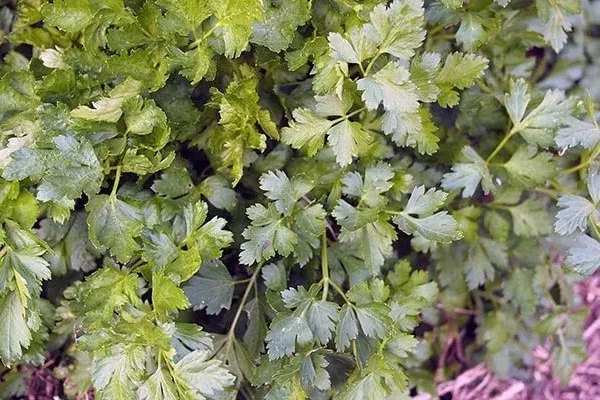
Parsley diseases
There are many diseases that threaten plants, so gardeners should pay close attention to the condition of their greenery and, if signs of illness are detected, take immediate action.
Powdery mildew
This fungal disease can be identified by a white-gray coating on parsley. The lower leaves are affected first, and over time, the disease affects the entire plant.
As the fungal plaque develops, it darkens, changing color to a russet-brown, and its density increases. The white substance is the mycelium, and the spores are small, spherical, dark beige grains.
Ideal conditions for fungal growth include an excess of nitrogen fertilizers in the soil and hot, dry weather, especially with significant humidity fluctuations between day and night. Spores are spread by wind and water during irrigation or rain.
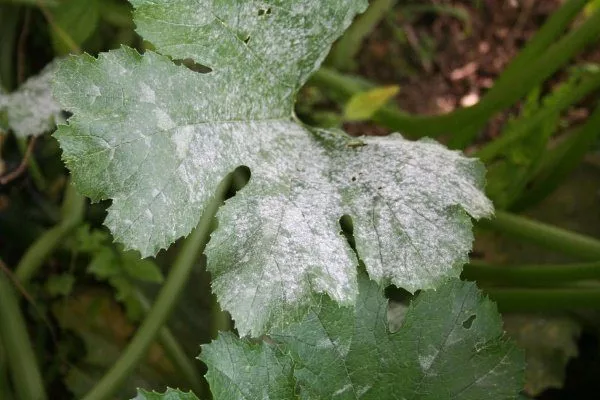
Powdery mildew can cover a large area of plants of one species in a very short time.
Preventive measures include:
- removing parsley plant debris in autumn;
- control over the application of nitrogen fertilizers and phosphorus-potassium fertilization to strengthen plant immunity;
- work on developing hybrids resistant to infection;
- annual change of landing site.
If the disease has already progressed, treatment with fungicidal compounds such as Fundazim, Quadris, and others is essential. Alternatively, you can try folk remedies containing wood ash, laundry soap, kefir, and other ingredients.
Stolbur
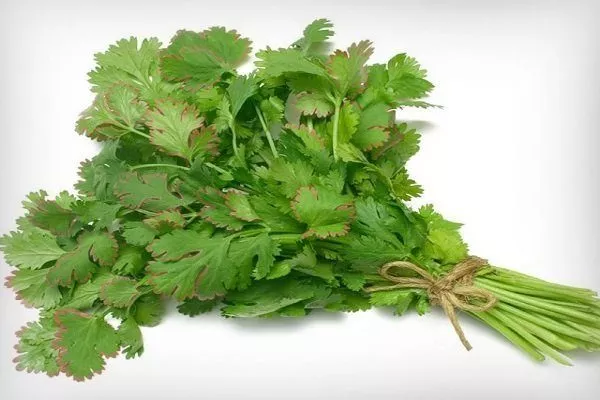
The causative agent is Phytoplasma. Symptoms include the appearance of a red border on the leaves, and as stolbur develops, the entire leaf takes on a reddish tint. During flowering, seeds are formed that are unsuitable for sowing, and the plant often dries up and dies. Cicadas spread the disease in late summer.
Preventive measures:
- crop rotation;
- seed treatment;
- insect control;
- foliar feeding with 0.04% borax solution;
- weeding, thinning dense crops.
Black rot (or Alternaria)
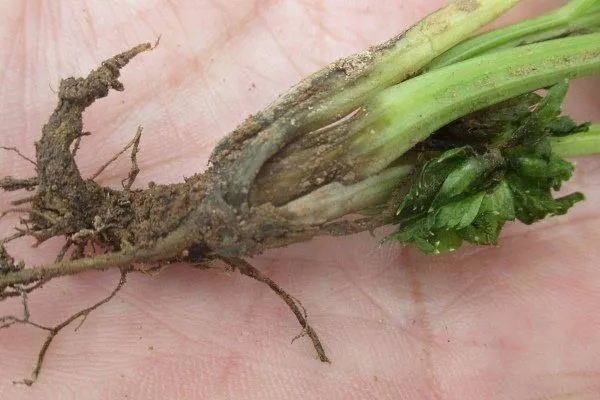
Alternaria is a root disease. This fungal infection causes the stems and roots of parsley to become covered in various black spots. The top layer of the root system peels off, and the plant dies. The flavor is impaired. During storage, the roots turn black and rot.
Preventive measures include sowing high-quality healthy seeds, moderate watering, and storing the harvest at a minimum temperature and in a dry room.
- ✓ Seeds should be of uniform color without spots or damage.
- ✓ When pressed, the seeds should not crumble or become deformed.
Early blight (or cercosporiosis)
When parsley is infected, it becomes covered with yellow-brown spots of varying shapes, up to 0.6 cm in size. As the spots develop, they lighten, but the brown rim remains. These spots on the stems have a sunken appearance. Plants grow slowly and wither.
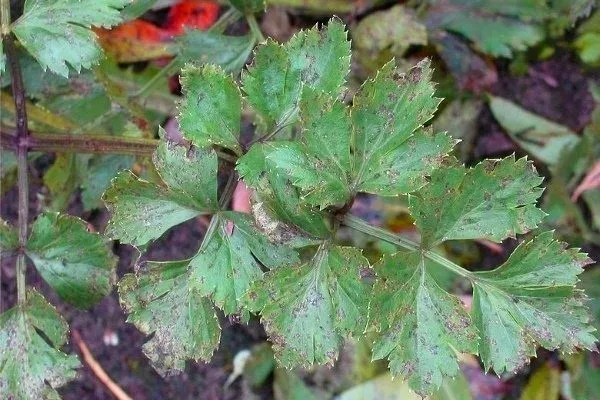
The disease develops when air humidity is over 80% and temperatures are above 21°C. Parsley that is densely planted in low-lying, marshy, and poorly ventilated soils is most susceptible.
Combating early burns involves:
- use of healthy seeds and seedlings when planting;
- crop rotation;
- loosening the soil and weed control;
- treating plants with a 1% Bordeaux mixture solution every 10 days.
The use of Bordeaux mixture is completed 2 weeks before harvest.
Rust
This fungal disease can quickly destroy crops. Raised, yellow-brown spots with orange edges form on the lower leaves of parsley. The first stage of the disease occurs in early summer. By autumn, the spots darken and merge. The parsley turns yellow prematurely and dries out.
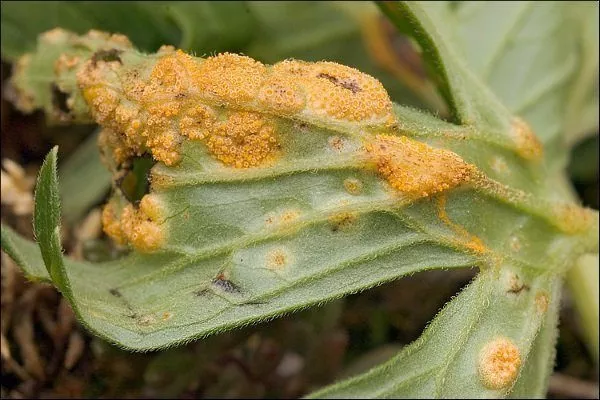
Fungal spores overwinter on plant debris and germinate in the spring, infecting new areas of greenery. Rust infestations require fungicide treatment. Prevention involves deep tilling of the soil and the destruction of all plant debris.
Septoria (or white spot)
The causative agent is Septoria petroselini Desm. Very small brown spots appear on the lower leaves. Over time, these spots cover the entire plant and turn brown. The parsley dries out, but the spores remain inside. Septoria prefers warm, humid weather and is most active in late summer and early fall. It is spread by wind and rain.
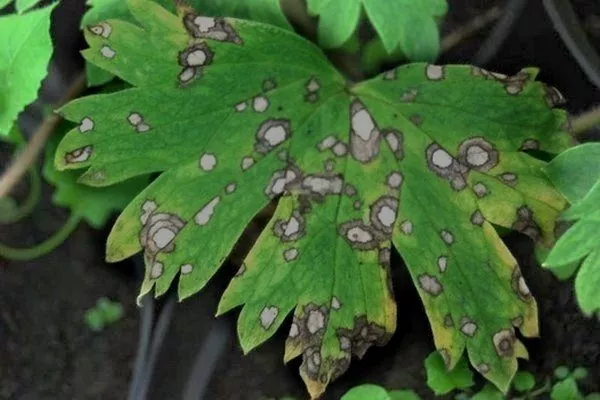
To prevent white spot on parsley plants, sow high-quality seeds in well-ventilated areas with low-acid soils and completely clear the area of all above-ground plant parts in the fall. Control methods include treatment with antifungal agents.
Fomoz
This is a fungal disease, the symptoms of which are the formation of gray-brown spots on the leaf veins. Parsley roots develop sunken rot during storage. The presence of pests on the greens exacerbates the problem.
The fungus prefers humid weather and air temperatures of 10-15°C. It spreads via pycnospores, which remain active in the soil for up to 3 years.
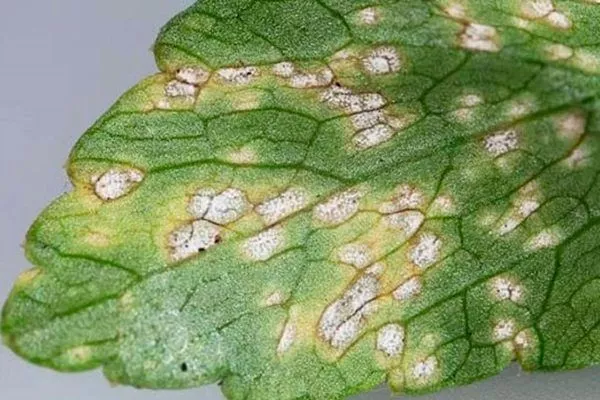
Preventative measures reduce the risk of parsley infection. To do this, practice crop rotation, use treated, healthy materials when planting, and manage pests.
Most parsley diseases are fungal in nature. Therefore, preventative measures are especially important when dealing with diseases. Often, the use of fungicides is a necessary measure not to save the crop, but rather as a preventative measure to ensure a healthy harvest next year.
Parsley pests
If left unchecked, insects can destroy an entire parsley crop in a short period of time. Furthermore, they carry fungal spores, making eradication measures doubly necessary.
Melon aphid
These are small, wingless or winged insects, egg-shaped, green or black in color. With a single fertilization, an aphid is capable of reproducing every 14 days throughout the entire season. Therefore, early detection and control are especially important.
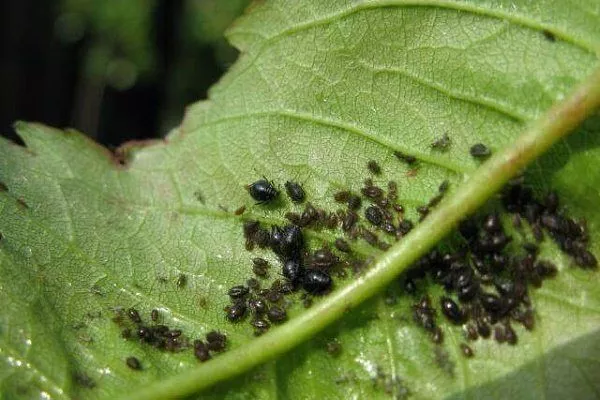
Insects feed on the juices of parsley, thereby depriving it of nutrients and causing its death. To prevent melon aphids, plant parsley in bright, well-ventilated areas, fertilize the plants, and loosen the soil.
Avoid overusing chemicals to control aphids. They can also kill insects that are beneficial to gardeners.
Ladybugs, lacewings, and predatory bugs eat aphids.
It's preferable to eliminate this type of pest using folk remedies. These include solutions based on ash and laundry soap, an infusion of onion peels with citrus peels, or a mixture of garlic, wormwood, mustard, and others.
Carrot fly
Adults feed on nectar during parsley flowering. They pose no threat to the crop. Plant death is caused by the larvae, which penetrate the plant and feed on the sap and tissue of the roots.
Flies lay eggs near the plant that their offspring will feed on. Properly and timely treatment of parsley (in May) will save the harvest. The difficulty lies in the fact that flies lay eggs twice a season. The second clutch is difficult to spot and can be missed.
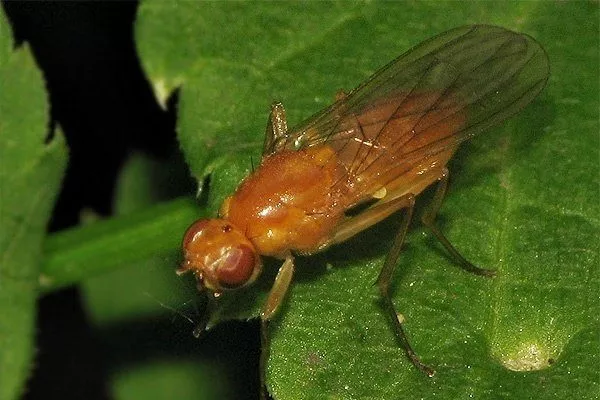
These insects prefer damp, shaded areas. Carrot flies spend the winter as pupae in root vegetables and the soil.
The main method of fly prevention is crop rotation. Sow parsley at least 10 meters from the previous year's growing site. This will kill the flies in the spring, as they are unable to fly such a long distance.
For a productive harvest in garden plots, choose parsley seeds of the 'Calgary' and 'Flakke' varieties, which are resistant to this pest. Seeding density should be minimal. Antifungal treatment of the planting material before sowing is recommended.
Chemical fly repellents include Karate, Arriva, and others. Before resorting to these, it's best to try folk remedies. These include wormwood and garlic infusions, and sprinkling greens with strong-smelling powders, such as red pepper, tobacco dust, and mustard.
Stem nematode
This parasitic worm is translucent white, up to 1.8 mm long, and up to 0.06 mm wide. It lays approximately 300 eggs per season. It overwinters in plant stems and roots at a depth of up to 20 cm. Its presence in parsley can be identified by the following signs:
- discrepancy in seedlings;
- the sprouts are weak, deformed, with spots on them;
- the color of the seedlings is pale green;
- The stems may have thickenings.
Frequent watering, foliar feeding, and growing parsley in shady, moist areas are favorable conditions for nematode development. The pests prefer soils with high acidity and the presence of plant debris.
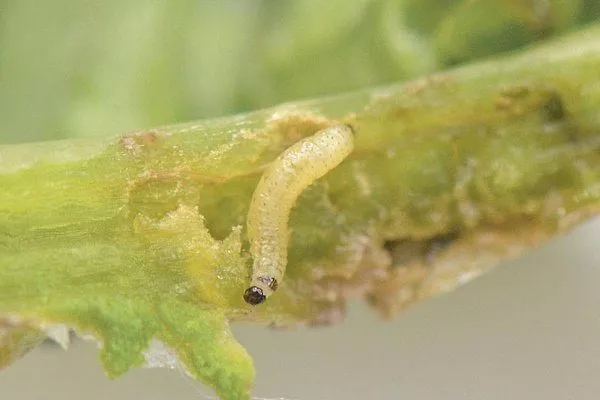
Preventive measures come down to:
- liming of soils;
- agrotechnical care;
- Planting marigolds around the perimeter of a parsley bed is a good idea - the phytoncides repel these worms.
Methods of control using chemicals include disinfection of the soil with "Thiazon" or a similar compound and treatment with poisons, for example, "BI-58".
Carrot psyllid
The carrot psyllid is a yellow-green insect about 2 mm in size with membranous wings. Its eyes are red. They overwinter on wild carrots and, in spring, lay eggs on garden plants. The larvae feed on plant sap, which deprives the parsley of nutrients. This slows plant growth, and the leaves curl. The parsley root hardens and disintegrates.
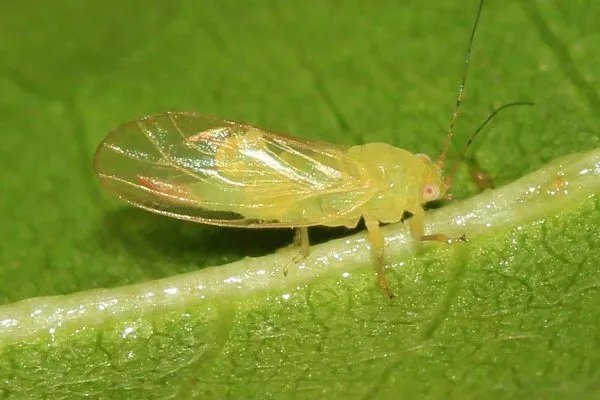
Preventive measures against leafhoppers include:
- weeding out wild carrot thickets;
- choosing a planting site away from coniferous trees.
Folk methods of combating this pest involve treating carrots with a tobacco infusion and laundry soap.
In case of a large-scale flea infestation, chemicals are used, such as "Actellic," "Sumicidin," "Tsimbush," and others. Their use must be strictly according to the instructions.
Chemical treatments should be stopped at least one month before harvesting.
Adherence to proper agronomic conditions for growing parsley, the use of preventative measures, and timely pest and disease control will ensure a bountiful harvest of this healthy herb, a joy for both farmers and amateur gardeners.