
Parsley Astra, known for its curly leaves, is a favorite choice for home cooking, where its aromatic greens are prized and the roots remain unused. Among the many available varieties, Astra stands out as the most sought-after. To ensure successful growth of this plant, it's important to consider certain aspects of its agronomy.
History of the variety
Parsley Astra, with its characteristic curly leaves, was developed by renowned breeders Yuri Alekseev, Petr Klapst, and Jiří Horaj. After completing all necessary testing, the variety was approved for widespread use in 1997.

An idea of curly parsley
This aromatic herb adds a unique flavor and appealing aroma to dishes. The greens store well when fresh.
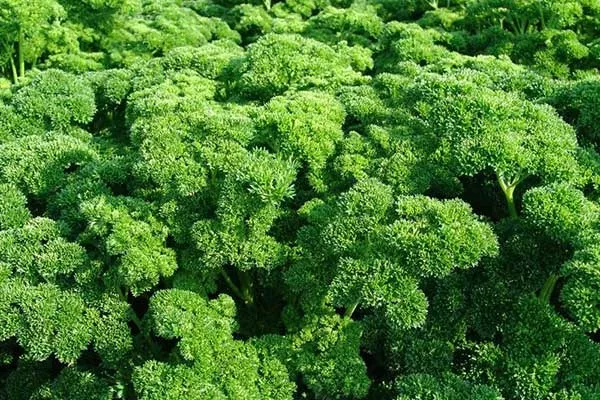
To extend the shelf life of the harvest, mature leaves are carefully cut, chopped, and frozen. This parsley is perfect for adding to salads and hot dishes in winter.
Description of the plant
This aster stands out for its abundance of large leaves. It forms a compact, slightly elevated rosette. The leaves are a rich dark green and have heavily wavy edges.
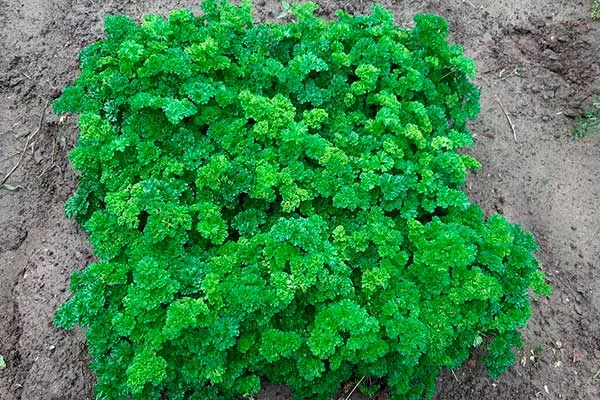
The leaf petioles are medium-length, without a purple tint. The foliage is soft to the touch, and each plant weighs between 70 and 80 grams. After pruning, parsley quickly recovers, beginning to regrow. The root portion has poor storage properties.
Taste characteristics and purpose
Astra has a unique taste in which sweetness is harmoniously intertwined with a slight parsley bitterness, creating a bright and pleasant combination.
The greens are widely used in cooking, in both hot and cold dishes and appetizers. The crisp, delicate leaves often serve as an elegant garnish.
Ripening and yield
This variety is distinguished by its early maturity: from the emergence of shoots to the development of mature greens, it takes only 50-60 days, depending on weather conditions. Harvesting of greens begins in May and continues throughout the season, with the harvest being collected several times.
Soil requirements
To successfully grow Astra parsley, it's important to choose the right location. This plant prefers sunny areas with well-drained, sandy loam soil and a neutral pH. Astra parsley is frost-hardy, allowing you to sow its seeds even in cooler seasons.
- ✓ Soil pH level should be strictly between 6.0-7.0 for optimal growth.
- ✓ The soil must contain at least 3% organic matter to provide nutrients.
Resistance to diseases and pests
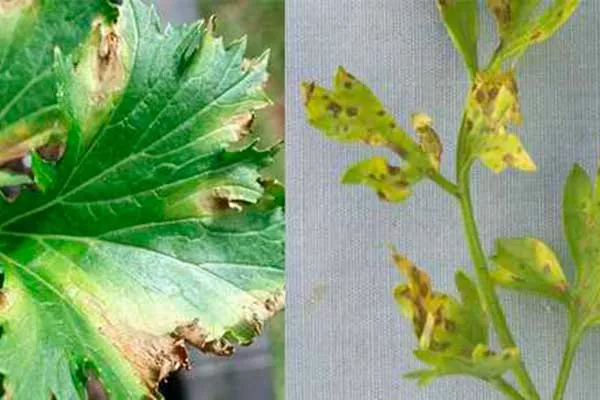
If cultivation practices are not carefully considered, Astra parsley may be susceptible to a number of diseases. The most common ailments include:
- Powdery mildew, which is a well-known fungal disease;
- stolbur and cercospora, which affect the leaves of the plant;
- rust, which appears as red or yellow-orange spots;
- Septoria, which attacks the lower leaves and quickly spreads up the plant;
- Phoma, which manifests itself through putrefactive spots and brown marks on the leaves.
| Disease | Resistance of Astra parsley | Control measures |
|---|---|---|
| Powdery mildew | Average | Treatment with fungicides at the first signs |
| Septoria | Low | Removal of affected leaves, treatment with copper-containing preparations |
Among the dangerous pests are:
- carrot fly and leafhopper;
- stem nematode;
- melon aphid.
Growing and care
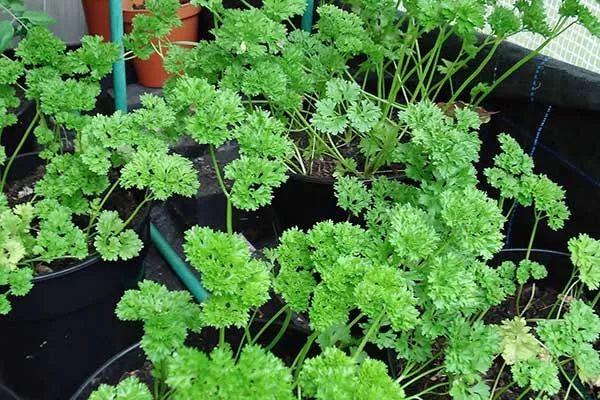
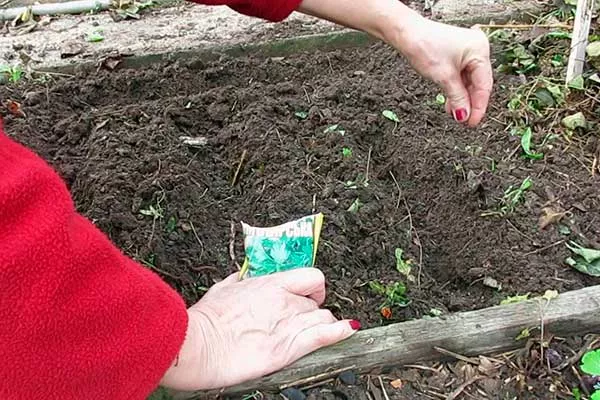
This variety has reliable frost resistance. Seeds can be sown in early spring, dividing the process into several stages, or in the fall, given their ability to tolerate low temperatures.
Curly parsley takes root easily in a new location. It doesn't require special growing conditions or complex care, making it suitable for growing almost all year round.
Rules:
- The optimal conditions for this variety are sandy loam soil, but clay or loamy soils are also suitable. To achieve a high yield, it's important to choose a well-lit and open location.
- Begin preparing the plot early, in the fall. Clear the area of plant debris, level it, dig it over, and add compost. In the spring, treat the beds to kill pathogens and pests, and add mineral fertilizers to improve yields.
- The preferred seeding depth is about 1 cm, as planting seeds too deeply can interfere with germination. For the Astra variety, the recommended spacing between seeds within a row is 5-8 cm, and between rows, 25-35 cm.
- Before sprouting, it's helpful to soak parsley seeds in warm water for 2-3 days. Afterward, they should be dried to their original state to facilitate germination. To maintain the necessary humidity in the seed containers, cover them with thick film or glass, creating a greenhouse effect.
- To grow seeds, choose a high-quality, nutritious, and disinfected substrate. It's recommended to use a ready-made soil mix, which already contains all the necessary elements and doesn't require additional fertilization or treatment.
- Caring for this herb is simple, but it does require regularity. Curly parsley requires periodic loosening of the soil and regular watering, but it's important to avoid overwatering to prevent fungal diseases and plant rot.
Positive and negative qualities
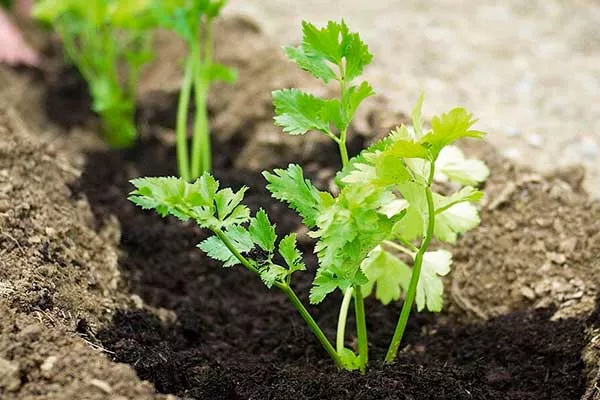
The Astra parsley variety stands out for its unique characteristics. Among its key advantages are:
Furthermore, this plant is renowned for its long leaves, which can have either a sweet or bitter taste. This variety has no significant drawbacks.
Reviews
Parsley Astra is renowned for its excellent productivity, superb flavor, and ability to withstand sudden cold snaps. However, the variety is susceptible to pests and diseases, so spring preventative spraying is an essential part of cultivation practices.