
Rapeseed is an annual oilseed crop widely grown worldwide. This plant produces virtually no waste and is grown for both food and industrial purposes. Harvests can be obtained in summer and fall, sowing winter and spring rapeseed, respectively.
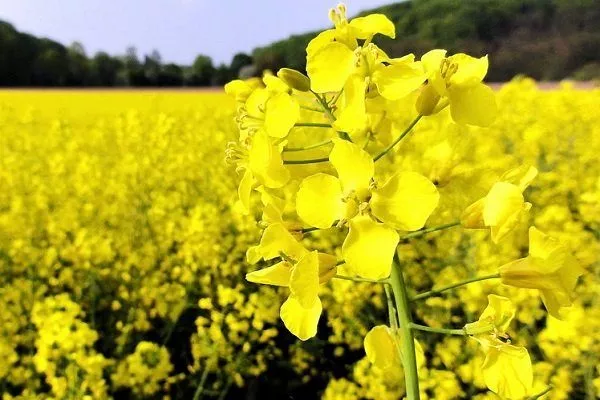
Growing requirements
Rapeseed is a member of the Cruciferae family and has an unknown origin. It is believed to have originated from a cross between rape and kale. The crop is undemanding, but when grown commercially, it requires the most favorable conditions possible, which guarantees high yields.
Light
Rapeseed, like most field and pasture crops, requires good light. It does not respond well to low light levels or dense plantings.
Let's consider how the shading effect affects the appearance and characteristics of rapeseed:
- the color fades;
- the stems become thinner;
- internodes are elongated;
- plants fall over easily even in a light wind;
- few lateral branches are formed;
- Elongated growth points negatively affect the wintering of the winter variety.
Rapeseed is a long-day crop. These plants enter the flowering phase when daylight hours increase to 13 hours or more.
Moisture
This plant thrives on moisture. Winter/spring rapeseed requires 600-800/500-700 mm of precipitation during its growth and development.
During the growing season, rapeseed has three periods when it is especially important to receive irrigation:
- shooting;
- bloom;
- budding.
A lack of moisture reduces rapeseed's ability to absorb boron, which negatively impacts yield. Drought promotes the spread of pests in rapeseed fields. These insects are particularly damaging to spring rapeseed.
Sufficient soil moisture is also necessary during sowing to ensure uniform emergence. This isn't a problem when sowing spring rapeseed—the soil is almost always moistened by melting snow in the spring. Moisture issues may arise when sowing winter varieties. Irrigation is necessary to ensure the seeds are sown in a favorable environment. If the soil isn't irrigated, the yield of the crop is questionable.
Temperature conditions
Rapeseed is a cold-hardy crop. It can withstand temperatures down to -15°C. If the winter crop is covered with at least 5 cm of snow, it can withstand temperatures ranging from -22 to -25°C.
Rapeseed vegetation begins at temperatures of +1…+3°C. Plants may die if frosts return.
Rapeseed does not tolerate heat well. If temperatures rise above 30°C, plant growth and development slows, pollination is impaired, and yields drop.
Soil
Rapeseed grows in virtually any soil. It can be grown even in the poorest soils, but only fertile soils allow for high yields. The optimal soil pH is neutral. The worse the climate, the more soil quality affects the yield.
- ✓ The optimal depth of the arable layer for rapeseed should be at least 25 cm to provide sufficient space for the development of the root system.
- ✓ The humus content in the soil must be at least 2.5% to ensure the required level of fertility.
Yarov and winter rape can be grown On sandy loams and loams. The spring variety can also be sown on peatlands. Sandy soils are unsuitable for growing the crop.
Planting rapeseed
When growing rapeseed, timing and cultivation techniques are crucial. The vigor of the seeds' growth depends on when and in what soil.
Crop rotation
The crop's yield is greatly influenced by its predecessors and its place in the crop rotation. Rapeseed grows best after:
- cereals;
- grain legumes;
- potatoes;
- green herbs.
Rapeseed can be grown after fallowing. The crop can be replanted in the same location after three years.
It is prohibited to sow rapeseed after:
- rapeseed, cabbage, mustard and other cruciferous crops;
- sunflower;
- beets.
On a large farm, rapeseed occupies no more than 20% of the total land area, and if sunflowers are part of the crop rotation, the maximum area for both crops will be up to 25%. A higher percentage is permitted when growing hybrids and using systemic protection.
Rapeseed is an ideal precursor crop. It's a crop that improves soil structure. Its roots loosen the soil and increase yields. Rapeseed leaves behind a lot of plant residue.
Rapeseed is a phytosanitary plant, as it effectively destroys root rot, and its green foliage suppresses weed growth. Growing grain after rapeseed increases yield by approximately 5-6 c/ha.
Pre-sowing preparation
The soil preparation procedures and specifics for winter and spring rapeseed differ. Soil preparation for winter rapeseed is carried out in the fall, while for spring rapeseed, it is done in early spring.
Soil preparation:
- For winter rapeseed The soil is prepared at least two weeks before sowing. First, plowing is performed, then rolling. These procedures are performed either on the same day or at short intervals. Pre-sowing cultivation is carried out immediately on the day of sowing (no more than 24 hours before). The main objective is to achieve a loose top layer and a compacted soil layer at a depth of 2-3 cm.
Pre-sowing activities are carried out using combined units AKSh-6 (or AKSh-7.2) or using a hitch of a cultivator, harrow and roller. - For spring rape The soil is prepared in the fall. This preparation involves clearing the land of weeds and leveling it. Rapeseed responds well to deep chiselling (up to 40 cm). It is not recommended to sow the spring variety after spring plowing, as this reduces yield by 20-30%.
In the fall, after deep tillage, the soil is cultivated, harrowed, and other techniques are applied. The lack of soil compaction allows rapeseed roots to penetrate freely into the lower horizons, which facilitates harvesting even during drought.
Chisel tillage is a primary soil cultivation technique aimed at deep, continuous loosening of the soil without turning over the top layer.
Soil preparation is carried out taking into account the individual characteristics of the field. The future harvest largely depends on the quality of the rapeseed seeding. Fields must be leveled, and seedbeds must have a fine, crumbly structure. Plant residues must be avoided, and the soil must be sufficiently moist.
When sowing spring rapeseed in the spring, it is recommended to avoid any additional agricultural practices, such as cultivation, stubble cultivation, and disking. These practices lead to moisture loss, so they should be carried out only when absolutely necessary, and the soil should be immediately rolled.
Selection and preparation of seed material
To obtain high yields of oil and meal, select seed based on the climate zone and soil conditions. To optimize the growing process, it is recommended to alternate early, mid-season, and late-ripening varieties.
Tips for preparing and selecting seeds:
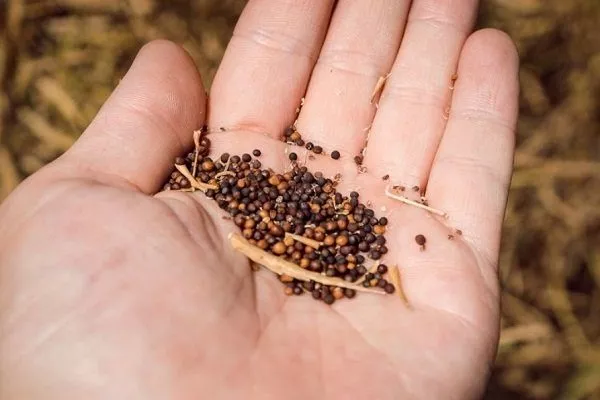
- the optimal seed size is from 1 to 3 mm;
- planting material is treated 2 weeks before sowing;
- fungicides are used for disinfection;
- maximum moisture content of treated planting material is 10-12%;
- All small and underdeveloped specimens are rejected.
Sowing dates
The rapeseed sowing date depends on climate and weather conditions. When starting sowing, farmers consider temperature and soil conditions rather than calendar dates.
Rapeseed sowing dates:
- Winter. Sowing begins in August-September, taking into account local climatic conditions. Time your sowing so that the plant forms rosettes of 7-8 leaves before the onset of cold weather. Winter cereals are typically used as a guide for sowing time—3-4 weeks should remain before sowing.
- Spring. It is sown early, but in sufficiently warm soil (up to +5°C). The approximate sowing time is April to early May. The timing depends on the local climate. In light soils, sowing is carried out 10 days earlier than in peaty and heavy soils.
Rapeseed hybrids are sown 5-6 days later than varieties, as hybrids start and develop faster.
Sowing technology
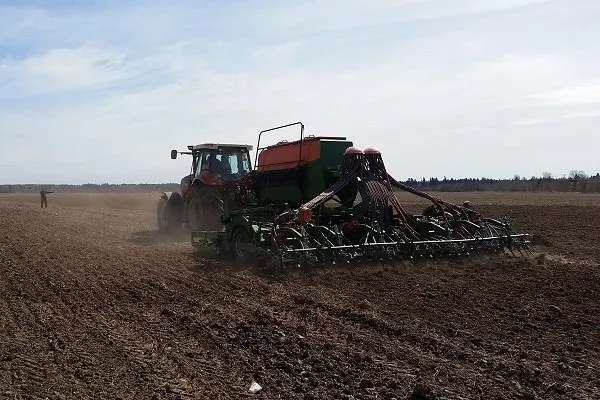
Sowing is done using continuous rows. The row spacing is 12-15 cm. Seeders equipped with a microseeding function are used for sowing. Seeding patterns and rates depend not only on soil and climate conditions but also on the rapeseed variety.
Sowing rapeseed:
- Winter. Seeds are planted 2-3 cm deep, or 3-4 cm deep in dry, light soils. Rolling is essential after sowing. Winter temperatures and average annual precipitation are taken into account when calculating the seeding rate. The harsher the conditions, the higher the seeding rate. On average, it is 5-6 kg/ha.
For the plant to successfully survive the winter, by the arrival of winter, there should be 40-60/80-100 plants per square meter of field (the norm for hybrids/rapeseed varieties). In the spring, the number should remain at 45-55/35-45, respectively. - Yarovogo. Seeds are planted 1-1.5 cm deep in cohesive soils, 1.5-2 cm deep in loams, and 2-2.5 cm deep in the lightest soils. The seeding rate is 6-8 kg/ha. The number of plants at emergence is 90-140 per square meter.
The more the agrotechnical parameters deviate from the norm – the moisture content in the soil, the type, timing, method and quality of its preparation – the higher the seeding rate per 1 square meter.
Top dressing
Rapeseed responds well to fertilizer. Fertilizers can increase the quantity and quality of the harvest. In addition to essential elements (nitrogen, phosphorus, and potassium), this crop requires boron, sulfur, and other minerals.
- Conduct a soil analysis for boron and sulfur content before sowing.
- Apply boron fertilizers at a rate of 1.5-2 kg/ha during the stem formation phase.
- Apply sulfur fertilizers at a rate of 20-30 kg/ha during the budding phase.
If there is a lack of sulfur, rapeseed does not form pods, and a boron deficiency leads to thickening of the stem, delayed flowering and a critical reduction in fruit formation.
Nitrogen
Nitrogen influences the formation of green mass. Over the entire growing season, 5-6 kg of nitrogen per 1 centner of produce is required. If you plan to harvest 30-40 centners per hectare, apply 150-250 kg of nitrogen. When calculating the nitrogen dose, consider the soil type, its nutritional value, the previous crops, etc.
Application of nitrogen fertilizers:
- For winter rape. Nitrogen is applied in the fall and spring in 1-3 applications. Before winter, it's important not to overdo it with the fertilizer—if the plants overgrow, they may not survive the winter.
In spring, nitrogen is applied in increments (1/3 of the recommended dose) immediately after plants emerge from the snow and during the stem and bud formation stage. Spring fertilization increases the number of buds and prolongs the flowering period. - Under spring rape. Fertilizer is applied before the preceding crop. Rapeseed is fertilized directly with manure, which covers 50% of the crop's nitrogen requirement. If the dose is more than 150 kg/ha, the fertilizer is applied in two doses: 3/4 of the fertilizer before sowing and 1/4 of the fertilizer during stem formation.
Excess nitrogen leads to overgrowth of green mass, plants become fat, the initiation of reproductive organs is delayed, and rapeseed lodges. Seeds produce more protein, while oil content decreases.
Phosphorus
Compared to most field crops, rapeseed requires significantly more phosphorus. This element is essential for plant root development. It also improves seed quality and increases resistance to disease, drought, and cold.
The recommended phosphorus fertilizer rate is 40-60 kg/ha. To produce 1 centner of rapeseed, 2.5-3.5 kg of phosphorus are used.
Application of phosphorus fertilizers:
- For winter rape. This element is added in the fall during the main fertilization or before the predecessor.
- Under spring rape. The timing is affected by the soil texture and moisture conditions. On heavy soils, phosphorus is applied along with potassium fertilizers before fall plowing. If the soil is light, phosphorus is incorporated into the soil in the spring (before sowing) to prevent leaching.
Potassium
Potassium prevents foliage dieback, promotes fertilization, and increases seed oil production. Potassium fertilizer application rates range from 100 to 140 kg/ha.
Potassium application:
- For winter rape. Fertilizer is applied before primary soil cultivation or before the previous crop. 1 centner of seeds requires 4-6 kg of potassium.
- Under spring rape. When growing on heavy soils, potassium is added in the fall, before plowing. On light soils, two-thirds of the potassium is added in the fall, and one-third in the spring, along with phosphorus during pre-sowing cultivation.
You can also learn about the specifics of fertilizing rapeseed in the following video:
Caring for rapeseed
Rapeseed is a hardy and undemanding crop that can grow under the most adverse conditions. Achieving high yields and oil content is only possible with proper agronomic practices and is largely dependent on weather conditions.
Features of watering
Rapeseed is very moisture-loving. During the growing season, it consumes 1.5-2 times more water than grain crops. However, it does not tolerate high groundwater levels. Rapeseed should not be planted in excessively wet or marshy areas located in lowlands or prone to frost.
The crop must have sufficient precipitation and moisture stored in the soil. It's important for plants to receive moisture within the first 70 days—this is the period during which approximately 70% of the crop is formed. From flowering to maturity, rapeseed requires 300 mm of precipitation.
Weed control
Fields where rapeseed is grown must be cleared of perennial weeds. Control measures depend on the severity of the infestation and the crop variety.
Weed control when growing rapeseed:
- Winter. If the soil is infested with weeds, treat it with herbicides 1.5 months before sowing. Chemical treatment is carried out at temperatures between 15 and 20°C and wind speeds no greater than 5 m/s. Failure to meet these conditions significantly reduces the effectiveness of chemical weeding.
- Yarovogo. After heavy rains (but no later than 4 days after sowing), harrow the field. This is done only in dry weather. The harrows are moved diagonally across the field.
At the 2-3 true leaf stage, another harrowing session is performed – post-emergence. This time, the harrows are moved at a 90-degree angle to the direction of the crop.
When seedlings emerge, agronomists conduct a weed count to develop tactics and methods for weed control. To do this, they place 50 x 59 cm frames diagonally across the rapeseed field at regular intervals to count the number of weeds within them and identify their species.
The following weeds are particularly common in rapeseed fields:
- dodder;
- couch grass;
- field poppy;
- barnyard grass and other rapeseed competitors.
Preparations used for weed control:
- Roundup, Glysol and their analogues. These products are used during the warm season. They destroy dicotyledonous plants and perennial grasses.
- Treflan. Fields are treated before sowing. The product or its analogues are incorporated into the soil. The product is effective against annual cereals and dicotyledonous plants.
- Butizan. Used after emergence. Effective on the same weeds as Treflan.
- Fusilade is super. Apply in autumn and early spring. Destroys couch grass.
- Lontrel. Treatment is carried out when 3-4 leaves appear on the plants. It destroys chamomile and sow thistle.
Diseases
The crop primarily suffers from fungal infections, which reduce yield and seed oil content. The main rapeseed diseases are:
- Powdery mildew. The plant becomes covered with a powdery mildew. This disease, which occurs in the late stages of rapeseed development, leads to reduced yields.
- Alternaria. It affects all parts of the plant, causing black spots to appear, leading to the death of the rapeseed. The disease particularly affects flower stalks.
- Fomoz. It's harmful to all plants in the Brassicaceae family. It causes blackening of the stems and black spots. It gradually affects the entire plant and leads to its death.
Rapeseed is also susceptible to white rust, bacterial root rot, clubroot, black leg, white rot and other diseases.
A universal remedy for disease control is the use of benzimidazole preparations (active ingredient: carbendazim). Benomyl-based fungicides also help combat diseases.
Pests
When growing rapeseed, insect pests pose a particular danger, not only damaging the plants but also completely destroying them. The crop is harmed by both polyphagous insects (various moths that attack cruciferous plants) and pests that "specialize" only in rapeseed.
The most dangerous pests:
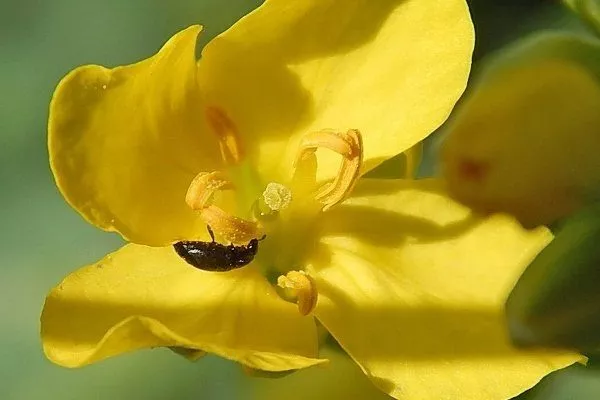
- Rapeseed blossom weevil. The beetles are black with a blue-green metallic sheen. Both the larvae and adults are the main pests. The pests eat the flower buds, and the later larvae consume the seedpods.
- Rapeseed leaf beetle. The adults cause the most damage. The beetles are red-black with stripes. The larvae are brownish and bristly. The insect causes damage at all stages of its development. It feeds on the plant from flowering until the pods emerge.
- Rape sawfly. An orange beetle with black spots. The larvae cause damage, feeding on leaves, flowers, and pods.
- Cabbage moth. The butterfly is gray-brown, widespread, and attacks virtually all crops. Its green-black caterpillars, which eat leaves, also cause damage.
- Cruciferous flea beetle. Damage is caused by beetles and larvae that eat the leaves. If the weather is hot and dry, the pest can destroy seedlings within 24 hours.
A list of some types of preparations for controlling insects that affect rapeseed:
- Nurimet Extra. A universal two-component insecticide that kills insects within 3-7 hours. Kills flea beetles, flower beetles, and other pests.
- Newstar. An environmentally friendly insecticide that kills sucking and leaf-eating insects. The flower beetle dies almost instantly. Apply during the growing season.
- Fostran. A systemic insecticide and acaricide that kills pests within hours. Apply at the seedling and first leaf stage.
How to prepare rapeseed for winter?
Winter hardiness of rapeseed is not a given; it can be achieved through a combination of autumn and pre-winter conditions. Winter rapeseed exhibits its greatest cold resistance during the rosette stage with 6-8 true leaves.
Measures that help winter rapeseed survive the winter:
- In the fall, phosphorus and potassium fertilizers are applied to help plants develop a strong root system. This is what determines rapeseed's resistance to temperature fluctuations. Foliar application is recommended.
- By the end of September, the plants should have four true leaves. The root collar should be 0.4 cm in diameter. The leaves should be a rich green. If the rapeseed is growing and developing too quickly, a regulator should be applied to slow its growth and increase its cold resistance.
Preparing winter rapeseed consists primarily of implementing agronomic measures that ensure that in the fall the plants reach indicators as close as possible to the ideal phase of entering winter.
Harvesting and storage of crops
Rapeseed is harvested using direct combining. Harvesting begins when the seed moisture reaches 9-12%. Specific process features:
- Harvesting takes place while the plants are still green. To prevent them from clogging the harvester, they are cut so that only the pods are captured.
- Ripe pods crack when touched by the harvester, so it is equipped with attachments that reduce seed loss.
- The combine speed is up to 5-6 km/h, and the drum should rotate at a speed of 600-800 revolutions per minute.
The collected seeds are cleaned of impurities, dried to a moisture content of 8-9% and immediately cooled to a temperature at which long-term storage is possible – 15°C.
Mistakes in growing rapeseed
Incorrect agricultural practices immediately impact the health of rapeseed crops, leading to disease, reduced yields, and other problems. Mistakes and their consequences:
- The soil and seedbeds are poorly prepared. Uneven plant development. Overgrown and underdeveloped winter rapeseed plants die during wintering.
- The seeds are deeply planted. Delayed germination. Weakened plants. Elongation of the root collar. Risk of not surviving the winter.
- The straw remains of the predecessor are poorly incorporated. The seedlings, falling into the straw, stretch out.
- The sowing rate has been exceeded. Due to the dense growth, the plants develop poorly and few pods are formed.
- Excess of nitrogen fertilizers. Plants are overgrowing. Stems are brittle and fragile, and they are lodging. Winter rapeseed is at risk of not surviving the winter.
- Violation of crop rotation. Spread of pests and diseases.
Rapeseed is a promising crop, attracting growing interest from both agricultural consumers and farmers. Cultivating winter and spring rapeseed has its own nuances, but both require farmers to carefully follow precise agricultural practices.