
Sunflower harvesting is an important and responsible undertaking. It's crucial to be able to determine the crop's maturity and be prepared for the harvest. The key tasks during this period are timely completion of harvesting operations and proper storage of the crop after harvest.
How do you know when it's time to harvest sunflowers?
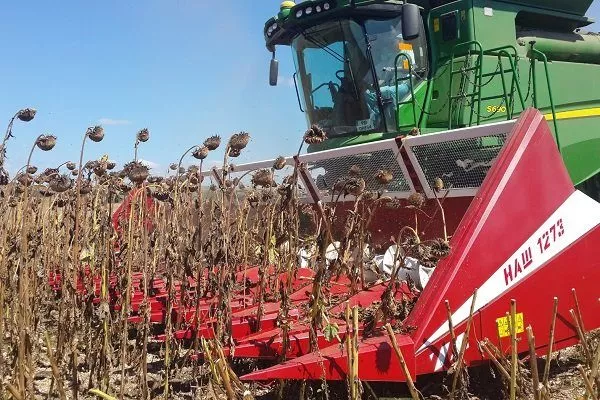
Determining the maturity of a crop is the responsibility of a specialist—an agronomist-technologist. However, it's also easy to do without specialized knowledge. Sunflower maturity is determined by external characteristics:
- the petals dry up and fall off, and the head hangs down;
- the back of the seed head changes color from yellow to brown;
- the seeds swell and protrude slightly from their “cells”;
- The kernels in the achenes take on the varietal color and harden.
Measuring the moisture content of the heads and seeds is a mandatory step for monitoring crop maturity. This indicator fluctuates depending on the stage (level) of maturity:
- yellow phase — basket humidity from 85 to 88%, seeds — from 30 to 40%;
- brown phase — the moisture level of the basket is within 40-50%, and that of the seeds is 10-12%;
- full ripening — head moisture content from 18 to 20%, and seed moisture content – 7-10%.
Begin harvesting when more than 80% of planted sunflowers have entered the brown phase. Keep in mind that the optimal moisture content for seeds intended for long-term storage is 9-11%.
If you have drying equipment on your farm and cannot wait to harvest due to weather or other conditions, you can begin harvesting sunflower seeds when the moisture content of the seeds is no more than 20%.
Sunflower harvesting dates
Timely sunflower harvesting minimizes seed loss and prevents spontaneous combustion during storage. To determine the harvest period and its precise start date, consider the crop's moisture content and the availability of farm equipment.
The minimum humidity for harvesting is maintained only in the southern regions; in colder climates, harvesting begins when the sunflower moisture content reaches 12 to 14%.
Weather conditions have a significant impact on harvesting timing. It's important to weigh the risks and costs of moving the harvest date earlier or later. To speed up seed ripening during rainy autumns, it's advisable to use special treatments.
An essential pre-harvest requirement for a farm is the preparation or acquisition of specialized equipment. Farm equipment directly impacts the duration of the sunflower harvest. There's no need to skimp on equipment; it must have sufficient capacity to complete the harvest within six days.
Delaying the sunflower harvest will lead to over-ripening of the crop and a sharp increase in losses due to dry and brittle stems, natural seed shedding, seed rot, and pest activity (birds and rodents).
Treatment with desiccants
Desiccants are products that promote earlier and more uniform ripening of sunflowers, thereby guaranteeing higher yields and a high-quality harvest. Desiccation technology allows for the harvest to be advanced by 5-7 days, thereby saving time and generating additional profits.
Applying the product during the brown stage of development reduces the incidence of crop diseases. Phomopsis, gray mold, and white mold develop rapidly during sunflower seed formation. Desiccation dries out the crop and stops the disease.
Cultivation helps control weeds, inhibiting the growth of ragweed, white goosefoot, sow thistle, and pigweed. This is especially important if the weeds are taller than the main crop.
The effectiveness of desiccation is determined by the correct choice of product and its concentration, so be sure to read and follow the instructions for use of the product.
Farmers use three types of desiccants, based on:
- isopropylamine and potassium salts of glyphosate - "Tornado-500", "Tornado-540";
- diquata - “Sukhovei” and “Reglon Super”;
- Glufosinate ammonium - "Basta".
- ✓ Consider soil type and climate conditions when choosing a desiccant.
- ✓ Check the compatibility of the desiccant with other agrochemicals used.
Desiccant treatments for sunflowers cannot be performed using self-propelled sprayers, as crop losses are too high. Therefore, consider aerial spraying. Be sure to monitor spray settings and water flow. The recommended water flow rate is at least 80-100 l/ha, and the product itself should be applied according to the instructions (usually 2 l/ha).
Plan to apply the treatments on a cloudy day or in the evening, as the active ingredient is destroyed by sunlight. Within 50-70 minutes, the treatment is fully absorbed by the foliage and begins its beneficial effects.
Harvesting methods
Sunflower harvesting is carried out using grain combines such as the Polesie, Neva, and Don-1500, equipped with special headers. These attachments are adapted for harvesting sunflower heads at various heights, including lodged plants.
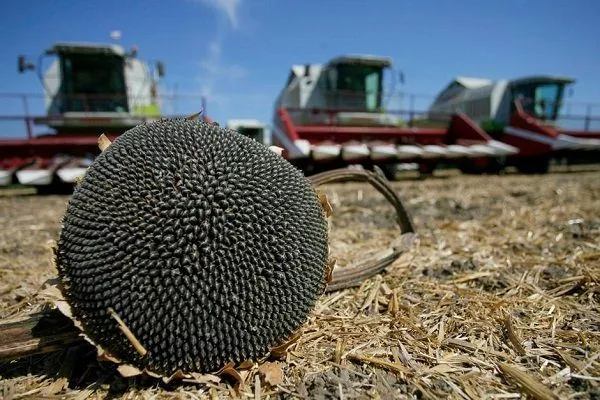
Headers are agricultural tools that can expand the capabilities of harvesting equipment and make it highly efficient. Their standard performance indicators are:
- residual stubble height - no more than 20 cm;
- in the bunker the purity of the heap is not less than 95%;
- seed losses – up to 2.5%;
- grain crushing - no more than 1%.
When purchasing sunflower harvesting equipment, please be aware of the following:
- The size of the nozzles is selected according to the dimensions of the cleaning machine. The minimum width of the header is 4 meters. The larger the device, and therefore its weight, the higher the fuel consumption, but the shorter the harvesting time.
- The header is secured to the combine body with special flanges. The design may include a hydraulic system that is used for vertical adjustment of the header by the combine operator directly from the cabin.
This saves time and preserves the worker's physical strength, but requires additional knowledge. Attachments with a mechanical drive shaft are economical and easy to maintain. - Often, the header comes complete with a tray to reduce natural crop losses. If the kit does not include it, order a pallet according to individual parameters or purchase it separately.
A modern harvester allows for harvesting in all areas of the crop field, regardless of weather conditions. Thanks to it, work proceeds smoothly and quickly, with minimal losses.
Using grain headers for sunflower harvesting is unacceptable due to their unsuitability for this type of work. An unsuitable reel will result in high seed loss during harvesting.
The solution in this situation is to purchase a special attachment—a lifter. Universal models are compatible with various types of cleaning equipment, are easy to use, and require little maintenance.
Sunflower harvesting technology is similar to grain harvesting. It involves:
- Mowing the field and dividing it into rows 2-3 days before the combines enter.
- Organization of roads and access roads for equipment.
- Sunflower harvesting with harvesters.
- Stubble burning.
Proper and timely organization of the harvest will allow the work to be carried out efficiently and quickly, so do not neglect the preparation of equipment and other measures.
Proper storage of sunflowers
Sunflowers are very demanding when it comes to storage conditions, so if you can't meet them, it's advisable to use the services of specialized warehouses and elevators.
Optimal conditions for storing seeds indoors:
- constant ventilation;
- humidity - 7%;
- air temperature - 7-10 °C.
Before being sent for storage, sunflower seeds must undergo primary cleaning using the ZAV-20 complex or other similar units; additional processing using the SVU-5 and SM-4 secondary and final cleaning systems; and calibration using the PSS-2.5 and BPSU-3 pneumatic sorting tables.
This needs to be done because:
- Screening The seed sieve removes unmarketable empty seeds, debris, and weeds from the bulk of the seed. The final weed content should not exceed 2%.
- Calibration Sunflower seeding involves separating seeds into planting material and those that will be sent for processing.
- Drying prevents rotting and increases the shelf life of sunflower.
- ✓ Check seeds for damage and diseases before storing.
- ✓ Ensure that seeds dry evenly to prevent condensation.
When drying seeds, observe fire safety regulations. During the drying process, the seeds rub against each other, causing microparticles of the husk to become airborne. High concentrations of these particles can cause a fire.
If preparatory work is not carried out and storage conditions are not met, the harvest will be lost. All the money and effort spent will be wasted, because:
- The oil in the seed kernel is capable of oxidation. This crop is not suitable for processing into oil due to its high acid content, and it is also not suitable for sowing.
- High temperatures and high humidity indoors lead to the spread of sunflower diseases. The seeds become completely unusable. Furthermore, as a result of microbial growth, the sunflower not only loses its properties but can also spontaneously combust.
Store grain intended for the food industry in cloth bags placed on wooden pallets in groups of 6-8. Seeds intended for this purpose should not contain chemicals.
Place the sunflower seeds you'll be using for sowing next season in bulk into a bin or transport them to an elevator. Periodically check their moisture and temperature to prevent problems. Don't forget to disinfect the area before sowing the seeds.
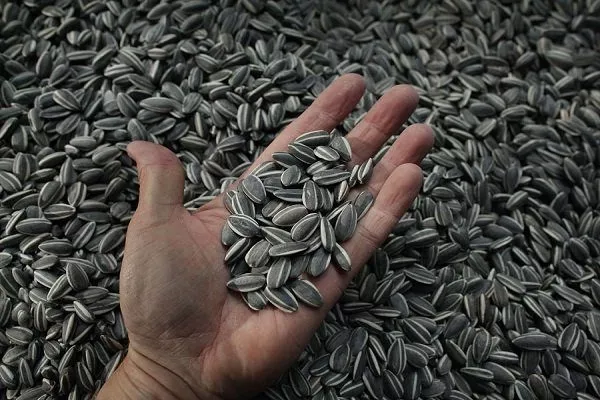
The maximum shelf life of sunflower seeds, if all conditions are met, is 6 months.
Begin harvesting based on seed maturity and moisture content. Use desiccants to reduce harvesting time. Harvest using combines with seed attachments or seed lifters. Don't neglect seed preparation for storage and maintain proper conditions in bins and elevators. Your harvest will be a profitable one!
Thank you for a lot of useful information about storing sunflowers.