
Sunflower varieties are divided into three groups: oilseed, confectionery, and hybrid. Each variety has its own ripening period, regional cultivation, and care requirements.
Popular oil-bearing sunflower varieties
These varieties are grown for oil production. Oilseed sunflowers are also used to produce silage and other concentrated animal feed.
| Name | Ripening period (days) | Drought resistance | Oil content (%) |
|---|---|---|---|
| Yenisei | 85-90 | High | 30 |
| VNIIMK 100 | 100 | High | 49-54 |
- ✓ The optimal sowing depth of sunflower seeds should be 5-6 cm in heavy soils and 6-8 cm in light soils.
- ✓ The soil temperature for sowing should be at least 8-10°C at the seed placement depth.
Yenisei
A cross between the VNIIMK 883 and VNIIMK 8932 varieties, Yenisei achieved rapid maturity (85-90 days, less than the parent varieties). Yenisei is resistant to shattering and lodging, and is highly adaptable to both northern regions (not requiring warmth during germination, allowing early sowing) and arid conditions. It has a moderate but stable yield (up to 30 centners per hectare).
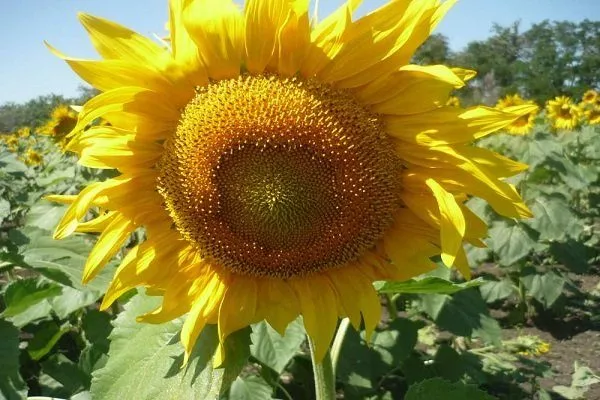
Recommended regions for cultivation are the Central Black Earth, Middle Volga, North Caucasus, Ural and West Siberian regions.
The seeds are medium-sized, elongated, black, and streaked with gray. The stem height is 140-160 cm. The seed head is thin, flat, and large (22-25 cm in diameter). It is self-pollinating. The seeding rate is 55,000 seeds per hectare.
The variety is resistant to broomrape and sunflower moth. There is a risk of gray and white mold.
VNIIMK 100
A medium-sized, early-ripening variety (requiring about 100 days), bred using laboratory methods in the Krasnodar Territory. It has a yield of approximately 20 centners per hectare (but can reach 30 centners per hectare) and a high oil content (49-54%). This variety is drought-resistant.
- ✓ The 'VNIIMK 100' variety requires a minimum amount of nitrogen fertilizers during the growing season to achieve maximum oil content.
- ✓ For VNIIMK 100, it is critical to maintain crop rotation at intervals of at least 4 years to prevent the accumulation of diseases in the soil.
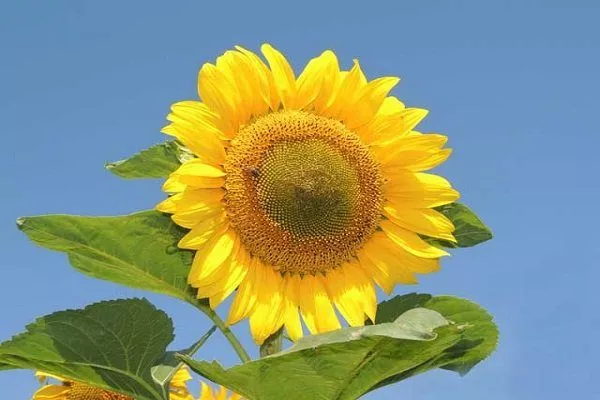
Recommended regions for cultivation are the Central Black Earth, Middle Volga, Ural, and North Caucasus regions.
It has a long flowering period, which protects against crop loss in the event of cold spring weather. The seeds are medium-sized to large, convex, oblong, black, with hints of gray stripes. The plant height is 140-160 cm. The seed head is small (18-22 cm in diameter), slightly convex, and inclined downward. The seeding rate is 55,000-60,000 seeds per hectare.
The variety is resistant to various types of rot and phomopsis, and has good immunity to broomrape and downy mildew.
Confectionery varieties
Confectionery or "large-fruited" sunflower seeds are characterized by low fat content, making them unprofitable for oil production. In Europe, this type of sunflower is used as a substitute for raw nuts, while in the CIS countries, confectionery factories use it to produce halva and packaged roasted sunflower seeds, which have superior flavor compared to oil-bearing or hybrid varieties.
| Name | Ripening period (days) | Drought resistance | Oil content (%) |
|---|---|---|---|
| Squirrel | 115 | Average | 44 |
| Poseidon 625 | 108-112 | High | 42-47 |
| Nut | 90-95 | High | 40-47 |
| Sweet tooth | 106-115 | High | 50 |
| Altai | 108-112 | High | 48 |
Squirrel
A sunflower cultivar created through multiple cross-pollination of the Oreshek variety in laboratory conditions. It matures mid-season (approximately 115 days). This variety's yield varies depending on the growing location. The average yield is approximately 15-27 centners per hectare, with a maximum of approximately 43 centners per hectare. Oil content is 44%.
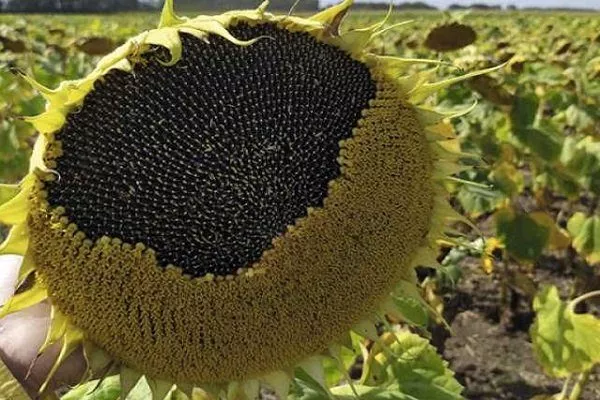
Recommended regions for cultivation are the Central Black Earth, North Caucasus, Middle Volga, and Lower Volga regions.
Requires territorial isolation due to its tendency to pollination and loss of original morphological features.
The seeds are large, dense, and black with gray stripes along the edges. The plant height is approximately 165-175 cm. The seed head is medium-sized (21-30 cm in diameter), slightly convex, and tilted downward. The seeding rate is 35,000 seeds per hectare.
The variety is fairly resistant to broomrape and rot. It can be affected by rust.
Poseidon 625
A medium-sized (tall specimens are also possible), early confectionery variety, bred from the Lakomka biotype. It has an average yield of 18-23 c/ha (but can reach 45 c/ha; there is potential).
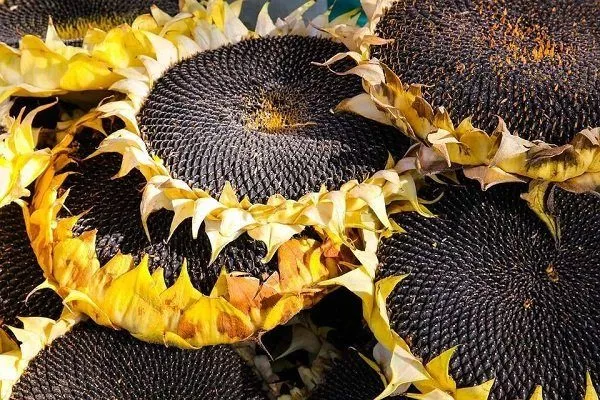
Recommended regions for cultivation are the Central Black Earth, North Caucasus, Lower Volga, and Ural regions.
It requires territorial isolation because it is prone to pollination and loss of original morphological characteristics.
The seeds are large, oval, and oblong, black in color, with gray stripes along the edges. Their oil content reaches 42-47%. The plant height is 150-165 cm. The seed head is medium-sized (21-30 cm in diameter), flat, and downward-sloping. The seeding rate is 35,000 seeds per hectare.
The variety is resistant to broomrape and sunflower moth. There is no risk of infestation by Phomopsis and various types of rot.
Nut
A large-fruited sunflower, bred from the confectionery varieties Lakomka and SPK, to produce an early-ripening biotype (90-95 days). Suitable for cultivation in any climate. This tall variety yields 12-27 c/ha (depending on the growing location).
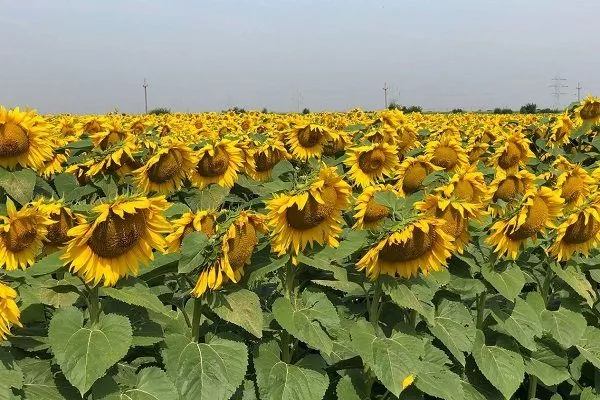
Recommended regions for cultivation are the Central Black Earth, North Caucasus, Middle Volga, Lower Volga, and West Siberian regions.
The seeds are large, black, with gray longitudinal stripes. Oil content reaches 40-47%. It is characterized by good seed set under adverse weather conditions. Plant height is 170-185 cm. The seed head is medium-sized (21-30 cm in diameter), flat, and inclined downward. Seeding rate is 25-28 thousand seeds per hectare.
The nut is resistant to broomrape, sunflower moth, and phomopsis.
Sweet tooth
A versatile, mid-season (106-115 days), large-fruited variety bred in Krasnodar from the SPK variety, it boasts a tall (up to 2 m) stem and a good yield (32-35 c/ha). Due to its high oil content (50%), this sunflower variety is suitable for both confectionery and oil production.
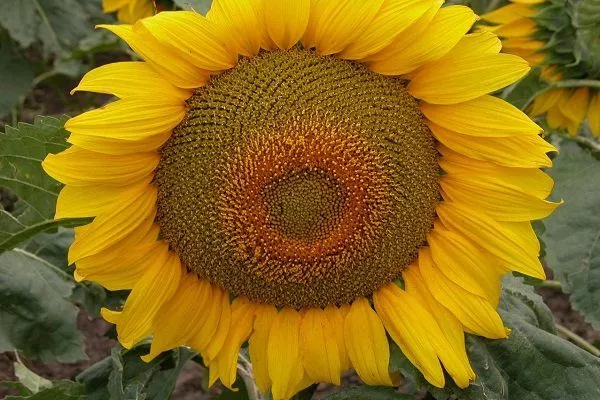
Recommended regions for cultivation are the North Caucasus, Lower Volga, and West Siberia.
Lakomka is considered the best honey plant. It doesn't require territorial isolation, as the variety is not prone to cross-pollination.
The seeds are large, elongated, black with gray longitudinal stripes along the sides. The plant height is 180-190 cm. The seed head is large (25-30 cm in diameter), flat, and downward-sloping. The seeding rate is 30,000 seeds per hectare.
The variety is resistant to broomrape, sunflower moth and powdery mildew.
Altai
A mid-early (108-112 days) variety developed by Altai breeders from the Poseidon 625 variety. Yields can range from 19 centners per hectare to as high as 39 centners per hectare. Adapted to pesticide-free cultivation. A good honey plant.
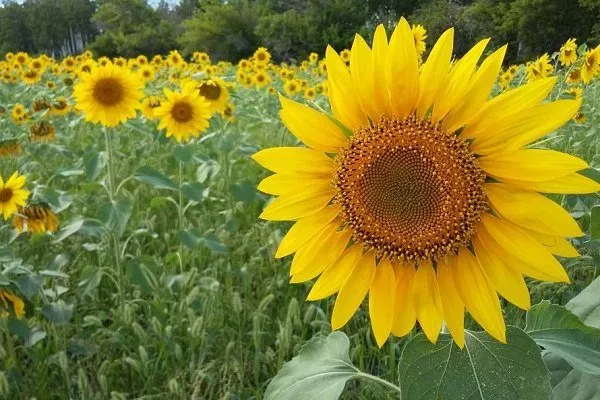
Recommended regions for cultivation are the Urals and West Siberian regions.
Altai seeds are large and long, black, with distinct gray stripes along the edges. The crop's oil content reaches 48%. The plant height is 170-180 cm. The seed head is large (25-30 cm in diameter), slightly convex, and inclined downward. The seeding rate is 35,000 seeds per hectare.
The variety is quite resistant to downy mildew, white rot (caused by Sclerotinia sclerotiorum) and broomrape.
Sunflower hybrids
A hybrid is the result of controlled crossbreeding of sunflower varieties with each other or with wild sunflowers, with the goal of producing new breeding material that would meet the requirements of different climatic zones, produce high yields with maximum oil content, and be resistant to various diseases, parasites, etc.
The emergence of hybrids was due to the fact that in the mid-20th century the range of sunflowers was monotonous and, as a result, more susceptible to diseases and dependent on weather conditions due to genetic uniformity.
Hybrid seeds are not considered planting material, unlike oilseed and confectionery varieties, since the second reproduction completely loses the characteristics inherent in the first.
| Name | Ripening period (days) | Drought resistance | Oil content (%) |
|---|---|---|---|
| Forward | 115-120 | High | 52 |
| Oliver | 108-112 | Average | 49 |
| Rimisol | 110-115 | High | 44 |
| Union | 90-100 | High | 50 |
| Wellox | 112-115 | High | 52 |
| Jason | 110-112 | High | 45 |
| Bosphorus | 100-108 | High | 51 |
| NK Condi | 115 | High | 50-54 |
| Odysseus | 112-116 | High | 52 |
Forward
A drought-resistant, medium-yielding (18-27 centners/ha), mid-season (115-120 days) variety, bred from the VNIIMK 100 sunflower cultivar by Kharkiv scientists. It is easy to grow before the heads are formed and requires nitrogen fertilizers during ripening. Recommended growing region: Central Black Earth Region.
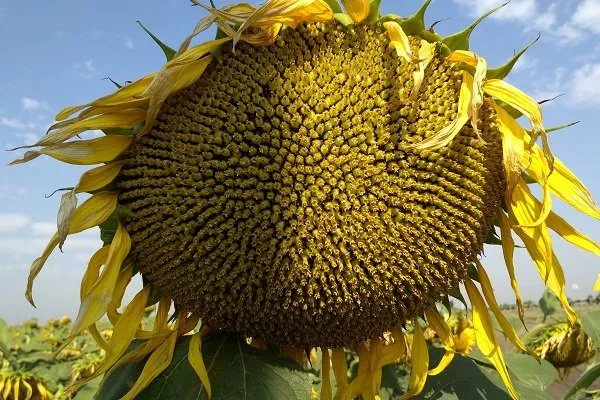
This variety is popular due to its low seed price, resistance to shattering, and the fact that the head tilts toward the ground, preventing birds from damaging the crop. It has a high oil content (up to 52%).
The achenes are medium-sized, narrow, and black, with barely noticeable gray stripes along the edges. The stem height is 170-180 cm. The seed head is small (16-20 cm in diameter), slightly convex, and tilted downward. The seeding rate is 45,000-50,000 seeds per hectare.
Forward is susceptible to infection by new subspecies of broomrape and is fairly resistant to powdery mildew and rot.
Oliver
This sunflower is short (medium) in stature and moderately drought-resistant, with yields of approximately 15-19 centners per hectare, reaching 35 centners per hectare with adequate moisture. Oliver is a mid-early hybrid (108-112 days). It is renowned for its high oleic acid content, which is widely used in industry.
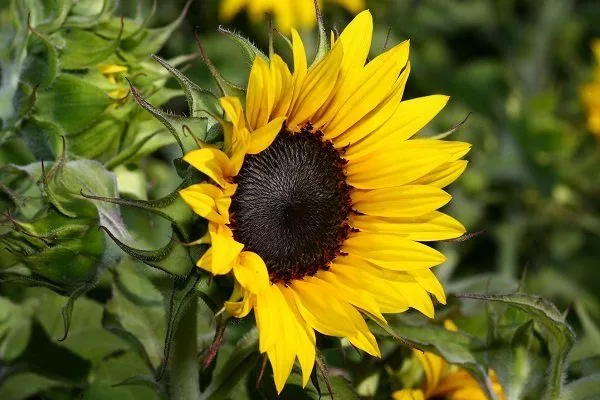
Recommended regions for cultivation are the Lower Volga and North Caucasus.
The seeds are medium-sized, ovoid, black, with gray stripes along the edges. Oil content is approximately 49%. The variety has moderate lodging resistance. Plant height is 160-170 cm. The seed head is small (18-22 cm in diameter), convex, and downward-sloping. Seeding rate is 45,000-50,000 seeds per hectare.
Oliver has strong immunity to rust, rot, phomopsis, septoria, and easily copes with broomrape.
Rimisol
A mid-season (110-115 days) hybrid of Serbian selection, bred using the "Open Field" principle. Yields 21-24 c/ha. Resistant to high temperatures and drought, it has a strong stem, making it less vulnerable to strong winds.
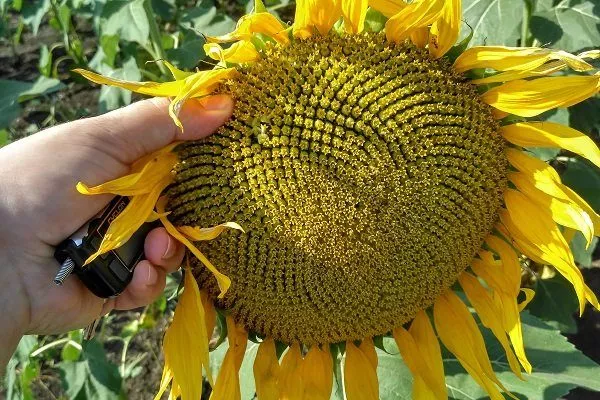
Recommended regions for cultivation are the Central Black Earth, North Caucasus, and Lower Volga regions.
The seeds are wide, oblong, black with gray stripes along the edges. The oil content is 44%. The plant height is 170-180 cm. The seed head is thin, convex, slightly downward-sloping, and small (19-22 cm in diameter). The seeding rate is 55,000-60,000 seeds per hectare.
Rimisol has limited resistance to Phomopsis, rust, and broomrape. The originator claims the hybrid is resistant to imidazolinone herbicides.
Union
A new sunflower hybrid bred in Russia in 2019 with the goal of producing an early-maturing (90-100 day) variety. It is drought-resistant, as well as resistant to powdery mildew and phomopsis.
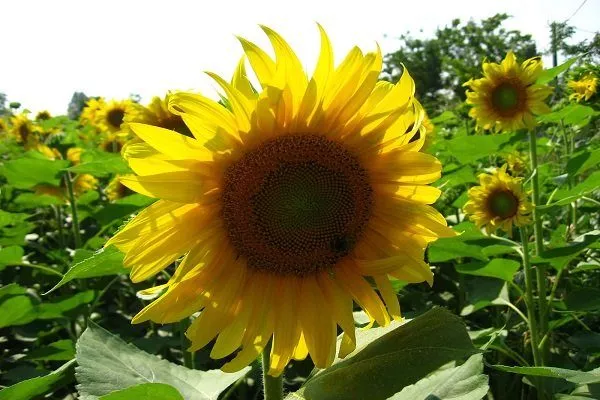
The Soyuz variety boasts high oil content (up to 50%) and good yields (up to 50 centners per hectare), according to the cultivar's manufacturer. The seeds are dense and black. It is a tall variety (stem height 170-190 cm). The seed head is medium-sized, slightly convex, and inclined downward. The seeding rate is 55,000-60,000 seeds per hectare.
This sunflower hybrid has been undergoing variety testing since 2019, and at the time of writing, it has not yet been added to the state register of plants approved for use in Russia.
Wellox
A mid-season hybrid (112-115 days) developed by French breeders. It has good oil content (up to 52%). Average yield is up to 22 centners per hectare (yields up to 47 centners per hectare have been recorded).
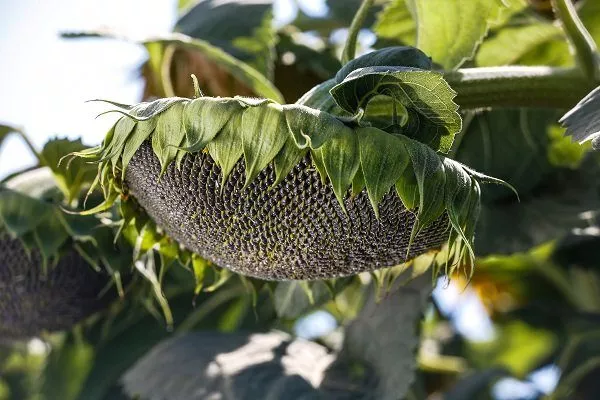
Recommended regions for cultivation are the Central Black Earth, North Caucasus, Middle Volga, Lower Volga, West Siberian, and Ural regions.
The seeds are small, dense, oval, and black, with faint gray stripes along the edges. The plant height is up to 170 cm. The hybrid is resistant to lodging and shattering. The seed head is medium (20-22 cm in diameter), convex, and downward-sloping. The seeding rate is 55,000-60,000 seeds per hectare.
Wellox is resistant to phomopsis, rust, white rot.
Jason
This mid-early hybrid (110-112 days) was developed by Kharkiv breeders. It is resistant to both cold and extreme heat and drought, and is characterized by rapid growth, which is an advantage for hot, arid regions. The recommended growing region is the Central Black Earth Region.
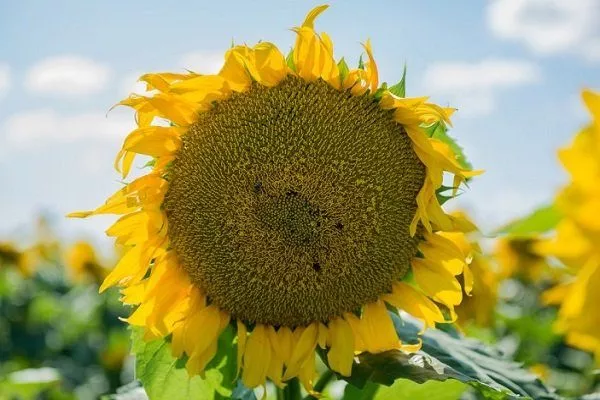
The average oil content is 45%. Yields, depending on irrigation, range from 30 to 47 centners per hectare. There is a risk of stem lodging, so repeated nitrogen fertilizer applications are not recommended.
The seeds are medium-sized, dense, wide, oval-shaped, and black with stripes along the edges. The plant height is 175-180 cm. The seed head is medium-sized (18-24 cm in diameter), convex, and downward-sloping. The seeding rate is 50,000-60,000 seeds per hectare.
Jason is resistant to broomrape, root rot, and rust.
Bosphorus
An early-ripening hybrid (100-108 days), developed by Swiss breeders for cultivation in arid steppe conditions. Recommended growing region: Lower Volga.
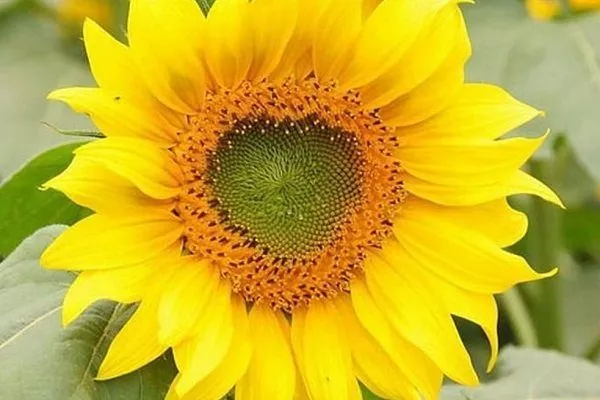
It is popular due to its high yield without much intervention, as this hybrid doesn't require constant fertilization, unlike other oilseed varieties, and doesn't require abundant irrigation. The average yield is 22 centners per hectare, with an oil content of 51%.
The seeds are medium-sized, narrow, ovoid, and black, with bright gray stripes along the edges. The plant height is 150-160 cm. The seed head is small (20-24 cm in diameter), slightly convex, and tilted downward. The seeding rate is 40,000-50,000 seeds per hectare.
The hybrid is resistant to broomrape, but has minimal immunity to various fungi, so it is advisable to treat the soil with fungicides before sowing.
NK Condi
Mid-season (about 115 days), high-oil content (50-54%), high-yielding (30-43 c/ha) hybrid, bred by Swiss breeders.
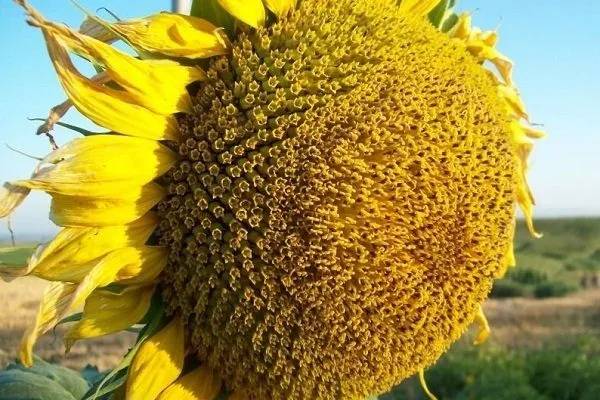
Recommended regions for cultivation are the Central Black Earth, North Caucasus, Middle Volga, and Lower Volga regions.
The seeds are elongated, oval, black, lightly pubescent, and streaked with gray. The plant height is 165-170 cm. The seed head is large, convex, and slightly downward-sloping. The seeding rate is 45,000-50,000 seeds per hectare.
This hybrid is susceptible to attack by aggressive races of broomrape and is resistant to phomopsis, phomosis and white rot.
Odysseus
A hybrid developed by Ukrainian and Hungarian breeders. It is mid-season (112-116 days), has high drought and lodging resistance, yield potential of up to 50 c/ha, and oil content of up to 52%.
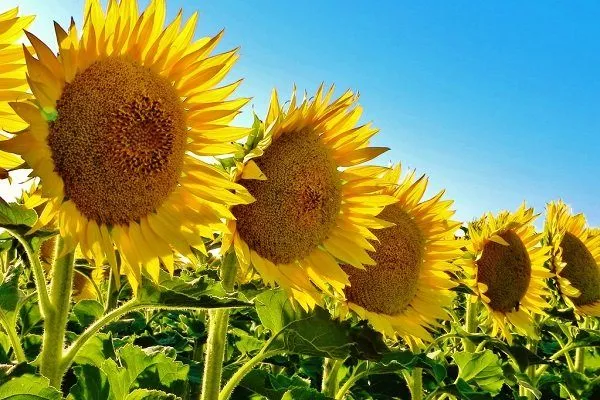
Recommended regions for cultivation are the Central Black Earth, North Caucasus, Middle Volga, and Lower Volga regions.
The seeds are black and large, resembling confectionery varieties. The plant height is 170-190 cm. The seed head is medium-sized (22-23 cm in diameter), convex, and downward-sloping. The seeding rate is 60,000-70,000 seeds per hectare.
Odysseus is resistant to diseases: rot, as well as to most races of broomrape.
Once you've selected a variety, you need to treat and cure the seeds. Adherence to this procedure is the key to a high yield and a decent profit for the farmer.