
To sow sunflowers in open ground, high-quality seeds are selected: they are calibrated by size, and damaged kernels are discarded. They are then treated for diseases and pests, and treated with seed dressings to improve germination. But successful cultivation depends on more than just following these rules. Proper care is also essential, otherwise the harvest will be meager.
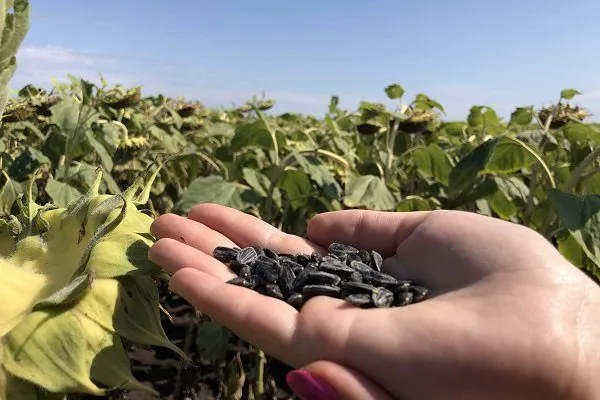
Selecting seeds and preparing them for sowing
| Name | Ripening period | Disease resistance | Oil content |
|---|---|---|---|
| Early ripening | 80 days | High | 45-50% |
| Mid-season | 90-110 days | Average | 50-55% |
| Mid-late | 120-130 days | Low | 55-60% |
- ✓ Testing for the presence of genetic markers of disease resistance.
- ✓ Evaluation of germination energy in laboratory conditions to determine potential germination.
Seed material is classified according to ripening time:
- early ripening;
- mid-season;
- mid-late.
Often, several varieties are grown simultaneously in fields. This allows for an even harvest.
When choosing seeds for planting, farmers also consider the following factors:
- germination rate;
- purity of the variety (for industrial cultivation, material with an indicator of at least 98% is used);
- humidity up to 10%.
The yield of domestically and imported seeds is approximately the same. The only difference is that imported seed is more expensive.
Before sowing, the seeds are sorted. High-quality, large seeds are selected, and broken, hulled, and small kernels are discarded. Next, the seeds are soaked in a manganese solution for 24 hours before planting. This procedure prevents disease and reduces the risk of pest attacks. If you purchase prepared seedlings treated with a film-forming compound, this step is not necessary.
Favorable and unfavorable days for sowing
Depending on the growing region, sunflowers are sown outdoors between March and June. The appropriate time for sowing sunflowers is determined by taking into account climate conditions and the position of the moon, as the moon affects crop growth. All sowing work is recommended to be carried out when the moon is waxing.
Avoid planting during the new or full moon, as plant growth will be slow. Days when the celestial body is in its waning phase are also considered unfavorable for planting.
Adhering to the dates specified in the sowing calendar is not enough. When planting, you must consider seeding rates, maintain proper row spacing, and properly cultivate the soil and seeds.
Crop rotation
It's important to follow crop rotation rules to prevent plant diseases. Sunflowers should not be planted before or after the following crops:
- spring and winter rape;
- mustard;
- cabbage and radish;
- soybeans;
- legumes;
- oilseed plants;
- potato.
Ideally, sunflowers should be planted in a field every six years. This practice reduces the risk of developing white and gray mold, sclerotinia, and phoma.
Optimal predecessors and successors for sunflowers are winter and spring cereal crops. Wheat, barley, corn, rye, and rice can be sown in the fields.
Sowing in open ground
The plant is undemanding when it comes to growing conditions. It can easily tolerate short-term temperature drops even after germination. Sunflowers thrive in arid conditions because their root system can extract moisture from the soil at depths of up to 2 meters, so they don't have any special growing conditions.
- ✓ Soil temperature not lower than +10°C at a depth of 10 cm to ensure good germination.
- ✓ No weeds within a 30 cm radius of the plant to minimize competition for resources.
However, to ensure successful cultivation and a good harvest, it is important to adhere to the basic sowing rules.
Timing and conditions for sowing depending on the type of sunflower
In central Russia, sunflower seeds are sown outdoors in late April. In Siberia and the Urals, the sowing period is pushed back to early May, waiting for the soil to warm to a comfortable 8–12 degrees Celsius.
When planning sowing, take into account the ripening time of the crop (that is, the period of time that must pass from sowing to harvesting). Early-ripening varieties are ready for harvesting 80 days after sowing. Mid-season varieties require 90-110 days, and late varieties 120-130 days. It's important to harvest before the first frost.
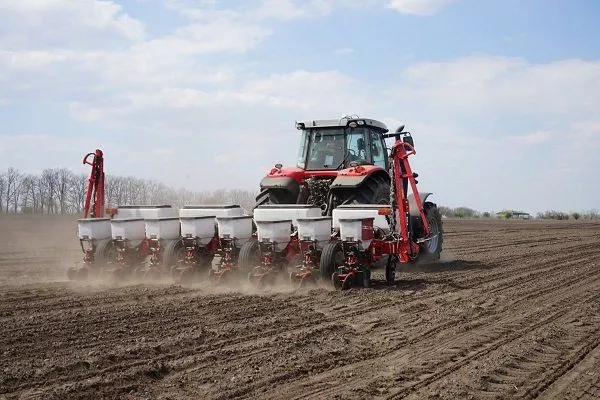
Some adjustments should also be made for the plant's appearance. Oilseed varieties are less demanding of growing conditions than confectionery varieties, so they can be sown earlier, without waiting for the topsoil to warm. Confectionery sunflower seeds germinate less well when sown early, so plantings tend to be sparse because some of the seeds die before they can take root.
Pre-sowing soil cultivation
Before sowing, the stubble is ploughed to a depth of 6-10 cm. This will help eliminate weeds.
Mineral fertilizers help improve conditions for crop growth and development. Humus and manure are added to the soil during spring plowing. This additional enrichment of the soil with nutrients helps increase yields.
Seeding rates
Sowing rates are determined depending on the planned seedling density:
- when grown for silage, the rate is 25-40 kg/ha;
- with wide-row sowing the volume is reduced to 15-20 kg/ha;
- when grown for seed, the rate is 6-14 kg/ha.
When applying herbicides to the soil, the sowing volume is increased by 15-20%.
Sowing depths vary depending on soil temperature and moisture, the size of the seedlings, and the rate of germination. Ideally, plant 2-3 seeds per hole. For small-seeded plants, plant the seeds 4-5 cm deep, while larger seeds should be planted 8 cm deep. Planting seeds 10 cm or deeper is not recommended, as this will reduce germination.
Sowing methods
| Name | Sowing depth | Distance between plants | Moisture requirements |
|---|---|---|---|
| Wide-row | 4-5 cm | 25-80 cm | Average |
| Square-nested | 8 cm | 70 cm | Low |
| Dotted | 4-5 cm | 30 cm | High |
There are three popular methods of sowing sunflowers in the field: wide-row, dotted and square-nest:
- Wide-row. Seeds are sown in rows, with row spacings ranging from 25 to 80 cm. Agronomists recommend minimizing the distance between plantings to conserve usable space. Also, if sown too sparsely, the soil will dry out due to lack of shade, which is dangerous for low-growing varieties and confectionery varieties.
- Square-nested. Sunflower seeds are sown in a 70x70 cm pattern, with the seeds placed at the corners of the square. Wide spacing allows for mechanized plant care.
- Dotted. Sowing is carried out according to a 70*30 cm pattern. The seeds are distributed evenly, at a certain distance from each other.
When growing on an industrial scale, pneumatic seeders are used for sowing in fields. Their use allows for precise spacing between crops and conserves sunflower seeds.
Caring for planted sunflowers
A good harvest can be achieved with proper and comprehensive plant care. To ensure large oil kernels, the plants need regular feeding, generous watering, and pest control.
Proper watering
In areas with poor natural moisture, sunflower yields will be low without supplemental irrigation. Insufficient moisture reduces the yield per hectare by approximately 1 ton.
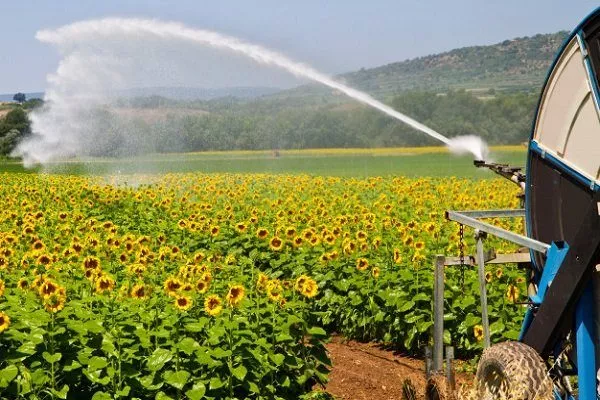
Irrigation is especially necessary during flowering and seed formation. Research shows that during this period, soil moisture should be maintained between 60 and 70%. These levels are also important to maintain during the active growing season—20 days before and after flowering.
The recommended water consumption rate for irrigation is 1,200 cubic meters per hectare. Depending on soil and weather conditions, sunflower fields are watered 4-5 times during the growing season.
Watering timing is linked to the plant's developmental stages. Optimal soil moisture is achieved during the following periods:
- before the formation of inflorescence rudiments;
- at the beginning of basket formation;
- at the beginning of flowering;
- at the moment of seed filling.
Additional moisture during this time is essential for a high-quality harvest. If the summer is rainy, sunflowers are watered only when the soil moisture level drops below 60%.
Fertilizer table
Fertilizers must be added to the soil in the fall (before plowing), in the spring (before sowing) and in the rows between plantings during sowing.
It is recommended to apply fertilizers in accordance with the rules described in the table:
| Substance used | Period of contribution | How to use? |
| Nitrogen | It is used during the early stages of germination. The crop then uses up the accumulated minerals that have formed in its tissues. | Used in dry form and as solutions.
Norm: 30 kg/ha. |
| Potassium | During the period of active growth. | The substance is applied foliarly.
Potassium chloride, potassium nitrate, and potassium sulfate are used. The application rate is 20 kg/ha. |
| Bor | After the formation of 3-4 pairs of leaves and before flowering. | Apply 1-2 kg/ha foliarly. |
Exceeding the recommended doses is not recommended. Large amounts of fertilizer will not increase yield. High nitrogen concentrations will increase vegetative growth and lead to a decrease in seed oil content.
Sunflower diseases
Sunflowers are immune to many diseases and are rarely attacked by pests. Birds, which peck the seeds from the flowers, cause the most damage to crops.
The list of diseases that can affect sunflowers includes:
- White rot. The disease affects the root collar and stem, causing water-soaked, brown spots to form.
- Downy mildew. The stem becomes thinner, the internodes shorten, and a white coating forms on the stem and leaves.
- Gray rot. The above-ground part turns brown and becomes covered with a fluffy coating. Oily spots form on the underside of the inflorescence. The kernel shell becomes loose and takes on a marbled hue.
- Rust. Spotted rusty spots appear on young leaves.
- Verticillium wilt. Leaves lose turgor, become pale, and rapidly dry out. The disease affects all parts of the plant.
- Dry rot of baskets. Brown spots, softened underneath, form on the inflorescences. The achenes stick together, remain underdeveloped, and taste bitter.
- Bacterial burn. The lower part of the stem turns brown and then dies.
To combat these diseases, fungicides are used. Affected plants and adjacent crops are disposed of immediately to prevent the disease from spreading throughout the area.
Treating planting material at the pre-sowing stage helps increase sunflower resistance to diseases and pests.
You can also learn how to properly sow sunflowers in the following video:
Sowing is carried out at specific times, taking into account climatic conditions and the lunar calendar. After the seedlings emerge, they are tended, watered, and fertilized. If basic guidelines are followed, a massive harvest can be harvested in late summer or early fall.