
The Vulcan sunflower is a promising variety, attracting the attention of farmers and agronomists due to its excellent varietal characteristics. It stands out for its high yield, drought resistance, and excellent oil content. To achieve the best results in its cultivation, it is important to provide the crop with timely care.
History of selection
It was bred in 2002 by breeders Zh. M. Mukhina and A. V. Vasiliev from the company OOO Agroplazma. In 2005, it was included in the State Register.
Description of the Vulcan sunflower
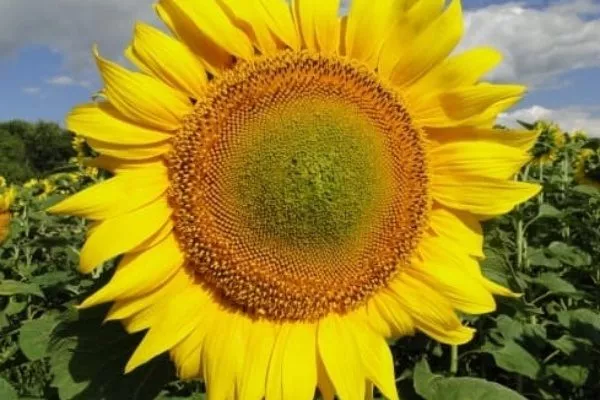
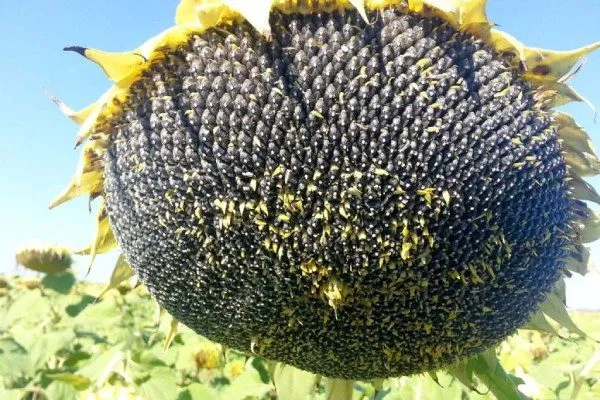
The plant reaches a height of 160 to 180 cm. Branching is absent. The leaves are heart-shaped and green. The flowerhead is medium-sized, with a convex seed surface, half tilted downward. The flowers are yellow.
Characteristics
This variety boasts a high oil content, reaching 48.1%. It is drought-resistant and thrives in a variety of climates. It is suitable for cultivation in the North Caucasus region.
For Vulcan, a mid-early variety, harvesting typically occurs in late August or early September, depending on the specific climate conditions of the region. It's important to harvest promptly to avoid losses due to seed fall or damage by birds and pests.
Productivity by region
The average crop yield is 21.9 centners per hectare. The table provides the exact data:
| Region | Yield (c/ha) | District |
| Krasnodar Krai | 37.4 | Otradnensky |
| 34.0 | Korenovsky | |
| 35.2 | Ust-Labinsky | |
| Stavropol Krai | 32.4 | Kirovsky |
| 33.1 | Krasnogvardeisky | |
| Oryol Oblast | 22.1 | Maloarkhangelsk |
| Ryazan Oblast | 26.4 | Pronsky |
| Penza Oblast | 29.5 | Kolyshleysky |
| Voronezh Oblast | 35.5 | Talovsky |
| 24.0 | Bobrovsky | |
| Rostov Oblast | 32.9 | Konstantinovsky |
| 30.6 | Tselinsky | |
| 30.0 | Neklinovsky | |
| 29.6 | Neklinovsky |
Growing and care
Sunflowers require careful soil preparation, proper seed selection, and adherence to agricultural practices. It's important to consider the region's climate and soil composition and monitor the plants' health throughout the growing season.
Step-by-step instructions:
- Choose a sunny location with well-drained soil. The plant prefers black soil, loam, and light sandy loam.
- In autumn, carry out deep plowing to a depth of 25-30 cm. In spring, carry out pre-sowing cultivation to a depth of 5-7 cm.
- Check the seeds for germination.
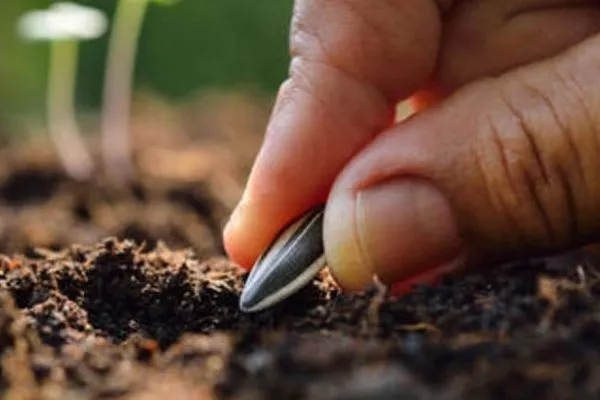
- Sowing should be carried out when the soil warms up to 10-12°C at a depth of 5 cm. The optimal seeding depth is 5-8 cm.
- ✓ Laboratory germination must be at least 92% for elite seeds
- ✓ Germination energy is at least 85% after 3 days of soaking
- ✓ Seed moisture before sowing is 12-14% for optimal storage
- ✓ No mechanical damage to the shell in more than 2% of seeds
Follow the care measures:
- Watering. Sunflowers are drought-tolerant, but to achieve a high yield, regular watering is necessary during bud formation and flowering. In arid regions, use drip irrigation.
- Top dressing. Before sowing, apply nitrogen, phosphorus, and potassium fertilizers. During the growing season, feed the plants with nitrogen and potassium, especially during the flowering stage.
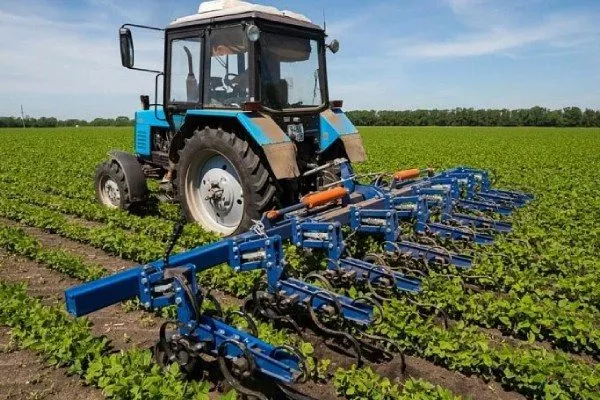
- Weeding and loosening. Weed regularly, especially during the early stages of sunflower growth. Loosen the soil to improve aeration of the root system.
- Protection from pests and diseases. Apply preventative insecticides and fungicides. Inspect plants for pests and signs of disease.
- 14 days before sowing, treat seeds with a seed dressing based on fludioxonil (2 l/t)
- Phase 4-6 leaves - preventive treatment with a fungicide against Phomopsis
- Beginning of flowering - foliar feeding with boron (150 g/ha) to improve pollination
- Seed filling phase - control of gray mold at humidity above 80%
Advantages and disadvantages
Reviews
The Vulcan sunflower is an excellent choice for both experienced and novice growers. This crop offers numerous advantages, including the ability to grow without irrigation, yielding excellent results. Proper care and minimal attention will produce plants with strong immunity and excellent quality.