
The Lakomka sunflower is a crop that attracts attention with its abundant harvest and delicious seeds. It is characterized by disease resistance, uniform flowering and ripening, and successful thriving. These qualities make it an ideal choice for growing in a variety of locations. Proper care is essential.
Who developed the variety and when?
The variety's creation was the result of the collaborative work of a group of breeders. This team included S. G. Borodin, V. N. Surovikin, V. P. Ipatovsky, A. A. Detsyna, and S. K. Pigrova. The breeding work was completed in 1997, and official approval for cultivation was granted in 2000.
Peculiarities
Sunflower Lakomka is a Russian annual variety intended for confectionery purposes, the seeds of which are widely used in cooking (read about the best types of the crop Here). The bright inflorescences hold up well when cut. Although this variety is unpretentious, it still requires some care.
Description of the appearance of the culture
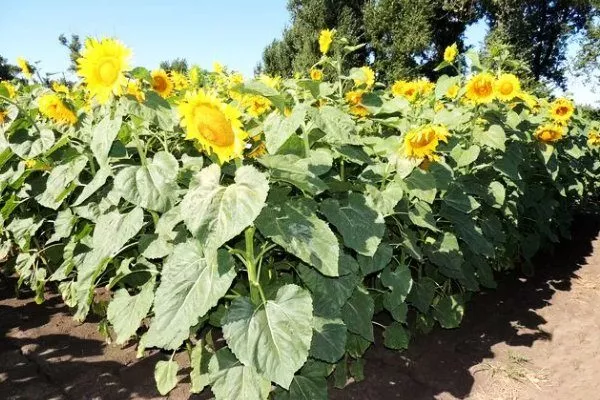
This tall plant reaches 1.5-1.7 m in height and is unbranched. Distinguishing features of the plant include:
- Leaves - Medium-sized, heart-shaped, green, with little or no blistering. The edges are moderately serrated, with irregular teeth.
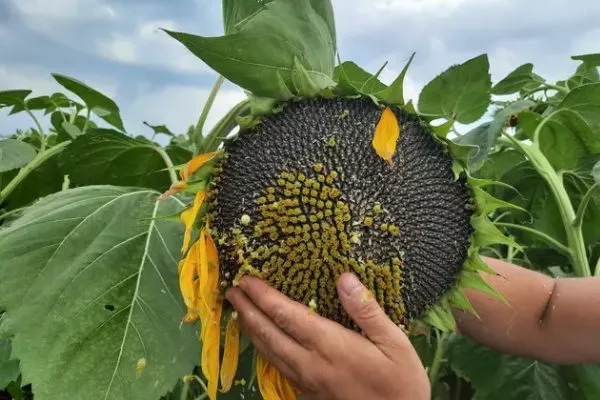
- Inflorescences – yellow in color with a large basket, the seed side is flat, the basket is tilted downwards.
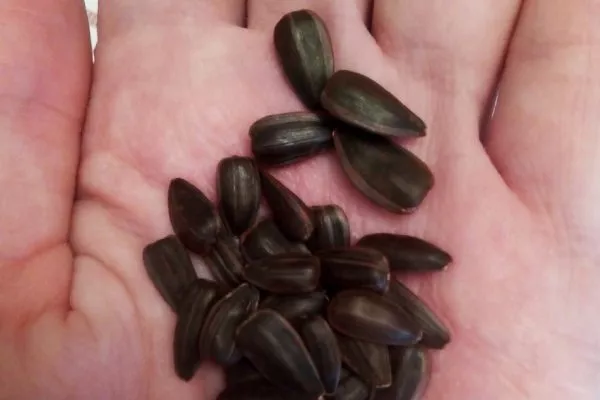
- Seeds – large, smooth, oval-elongated, black in color with gray stripes on the sides and edges, well executed.
Taste characteristics and application
Sunflower kernels have a distinctive flavor. They are rich in thiamine, iron, potassium, zinc, and vitamin E. Their oil content is up to 50%, and their protein content is approximately 17.2%. Peeled kernels are used in salads, confectionery, and as breading.
Ripening time and yield
Lakomka is a mid-early variety, with the time from germination to harvest taking approximately 65-71 days. The kernels ripen uniformly, providing a high yield of up to 22.2 centners per hectare.
Necessary climatic conditions
The crop is recommended for cultivation in Western Siberia, the North Caucasus, and the Lower Volga region. It can be grown in other regions as well, but in such cases, special care will be required, taking into account local climatic conditions.
Resistance to diseases and pests
Lakomka is highly resistant to sunflower moth and downy mildew. It exhibits moderate resistance to broomrape, phomopsis, and other common pests. diseases.
To protect crops from diseases and pests, follow these steps:
- Practice crop rotation.
- Carry out mandatory seed treatment with fungicides and insecticides before sowing.
- Observe the timing and sowing pattern.
- Remove weeds from the area regularly.
- Perform preventative treatments with fungicides and insecticides.
- Remove plant debris after harvest.
- In autumn, perform deep plowing or digging of the soil.
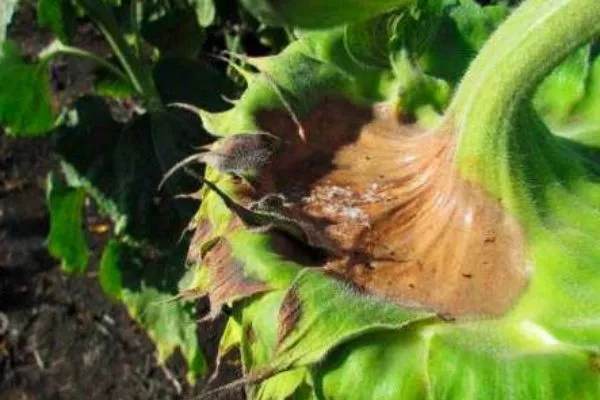
If signs of fungal diseases appear, apply systemic fungicide solutions, such as Apron or Kruizer. Stop treatment at least one month before harvest. Viral diseases are incurable, so remove and destroy any plants affected by mosaic immediately.
Treating seeds with insecticides before sowing protects seedlings from pests for 5-7 weeks, but then it is necessary to periodically carry out preventative spraying of sunflowers with solutions of broad-spectrum insecticides and acaricides: Zalp, Akarin, Actellik or Agravertin.
Subtleties of planting
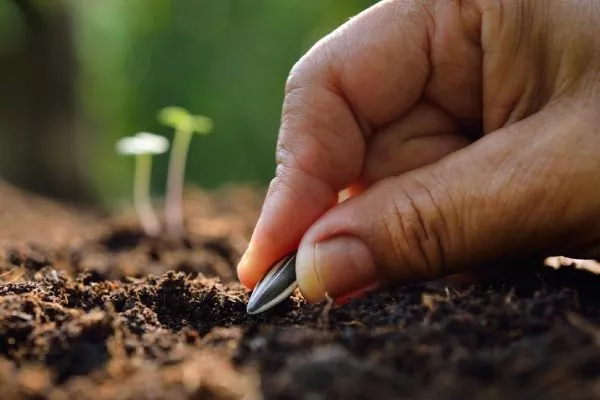
Sow Lakomka sunflower seeds outdoors when the soil temperature reaches 10–12°C. This usually occurs in April or May. Plant in sunny areas with fertile, well-drained, neutral soil. Plant the seeds 1.5–2 cm deep, spacing them in a 50×100 cm pattern.
- ✓ Soil pH should be between 6.0-7.5 for optimal growth.
- ✓ The depth of the fertile layer is not less than 30 cm.
Avoid growing crops in the same spot for several years in a row. Take a break for 3-4 years to allow the soil to recover its properties. Tomatoes and legumes are poor predecessors, while barley, castor beans, wheat, and silage corn are good ones.
Care and cultivation
Avoid overwatering the soil or allowing moisture to stagnate around the roots, as these conditions can cause the sunflower to become diseased and die. Follow these recommendations:
- Water as needed. It's especially important to keep the plant moist until four pairs of leaves have formed. The next phase of increased moisture needs occurs during inflorescence formation, followed by flowering and seed formation.
- When watering, it's not just the frequency that's important, but also the depth of soil penetration at the root level. During the summer months, especially in hot weather, daily watering is recommended.

- In case of dry weather, it may be necessary to increase the frequency to two or even three times a day, as the crop is very thirsty for moisture.
- Periodically clear the area of weeds and loosen the soil. The plant is undemanding regarding humidity levels.
- After the formation of the third pair of leaves, fertilization is required due to its high nutrient requirements:
- Apply 20-40 g of Superphosphate per 1 sq. m, evenly spreading the dry fertilizer over the soil surface.
- The granules are introduced into the soil to a depth of 10 cm, after which the soil is watered.
- When sunflower heads begin to form, apply a potassium-nitrogen fertilizer to the soil. To do this, add 20 g of potassium sulfate to 10 liters of mullein solution.
- During the seed ripening period, fertilize the plants with the same composition.
- ✓ Pale leaves may indicate a nitrogen deficiency.
- ✓ A purple tint to the leaves indicates a phosphorus deficiency.
Advantages and disadvantages
Before planting a crop, study its positive and negative qualities. Pros:
Cons:
Reviews
The Lakomka sunflower variety has earned recognition among farmers for its high yields, excellent taste, and reliable disease resistance. While the crop requires little attention, it does require basic agricultural practices, as this is crucial to the quality of the produce.