
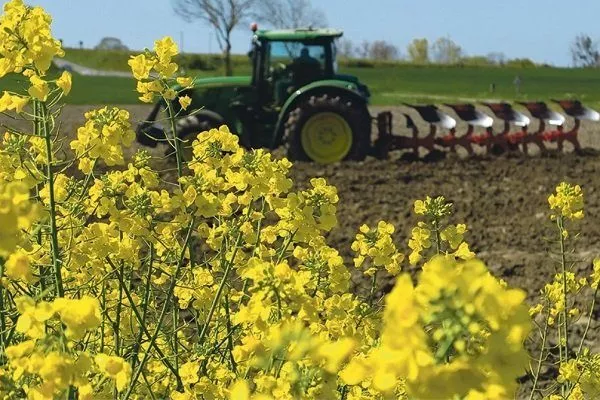
Winter rapeseed is a herbaceous plant with bright yellow flowers grown worldwide for both industrial and food purposes. It is the most widely grown oilseed crop. Learn how to plant and grow rapeseed, harvest it, and store it.
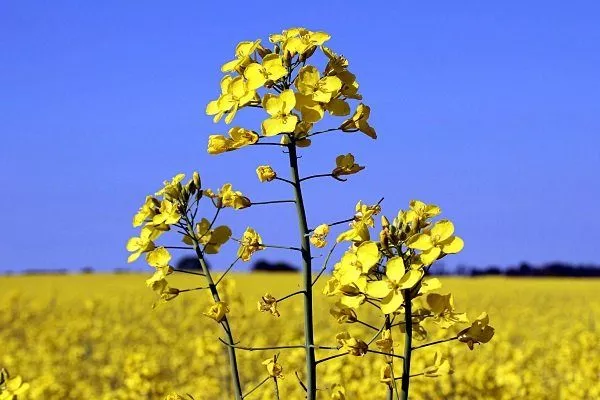
Characteristics and description of rapeseed
Rapeseed is a cultivated hybrid of rapeseed and cabbage, containing virtually all the chromosomes of both parent plants. It is unique in that botanists know little about it and it is not found in the wild.
Brief description:
- Root system. A vigorous, spindle-shaped plant. The main root reaches 3 m in length. The roots effectively structure the soil and actively absorb phosphorus.
- Stem. Erect and branched. Height: 1-2 m. Color: light green with a waxy coating.
- Leaves. The upper and lower leaves differ in shape. They are lanceolate and lyrate, respectively. The leaves are covered with a waxy coating.
- Inflorescences. These are loose, elongated racemes with yellow flowers. A single plant bears up to five hundred flowers, each blooming for three days.
- Fruit. These are straight or curved pods up to 15 cm long. One plant produces up to 300 pods, each containing 20-40 seeds.
- Seeds. Spherical, black or brownish in color, 1,000 seeds weigh only 4-6 g.
Rapeseed is a herbaceous annual crop, represented by winter and spring forms that have no morphological differences. The crop is a light- and moisture-loving plant, tolerates cold well, and is resilient to external influences.
Features of the culture:
- well-developed ability to recover;
- is a partially self-pollinating plant - 20-30% of plants are cross-pollinated;
- propagated by seeds, which remain viable for about 6 years;
- vegetation period – about 320 days for winter crops (for reference, for spring crops it is up to 120 days);
- high need for long daylight hours;
- high soil requirements.
Use of rapeseed
In agriculture, rapeseed is grown as an oilseed crop. Depending on the variety, rapeseed is used for the following purposes:
- Technical. Rapeseed oil is used in the production of fuel, lubricants and drying oil.
- Food. Oil is added to dishes during cooking. The byproducts of the oil are used to make meal and cake, popular pet food. Rapeseed is also used to make silage, haylage, and grass meal.
Rapeseed appeared in Russia in the 19th century. It is now cultivated throughout the world. In China alone, 7 million hectares are devoted to rapeseed.
Rapeseed is also considered an excellent honey plant. Up to 100 kg of honey can be harvested per hectare. Furthermore, rapeseed is an excellent green manure and precursor crop. Grain crops grow particularly well after it. After harvesting, approximately 5,000 kg of roots remain in the field.
Varieties and hybrids
Winter rapeseed is currently available in a wide variety of varieties and hybrids. Below are descriptions of the most popular.
| Name | Growing period (days) | Plant height (m) | Disease resistance | Oil content in seeds (%) |
|---|---|---|---|---|
| Hardy F1 | 300 | 1.5 | High | 40-45 |
| Nelson F1 | 264 | 1.7 | Average | 45-50 |
| Triangel F1 | 264 | 1.5 | High | 40-45 |
| Adriana | 264 | 1.2 | High | 58 |
Hardy F1
Winter rapeseed. A frost-resistant, high-yielding hybrid with a mid-late ripening period. Suitable for late sowing and late harvesting. The growing season is 300 days. Plant height is up to 1.5 m. It does not shatter or lodging. Resistant to pests and diseases, especially bacterial wilt, phoma, sclerotinia, and blackleg. Seed oil content is 40-45%. Yield is up to 60 c/ha.
Nelson F1
Winter rapeseed. A mid-early hybrid with high cold tolerance. It can produce high yields and has good oil content. It grows well in regions with good moisture. Plant height is up to 1.7 m. Yields up to 60 centners per hectare.
Triangel F1
A mid-early winter hybrid. The pods are medium-sized. The oil content in the seeds is 40-45%. It is distinguished by high winter hardiness. The variety is resistant to shattering and lodging. It produces good yields in a variety of soil and climate conditions. It is drought-resistant. Yields are 45-55 c/ha.
Adriana
A mid-early variety. Plants are medium-sized, with large pods. High oil content – up to 58%. Growing season – 264 days. Plant height – 1.2 m. Not prone to lodging. Resistant to mold, sclerotinia rot, and fungus. Yield – up to 45 c/ha.
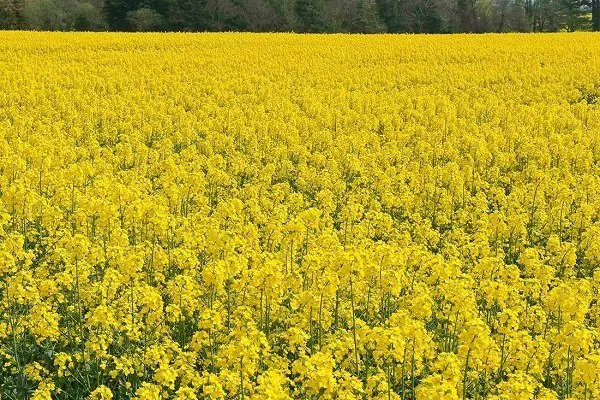
Growing conditions requirements
Rapeseed is a demanding crop, so to obtain high yields, follow a number of procedures and conditions.
Daylight hours and air temperature
Rapeseed is a sun-loving crop that requires good light. If planted too densely, the leaves die prematurely, and the stems become thin and pale. The plant lags in development, producing few lateral branches. In general, rapeseed grows poorly in shade and lodges.
Regarding the optimal ambient temperature, rapeseed is a cold-hardy plant. Other temperature considerations include:
- germination temperature – +1…+3°C;
- withstands frosts down to -18°C (without snow);
- growth stops at +2°C;
- the optimal temperature for growth is +18…+20°C, for seed maturation – +23…+25°C;
- An increase in temperature to +30°C has a negative impact on pollination and crop yield.
Rapeseed grows best where winters are mild and snowy, without sharp temperature fluctuations.
Soil requirements and fertilizer needs
Rapeseed can grow in almost all types of soil, but to obtain high oil content, it requires fertile, loose, water- and air-permeable soils.
Optimal soil characteristics:
- acidity – pH 6-6.5;
- humus – minimum 1.5-2%;
- phosphorus and potassium – 150 mg per 1 kg of soil;
- Soil type: sod-podzolic soil, loam.
- ✓ The optimal depth of the arable layer should be at least 25 cm to ensure sufficient aeration and moisture retention.
- ✓ The organic matter content in the soil should be at least 3% to maintain high biological activity.
Rapeseed grows worst in sandy soils with high groundwater levels. The greater the climate deviation from the norm, the more dependent the yield is on soil characteristics.
Necessary fertilizers:
- Nitrogen. Promotes the formation of green mass. 5-6 kg of nitrogen are applied per 1 centner of product. To obtain a yield of 40 centners per hectare, 150-240 kg of active ingredient (abbreviated as a.i.) are applied.
The best time for application is spring and fall. If necessary, apply in portions, 1-3 times. In fall, the dosage is minimal. If too much nitrogen is applied, the rapeseed will start growing and won't have a chance to survive the winter. In spring, nitrogen is applied in portions: after the snow melts, during the stem and bud formation phase. - Potassium. This element prevents premature leaf death, promotes fertilization, increases seed oil content, and improves immunity and stress resistance. Potassium is applied in the fall during primary tillage. The recommended rate is 4-6 kg per 1 centner of seed.
- Phosphorus. Rapeseed is characterized by its high phosphorus requirements, exceeding those of grain crops. This element is essential for root development, determines seed quality, and enhances frost resistance. To obtain 1 centner of yield, 2.5-3.5 kg of phosphorus is required. Application is recommended in the fall.
In addition to these three components, rapeseed requires other elements. Boron and sulfur are especially important for the crop.
A boron deficiency causes stems to thicken and few seeds to form. A sulfur deficiency results in the absence of pods. Thanks to its powerful roots, the plant extracts all the necessary elements from the earth itself, and foliar feeding is used to address these deficiencies.
Sulfur is applied to the soil along with base fertilizers or during sowing. Granules are scattered directly into the rows. The sulfur application rate is 30-60 kg/ha.
Watering the crop
Winter rapeseed, like all brassicas, thrives on moisture. Irrigation is the most important factor in yield. To achieve a high yield, rapeseed requires 600 to 800 mm of rainfall during the growing season. With 500-600 mm, the yield is satisfactory; with 400 mm, the yield significantly declines.
Moisture requirements vary throughout the growing season. During the first month and a half, watering rates are low, as plants typically have sufficient moisture stored over the winter.
When moisture is insufficient or watering is uneven, the plant produces additional shoots. This leads to crop losses and makes harvesting more difficult.
Watering features:
- high moisture requirement (approximately twice that of grain crops);
- For seeds to germinate, they need 50% of their weight in water;
- excess moisture is also undesirable (it negatively affects seed formation);
- Crops are dying from flooding and an ice crust on the soil surface.
Crop rotation
Rapeseed improves soil looseness and acts as a kind of phytosanitary agent, as it destroys root rot.
Desirable predecessors:
- steam field;
- grain and silage crops.
Unwanted:
- cruciferous;
- beet;
- sunflower.
The interval between growing rapeseed and the above-mentioned crops should be at least four years. Otherwise, rapeseed is susceptible to diseases and pests common to these plants.
Growing wheat, rye and other crops after rapeseed increases their yield by an average of 5 c/ha.
Sowing
Rapeseed is sown in compliance with agricultural standards and regulations. Even the slightest violation of these regulations results in yield losses.
How to prepare the soil?
The cultivation method is selected based on the preceding crop, soil type, its susceptibility to erosion, and the presence of infections. On heavy soils, plowing is used, while on light soils, minimal tillage is used, with soil inversion. Rapeseed is also grown without prior soil cultivation, sowing directly into the stubble.
Features of soil cultivation:
- The main focus is on retaining moisture and minimizing compaction. The subsoil layer must be sufficiently loose.
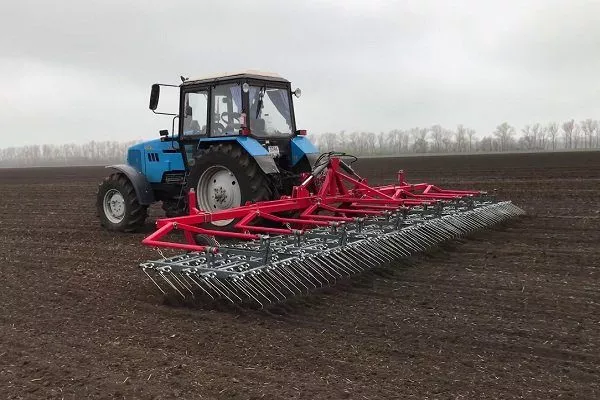
- To plow the field, implements with ring-spur rollers and harrows are used. A week after plowing, the field is cultivated to level the surface. There should be a gap of at least 14 days between plowing and sowing.
- If rapeseed is sown after perennials, disking is used before plowing. Crop sown after grain requires well-cultivated and prepared soil.
- Pre-sowing cultivation is performed using the AKSh-7.2 unit or a combination of a cultivator, harrow, and roller. Pre-sowing cultivation is carried out a day or two before sowing. This creates a loose soil layer. The clods should be small, while at a depth of 2-3 cm, the soil becomes more compact.
Timing and sowing rates
Rapeseed is sown 100 days before the first frost. This sowing time is a couple of weeks ahead of wheat. This allows enough time for the seedlings to develop and establish themselves before the first frost.
Signs of optimally developed rapeseed before the onset of cold weather:
- number of leaves – from 5 to 8 pieces;
- the root collar reaches 7-10 mm in diameter;
- the central shoot should not start to grow (its length does not exceed 2 cm).
- ✓ The presence of a dense rosette of 6-8 leaves, which indicates sufficient accumulation of nutrients.
- ✓ The diameter of the root collar is at least 8 mm, which is an indicator of good preparation for wintering.
If plants are underdeveloped, they have a poor chance of successfully overwintering, as they don't have time to store nutrients. The foundation for future yields begins in the fall, as the number of leaves in the rosette determines the number of lateral branches that form in the spring.
If rapeseed is sown too early, it will overgrow and be damaged by frost. However, it's important not to delay sowing. If there's a risk of the seedlings overgrowing, they should be treated with a special growth regulator.
Sowing parameters:
- The norm is 4-6 kg per 1 ha, with micro-seeding – 2-2.5 kg.
- The seeds are planted to a depth of 2-3 cm. If the soil is dry and light, plant them to a depth of 3-4 cm.
After sowing, the field must be rolled. Hybrids are sown a week later than cultivars, as they grow and develop much faster.
If minimal soil tillage is required, choose hybrids for growing. They produce higher yields with minimal care and develop roots faster.
The following factors influence the sowing rate:
- climate – winter temperatures, amount of precipitation, etc.;
- moisture content, as well as the type and quality characteristics of the soil;
- sowing time;
- soil treatment method.
The more these parameters deviate from the optimal values, the more kilograms of seed are used per hectare of field. For earlier sowing, the seed rate is increased by 10%.
Planting too densely weakens the plants and even causes them to lodge. To successfully survive the winter, rapeseed should be planted at a density of 40-60 plants per square meter for hybrids and 80-100 plants per square meter for cultivars.
Sowing
Rapeseed is grown using the drill seeding method. Standard seeders with a microseeding function are used to sow the crop.
If row seeding is used, the row spacing is 15-30 cm. For seeding, you can use a special SPR-6 seeder or SPU-6/4/6D grain-grass units.
The row spacing is selected taking into account the following factors:
- purpose of crops;
- climate;
- phytosanitary situation;
- methods of weed control.
Narrow row crops increase the risk of fungal attack. Wide rows adversely affect rapeseed cultivation practices. More uniform ripening is observed in fields with narrow rows. Intensive cultivation practices create a track that guides equipment during crop management.
Cultivation technology
Maintaining rapeseed crops requires specialized agricultural equipment, fertilizers, and various chemicals—herbicides, fungicides, and insecticides. The future harvest depends on how well the crop is cared for.
Caring for winter rapeseed crops
Rapeseed is not considered a particularly demanding crop, but to reach its full potential and achieve high yields it does require some care:
- Autumn harrowing is performed in the 4-6 leaf stage. Light and medium harrows are used for cultivation. The speed of the harrows is up to 5 km/h.
- During the second leaf stage, inter-row cultivation is performed. It's important to prevent soil from getting onto the seedlings. To achieve this, special protective devices are installed on cultivators. The speed of movement is up to 7 km/h. If necessary, repeat the cultivation process (before the rows close).
- If an ice crust forms on the field, it is broken up using ring-spur rollers.
- To prevent crops from getting wet, water-draining furrows are made in the field.
What influences the wintering of rapeseed?
To obtain a good rapeseed harvest, it's important to create optimal conditions for its overwintering. This depends largely on climate and weather conditions. However, there are factors farmers can consider to influence the overwintering of winter crops.
How rapeseed survives the winter depends on:
- Selecting a variety. When sowing, choose varieties or hybrids that are suitable for your specific location. They can withstand severe frosts and other adverse conditions throughout the winter.
- Quality of soil preparation. Successful overwintering depends on soil preparation methods. If the soil is well prepared, seedlings emerge quickly, and the central shoots do not stretch.
- Fertilizers applied. Good fertilizing allows seedlings to actively develop before the onset of frost.
- Timing and sowing rates. Both sowing too early and too late have equally negative effects on winter survival. It's important to choose the timing as precisely as possible. Maintaining the seeding rate helps prevent overcrowding.
- Presence/absence of weeds. They have a negative impact on rapeseed crops (they are inhibited in the same way as excessive density).
- Application of growth regulators. Growth regulators with fungicidal properties help to increase cold resistance.
Spring events
In the spring, farmers inspect their crops and assess their condition. Often, the weather is such that even dead seedlings look quite healthy for a long time. If the soil is moist, plants with dead root systems can retain normal color and leaf elasticity.
How to determine in spring whether rapeseed is alive or not:
- Dig up several plants in different locations. It's best to select specimens that are located diagonally across the field.
- Cut each root lengthwise and assess its condition. The cuts should be white, without any brown spots. The condition of the roots is an indicator of how the crops overwintered.
In fields where rapeseed did not survive the winter, the spring variety is sown.
What to do in spring:
- If the crops have successfully overwintered, nitrogen fertilizers are added to the soil and the soil is harrowed across the rows with toothed harrows.
- If the crops are wide-row, the spaces between the rows are cultivated.
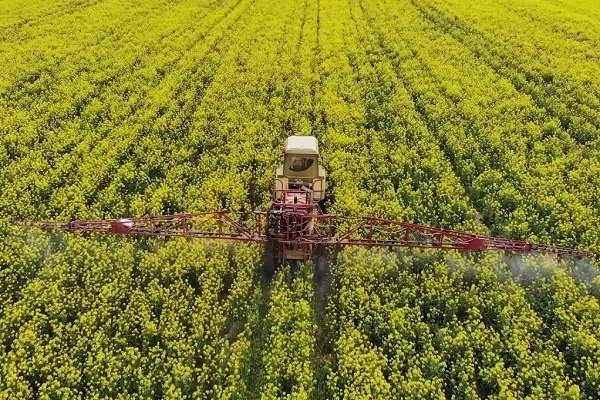
- In spring, weeds are controlled, pests are destroyed, and diseases are prevented by spraying with special agents.
What to do in autumn?
In the fall, important measures are taken that affect plant development and overwintering. The main goal is to control weed growth, which can interfere with the normal development of winter rapeseed and its overwintering.
What to do in autumn:
- In the fall, the crops are treated with herbicides. It's important to suppress weed growth at the initial stage. The rapeseed then takes care of itself. This is especially true for hybrids, as they grow particularly vigorously and quickly.
- By the end of September, the crops are inspected. When developing normally, the plants should have four true leaves. The root collar diameter is 0.4 cm. The color is a rich green, typical of rapeseed.
- If crops develop too quickly, a regulator is added in the fall that slows their growth and increases cold resistance.
Pest control treatments are usually not carried out in the fall, as the seeds are protected with a special solution. If the field is heavily infested with insects, the crops are treated with insecticides, such as Karate Zeon.
Weed control
Rapeseed crops can become overgrown with dodder, couch grass, field poppy, barnyard grass, and other weeds that compete with rapeseed. These weeds are controlled by weeding and herbicides. These measures are generally carried out during the warm season.
How to control weeds:
- In summer, the field where the predecessors grew is treated with Glysol, Roundup, etc. These preparations kill perennial cereal and dicotyledonous weeds.
- Herbicides can be applied before sowing. Treflan or a similar product is incorporated into the soil. It helps control annual grasses and broadleaf weeds.
- After sowing, before the rapeseed emerges, the field is treated with Butisan. It targets the same weeds as the previous product.
- Fusilade Super is used against couch grass in autumn and early spring.
- Lontrel is used for chamomile and sow thistle. It is applied when the plants have 3-4 leaves.
Pests and diseases
There are many pests that damage rapeseed flowers, leaves, and seeds. In spring, the crop is attacked by the rape blossom beetle, and in autumn by flea beetles. Rapeseed can also be attacked by cabbage pod gnats, cabbage aphids, and other pests.
To determine which pest is attacking crops, special cup traps filled with water are placed in the fields.
Pest control products:
- Decis-Extra – 100 ml per 1 ha;
- Karate – 150 ml per 1 ha;
- Sumi-Alpha – 300 ml per 1 ha.
Rapeseed can be affected by:
- phomosis;
- white rot;
- powdery mildew;
- black leg;
- sclerotinia;
- stem rot;
- Alternaria;
- root collar necrosis.
Modern fungicides, such as Impact 25% (at a rate of 500 g per 1 ha), help to cope with diseases.
Cleaning and storage
Rapeseed is harvested using direct combining. Harvesting conditions include uniform ripening, a weed-free environment, and a seed moisture content of no more than 18%. If the field is heavily infested and the pods ripen unevenly, split harvesting is used. This begins under the following conditions:
- after the lower leaves have fallen;
- when the lower pods are lemon-yellow;
- seeds - black or brown;
- seed moisture content – 30%.
The stems are cut at a height of 20-30 cm. The mown plants are laid into windrows using a harvester. A week later, when the seed moisture content is no more than 14%, the windrows are collected and threshed.
Both harvesting methods (direct and separate) are carried out using John Deere, Don1 500 B or similar combines.
Rapeseed is quickly cleaned to prevent spoilage. Cleaning is performed in special equipment. The seeds are then dried, alternating between cold and warm air. The maximum moisture content is 10%. The dried material is sorted.
For storage, rapeseed is placed in bags, which are stacked in piles or on platforms. The maximum stack height is four bags, and the width is up to two bags.
Agrotechnical errors
Despite the simple cultivation technology, inexperienced farmers often make mistakes in agricultural practices, which lead to a decrease in yield and its quality.
Errors and their consequences:
- The soil is poorly prepared. Seedlings emerge unevenly. Plants that grow larger or smaller than normal do not survive the winter.
- The seeds are deeply planted. Seedlings are delayed. They are weak, with elongated root collars. Chances of successful overwintering are low.
- The straw remains of the previous crop are poorly incorporated. When rapeseed sprouts are caught in straw, they stretch out. The plants are weak. Rapeseed sprouts unevenly. The elongated neck reduces the crop's frost resistance.
Crop residues remove water and nitrogen from rapeseed. To ensure straw decomposition, add an additional 1 kg of nitrogen per 100 kg of straw. - The seeding rate has been exceeded. When overcrowded, the plants are weak, elongated, and unable to survive the winter. When spring arrives, they do not branch and have few pods. Rapeseed often lodges.
- Excessive application of nitrogen in the fall. The seedlings are overgrown, fragile, and brittle. They are unable to survive the winter.
- The sowing dates have been violated. The plants emerge weak and don't survive the winter well. Yields decline.
An experienced farmer will share his mistakes when growing rapeseed in the following video:
Contrary to the "anti-rapeseed propaganda" that claims it hopelessly depletes soils, rapeseed is a valuable green manure crop and a source of soil fertility. It improves soil structure, prevents erosion, and increases the yield of subsequent crops. Growing rapeseed is not only profitable but also beneficial to farmland.