
Flax is not only an important agricultural crop used in the textile and pharmaceutical industries, but also a popular ornamental plant. Let's learn about the different types of flax and the specifics of their cultivation.
Description of the plant
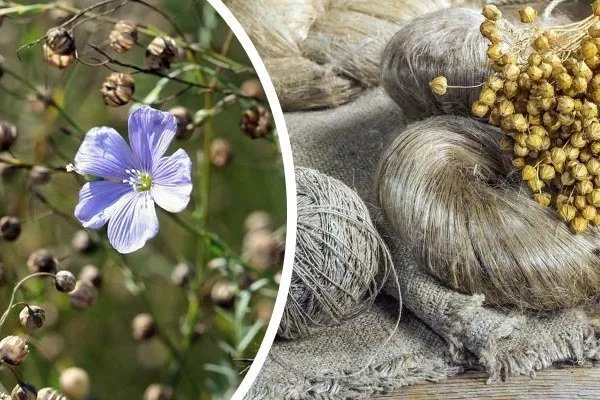
Flax (Linum) is an annual herbaceous plant used for the fabric of the same name. Its delicate blue flowers make it popular among gardeners and it is often used as an ornamental plant.
Characteristics and features of flax (common):
- Stem. Erect, slender, cylindrical. Height: 0.6-1.5 m. Branching at the top. Pale green in color. Has a slight waxy coating.
- Leaves. The leaves are sparsely arranged and spiral. They are 2-3 cm long and 3-4 cm wide. They are acute, sessile, linear or linear-lanceolate in shape. Their color is bluish-green.
- Flowers. Medium or small – 1.5 to 2.4 cm in diameter, with white stamens. The plant produces relatively few flowers. The flowers have long peduncles, and the sepals are 5-6 cm long. The color is light blue or blue, rarely white, pink, or red-violet. Flowering occurs from June to July.
- Fruit. The capsules are flattened to spherical, 6-8 mm long and 6-7 mm in diameter. Inside are 10 oblong, smooth and shiny seeds, 3.3-5 mm long. The color is light brown, dark brown, or greenish-yellow. The seeds ripen in July-August.
Types and varieties of flax
Flax is not only beautiful and useful, but also versatile. There are approximately two hundred species of this plant, of which the most well-known is the perennial blue flax. Depending on the species, flax is used as a fiber or oilseed crop.
Cultivated flax is divided into three groups:
- Flax. This fiber crop is grown for fabric production. The stem of this tall plant contains 20-30% fiber.
- Curly flax. It is grown for its seeds. The plant is low-growing, no taller than 30 cm, with highly branched stems. A single plant produces up to 80 capsules. The seeds are larger than those of the common flax. They contain 47% fat, which is why the common flax is often called oil flax. It is often grown as an ornamental plant. The common flax has very small flowers of varying colors—delicate lilac, lemon, and scarlet. It is a good precursor to winter crops, green fodder, and silage.
- Flax-mezheumok. A species that occupies a cross between the common mulberry and the curly mulberry. It is grown for its oil.
In the wild, creeping flax is a heavily foliated wild plant with blue flowers. It is used for breeding.
There are many subspecies and varieties of flax, including:
- Red. An ornamental annual with graceful stems. Height: up to 50 cm. Flowers are scarlet. Blooming lasts one day; by evening, the flowers fall off, and new ones bloom.
- Perennial blue. A perennial plant growing 60 cm tall with cornflower-blue or white flowers. It blooms in the second year.
- Yellow. A 60 cm tall perennial with large, bright yellow flowers. Grows well in shaded areas and on rocky slopes.
- Clear Dawns. An ornamental annual plant up to 40 cm tall. The flowers are purple, up to 3 cm in diameter.
- Celestial azure. A perennial plant growing up to 80 cm in height. Growing in the same place for years, the plant resembles a blue cloud.
- Northern. A perennial plant up to 35 cm tall, it grows in the northern regions – in the Subpolar and Polar Urals. The flowers are large, blue, with petals 1.8 cm long.
- Large-flowered. An annual plant up to 60 cm tall. Flowers are scarlet, 3 cm in diameter.
- Sunny bunny. A low-growing, easy-to-grow perennial with bright yellow flowers gathered in umbels. It's ideal for growing in flower beds.
Features of cultivation
Flax doesn't require any special growing conditions, so choosing a planting site isn't difficult. This plant will thrive in any conditions, but to get the most out of it, it's best planted in a sunny spot, not shaded by trees or buildings. Growing perennial flax in regions with limited sunshine can be challenging.
The video below will show you how to plant and grow flax in your garden:
Flax grows in all soils, with the exception of marshy soils. It's also advisable to select sites with deep groundwater. Flax is grown from seedlings or by sowing seeds in open ground – the choice depends on the plant species and climate conditions.
Directly into open ground
Flax is grown by direct sowing of seeds into the soil:
- Technical. The crop is grown on a large scale for fiber or oil production. Sowing procedure:
- Before sowing, phosphorus is added to the soil at a rate of 10 kg/ha, carefully leveled and rolled.
- Before sowing seeds, the soil is cultivated and harrowed in two directions.
- The seeds are treated several months before sowing.
- Sowing is carried out in mid-spring, when the soil warms up to 6-8 °C.
- Seeds are sown in narrow rows. The row spacing is 7.5 cm. The optimal sowing depth is 1.5-3 cm.
- Decorative. If the region has a mild and warm climate, flax seeds are planted in open ground without growing seedlings. The soil is fertilized with compost or other organic fertilizer. The seeds are evenly distributed over the area prepared for sowing, without being buried deep. The seeds are carefully sprayed with water, covered with a thin layer of soil, and insulated like ordinary garden flowers.
Sowing begins in spring or fall, when daytime temperatures reach 20°C. Aim for 5 cm spacing between seeds; if planting more densely, thin out the seedlings later. Broadcast sowing produces denser plantings.
It is prohibited to sow flax in open ground on rainy and damp days.
If you plant seeds in the fall, at a depth of 2-3 cm, there's a risk of the plant freezing. Plants planted in the spring, in warm weather, will bloom in the summer; perennials bloom the following year.
From seeds, as seedlings
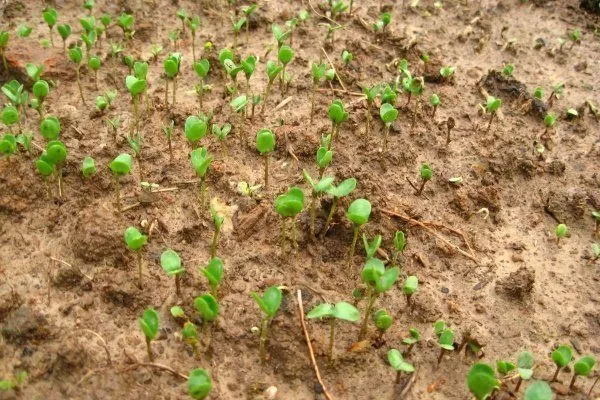
In central Russia, growing flax from seedlings is more effective. They are grown in a warm room. Seedlings emerge 20 days after sowing. Seedlings cannot withstand even short-term frosts, so they are planted after the soil has warmed and temperatures have stabilized. The optimal time for planting seedlings is May to June, depending on the region's climate.
Flax sprouts evenly, but the seedlings are very fragile and sensitive to cold. It's necessary to provide shelter from the cold and wind. Once the plants are established, they will be able to withstand adverse conditions.
The procedure for planting flax seedlings:
- Digging up the soil. Laying a 10 cm layer of crushed stone or sand for drainage.
- Distribution of humus over the surface of the area.
- Adding mineral fertilizers – potassium sulfate or superphosphate.
- Planting seedlings with an interval of 5 cm between bushes.
It's best to plant seedlings in groups—without support, the plants will bend toward the ground. Later, if necessary, the plants can be replanted, but flax does not tolerate this procedure well.
Flax propagation
The flax propagation method depends on the plant type—annual and perennial species have their own preferences. The following propagation methods are distinguished:
- Seeds. The best time to plant flax is spring and fall. Perennial varieties can be planted in summer. For more effective planting, seeds are sown in containers and then placed outdoors without replanting. For large-scale flax cultivation, only seed propagation is used.
- Dividing the bush. This method is used for two-year-old flax. In the spring or after flowering, several sections are separated from the plant. The separated sections are planted at 20 cm intervals, watered regularly, and protected from direct sunlight.
Plants grown from seeds are more luxuriant and showy than those grown from seedlings. Perennials can grow in the same place for 4-5 years.
Care
Flax care depends on the species and the purpose for which it is grown. All flax species thrive in full sun, do not tolerate overwatering, and respond well to fertilizer. Decorative and industrial flax each require their own specific care requirements.
To ensure ornamental flax looks luxurious, its blooms should be abundant and as long as possible. To achieve this, the following measures are taken:
- Regular watering is essential, ensuring that water does not stagnate in the soil. Watering frequency depends on the weather, but on average, the plant is watered 1-2 times a week. As autumn approaches, watering becomes less frequent and eventually stops altogether.
- Regular weeding. Weeds detract from the flax's decorative qualities.
- Top dressing with complex fertilizers is carried out twice.
- Treatment against pests and diseases.
Caring for industrial flax involves timely fertilizing and watering. To grow a hundredweight of flax, 400-430 centners of water are required. Water shortages are especially dangerous during budding and flowering, as they lead to a sharp decline in yield. During this period, flax also requires nutrients, so farmers fertilize it.
What kind of soil does flax prefer?
Flax grows best in loamy soils—medium to light, silty ones. The optimal soil type is loamy soil with a deep topsoil, slightly acidic reaction, and a lumpy structure.
- ✓ Optimum soil pH for flax: 6.0-6.5.
- ✓ The depth of the arable layer should be at least 20 cm to ensure sufficient aeration of the roots.
Light sandy loam soil is undesirable, especially with sandy subsoils, as flax suffers from moisture shortages. Flax also grows poorly in clay soils, as they compact and form a dense crust after precipitation.
Temperature
For flax of any purpose—technical or decorative, spinning or oilseed—the optimal temperature is 20°C. However, being a cold-resistant plant, flax thrives at lower temperatures, down to +12°C.
Top dressing
Flax doesn't require regular or abundant feeding. All the plant needs is:
- Pre-sowing application of organic fertilizer in combination with potassium fertilizers.
- During the period of active growth, complex mineral fertilizers are applied.
- Before flowering, apply the second fertilizer of the season.
- Before sowing, apply organic fertilizer at a rate of 5 kg per 10 sq.m.
- During the period of active growth (3-4 weeks after germination), apply complex mineral fertilizer.
- Before flowering, apply a second fertilizer with a complex fertilizer with a high potassium content.
Decorative flax is fed with ammonium sulfate, Ammophos, Sudarushka, Kristalon, and Kemira.
Industrial flax crops are fertilized with complex fertilizers containing boron and zinc. Application is made during cultivation at a depth of 10-12 cm. This approach allows for an even distribution of nitrogen, phosphorus, potassium, and micronutrients across the field surface.
Periods of increased need for mineral fertilizers are shown in Table 1.
Table 1
| Fertilizer | Period of increased need |
| Nitrogen | Rapid growth—from the "Christmas tree" stage to budding, when yield increases. Excess nitrogen is dangerous, as it reduces fiber quality and increases the tendency of stems to lodging. |
| Potassium | From the beginning of growth, especially during flowering. Promotes healthy seed formation and improves fiber quality. Potassium deficiency reduces seed pod production. |
| Phosphorus | It is required throughout the growing season. Its presence determines the yield of seeds and fiber. |
Diseases and pests
Flax is known as an easy-to-grow plant. However, despite its modest requirements, flax is just as vulnerable to pests and diseases as other crops. Flax diseases and pests, along with control measures, are listed in Table 2.
Table 2
| Diseases and pests | Symptoms of infection and damage | Control measures |
| Fusarium | First, the plant turns yellow in spots, wilts, and its heads droop. Then the flax turns brown and dies. | Cultivating varieties resistant to fusarium. Crop rotation is practiced—flax is replanted in the field every 6-7 years. Seed treatment is used. Spraying the crops from above with copper oxychloride. |
| Rust | Orange-rusty spots on stems and leaves. Develops during the rainy season. | Sowing within the timeframe specified by agricultural practices. Harvesting at the early yellow stage. Removing field residues. Increased potassium application and minimal nitrogen application. Treatment with copper oxychloride. |
| Polysporosis | Brown spots appear on the basal part of the stem and on the cotyledon leaves. The plant lodges, and the yield decreases. | Use healthy seeds. Seed treatment with Tigam 70% and other preparations. Spraying with copper oxychloride. |
| Anthracnose | It's especially dangerous for seedlings. Rusty-orange spots, ulcers, and constrictions appear. Plants die. | Sowing high-quality seeds. Seed treatment with Granosan and Tigam. Fertilizing plants with potassium fertilizer. Spraying with copper oxychloride. |
| Bacteriosis | The disease usually appears on over-limed soil. | Deep autumn plowing, pre-sowing soil cultivation, application of fertilizers, crop rotation, seed treatment and microelement treatment, spraying with copper oxychloride. |
| Gray mold | Observed during mass lodging and rainy weather. Stems become infected with fungus, developing sclerotia—convex, dark-coated warts. Fiber quality deteriorates. | Adherence to agricultural practices, preventing flax lodging. Reduce nitrogen and increase potassium and phosphorus fertilizer applications, and apply wood ash. Early sowing and early pulling of lodged flax. |
| Mottling of cotyledons | The plant's cotyledons are affected. Brick-red streaks and specks appear on the stem and cotyledon leaves, merging into spots. The plants rot and die. | Seed treatment with Granosan and Vitovax 75%. |
| Pasmo | Affects all parts of the plant. Leaves become spotted. The spots are transparent and yellow-brown. They usually appear before harvesting. | Sowing healthy seeds. Maintaining crop rotation standards. Seed treatment. Spraying crops with benlate. |
| Ascochytosis | A fungal disease that attacks the stem. Fiber quality deteriorates, and seeds lose viability. Cold and damp weather favors the disease. | Cleaning, drying, and timely seed treatment with Tigam. Spraying with copper oxychloride during budding. |
| Flax flea | A small, shiny beetle (up to 2 mm long) black, blue, or dark brown. It attacks the growing tip and cotyledon leaves. Damage increases in hot and dry weather, reducing yield and fiber quality. | Autumn plowing is carried out as early as possible. Spray the edges of the plantings with Decis. This treatment is carried out in sunny weather a day or two before germination. If the pest density is 10-20 individuals per square meter, a general pesticide treatment is carried out. |
| Flax weevil | The beetle is black and 1.9-2.3 mm long. It crawls onto flax from creeping wheatgrass. Larvae are deposited on the upper part of the plant. Flax damaged by the weevil grows and branches slowly, the stem length decreases, and the yield and fiber quality decline. | Post-harvest autumn plowing. Plowing is done to the full depth of the arable layer. The chemicals used are the same as those used for flax flea beetle control. |
| Flax thrips | A dark-brown insect 0.9 mm long. The larvae are yellow and the same length. Adults and larvae destroy crops by sucking the sap from the plant tips. Leaves curl, buds and ovaries fall off, plant growth is poor, and seed yield declines. | Post-harvest autumn plowing. If thrips appear during the growing season, spray with insecticides. |
| The long-legged fly is harmful. | A gray, long-bellied compa. This pest is a larva that damages crops throughout the growing season. It causes significant crop losses. | Spray the crops with 12% decis. This is done in the evening, when the larvae emerge. |
| Flax moth | A small, moth-like butterfly. The forewings are yellowish, the hindwings are gray, and the wingspan is 14-16 mm. The pest is a white-pink caterpillar with a brown head; it eats the seeds in the capsule. | Dusting of crops and spraying with herbicides |
| Gamma owl | A gray or dark-brown butterfly. This pest is a caterpillar that appears on plants during flowering. It can consume an entire plant. | Aerial spraying, chemical treatment. |
| Meadow moth | A small gray butterfly. The pest is a greenish-gray caterpillar with a dark stripe on its back and sparse hairs. It reduces the fiber yield and quality. | Plow the areas where the caterpillars overwinter. Spray with chemicals. |
Combination with other plants
The question of flax's compatibility with other plants is relevant in garden plots where it is used as an ornamental plant. Crops that are similar in growth and growing conditions make good companions for flax.
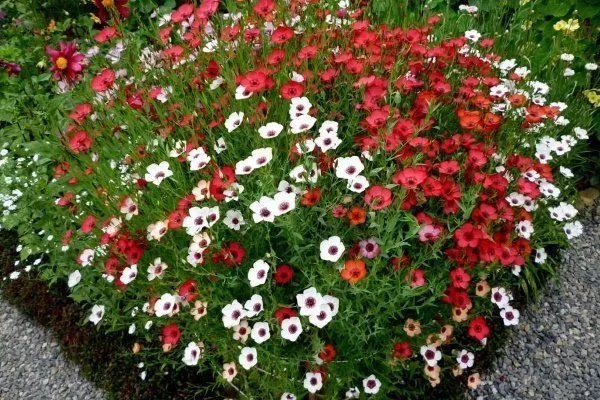
Perennial blue flax is especially popular with gardeners – its rich blue flowers, delicate and light, look harmonious in flowerbed arrangements. They are also planted in borders, mixed borders, and rock gardens.
Flax pairs well with plants that thrive in sun and tolerate drought. Best partners:
- chamomile;
- calendula;
- cornflowers;
- clover.
Harvesting
When growing flax indoors, the seeds—for sowing or other purposes—are collected at the stage of technical maturity. When growing flax for fiber, harvesting occurs when the stem is at its most fibrous.
You can tell it's time to harvest by the color of the boxes:
- Flax grown for yarn is harvested when the fruit reaches early yellow ripeness. Fifty percent of the bolls turn brown or yellow-green, and the other half turn yellow.
- Flax grown for oil is harvested at peak ripeness—the green pods should be no more than 5%. Harvesting typically occurs in August.
The harvesting technology depends on the type of flax:
- Oil flax. Harvesting is done using flax pulverizers and flax harvesters. This equipment pulverizes the flax, strips the seed pods, and loads them into trailers. Flax ripens unevenly. For the equipment to operate smoothly, the stalk moisture content must be above 40%. The optimal harvesting time is when 70-75% of the pods are ripe.
- FlaxHarvesting is carried out using specialized flax harvesting machines, which include a sequence of operations: pulling, combing, tying sheaves, growing sheaves, and collecting the heap. Dry flax is lifted and tied into sheaves at a moisture content of at least 20%.
Flax is a versatile plant that is both a valuable industrial raw material and a beautiful garden ornament. Requiring minimal care, cultivated flax produces high yields of fiber and oil in the fields, while ornamental varieties adorn the garden with luxurious blooms for almost two months of summer.