
Cotton is a heat-loving plant, cultivated primarily in subtropical and tropical climates. To obtain good raw cotton yields, farmers must adhere to numerous agricultural practices and requirements.
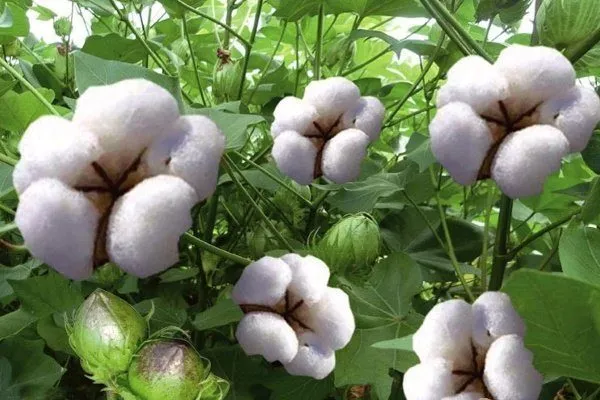
Description of cotton plant
Cotton is a botanical group in the Malvaceae family, comprising approximately 50 species of plants, including woody and herbaceous plants, annuals and perennials. Cotton plants used for textiles are annual or biennial herbaceous plants.
Features of cultivated cotton:
- Root. Taproot system. The root length can reach 3 meters.
- Stem. Branched. Reaches 2 m in height.
- Leaves. They are arranged alternately and attached by petioles. They are lobed, with each leaf having 3 to 5 lobes. They resemble maple leaves.
- Flowers. Yellow, white or red, with 3-5 petals.
When the plant blooms, it's covered in flowers. When the blooming is over, each flower gives way to a unique fruit—a round or oval capsule. Inside this "chest," the cotton seeds ripen.
When the seeds ripen, the capsule splits open, revealing a white fibrous mass containing the plant's seeds. This white mass is called cotton. It consists of short and long hairs. The former are fuzzy, the latter are downy.
Story
People began using the fruits of the cotton plant many centuries ago. This is evidenced by archaeological excavations. Cotton was first used in India. There, archaeologists have found materials and tools used to process cotton raw material.
Somewhat later, cotton began to be grown in Greece and the Middle East. China, Persia, Mexico, and Peru—all of these countries began cultivating cotton several millennia BC.
The English were the first in Europe to produce cotton fabrics. The first cotton processing machines appeared here in the 1770s.
Statistics show that every person on earth consumes 7 kg of cotton annually.
Thanks to technological advances, cotton production has become cheaper, and the range of fabrics has expanded. Cotton products now include dozens of fabrics, including calico, pique, gauze, cambric, poplin, and many others.
What types and varieties are there?
Botanists have long struggled to classify the numerous representatives of the genus Cotton. There are numerous species, and most are highly variable under the influence of external factors. Most importantly, cotton plants cross-pollinate easily, resulting in hybrids.
Today, agriculture uses the following types of cotton:
- Grassy. An annual plant native to Central and Southeast Asia and the Transcaucasus. It is the shortest and most resilient species. It tolerates northward movement better than others. The herbaceous cotton plant produces a coarse, short cotton, also known as woolly cotton.
- Indochinese. A woody perennial plant. It is the tallest species, reaching a height of 6 meters. Unlike other species, it has red flowers, not yellow. However, the cotton it produces is yellow. It is native to tropical regions.
- Peruvian. It produces the longest and highest-quality fiber. Originally a perennial plant, it became an annual after selective breeding. It is grown only in Egypt and on the southeastern coast of the United States.
- Ordinary. It has become the most widespread. It is grown wherever the climate permits. It is an annual plant with white flowers. The fiber it produces is of average quality.
The varieties that have become widespread in Central Asia are Tashkent-6, Andijon-35, Regar-34, Dashoguz-11 and others.
We also recommend watching a story about a breakthrough in agricultural breeding—the development of a new cotton variety:
Growing requirements
When growing cotton, its requirements for the following factors are taken into account:
- Sowing time. Cotton seeds should be sown as early as possible—no later than February. If you delay, the plant will bloom too late, and the bolls will ripen only in late autumn.
- Temperature. All cultivated cotton species are extremely heat-loving. Seed germination begins at temperatures of 10-12°C. The optimal temperature is 25-30°C. The plant dies at frosts of 1-2°C. Death can occur both in the spring, at the beginning of the growing season, and in the fall.
- Moisture. Cotton plants tolerate drought well thanks to their extensive root system. Without moisture, the plant grows, but high yields are out of the question. Cotton plants require irrigation. If there's insufficient moisture, the bolls fall to the ground.
- Light. The plant loves light.
- Soil. Prefers gray soils, alkaline-marsh soils and saline soils.
- Nutrients. The plant is very demanding when it comes to fertilizers. To produce 30-35 centners of raw cotton per hectare, cotton extracts 46 kg of nitrogen, 18 kg of potassium, and 16 kg of phosphorus from the soil.
The growing season for cotton grown in Central Asia is approximately 140 days. The bolls themselves mature on the plant within 50 days.
Crop rotation
The best precursor for cotton is alfalfa. This crop promotes humus accumulation, enriches the soil with nitrogen and other nutrients, and reduces salt levels. Planting alfalfa improves soil drainage and promotes air circulation in the topsoil.
Nursery data show that alfalfa can increase crop yields by 50%. Moreover, high yields are maintained for 2-3 years after planting.
A multi-field system looks something like this. Six or seven fields prepared for cotton are then converted to alfalfa. In addition to alfalfa, it is recommended to plant the following before cotton:
- corn for silage and green fodder;
- sugar beet;
- any legumes and grains.
Soil preparation
Preparing the soil for cotton comes down to the following activities:
- Peeling the soil after harvesting alfalfa. The deadline is late August to early September. The plow depth is shallow—only 5-6 cm, or 10 cm if the soil is heavy. Cultivation of the soil is necessary to remove weeds and seeds.
- Plowing of fallow land. The plowshares of a two-tier plow cultivate the soil to a depth of 40 cm.
- Herbicides can be applied simultaneously with plowing. The method of burning the weed along with the rhizome is used extremely rarely.
- Washing of saline soils. Salted soils must be loosened again using a cultivator or plow.
- Double-track harrowing. This activity marks the beginning of spring work. In areas with a mild climate, harrowing begins in the second ten days of February.
- Application of manure. This is necessary for weak soils. After application, plowing is required.
- Cultivation to a depth of 5-8 cm – this is the final stage of soil preparation.
Cotton requires a lot of nutrients. If it's grown in the same field for many years, it needs to be fertilized:
- nitrogen – 140-160 kg/ha;
- phosphorus – 80-100 kg/ha;
- potassium – 30-50 kg/ha.
If cotton is sown after alfalfa, then in the first 2 years less nitrogen fertilizer can be applied – only 50-70 kg/ha.
The following activities produce good results:
- Parallel application of mineral and organic fertilizers.
- After-harvest crops of “green fertilizers” – cotton yields after them increase by 6-7 c/ha.
- Granulated superphosphate or nitrophoska - 100 kg/ha.
Seed preparation
Only high-quality, conditioned seeds, harvested before frost, are used for sowing. To ensure consistent yields, only zoned cotton varieties should be planted.
Seeds are treated mechanically or chemically before planting. The mechanical method involves removing the undergrowth, either completely or partially. The chemical method involves treating the seeds with acid vapors—sulfuric or hydrochloric.
| Processing method | Efficiency (%) | Costs (rubles/ha) |
|---|---|---|
| Mechanical | 85-90 | 5000 |
| Chemical | 95-98 | 7500 |
Other preparatory activities:
- Keeping seeds outdoors for 30-30 days.
- Seed disinfection. Use fentiuram 65% or copper trichlorophenolate. Dosage: 12 kg per ton.
- Before sowing, the seeds are immersed in water for 10 hours. Alternatively, they can simply be moistened by treating them three times, every 10 hours. The recommended water consumption rate is 500 liters per ton of seeds.
Landing rules
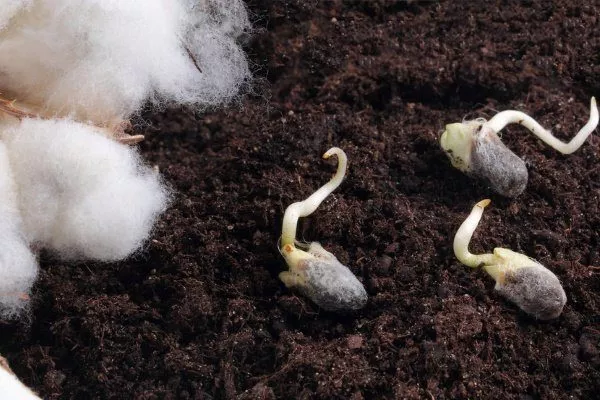
The minimum temperature for sowing seeds is 10-12°C. There's no point in sowing until the soil warms up. Cotton seeds can die in cold soil. Sowing seeds is done according to the chosen planting pattern. However, in any case, the row spacing should be 60 cm. Patterns used for sowing cotton:
- Dotted method – 60x25 cm.
- Rectangular nest – 60x45 cm.
- Square-nested – 60x60 cm.
- Wide-row crops – 90x15/20/30 cm.
Seeding patterns influence yield. Using specific methods can increase yield. For example, using the ridge method can yield an additional 3 c/ha.
Place 2-3 seeds per hole. They should be planted 4-5 cm deep. This is for regular gray soil; for marsh and meadow soil, 3-4 cm.
Seed consumption is determined by the chosen planting method. Seeds are selected so as to avoid the need for thinning. Seeding rates depend on seed treatment:
- Naked seeds – 40-42 kg/ha.
- Pulverized seeds – 60 kg/ha.
The number of plants per 1 hectare is 80-120 thousand.
Plant care
Once the cotton plant is sown, it is necessary to provide the crops with care:
- Irrigation. You can water the crops using any method, including sprinkling. To strengthen the roots, water the planting twice. First, when 3-5 leaves appear, and the second time three weeks later, when budding begins. When the plants are flowering and fruiting, they require more moisture. The final watering should be done a week before the leaves fall.
- Cultivation. During the growing season, three cultivations are carried out:
- when seedlings appear – depth 8-10 cm;
- before the first watering;
- when the soil dries.
- Mulching. Organic matter is preferred. The best option is to sprinkle the soil with loose manure. This helps retain moisture. The downside of manure is its high cost. Up to 250 kg per hectare can be used. Straw can also be used for mulching. Grass clippings are not recommended, as they can harbor pests.
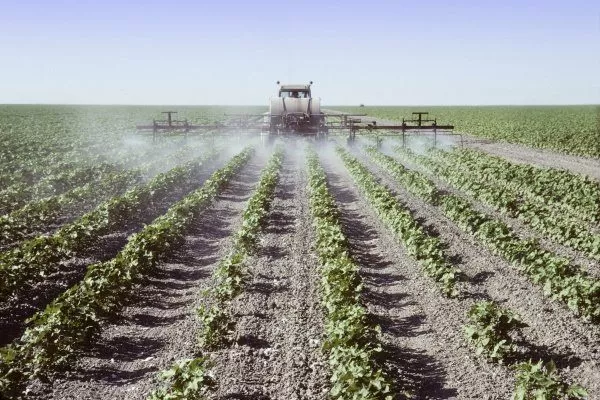
- Weed control. Before applying herbicides, the growth stage and weather conditions should be considered. The same applies to pest control. Many chemicals are available to kill aphids, mites, and other insects, but these treatments negatively impact the eco-friendliness of cotton. Chemical treatments are avoided whenever possible.
Diseases, pests and methods of protection
Pest and disease control measures:
- compliance with agricultural technology and farming culture;
- weed control;
- correct crop rotation;
- removal of plant residues after harvesting;
- deep autumn tillage – up to 30 cm;
- cultivation of disease-resistant varieties.
The most dangerous cotton pests:
- spider mite;
- aphid;
- tobacco thrips;
- winter moth;
- cotton bollworm.
Sucking pests. Control of aphids and tobacco thrips requires several treatments. The first is in March-April, with subsequent treatments depending on the insect density per square meter. Nitrafen 65% (40-75 kg/ha) is used against mites. Chlorophos 80% (1.5-1.8 kg/ha) is used against winter armyworm. Thiodan (2-2.5 kg/ha) is used against cotton bollworm. The frequency of spraying and the poisons used are selected individually, taking into account the insect species and their numbers.
Cotton harvesting
The harvest is in the fall, in September and October. The cotton bolls are picked manually or automatically. The cotton that contains the seeds is called raw cotton. The ripening of the bolls is uneven, so different harvesting methods must be used.
- ✓ The appearance of cracks on the boxes indicates readiness for harvesting.
- ✓ A change in fiber color from white to cream indicates maturity.
When most plants have at least two capsules open on each branch, defoliation—removing the leaves—begins. This procedure prevents diseases and the spread of pests that nest in the foliage.
Application and processing
Before cotton can be used for textile purposes, its seeds must be removed.
Cottonseed oil is used to make margarine and preserves. The cake is used as animal feed.
Specialized cotton gins are used to clean the fibers from the seeds. The processing procedure is as follows:
- Cleaning from seeds.
- Dust removal.
- Packing into bales.
- Sending to the spinning mill.
Despite centuries of experience in cotton cultivation, its cultivation remains painstaking. This plant requires specific climatic conditions and a range of agricultural practices. Achieving good yields requires considerable effort and investment.