
Sunflowers are considered a disease- and pest-resistant crop. However, improper agricultural practices and care can significantly damage the plant, resulting in significant yield losses. Insects and diseases can also be caused by unfavorable climatic conditions.
The most dangerous sunflower diseases
High humidity and warm air provide fertile ground for the active reproduction and development of pathogenic microorganisms. The remains of last year's plants provide favorable conditions for them. Any part of the plant can be affected:
- young shoots;
- rhizomes;
- stems;
- leaves;
- baskets;
- achenes.
It is important to monitor sunflowers for signs of disease in a timely manner to ensure effective control of the infestation.
| Name | Disease resistance | Growing season | Productivity |
|---|---|---|---|
| White rot | Low | The entire period | Reduction up to 60% |
| Gray mold | Low | The entire period | Reduction up to 60% |
| Verticillium wilt | Average | Flowering to ripening | Reduction up to 25% |
| Downy mildew | Average | Flowering before the formation of the basket | Decline in quality |
| Rust | High | Spring to autumn | Reduction up to 45% |
| Gray stem spot | Low | The first half of summer | Quarantine |
| Broomrape | Low | At a temperature of +20…+35°C | Crop destruction |
| Rhizopus | Low | Dry hot weather | Reduction up to 30% |
| Fomoz | Average | Stage 6-8 leaves | Reduction up to 25% |
| Alternaria | Average | Heavy rainfall | Reduction up to 35% |
White rot (sclerotinia)
The disease is caused by the fungus Sclerotinia. Its activity is triggered by high air and soil humidity during prolonged rainfall. It can affect all parts of the plant during the growing season. White rot manifests itself with the following symptoms, depending on the variety:
- Root. Affects the roots. They become soft, wet, and covered with a white mycelial coating.
- Stem. On young seedlings, it causes graying, rot, and a white coating. Over time, the stems droop, and the leaves wilt. The sunflowers eventually die. Mature plants become covered in gray-brown spots, the tissue deteriorates, and sclerotia form in the cavities.
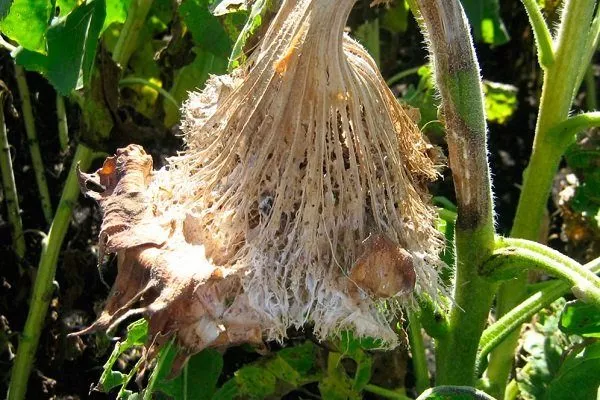
- Basket. Pale brown spots covered in a white coating appear on the underside of the flower head. They spread across the entire surface and affect the seeds, which darken, lose volume, and germinate with sclerotia.
White rot causes premature ripening, resulting in small, bitter seeds and a 60% reduction in yield.
To combat the disease, fungicidal agents are used, for example:
- Desaral;
- Dr. Krop;
- Azoxin;
- Phoenix Duo;
- Amistar;
- Keeper;
- Metacarb;
- Polygard.
- ✓ Optimum temperature for processing: +15…+25°C, no precipitation for 24 hours after application.
- ✓ The concentration of the working solution must strictly comply with the manufacturer’s recommendations to avoid phytotoxicity.
All products are used strictly according to the instructions on the packaging. Copper-containing products, such as copper sulfate (1% solution) and Bordeaux mixture, are also used.
Effectiveness in the fight against white rot is achieved only if treatment is started at the early stages of the disease’s development (at the first symptoms).
Preventive measures include:
- correct crop rotation;
- use of hybrid varieties with disease resistance;
- timely feeding;
- pre- and post-harvest treatment of soil with fungicides and insecticides;
- isolation of sunflowers from other crops prone to similar diseases;
- preparation of seeds by drying and cleaning.
Gray mold
The disease is caused by the fungus cinerea Pers. This parasite penetrates the plant through mechanical damage and wounds on the stomata and cuticle. Its activity is triggered by heavy precipitation at temperatures between 10°C and 25°C.
The disease affects any surface, from the root system to the seeds. The consequences are similar to those caused by white rot. The same remedies and preventative measures can help cure sunflowers or prevent the disease from developing.
Verticillium wilt
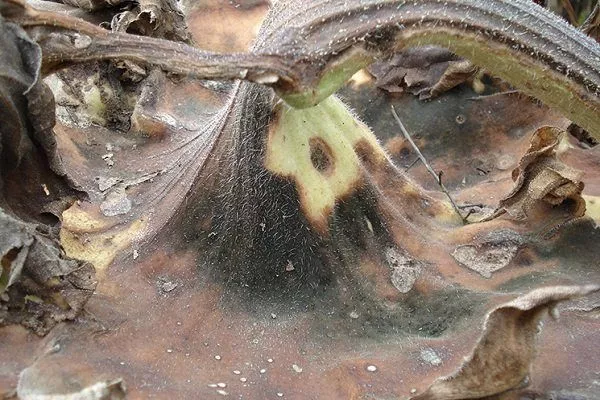
A fungal disease that begins at the roots and spreads to all parts of the plant. It manifests itself during flowering, during the flower head formation stage, and continues until the flower heads mature. It is most active in dry and hot weather.
Mycelium persists for a long time in infected seeds, plant debris, and soil. When the disease affects sunflowers, the following symptoms appear:
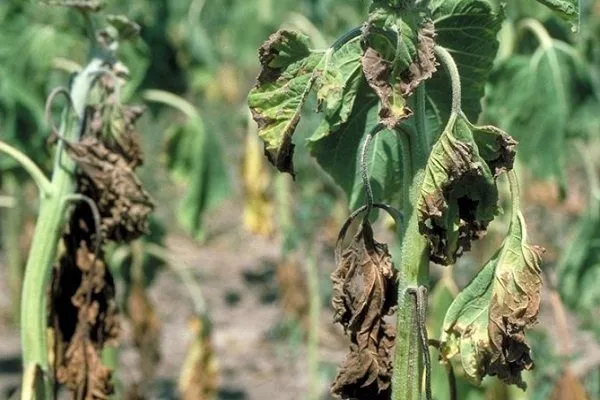
- leaves lose turgor and turn pale;
- brown spots with a yellow border of a necrotic type appear on different parts of the plant;
- the mycelium clogs the vessels of the root system, blocking access to nutrients, causing the leaves to dry out and not separate from the stem for a long time;
- the seeds rot and fall off.
If verticillium wilt is present, treatment can only be effective in the early stages of development, at the first signs of symptoms. Treatment with any broad-spectrum contact fungicide, twice at 10-12 day intervals, is effective. To prevent verticillium wilt, practice crop rotation.
Downy mildew (peronosporosis)
The pathogen is the microspore-forming fungus Plasmopara halstedii, which is activated by alternating moderate humidity and warm, dry weather. It manifests itself during the second half of the vegetative period (during flowering and the beginning of head formation).
Symptoms and development of the lesion:
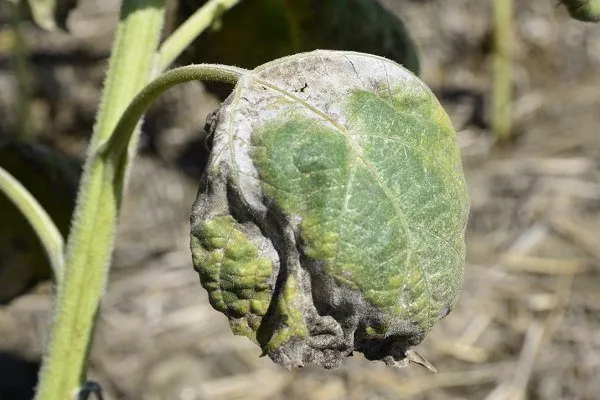
- The underside of the leaves becomes covered with a mealy coating.
- The color of the plaque changes to pink, dirty white, gray, brown.
- Fungal spores penetrate plant tissue, develop and spread throughout the crops.
Downy mildew leads to the following consequences:
- reduction of the assimilation capacity of the sunflower surface;
- destruction of chlorophyll;
- rapid wilting and yellowing of leaves, their death;
- death of vegetative organs;
- reduction in the quantity and quality of the harvest.
How to fight and prevent the disease:
- provide resistance to environmental stress;
- disinfect seeds before sowing;
- Practice crop rotation by not planting the same crop in the same place for several years in a row.
Rust
The causative agent is the monoecious fungus Puccinia, which is activated by high temperatures and air humidity.
It manifests itself as small, dense spots on leaf blades, where it undergoes all stages of development. In the spring, they appear on seedlings and eventually form orange calyxes on the underside of the leaf.
Rust damage leads to the following consequences:
- dying off of young leaves;
- lack of full development of the basket;
- seed size reduction;
- reduction of oil content to 15%;
- yield loss up to 15-45%.
Preventive and therapeutic measures aimed at combating sunflower rust are the same as for other diseases.
Gray stem spot (Phomopsis)
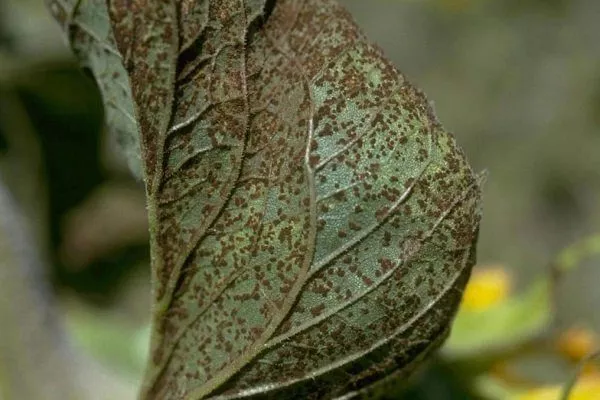
This disease is primarily characteristic of sunflowers; it rarely affects other plants. It is highly dangerous and is considered a quarantine disease. The causative agent, the teleomorph Diaporthe helianthi, becomes active in the first half of summer.
It is provoked by high humidity in warm weather during the rainy season, if the spores of the pathogen are preserved in seeds and plant debris.
Signs of damage appear as follows:
- The edges of the leaves become covered with dark brown angular spots of a necrotic type.
- The dying areas grow towards the petiole.
- Leaves with signs of damage dry up, and the spots become burn-like.
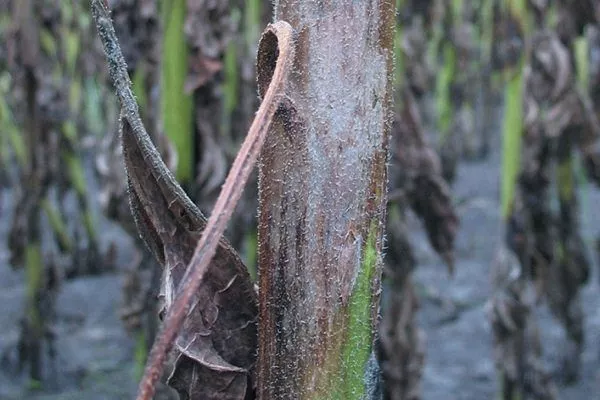
- During the flowering stage or later, the stems at the attachment points of damaged petioles become covered with necrotic brown spots, clearly outlined at the edges.
- The center of the spot becomes ash-colored and covered with pycnidia (capsules containing fungal spores).
- When pressure is applied to the affected area, the stem becomes indented and may break. This indicates that it is decaying.
There are no 100% effective treatments for Phomopsis. To prevent its occurrence, it is recommended to:
- strict adherence to crop rotation;
- cleaning and destruction of plant debris;
- pre-treatment with any fungicides;
- cultivation of hybrid varieties resistant to this disease.
Broomrape
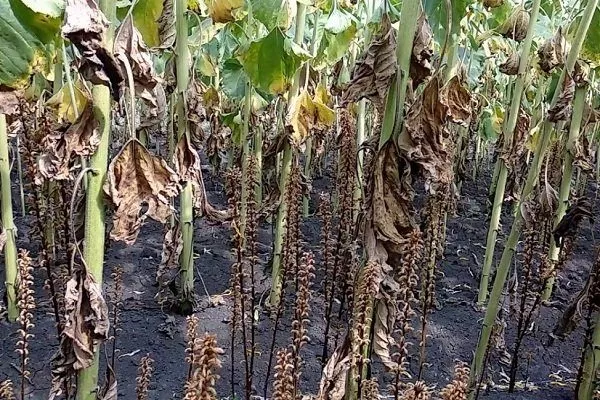
Commonly known as "broomrape," or broomrape (Orobanche Cumana Wallr) is a chlorophyll-free plant that parasitizes sunflower crops. It attacks the root system with toxic metabolites, leading to crop destruction.
Broomrape seeds are very small and spread quickly through the air. Favorable conditions for activation include soil acidity of 5.3-5.8 pH and air temperatures of 20 to 35°C. Furthermore, the host plant should begin producing root exudates.
The symptoms of the lesion are as follows:
- at the base of the sunflower stem, at the roots, white-yellow shoots appear;
- the plant's leaves experience a significant decrease in turgor, they droop and turn yellow;
- shoot growth slows down significantly.
There are several ways to combat broomrape:
- Crop rotation. It's recommended to allow 10-20 years between sunflower sowings in the same plot. During this period, it's best to sow the field with sorghum, corn, or millet. These plants encourage the emergence of the water slug, but the parasite doesn't develop on them, causing it to die.
- Herbicides. Imidazolinones are detrimental to broomrape. These include Device Ultra, Eurolighting, Santal, Vitalite, and Impex Duo. An effective measure is planting hybrid varieties with genetic resistance to many types of broomrape (Limit, NS Imisan, Arakar, and Rimi).
- Mechanical soil treatment. Regular weeding and loosening to a depth of 15 cm preserves the parasite seeds in the soil. If they reach the surface, they can be killed by low temperatures, fusarium, or significantly lose their germination capacity.
- Biological methods. The broomrape fly is a natural enemy of broomrape. It lays eggs in the flower stalk, which the larvae then consume along with the seeds. In widespread use, this method isn't always successful, as broomrape also damages sunflower crops.
Rhizopus
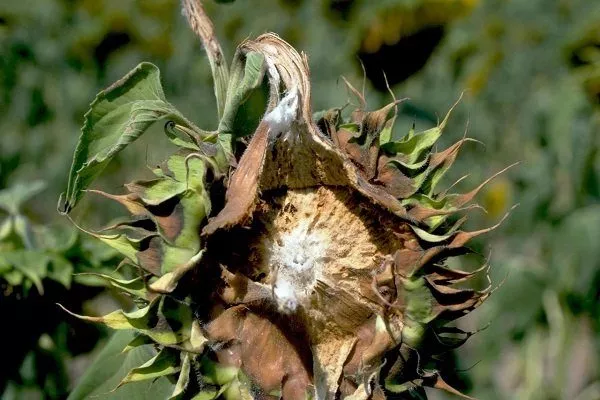
A disease caused by Rhizopus fungi: Rh. nodosus Namysl. Commonly known as "dry rot." The organisms survive in infected seeds, plant debris, and soil. It is triggered by dry, hot weather. It exclusively affects sunflower heads.
Symptoms of disease development:
- dark brown putrefactive spots appear on the underside of the basket, which often spread to the entire surface;
- the basket tissues dry out and harden;
- in case of severe damage, seed cells are easily separated from the base of the basket in large pieces;
- the achenes are underdeveloped, often stuck together, and the kernels become bitter in taste.
Rhizopus is particularly dangerous to crops because there are no hybrids or varieties resistant to it. Preventative measures such as crop rotation, regular weed removal, and balanced fertilization are considered effective.
Insecticide treatment helps:
- Maxim. 25 g/l for seed treatment (5 l/t).
- Apron XL. 350 g/l for seed treatment (3 l/t).
- Ampligo. 0.2-0.3 l/ha when cultivating soil with crops.
- Amistar Extra. 0.8-1 l/ha.
If necessary, repeat treatment is carried out after 2 weeks.
Fomoz
The causative agents of the disease are 2 organisms:
- Leptospira lindquisti;
- homa macdonaldi.
The bacteria are found in plant debris in the soil and are activated by damp conditions at temperatures of +20…+25°C. The disease attacks the plant at the 6-8 leaf stage:
- Dark brown spots with yellow edges appear.
- Over time, they grow, unite, and cover the entire leaf blade and petioles.
- Affected leaves wither and dry out.
- Brown spots appear on the outside of the basket, and their surface hardens.
- The seeds may turn brown and become weak or fail to form at all.
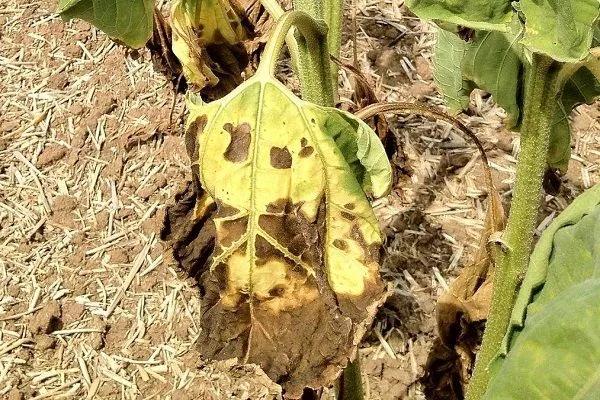
Subsequently, due to phomosis, sunflower yields decrease by 25%, and the quality of the product drops significantly.
When symptoms of damage appear, crops are sprayed with fungicides. Preliminary protection involves a comprehensive approach: following agricultural practices, crop rotation, fertilizing guidelines, and pre-planting seed and soil preparation.
Alternaria
The disease is caused by the mitospore fungus Altemaria, which lives in infected seeds or plant debris and becomes active during heavy, prolonged rainfall. The affected areas are the flower heads and seeds, and less commonly, the stems and leaves.
The disease manifests itself as small, dark-brown spots with a reddish rim. Over time, these spots increase in size, leading to drying of the affected area and death of the plant.
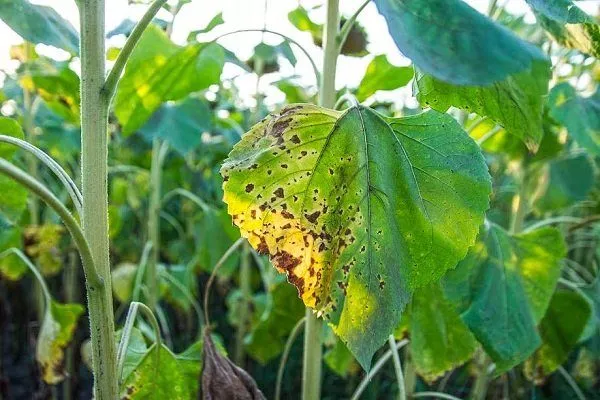
The disease leads to the following consequences:
- crops are thinning out significantly;
- premature dying of the plant and even its death occurs;
- the oiliness of seeds decreases;
- crop yields fall by 35%.
Disease prevention consists of following recommendations for crop cultivation and soil care.
Sunflower pests
Insects can also cause damage to sunflower crops. They damage plant surfaces, sucking sap and eating tissue. Disease pathogens easily enter through open wounds.
| Name | Methods of control | Period of activity | Damage |
|---|---|---|---|
| Firefly | Shelled varieties | Summer season | Crop failure |
| Moth | Insecticides | Summer season | Tissue damage |
| Thorn-nosed | Chemical insecticides | The beginning of summer | Crop loss |
| Barbel | Insecticides | 1-2 years | Death of a plant |
| Spider mite | Acaricides | Hot dry weather | Marble painting |
| Click beetles | Soil cultivation | Optimal hydration | Damage to seedlings |
| Weevil | Insecticides | Before laying eggs | Damage to sprouts |
Firefly
This small butterfly (wingspan approximately 2.7 mm) is found in all regions and is especially dangerous in the southern regions. It produces three generations during the summer season. During the winter, the insect's larvae remain in the soil.
When warm weather arrives, the pest lays eggs in the plant's flowers. The developing caterpillars feed on the buds within the flower heads. Over time, they completely gnaw out the nest, ruining the crop.
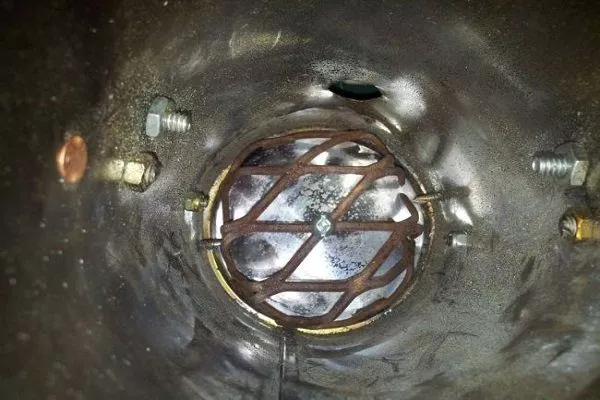
There is no effective method for controlling the moth. Armored sunflower varieties can be used for cultivation. They have strong tissue surfaces that are resistant to mechanical damage from insects.
Moth
The insect is common wherever sunflowers are grown. It appears as a butterfly up to 27 mm long with grayish wings covered in spots and a border. The caterpillars cause damage. They are gray in color with longitudinal stripes and reach up to 16 mm in length.
Small caterpillars eat flowers. Adults live on achenes, also feeding on the tissues of the base of the flower basket and weaving a web over the surface.
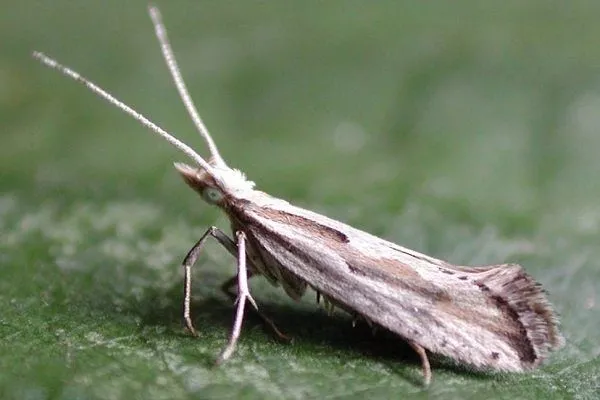
As a preventative measure, it is recommended to plant pest-resistant varieties, especially those with armor. To control the pest, use insecticides:
- Aliot;
- Senpai;
- Shar Pei.
Thorn-nosed
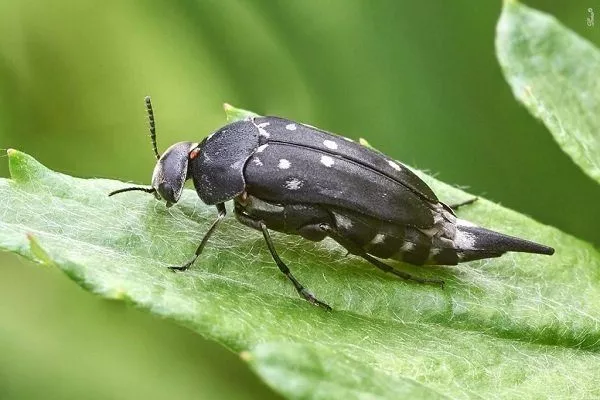
It is found primarily in the Caucasus and southern regions. The beetle, up to 5 mm long, is harmless to plants; its yellow larvae with red heads cause damage.
The thorn fly becomes active in early summer, during the breeding season. Larvae are deposited in the stem and flower head, where they gnaw out the flesh. Each flower head contains approximately 100 larvae. Such a large number can cause the loss of an entire harvest.
Barbel
The insect's distribution ranges include southern Russia, the Caucasus region, and parts of Western Siberia. The pest has a narrow body, 20 mm long, and long antennae. The damage is caused by its larvae—white worms measuring 35 mm.
Each generation develops over the course of one to two years. The larvae overwinter in the soil, pupating and emerging to the surface when warmer weather arrives. The females lay their eggs in the stem. The larvae feed on the flesh, then reach the root system. Sunflower growth declines rapidly, and the plant may die.

To destroy the longhorn beetle and its larvae, insecticides are used:
- Clipper;
- Anti-shashel;
- Empire-20;
- Phoenix.
Spider mite
Mites live in the substrate. Active development and reproduction begin in hot, dry weather, especially when temperatures reach +30°C.
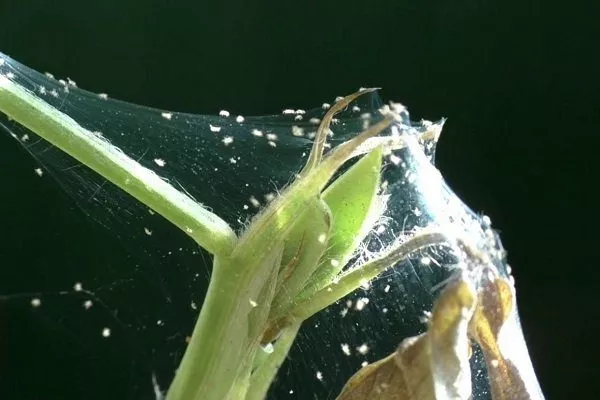
When spider mites infest the leaves and stems, white and silvery spots first appear. These grow and merge, giving the surface a marbled appearance. The plant becomes covered in webbing, adhered molting skins, and excrement.
- ✓ The appearance of small white dots on the leaves, which gradually merge into large spots.
- ✓ Formation of a fine web on the underside of leaves and stems.
Preventive measures include:
- removal of plant debris;
- regular weed control;
- deep loosening of the soil under crops.
During sunflower growth, spraying with acaricides, alternating chemical groups, is recommended. If mobile mites are detected, apply Vertimek at a rate of 0.8-1.2 l/ha.
Click beetles
This insect is considered one of the most dangerous to sunflowers. Its larva, the wireworm, causes particular damage to the crop. Since the click beetle is omnivorous, crop rotation is ineffective in controlling it.
The insect causes the greatest damage to plants during the most favorable time for vegetative development of seedlings, when soil moisture is optimal and temperatures range from 12 to 30°C. Click beetles can eat seeds, then damage the seedlings and root system.
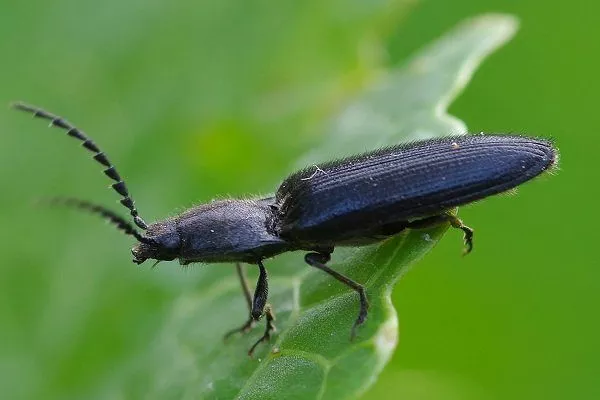
The beetle itself is small to medium-sized, with an elongated body that tapers toward the rear. The larvae are white and yellow in color and reach a length of 3 cm.
To combat click beetles, do the following:
- deep mechanical tillage;
- destruction of weeds, especially couch grass;
- liming of soil for deoxidation;
- pre-sowing seed treatment;
- spraying plantings with preparations containing thiamethoxam (for example, Cruiser), according to the instructions.
Weevil
There are two types of beetles: gray and black. They are similar in appearance, with a body length of 7-9 mm. The only difference is the color of the skin.
The larvae, which feed on sunflower root tissue, pose a particular danger. However, the insects themselves, before laying eggs, consume only emerging shoots and cotyledon leaves.
Insecticides are widely used to control pests:
- Aktara;
- Fastak;
- Force Syngenta;
- Gunner;
- Bombardier.
Proper agricultural practices, deep loosening of the soil and the destruction of weeds and other plant residues also help.
Sunflowers have long been successfully cultivated in almost all regions, but this makes them vulnerable to harmful insects and pathogens that cause serious diseases. Preventative measures can help prevent damage and save the crop. For treatment, use advances in the chemical industry that quickly combat crop damage.