
One of the most important steps when growing garden plants is watering, without which they die. However, soil moisture must be maintained according to the established standards for the specific variety, as overwatering also leads to disastrous results.
Timing of the first watering of garden crops
During the summer season, garden trees should be watered approximately three times, but if dry weather prevails, the frequency should be increased to three or four times. Newly planted trees require particularly thorough watering: they need two or three waterings per month to facilitate the rooting process.
- ✓ Take into account the soil temperature: watering should begin when the soil warms up to +10°C at a depth of 10 cm.
- ✓ Check the weather forecast for the coming days: avoid watering before expected frosts.
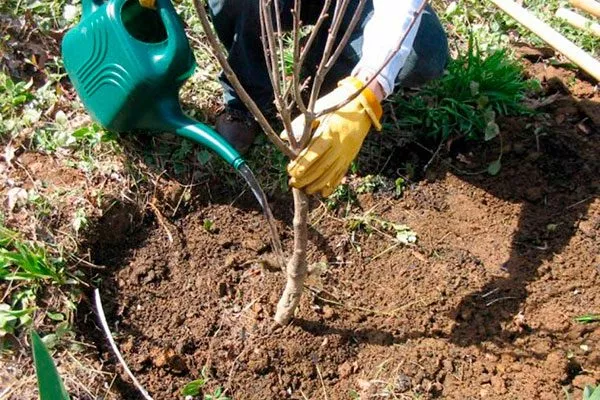
Watering begins from the end of May to mid-June, depending on the type of plant:
- Strawberries, currants, gooseberries: in the period from the end of May to the beginning of June.
- Apple: at the beginning of June.
- Plum, cherry plum, cherry, pear: in the first half of June.
- Grape: before the sap begins to flow, before the buds open.
Watering rates for fruit trees depending on the tree's age
Watering standards for trees vary depending on their age:
- For seedlings, 20-55 liters of water is recommended.
- For trees aged 3-5 years - 50-90 l.
- For trees aged 7-12 years - 120-150 l.
- For more mature trees - 30-50 liters per 1 sq. m of the trunk circle.
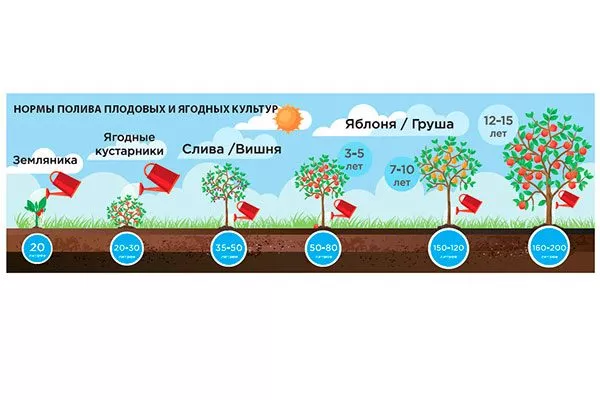
Berry bushes are watered at a rate of 40-65 liters per square meter. Strawberries should be watered at a rate of 20-25 liters during the harvest period.
How often should you water fruit trees in your garden?
It's important to consider many factors when watering your garden, including soil composition. Sandy soils require more frequent watering but less volume. Clay soils require less frequent watering but more water.
The frequency for fruit trees should be adjusted depending on their type. For example, stone fruit varieties require more water than pome fruit varieties. Soil moisture, plant condition, and their monthly water requirements should also be considered. Depending on your soil type, follow these recommendations:
- It is enough to water black soil and clay soils 1-2 times a month.
- Sandy soils require watering 2-4 times a month.
- Sandy loam soils need to be watered 1-3 times a month.
Peculiarities of moistening different plants
Many gardeners water their plants thoughtlessly: frequently and in small amounts. This approach is ineffective because the water remains in the upper layers of the soil and doesn't reach the roots, which are typically located 50-150 cm deep.
Plum and cherry plum
Watering plum trees is especially important during periods of heat and drought, as they require ample moisture. However, standing water is unacceptable for them.
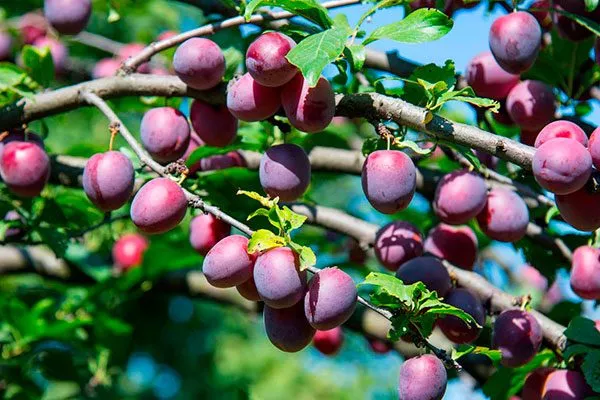
In spring and early summer, stone fruit crops thrive in high soil and air humidity. It's important to maintain a balance: avoid both overwatering and underwatering.
Grape
Watering grapes is recommended once a month, or even less frequently if there is precipitation. Ensure adequate water penetration to the root system, for example, by installing a watering tube buried in the ground.
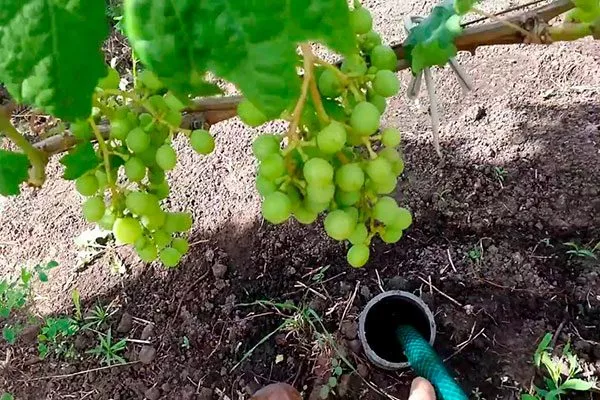
Watering before budding and during the flowering period is excluded to prevent diseases and poor fertilization.
Cherries and sweet cherries
The frequency of watering cherry and sweet cherry trees should be limited to four times per season: at the end of June, when active shoot growth occurs, during fruit ripening in July (if dry weather sets in), and at the end of the growing season in September.
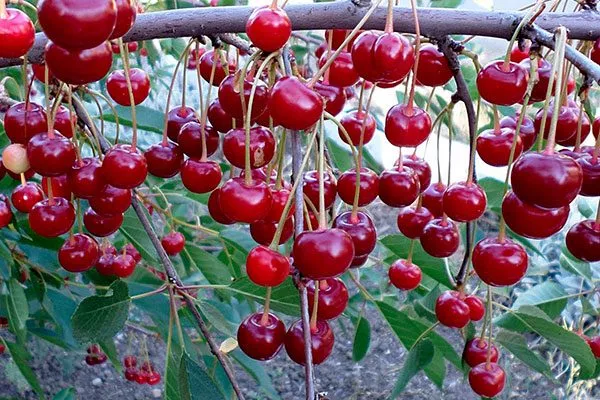
Avoid frequent watering, as this can lead to soil compaction and lack of oxygen.
Gooseberries, currants and other bushes
It's best to water the shrubs during bud swelling and after the soil has dried thoroughly. A second watering is recommended a few days after flowering has finished. Young shrubs around two years old require a bucket of water; older ones, twice as much.
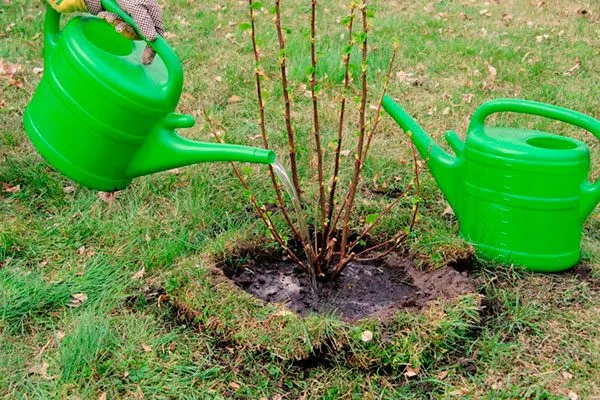
- ✓ Gooseberries require watering immediately before flowering to increase yield.
- ✓ Black currants are more drought-resistant than red currants and require less frequent watering.
It's best to make depressions or furrows for watering gooseberries directly at the base of the plant so that water reaches the roots directly. Moisture should penetrate to a depth of about 50-60 cm. It's important to water berry bushes three times per season, especially during fruit formation.
Strawberries are watered most often during the dry period of summer and during fruiting - approximately every 8-12 days.
Basic methods of watering the garden
Irrigation of garden crops is carried out in different ways, each of which has its own characteristics.
Surface
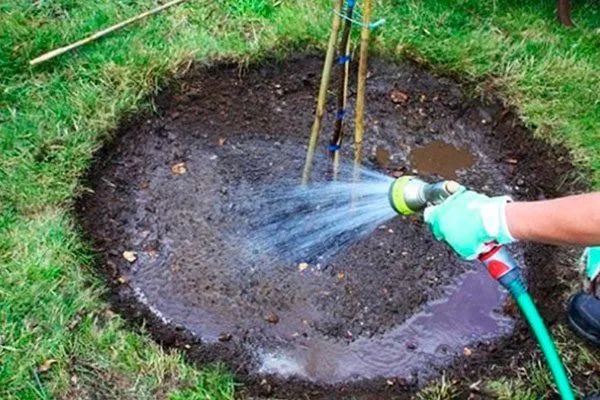
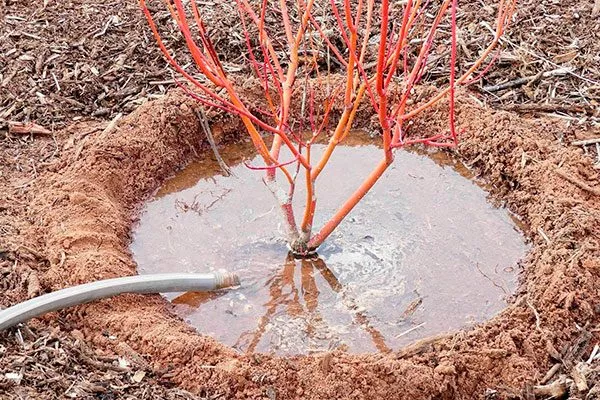
This method involves irrigating the soil around tree trunks using specially designed depressions called "cups." These are formed with rims to retain water near the roots. The diameter of these "cups" should correspond to the size of the tree's crown, which can change as the tree grows.
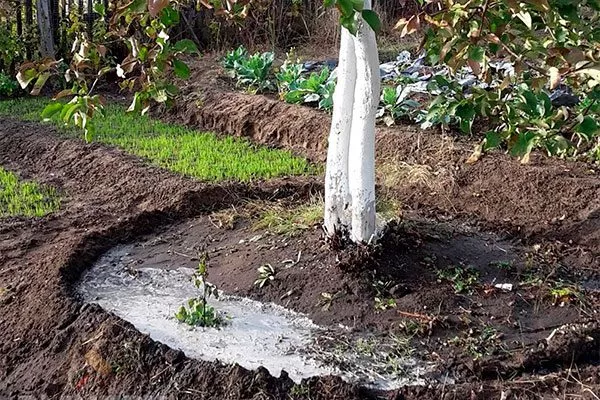
Furrow irrigation is suitable for trees planted in a row on level ground. Trenches of the desired width (up to 25-35 cm) are created between the rows of trees. During irrigation, water is delivered through a hose and distributed along the furrows. After the water has absorbed into the soil, the furrows are filled in.
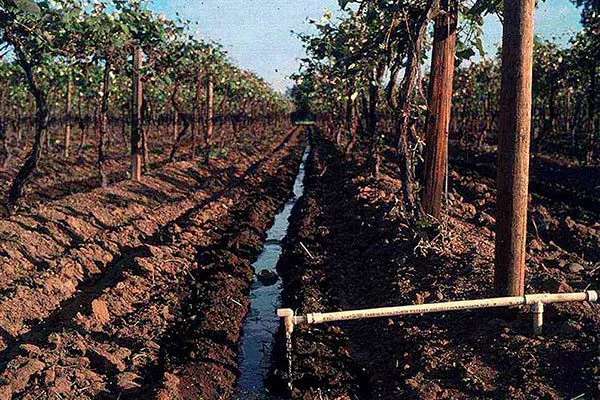
Surface irrigation technology includes the following steps:
- Creation of bulk soil embankments around the tree trunk.
- Preparing the “bowl” taking into account the size of the crown.
- Watering trees by placing a garden hose into each "bowl".
- Monitoring the filling and compliance of trees with water consumption standards.
Sprinkling
This method is characterized by creating conditions similar to natural rainfall, creating a humid environment for the soil, plants, and surrounding air. A constant and uniform pressure of water is essential, spraying it over the area, creating a fine rain effect.
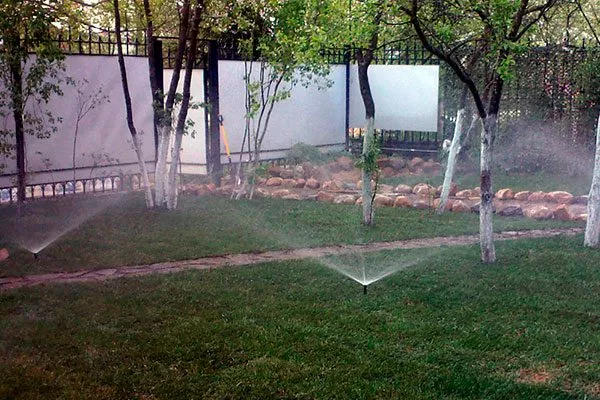
This method is ideal for sloping areas and helps maintain the fertility of the topsoil. A key feature of sprinkler irrigation is the need for specialized equipment.
Sprinkler irrigation procedure:
- Installation of sprinklers on the site taking into account their coverage radius.
- Connecting all elements into a complete system using pipes or hoses.
- Using a pump to supply water.
- Automate the watering process using a timer that turns irrigation devices on and off at a set time according to plant needs.
Subsurface irrigation
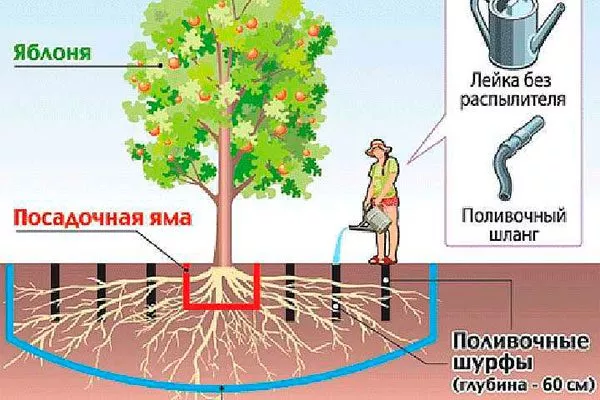
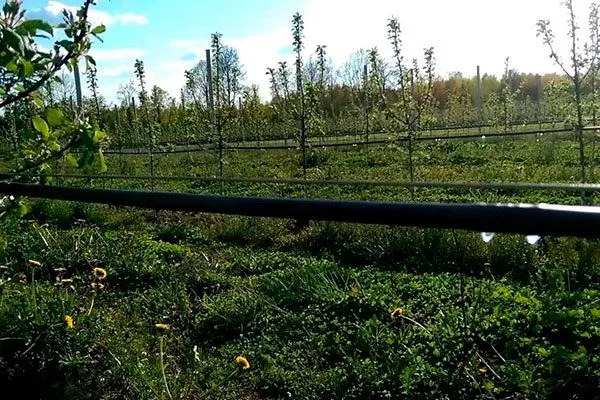
A subsurface irrigation system is an irrigation technology that delivers water directly to the plant's root system through pre-installed pipes. This approach reduces water consumption by a third thanks to targeted application, which is cost-effective and increases irrigation efficiency.
The downside is the complexity and cost of installing such a system. However, it eliminates the need for furrowing and soil loosening.
Drip irrigation system
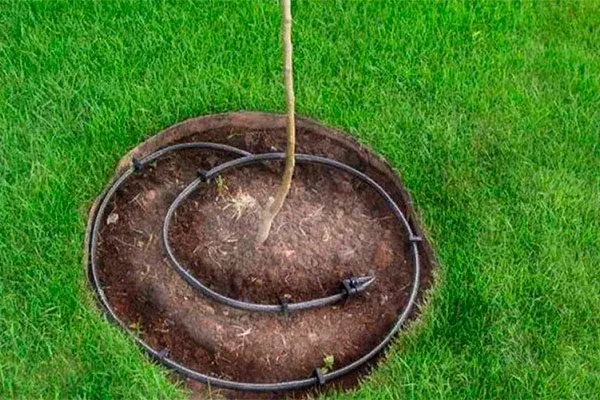
Drip irrigation is an adaptive landscaping method that can be installed independently. Perforated hoses are laid around the tree trunk and connected with fittings, after which the water flow is activated.
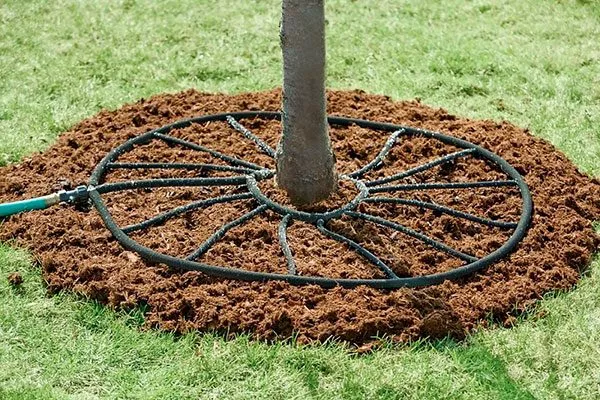
Despite its advantages, drip irrigation does have its drawbacks: for larger gardens, it is more advisable to purchase a professional system, as watering is very slow and it may take longer to achieve sufficient soil moisture.
How to determine the water needs of trees?
To determine tree watering needs, it's important to assess soil conditions, not rainfall. Mature trees require water to a depth of up to 1 meter, while shallow-rooted plants require water to a depth of 40 to 80 cm. A simple way to check soil moisture is as follows:
- Dig a hole between the trees to a depth of 30-40 cm.
- Take a handful of soil from the bottom of the hole and try to form a lump out of it.
If the soil doesn't stick together and crumbles, watering is necessary. If the lump holds its shape, place it on a napkin or newspaper. If it immediately leaves a wet mark, watering is not necessary. If a wet mark doesn't appear on the paper after 15 minutes, watering is necessary, but it's recommended to reduce the amount of water by about a third.
Moisture-charging irrigation of garden plots
To ensure healthy growth and fruiting of garden crops, it's essential to approach their watering wisely. Moisture absorbed by the roots should penetrate deep into the soil and not remain on the surface. When preparing to water, keep in mind that a significant amount of water may be required.
Watering rates:
- Seedlings: 20-25 l.
- Fruit trees 10-15 years: 40-55 l.
- Fruit trees older than 15 years: 60-90 l.
- Berry bushes: 20-45 l.
These amounts are suitable for light, sandy loam, podzolic, chernozem, and loamy soils. In the case of heavy clay soils or a close groundwater table, the water volume is reduced by 2-3 times or watering is avoided altogether, as excess moisture can lead to root rot and plant death.
Watering rules
The ideal time to water is in the evening before sunset or early morning to minimize water evaporation. On cloudy days, watering can also be done during the day. There are general rules to follow when watering:
- Avoid watering the leaves from above as this can promote the spread of diseases.
- Factors that determine how often you need to water in summer include:
- At temperatures up to +30°C: 1-2 times a week.
- At temperatures above +30°C: 2-4 times a week.
- On cloudy days: water only if the soil is dry.
- On rainy days: water no more than once a month.
- During periods of strong hot winds: avoid watering young seedlings and tree crowns.
- Rainwater is the best choice due to its softness and high oxygen content. Use clean water from open bodies of water. If you are using tap water, a well, a spring, or a spring, it is recommended to let it settle and warm it in the sun before use.
- Slow watering, such as with a hose syringe, allows water to penetrate the soil better, providing effective moisture without the risk of erosion and soil washout.
Common mistakes when watering
The most common mistake is overwatering plants, when gardeners follow a watering schedule without taking actual soil moisture and weather conditions into account. This approach can lead to overwatering of the root system, promoting rot and ultimately plant death.
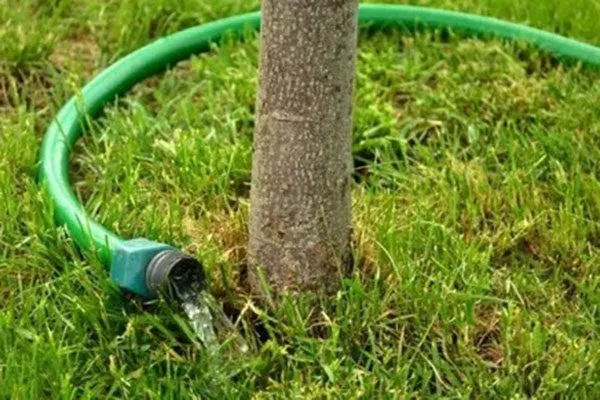
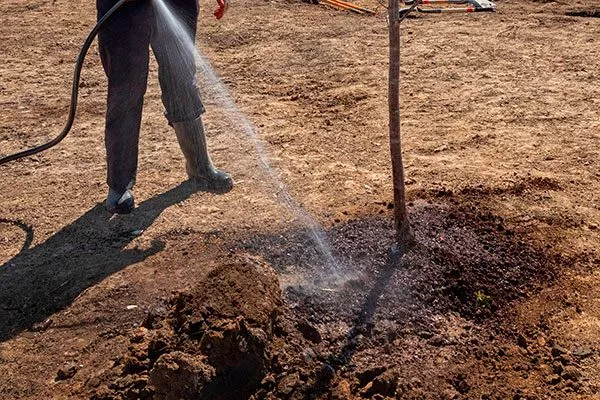
Another common mistake is watering without proper supervision, where water from a hose is simply left unattended under the tree. This can result in the water not being absorbed by the soil and spreading across the surface of the area, creating only the appearance of moist soil, while the soil layer where the roots are located remains dry.
Other issues:
- Watering plants during the flowering period can lead to over-watering of the soil, causing them to grow more vigorously but potentially dropping fruit. This often occurs during periods of heavy rainfall in the spring.
- When watering, it is preferable to use furrows or grooves 7–10 cm deep.
- Water your plants in the morning or evening if you want to moisten the leaves using sprinkler irrigation, which is also beneficial for fruit crops. In contrast, root watering is best done during the day when the soil is warmer.
- Always check the soil moisture level. To do this, dig a small hole after watering and feel the soil's moisture content. If the soil is moist to a sufficient depth, it is properly saturated. This will allow you to accurately estimate the amount of water needed to achieve optimal moisture.
Water fruit and berry crops according to their variety preferences, so be sure to research the watering requirements for your specific plant and variety. Remember that spring planting should be accompanied by regular watering to ensure the best possible conditions for plant establishment.