
A hedge isn't just for decoration. A fence made of shrubs demarcates and screens the property from prying eyes, protects it from wind and dust, and improves the microclimate. This article will discuss plants for hedges.
We'll also share how to quickly and easily create a plan and choose a great location for a green fence on your property.
How to choose a landing site
Before choosing plants, learn about the pros and cons of hedges, and decide on the height and type of fence: coniferous or deciduous. Remember that the green fence will remain on your property for many years. Clearly decide on the location to avoid wasting time, effort, and money on reworking it later.
- ✓ Consider wind direction to protect against dust and wind.
- ✓ Ensure sufficient distance from buildings for root system growth.
You can hire a designer, but a landscape design will be expensive. For example, in Moscow, the price is 34,000 rubles for a plot of up to 12 acres, while conceptual and working plans for such an area will cost 110,000 rubles. In St. Petersburg and the surrounding region, the price for visualization of one property is 20,000 rubles.
If you're on a budget, try an online plot planner—a free service available in Russian. It allows you to design your space in 2D: design barbecue and seating areas, plan the placement of a playground, arrange furniture and artificial ponds, and plan landscaping.
The main advantages of the online service:
- simple interface and instructions for beginners;
- a large selection of models: buildings, furniture, greenhouses, etc.;
- You can customize the size of all items;
- there are different types of plants and trees;
- The finished plan can be printed immediately.
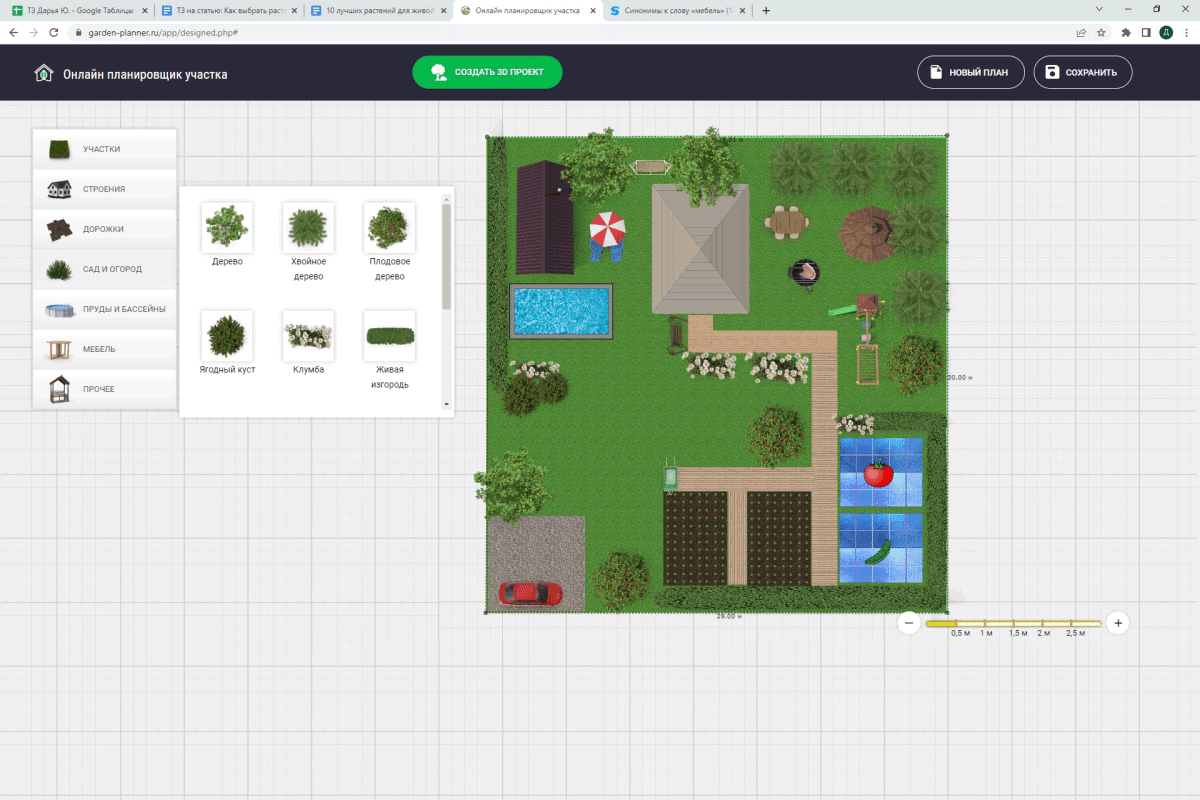
The "Garden and Vegetable Garden" section features hedges, so you can easily figure out where they would look best and what function they would serve. In the example below, we created three green fences: the first protects the path and garden from dust, the second (made of spruce trees) covers the recreation area and playground, and the third hides the pool and sauna.
What's the best material for a hedge: choosing plants
We've compiled a list of the top 10 best coniferous and deciduous plants for hedges. They're suitable for the variable climates of various regions of Russia and require little maintenance.
| Name | Height (m) | Frost resistance (°C) | Planting period |
|---|---|---|---|
| Spruce | 0.5-15 | -30 | September-October, April-May |
| Thuja | 2-15 | -30 | April-May, mid-autumn |
| Juniper | up to 2 | -30 | spring, autumn |
| Berry yew | up to 3 | -25 | spring, autumn |
| Lawson's cypress | up to 3 | -20 | spring, autumn |
| White dogwood | 2-3 | -25 | mid-autumn, spring |
| Spirea | 0.3-2 | -25 | spring, autumn |
| Barberry | up to 3 | -25 | spring, autumn |
| Viburnum-leaved bladder-senna | up to 3 | -25 | spring, autumn |
| Cotoneaster lucidus | up to 2 | -25 | spring, autumn |
Spruce
The tree is easy to grow and comes in many varieties. If you want grayish-blue needles, choose the prickly spruce. The blue spruce will survive in harsh conditions. The Norway spruce is popular in gardens due to its frost resistance. Depending on the variety you choose, you can grow a low or tall hedge (from 0.5 to 15 meters).
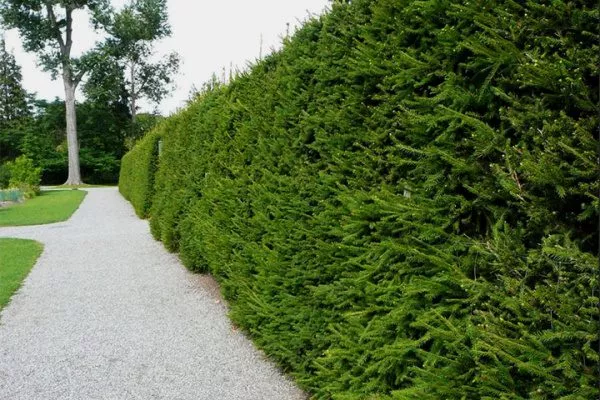
Spruce trees can be planted in two seasons: September-October and April-May. The tree doesn't require constant care, but it will still require some maintenance: watering during hot weather and pruning once or twice a year once it reaches the desired height.
Thuja
Thuja makes a fast-growing perennial hedge. It's ideal for temperate climates. It's best planted in April-May or mid-autumn. It requires the following care: watering, fertilizing with mineral and organic fertilizers, and regular pruning.
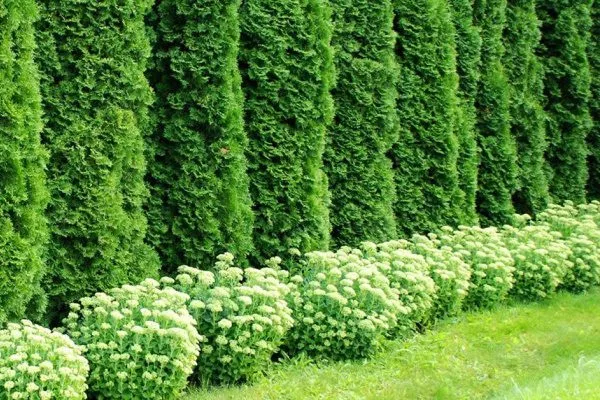
The most undemanding is the western thuja: it thrives in both sun and shade. Harsh Russian winters don't faze this plant, with a lifespan of around 90 years. Designers often choose the Smaragd thuja, which grows to 2-4 meters. It's suitable for a medium-sized hedge and will protect against dust. For maximum privacy, choose the Brabant thuja. These tall plants eventually reach 10-15 meters and will grow 40-50 cm per year.
Juniper
The plant is easy to grow and has medicinal properties. The Cossack juniper grows quickly, reaching 2 meters in height, and has a blue-green color. This species requires no additional watering in hot weather and easily tolerates temperatures as low as -30°C. The common juniper is also suitable: it has a conical crown and thrives in any conditions.
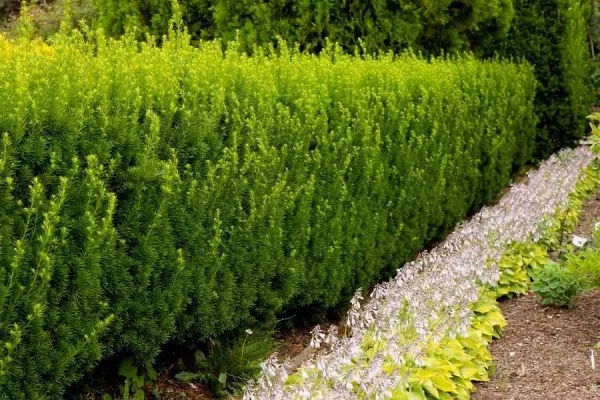
Berry yew
Among winter-hardy trees, the common yew is the most common. The plant can live up to 4,000 years. For the first few decades after planting, it grows slowly and resembles a bush. It grows an average of 10-15 cm per year. Its red and orange foliage makes it an attractive addition to any garden.
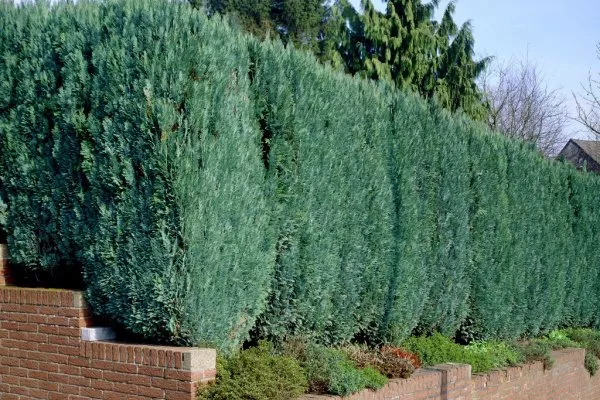
Lawson's cypress
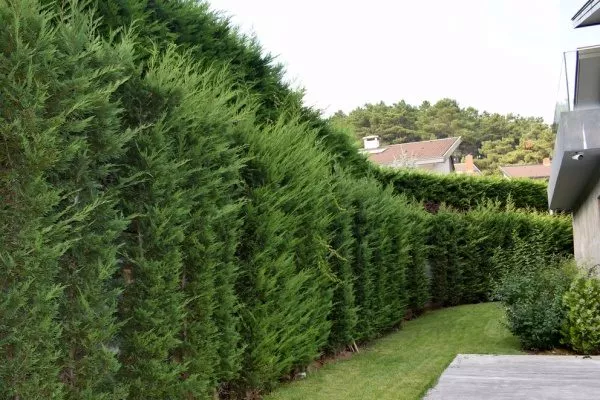
A beautiful and fast-growing conifer. When planting, it's important to choose a wise location: near a water source, as the plant thrives in humid conditions, and preferably in a sheltered area protected from the wind.
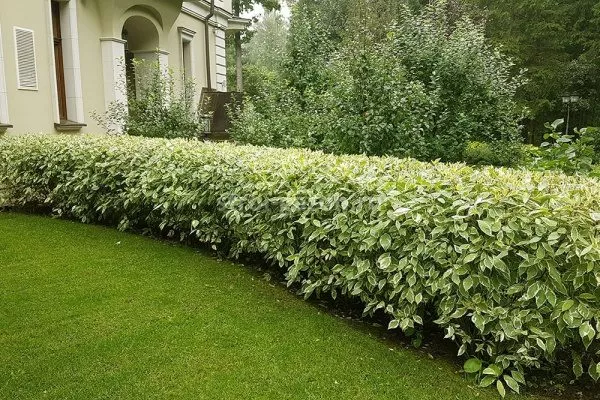
White dogwood
White dogwood is a fast-growing shrub suitable for hedges. It reaches 2-3 m in height and adapts well to various shapes when pruned. It's best planted in mid-autumn before frost or in spring. It's an easy-to-grow plant, but it does require care: fertilize twice a year, water sparingly, and trim occasionally (sometimes several times per season). This is necessary to prevent the root zone from becoming exposed.
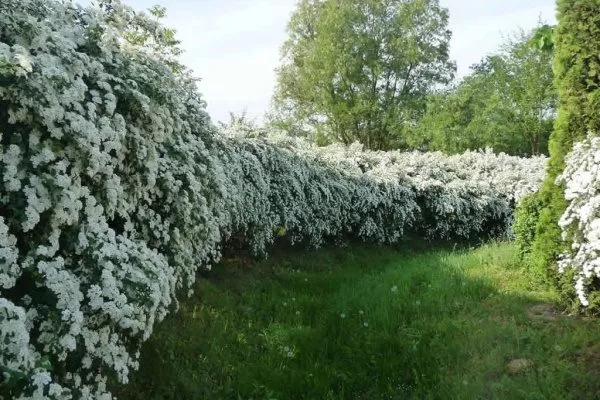
Spirea
A flowering deciduous shrub. Depending on the variety, it grows from 30 cm to 2 m in height. Choose whether you want to create a small fence or a tall enclosure. For the former, a creeping spirea is suitable, while an upright one is more suitable for the latter.
Barberry
This shrub grows up to 3 meters tall, features velvety leaves, and comes in several shades, from burgundy to yellowish. Different varieties can be used as a fence or a low border.
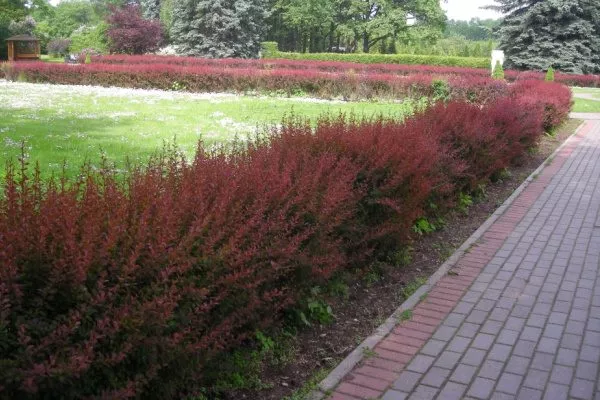
When choosing barberry, it's important to consider that the plant has long roots, which are often damaged during transplantation. Therefore, it's important to choose a planting site carefully.
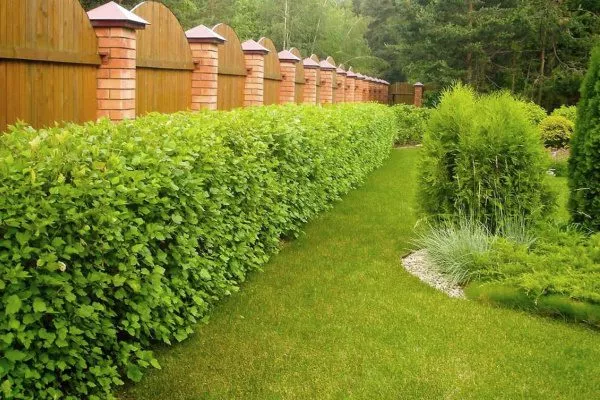
Viburnum-leaved bladder-senna
These hedge shrubs reach a height of 3 meters. When grown in full sun, Physocarpus produces large, purple-hued foliage; in shade, the color will be less intense and greenish. It's important to water the seedlings regularly and frequently to ensure the plant's establishment, as well as to prune them twice a year and fertilize them in spring and fall.
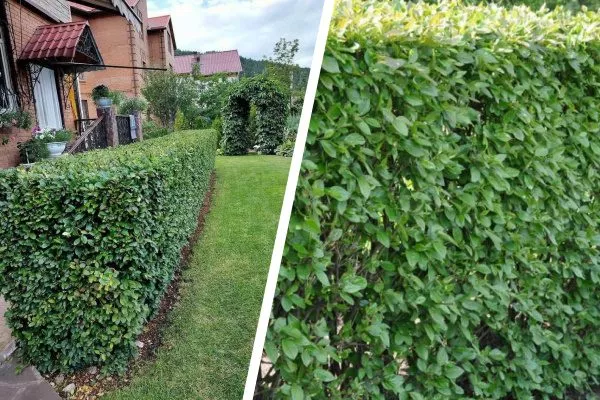
Cotoneaster lucidus
It is classified as a medium-sized shrub, reaching a height of no more than 2 meters. It is evergreen, with green foliage in summer and purple in autumn. The plant lives an average of 50 years. The glossy cotoneaster has upright stems and pointed leaves.
Let's sum it up
Even novice gardeners can create a hedge. All plants come with simple planting instructions and easy-to-follow care guidelines.
For a vibrant green fence, try barberry and glossy cotoneaster. If you want to hide a spot, choose spruce or Lawson cypress—they're tall and bushy. Spirea and white dogwood look unusual and grow quickly, while yew and juniper will provide a long-lasting delight.