
Maintaining a summer cottage or garden plot requires not only physical effort but also knowledge from gardeners and vegetable growers. Neglecting proper agricultural practices and the expertise of specialists leads to numerous mistakes that damage garden crops. Below are the top mistakes made by summer residents and gardeners.
1Lack of a plan
Neglecting planning when growing garden crops is a serious mistake that introduces chaos and unpredictability into the planting and care processes.
Planning tasks:
- Determining planting sites for trees, flowers, and garden plants according to their individual requirements. Planting sites are selected taking into account light, shade, proximity, and crop rotation.
- Optimizing plant care efforts. Each crop has its own watering, fertilizing, and preventative maintenance schedule. To maximize your time and effort, create a schedule of agricultural activities for different crops.
- ✓ Consider the groundwater level to prevent root rot.
- ✓ Analyze the disease history of the site to select resistant varieties.
Consequences of lack of planning:
- Planting plants that bloom or bear fruit at the same time can make a garden fragrant with flowers one moment and completely devoid of them the next. Similarly, with fruit and vegetable crops, it makes sense to plant varieties that ripen at different times.
- Planting in locations unsuitable for specific plants. To avoid this, choose the right soil type, light conditions, terrain, etc. for each crop.
Tree pruning at the wrong time
Failure to prune trees on time can lead to serious consequences, including death:
- Don't delay pruning branches in the spring. The procedure should be carried out early in the spring, before the sap begins to flow. Choose a time when the danger of severe frost has passed, but there are still at least two weeks left before bud break.
- Tree pruning is not recommended in winter. Pruning is only permitted in southern Russia. Winter temperatures there are often higher than spring temperatures in central Russia or Siberia. If pruning is performed in winter in a harsh climate and then immediately followed by frost, the cut tissue, bark, and cambium may be damaged.
- When pruning in spring, it's important to consider weather conditions. In central regions, pruning is usually done in March, when the snow has settled but not yet melted.
Sap flow, which is the time for spring pruning, begins no earlier than when the temperature reaches +5°C. During this period, the roots actively pump moisture and nutrients upward.
If you prune trees 2 weeks before the sap starts to flow, the cuts will remain dry and the vessels will immediately fill with air, preventing the release of sap.
Nothing harmful will happen if pruning is done a few days before the sap begins to flow. Since it's extremely difficult to determine when the sap will start to flow, it's best to be on the safe side and do the procedure early.
If pruning is delayed, air won't get into the vessels, and sap will leak out. The plant will weaken, and the leaking liquid will attract insects and pathogens, increasing the risk of sooty mold.
3Fertilizer application without regard to the growing season
Applying fertilizer without following the proper feeding schedule and growing season is a big mistake. Nutrients are beneficial when applied at specific times. It's a mistake to assume that applied fertilizers will remain in the soil and that plants will draw from them as needed.
Errors associated with violation of the feeding regime:
- Nitrogen should not be applied in summer or fall. This fertilizer is given to plants only at the initial stage of vegetation—early spring. Delayed application of nitrogen accelerates the growth of green mass, leading to shoot freezing in trees and delayed harvest in vegetables.
- Liquid nitrogen solutions are applied only during the period of active nutrient flow. This usually occurs in mid-May. Dry fertilizers are applied in April. By May, when sap flow begins to intensify, they dissolve in the soil.
- It's recommended to apply organic matter only in the fall. It needs time to decompose in the soil. Humus, compost, or other organic fertilizers will completely dissolve by spring.
- Phosphorus and potassium are applied in the second half of summer to support plants during fruiting. A second application of phosphorus-potassium mixtures is made in the fall, immediately after harvest. This allows plants to recuperate and stimulates the formation of flower buds.
- ✓ For sandy soils, increase the frequency of liquid fertilizer applications.
- ✓ On clay soils, use granular forms for slow release of nutrients.
Technical errors when:
- Applying fertilizer when the soil temperature is below +10°C. In such conditions, fertilizing is of no use, as the plant roots “work” at a slower rate.
- Fertilizer solution getting on leaves. Burning may occur. If this occurs, rinse off any product that gets on the leaves with water.
Watering during strong winds or hot weather
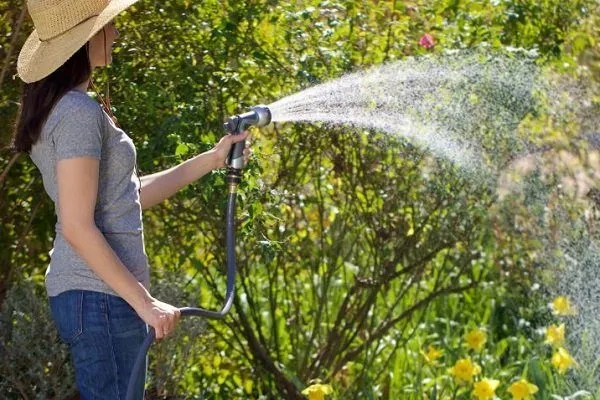
Watering is not recommended during hot weather when the sun is high. It's best to water plants in the morning, evening, or on cloudy days. Watering plants during periods of intense sun exposure carries risks—water splashing onto the leaves can cause sunburn.
When watering, it's important to consider the plant's characteristics. Some plants wilt in extreme heat. They need to be watered even in hot weather.
A slight wind does not interfere with watering. Strong gusts deflect the water stream, resulting in uneven watering across the irrigated areas. This is especially true when using various automatic irrigation systems. The recommended droplet diameter is 1.5 mm.
If you have to water plants in hot weather, do so in accordance with certain rules:
- Evening is the best time to water. Less moisture evaporates at this time of day.
- The soil must be loosened after watering to prevent the formation of a hard, air-impermeable crust.
- In hot weather, the best type of irrigation is drip irrigation.
- Water with room-temperature water. Cold water from the depths of the earth should not be used. Before watering, warm it in the sun—use a special container for this purpose. An old bathtub is an economical option.
Ignoring weeding
Only those inexperienced in gardening might think that weed control is pointless. In fact, by constantly pulling them out, we disrupt the active phase of photosynthesis, which depletes the plants' root systems. Regular weeding slowly but surely leads to the death of the weeds.
Why do you need to weed?
- Weeds interfere with the growth of crops of comparable size. They occupy space, crowd and shade plantings, hindering the growth and development of vegetables, flowers, and other plants.
- Many weeds are a source of disease. By leaving them in their garden beds, gardeners contribute to the spread of dangerous bacterial and viral diseases.
- Some weeds attract insects, such as aphids. As a result, these pests spread throughout the entire area.
- Weeds, like any plant, require nutrition. By taking nutrients from the soil, they deprive crops of a certain amount of nitrogen, phosphorus, potassium, and beneficial micro- and macronutrients.
- Some weeds compact the soil, making it less loose and breathable. These are plants with dense, thick roots that subsequently have to be removed almost by hand.
Weed control continues even in the fall. This is when the seeds begin to ripen. If they fall to the ground, the area will be overrun with weeds in the spring.
- ✓ For vegetable crops, use organic mulch that decomposes over the course of the season.
- ✓ For perennials, choose durable materials such as bark or wood chips.
6It's recommended to store collected weeds in black perforated bags. These conditions preserve beneficial bacteria and allow weed seeds to rot. The resulting mixture is suitable for fertilizer.
Failure to observe crop rotation
When growing any crop—garden or vegetable—it's important to follow crop rotation rules. This involves following the planting sequence. Plants should not be planted without considering the characteristics of their predecessors.
Crop rotation objectives:
- preventing the spread of diseases affecting certain groups of plants;
- creating the most favorable growing conditions for planted crops.
For example, it's known that tomatoes can't grow where potatoes were grown, and watermelons don't grow well after members of the pumpkin family. The main reason for this is their susceptibility to the same diseases and similar preferences for absorbing nutrients from the soil.
7Planting too densely
Dense planting is a common mistake among novice gardeners. Inexperienced gardeners hesitate to uproot, cut down, or otherwise remove unwanted plants, believing they're depriving themselves of a portion of their harvest. As a result, they suffer losses due to overcrowded plantings.
Each plant has specific planting density requirements. For example, densely planted seedlings become elongated and weak, while closely planted trees produce poor fruit formation and fail to ripen. Crowding stunts plants, leading to disease and reduced yields.
When planting shrubs, maintain intervals of 1-1.5 meters, and for trees, 3-5 meters. Each vegetable crop also has specific requirements. For example, if radishes, carrots, or beets are planted too close together, the roots will not develop.
8Preservation of plant residues
Handle plant debris with care. This includes stems and leaves of cultivated plants, as well as fallen leaves.
Principles of handling plant residues:
- Fallen leaves cannot be used for composting or mulching tree trunks unless you are sure they are not contaminated with fungi, bacteria, or microorganisms.
If the leaves are infected, they are destroyed (burned) or treated first with special preparations, and only then used for compost. - Don't compost rotted fruits and roots. They may contain harmful bacteria and insect larvae.
Soil inconsistency
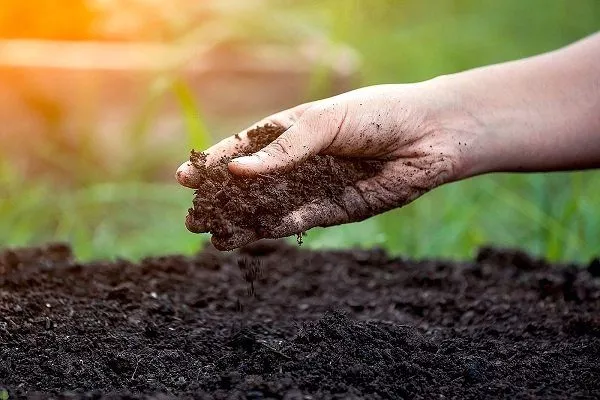
Each plant has its own soil requirements, or at least preferences. Some thrive in black soil, others in sandy soil, and still others thrive in clay soil. Besides soil composition, acidity is also important, and any gardener can adjust it themselves.
Many gardeners don't even bother to check the soil composition and acidity in their plots. This is a shame, as it affects not only the yield and taste of the fruit, but also the plant's overall ability to grow and develop.
How to change the soil if it is not suitable:
- For infertile soil with low humus content, it is recommended to add organic fertilizers, such as humus or compost, at a rate of 10–20 kg per square meter.
- Dolomite flour or slaked lime is added to acidic soils – 300-600 g per 1 sq. m.
- For heavy clay soils, add 10–20 kg of sand per 1 sq. m.
Uncultivated soil after harvesting
By leaving the soil uncultivated, gardeners miss out on several opportunities. Digging/loosening and fertilizing after harvesting allow them to lay a good foundation for future harvests.
Why cultivate the soil after harvesting:
- The soil structure will improve. Mechanical action creates empty spaces that allow air to enter. As a result, the soil becomes loose, crumbly, and oxygenated.
- Fertility will increase. If you add organic matter and mineral fertilizers during digging, by spring they will completely dissolve and be absorbed into the soil.
- The larvae of harmful insects will die. Pests that have settled in the soil for the winter will be on the surface or too close to the surface. As soon as frost hits, they will freeze to death. The key is to dig the soil without leveling it. The clods will freeze solid in winter, killing the larvae.
- The number of weeds will decrease. After tilling the soil, the rhizomes come to the surface and can be collected and destroyed. Many rhizomes, trapped in clods of soil, freeze during the winter and die.
- The growth of annual weeds is stimulated. They'll germinate, and then frost will kill the young seedlings. As a result, the overall weed infestation will decrease.
- Moisture will be retained. An uneven, lumpy surface holds snow better. In the spring, when the thaw begins, the water doesn't run off as quickly as from an uncultivated area.
Excessive digging of the soil
Gardeners unfamiliar with the proper cultivation techniques for garden crops often exhibit excessive diligence. Some gardeners believe they need to dig the soil every fall. They accomplish this task with a regular shovel, so they spend a tremendous amount of effort digging every year.
By shoveling tons of soil, it turns out that property owners are harming not only their lower backs and joints, but also the soil itself. Soil, like humans, needs rest; it can't be constantly disturbed, disrupting its structure and interfering with the normal life of microorganisms.
The soil is full of beneficial bacteria that require only light and air to survive. But there are also those that thrive in complete darkness. If they're moved from darkness into the sun, they simply die. These microorganisms are the ones that die during digging, and it takes a long time for the microflora to regenerate.
What to do with soil in the garden in autumn:
- loosen with a hoe to a depth of 5–7 cm;
- process with Fokin's flat cutter.
Weeding is performed simultaneously with loosening. The area is cleared of weeds, beneficial microorganisms are alive, and the soil is moderately loosened and softened.
12Untimely use of herbicides
Herbicides are applied at specific times. It's not uncommon for plots to have areas overgrown with weeds. Many gardeners, after harvesting their crops, treat the area with herbicides. This is a mistake.
When the weeds' growing season ends and sap flow ceases, using herbicides is completely useless. The most a gardener will achieve is the death of the above-ground parts of the plants. Come spring, the roots will grow back, and a new "army" of weeds will emerge. The herbicide and the money spent on it will be wasted.
Another reason not to use herbicides in the fall is their dependence on ambient temperatures. If the temperature drops below 8°C to 10°C, the herbicides lose their effectiveness.
How to kill weeds in the fall:
- using hoes – just weed the area;
- sow green manure;
- mulch with peat, sawdust, etc.
Covering plants too early
In regions with particularly harsh winters, fruit trees are recommended to be covered. Young trees are covered entirely, while mature trees are insulated only by the trunk. In temperate climates, young trees are primarily insulated, while mature trees are simply mulched at the roots. The timing of covering depends on the climate.
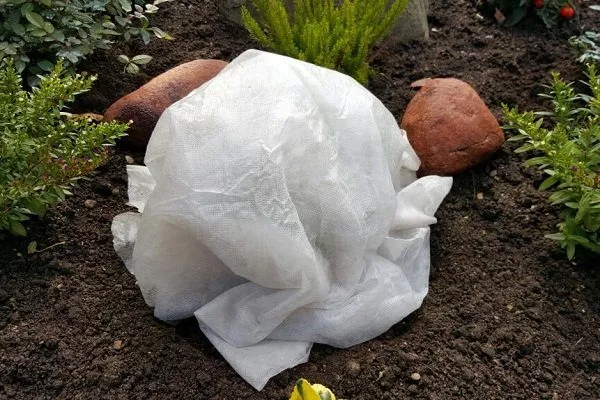
Some gardeners rush to end the season, covering their plants prematurely. Some begin covering immediately after harvesting. Such haste can cost the trees their lives.
Early covering of plants leads to:
- to the formation of condensation, which can become destructive with sudden temperature changes;
- to the emergence of diseases;
- to rot and death.
Covering work is usually carried out in anticipation of a significant cold snap. Work begins no earlier than the onset of sustained cold weather—-5-7 degrees below zero.
For the winter, gardeners insulate not only the trunk but also the roots, covering them with sawdust, peat, or humus to a depth of 10 cm. Straw should not be used, as it harbors rodents.
14Unwise purchases during the closing of the summer season
As soon as summer ends, agricultural stores begin their sales. Messages about promotions and discounts appear everywhere, which gullible gardeners fall for. It's been proven that the majority of unnecessary purchases are made during Black Fridays.
Gardeners should be more practical and not buy cheap, completely unnecessary goods:
- Seedlings of heat-loving bushes and trees. It's recommended to plant them in the spring. You can dig them in and store them until spring, but first familiarize yourself with the rules for storing seedlings for the winter.
- Liquid fertilizers. It is not recommended to apply such substances in the fall. At low temperatures, they freeze and lose their beneficial properties.
But there are still some things that are worth buying during the autumn sales period:
- Garden tools – this is a very important component of gardening, and you can't do without it. An extra shovel or rake is never a bad thing – you can always hand them over to your helpers. These tools are not cheap, so buying them at a discount is always a good deal.
- Seeds with a long shelf life. Don't just rake in everything—select only what you actually plan to plant. Otherwise, your savings will be swallowed up by unsold plantings.
- Universal fertilizers. Buy the compositions that you are guaranteed to need in the next season.
- Rare species of seedlings. Experienced gardeners know that the best seedlings are sold in the fall. This is when nurseries sell out their produce en masse. It's quite possible that in the spring you won't find that rare pear or apple variety you've been dreaming about.
Unkempt inventory
One of the most common mistakes gardeners make is leaving tools behind. The season is over, which means all hoes, shovels, rakes, and other tools in the garden/backyard should be properly stored.
Don't leave garden tools dirty or outside. This will quickly ruin them, and each one costs several hundred rubles.
Wooden handles crack from dampness, and metal rusts. Working with such tools is uncomfortable; they have to be cleaned, sharpened, repaired, and, more often, discarded due to wear and tear.
How to properly prepare garden tools for winter:
- Clear all tools from soil.
- Allow the tools to dry in the sun if they are damp.
- Grease the wooden handles with oil.
- Treat metal surfaces with grease.
- Store your tools in a shed or other dry place.
To keep your garden tidy and your crops healthy, proper care based on knowledge of agricultural practices and plant care principles is essential. Learning from the experience of seasoned gardeners will help you avoid making annoying mistakes in your own garden.