
Organic farming is gaining popularity not only among large producers but also among small-scale farmers. If desired, virtually any landowner can grow organic agricultural produce, provided they adhere to strict guidelines.
What is the essence of organic farming?
Organic farming is a method that respects natural ecosystems. It avoids deep tillage and synthetic compounds such as industrial fertilizers and pesticides.
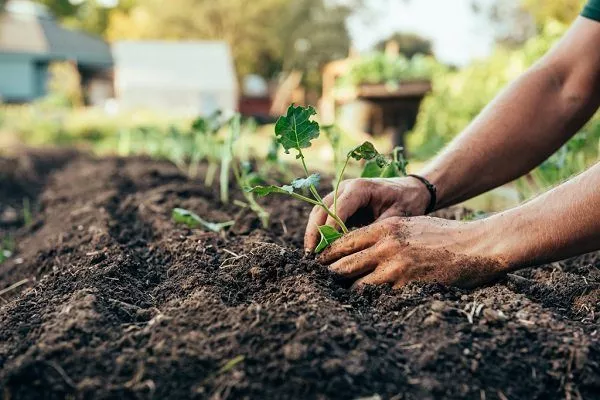
Eco-farming is based on the natural and free interaction of soil, plants, animals, and organic matter. In this type of farming, humans act not as pests and barbarians, but as facilitators.
Basic principles:
- crop rotation;
- rotting plant residues;
- use of agricultural waste;
- application of manure;
- maintaining natural soil fertility;
- soil cultivation.
Goals of organic farming:
- production of biologically valuable products;
- support of biocycles in the farming system;
- increasing soil fertility;
- maximum use of the farm's own (local) resources;
- use of materials and substances that can be reused in the household.
11 Steps to Transitioning to Organic Gardening
You can't switch from conventional to organic farming overnight, or even in a single season. Growing organic produce requires learning the principles and taking several consistent steps.
Selecting an environmentally friendly location for planting
Finding a clean area is practically impossible. Industrial waste, exhaust fumes, chemical plant discharges, and many other consequences of human activity are spread throughout the entire earth. There are simply more and less polluted areas.
- ✓ Check the history of site use for any use of chemical fertilizers and pesticides.
- ✓ Consider the direction of prevailing winds to minimize the transfer of pollution from neighboring areas.
To minimize contamination of grown produce when practicing organic farming, it is recommended to avoid proximity to objects such as:
- industrial zones;
- motorways;
- drainage collectors and sewer pits;
- garbage dumps;
- cemeteries;
- production facilities;
- warehouses;
- livestock farms.
Those serious about organic farming will need to conduct an environmental assessment before purchasing a plot of land. A simple comprehensive soil and water assessment costs around 1,000 rubles, while a more complex one costs between 10,000 and 40,000 rubles.
Purchasing suitable plants
Many organic farmers grow their own seeds and seedlings to ensure their eco-friendliness. If you don't have the opportunity or desire to grow your own planting material, you'll have to buy it.
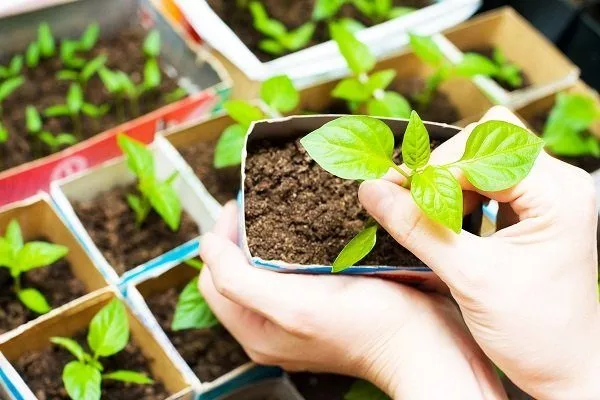
For organic farming you need bio seeds:
- GMO free;
- not treated with chemicals;
- obtained as a result of organic farming.
Genetically modified seeds are prohibited in organic farming. Only 20% of farmers worldwide plant genuine organic seeds—untreated or treated with special natural compounds—which must be approved by certification companies.
There are no domestically produced organic seeds in Russia. Seeds have to be sourced abroad or old local varieties used. These not only carry valuable varietal traits but are also resistant to pathogens and pests specific to a particular region.
Today, there are almost 3 million organic producers (eco-seeds) in the world.
How to grow your own organic seeds from uncertified ones:
- Find planting material that has not been treated with chemicals.
- The first harvest will be non-organic, and the seeds from it will be transitional. These will be the source of organic seeds next year.
When purchasing seeds for breeding, you should obtain certificates from the supplier confirming that the material has not been treated and is not GMO. This is especially important for soybeans, rapeseed, corn, potatoes, and sugar beets—crops with high GMO risks.
Practicing rotation
In agriculture, rotation is the period during which all crops pass through each of the fields on the farm in the sequence provided by crop rotation.
If you plant crops in the same place every year, sooner or later a large number of harmful microorganisms—the pathogens that cause diseases specific to a particular crop—will accumulate there.
Rotation principles:
- Rotate the planting location every year. Never plant the same plant twice in a row in the same spot.
- Create a rotation chart that includes information about when to transplant each crop to different areas of the garden.
- Do not plant seedlings where related plants grew.
Soil preparation
Many gardeners think that organic farming means avoiding chemicals and mineral fertilizers. But there are equally important steps, and one that begins with abandoning traditional tillage.
How to properly cultivate the soil:
- Divide the plot into beds. Mark their future dimensions with stakes.
- Use a shovel to dig paths between the beds. Transfer the soil from these paths to the beds. Level the soil with a rake.
- Cover the soil with organic, natural materials, as bare soil loses fertility.
- Regularly cover the soil with a 10 cm layer of mulch.
- Don't dig, loosen, or fertilize the beds. The soil should remain in its natural state.
Mulching
Mulching is a simple yet effective agricultural technique. It's used not only by organic farmers but also by ordinary gardeners who dig and apply mineral fertilizers.
The following results can be achieved through the mulching process:
- preventing weed growth;
- preventing crust formation;
- improving air permeability and oxygen supply to plant roots;
- preventing evaporation of moisture from the soil;
- maintaining soil temperature at an optimal level;
- warming the roots in the autumn-winter period.
A wide variety of natural materials can be used as mulch, as long as it's loose. During the growing season, the mulch layer is 3-5 cm thick, and for winter, up to 20 cm is added.
Peat or humus are best. You can also sprinkle the soil with sawdust, pine needles, hay, freshly cut grass, wood chips, fallen leaves, and straw.
Control weeds and pests without chemicals
Weeds are a nuisance when it comes to gardening. No matter how hard you fight them, they keep coming back. Many gardeners, in desperation, resort to pesticides. This is unacceptable for organic farming.
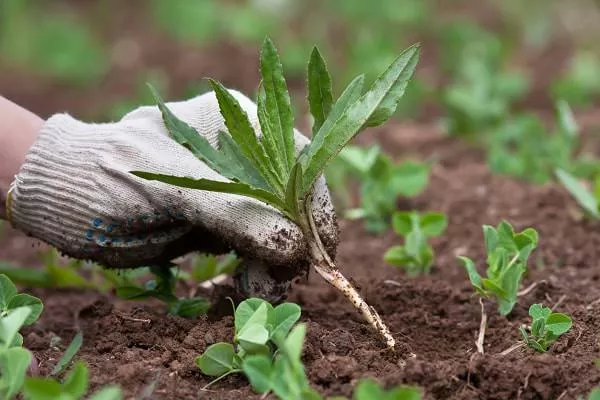
Why you need to fight weeds:
- shade beds with garden crops;
- attract insect pests;
- provoke the development of many diseases;
- absorb nutrients and water from the soil, which are intended for cultivated plants.
Weeding should be done so frequently that the growing green weeds are repeatedly cut off. This persistence deprives them of nutrients, and growth slows or stops.
Organic fertilizers
Synthetic mineral fertilizers not only promote crop growth but also destroy soil fertility. They are highly water-soluble and leach out of the soil, polluting water bodies. For example, saltpeter not only provides nitrogen but also destroys humus.
Before switching to a new method, it is recommended to dig a compost pit and put the following in it:
- weeds;
- mown grass;
- thin pruned branches;
- fallen leaves;
- tree bark.
The following items are prohibited from being added to compost: spoiled fruits and vegetables, animal feces, nightshade tops, bread, and bones. To speed up fermentation, add nettles, yarrow, or food scraps to the compost.
Methods for increasing soil fertility:
- adding rotted manure, compost or peat;
- sowing green manure - it improves the soil;
- adding humates - these natural substances promote the growth of soil bacteria.
Proper application of fertilizers
Ideally, organic farming does not require mineral fertilizers. However, achieving a harvest without these chemicals is not easy. Many gardeners cannot completely abandon them, and use them in small, strictly regulated doses.
Fertilizer application guidelines:
- Fertilizers are applied shallowly so that plants can fully absorb them and they do not end up in groundwater;
- preference is given to organic matter, ash, sapropel;
- any additional feeding is carried out only when absolutely necessary;
- A month before harvesting, fertilizing is stopped to prevent the fruits from accumulating substances that are dangerous to the body.
Optimal types of irrigation
Gardeners often make the mistake of watering their gardens with cold water directly from a well. The strong pressure washes away nutrients, and if the water gets on the plants, it can cause fungal diseases.
What is the best way to water organic garden beds:
- Buy a drip irrigation system at an agricultural store.
- Connect it to a container filled with water. Place it outside and let the sun warm it.
- Lay perforated hoses along the beds. Water will slowly drip into the soil.
The drip irrigation method maintains optimal soil moisture, preventing it from drying out or becoming overwatered.
Another effective irrigation method is installing subsurface irrigation systems. This involves laying plastic pipes along garden beds, near bushes, and trees. They are buried in the soil to a depth of at least 30 cm.
Air exchange
In traditional farming, the necessary air exchange in the soil structure is achieved mechanically – by destroying its integrity with agricultural tools.
Organic methods involve loosening the inner layers of the soil through the activity of soil microorganisms or common earthworms.
Sepp Holzer's Permaculture
Sepp Holzer was an Austrian farmer who inherited a farm in 1962. The plot, which the young man inherited from his parents, was located on a mountain slope.
Growing vegetables and fruits in the rocky terraces and cool mountain climate was difficult. Conventional farming methods were unsuccessful. Halzer's path to successful farming was one of communion with nature. While everyone else tried to help her, Sepp simply tried not to interfere.
Holzer, convinced of the ineffectiveness of conventional farming approaches in the Austrian Alps, decided to forge his own path. He abandoned environmental modification in favor of more sustainable methods.
The Austrian became one of the most renowned advocates of permaculture, a branch of organic farming.
Sepp Holzer's principles:
- refusal of pesticides and traditional land improvement;
- to give nature and every plant what they lack;
- abandonment of monoculture farming.
Holzer believes that growing monocultures is a constant struggle and confrontation. In such a field, all plants require the same nutrients. This doesn't happen in nature. Fertilizers have to be applied, fields sprayed, and so on.
If we establish a relationship with nature, all plants will be healthy and self-sufficient. People won't have to spend all their free time tending and striving for a harvest.
Example of a permaculture farm:
- beans are twining on corn stalks;
- pigs eat bean pods straight from corn stalks;
- animals, while eating beans, simultaneously loosen the soil with their snouts - suddenly they find something tasty in it;
- Next year, you can plant apple trees in the place where the pigs trampled.
This is a simple example, but it helps us understand Sepp Holzer's principles. In reality, permaculture requires considerable knowledge and calculations, an understanding of natural processes and the connections between its objects.
If we establish a relationship with nature, all plants will be healthy and self-sufficient. People don't have to spend all their free time tending and struggling to ensure a harvest, and the plants grow strong and healthy.
Mittlider's narrow beds
J. Mittlider, a US scientist, developed a universal method for growing agricultural crops. Interestingly, it is effective under a variety of climatic and soil conditions.
Advantages of the Mittlider method:
- Soil characteristics do not affect the yieldNow you don't have to worry about the lack of black soil—the narrow beds are filled with potting soil.
- There is no relationship between harvest and climate conditionsThe method is effective in a variety of regions, including arid ones and those with cool summers. Vegetables grown in narrow beds are not affected by frost, morning dew, etc.
- The area of the site is saved. Narrow beds take up little space, but are very productive.
- Easy care. It is enough to visit the garden a couple of times a week.
- Large harvests. They, as the experience of farmers has shown, are much higher than in a regular garden.
- Saving water. It requires 40% less than when grown in the traditional way.
If you already have raised beds in your garden, you can easily convert them into Mittlider beds. You can easily build a plastic greenhouse over them.
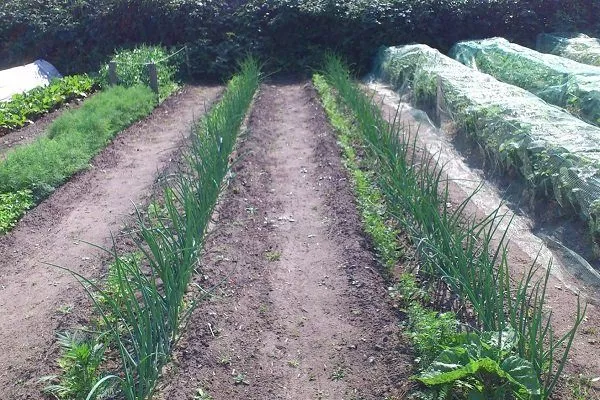
Mittlider's beds are only 45 cm wide and can be any length. The distance between adjacent beds is 90 cm. Through experiments, the scientist found that vegetables thrive best in such beds.
How to set up Mittlider beds:
- Stock up on tools and materials: a shovel, a hoe, stakes, a container for fertilizer and twine.
- Mark out the ground for the future beds. Use stakes and string to mark the outlines.
- Build 10 cm high earthen borders along the sides of the beds. Compact the soil between adjacent beds to create pathways.
- Water the beds thoroughly and plant the plants. Potatoes should be planted at 35 cm intervals, and bulbs at 5 cm intervals.
Mittlider wasn't a proponent of organic farming, so he added mineral fertilizers to the soil. However, his beds are perfectly suited to organic gardening. Instead of "chemicals," they are fertilized with compost, liquid manure solutions, and other organic matter.
Organic farming only seems more complicated and less profitable at first glance. By mastering eco-friendly methods of managing soil and plants, you can achieve good yields with less labor. At the same time, you'll receive completely safe produce free from harmful substances.