
Gardeners often prefer to plant crops and flowers in the fall to ensure a good harvest and a beautiful, blooming garden in the spring. To ensure positive results, familiarize yourself with the basic rules of winter planting.
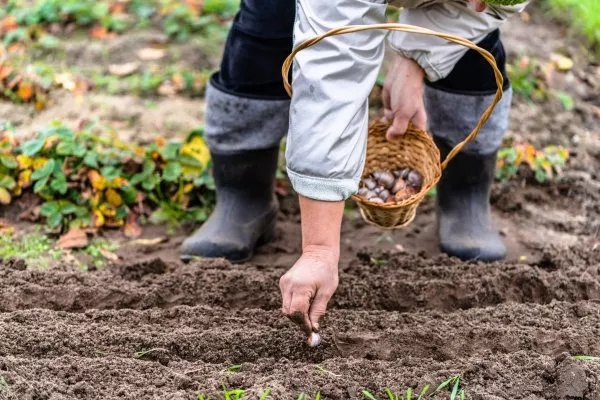
General requirements for winter planting
Winter planting requires following certain rules to ensure a good harvest of vegetables and fruits. The same applies to flowers.
- ✓ Make sure that the seeds have a high germination rate, at least 80%, and are full-weight.
- ✓ Check the variety’s resistance to low temperatures and short daylight hours.
Follow the recommendations:
- If you're worried about seeds that have lost their viability, err on the side of caution: increase the seeding rate by 1.5-2 times. Sow them more frequently than when sowing in spring.
- When using the autumn method, the seeds are exposed to harsher conditions, so for this procedure, choose full-weight, large material with a germination rate of at least 80%.
- When planting large beet and dill seeds, do so at a depth greater than for small turnip seeds – within 1.5-2 cm.
- Be sure to use only dry planting material.
- Before winter, gardeners recommend sowing pelleted seeds to reduce the risk of their destruction.
- Flower seeds can be sown either in a flower bed or in a special warm garden bed.
- Keep in mind that the topsoil can become very compacted over the winter, making it difficult for the seeds to break through the crust in the spring. Therefore, cover the seeded material with loose soil such as peat, humus, or compost.
How to prepare beds for planting?
Preparing garden beds for planting is both an important and enjoyable process. To do it right, follow these helpful tips.
For flowers
It's best to choose a bed for planting flowers that won't be used in early spring. Remove weed roots, otherwise they may choke out the spring seedlings, and don't add compost.
Preparation tips:
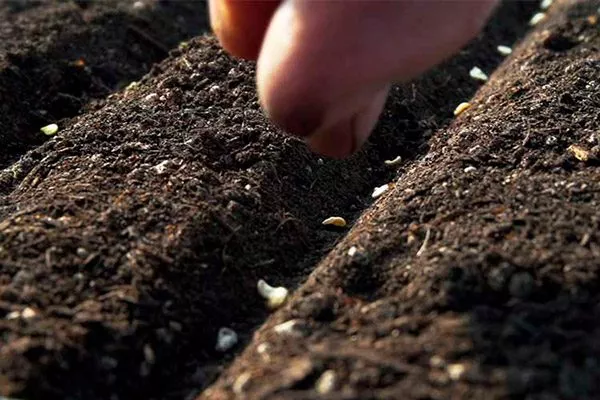
- Carefully level the ground with a rake, making even furrows 1-1.5 cm deep.
- Sow the seeds a little more frequently than for spring planting.
- Install arcs for covering with film.
This simple scheme will allow you to sow flower seeds that will sprout in the spring and delight you with beautiful flowers.
For vegetables
Depending on the number of crops you'll plant, select a plot of land that's appropriate in size. Prepare the beds in advance—14-20 days before planting. Be sure to leave paths between them for easy movement, and reinforce the edges with boards or slate.
- 14-20 days before sowing, dig the area to the depth of a spade.
- Add dolomite flour to acidic soils at a rate of 150 g per 1 sq. m.
- Add humus (10 kg per 1 sq. m) and wood ash (200 g per 1 sq. m).
Recommendations:
- Dig the beds, loosen them, and add the necessary components. On acidic soils, add dolomite flour (150 g per 1 sq. m) in advance and dig the area. Heavy soils require compost and peat.
- Add humus (10 kg per 1 sq. m) and wood ash (200 g per 1 sq. m) to the soil.
- For feeding, you can use ready-made complexes: Rastvorin, Kemira, nitrophoska.
Sow the crops in furrows, planting the seeds deeper than in the spring. Cover the crops with dry soil.
For shrubs and trees
It takes 1.5 to 2 months for the soil to settle completely. Therefore, if you plan to plant trees or shrubs in the fall, begin preparing the hole in July or August.
How to proceed further:
- Dig an oval or round hole measuring 60x60 or 80x70 cm. The roots should feel comfortable in the hole.
- Set the top and bottom layers of soil aside. Then mix the top layer of soil with mineral and organic fertilizers and return it to the hole.
- Add humus, rotted manure, peat or compost (30 kg per 1 sq. m).
- Add 20-300 g of granulated superphosphate, 400 g of lime, 150 g of potassium sulfate and 1 kg of wood ash.
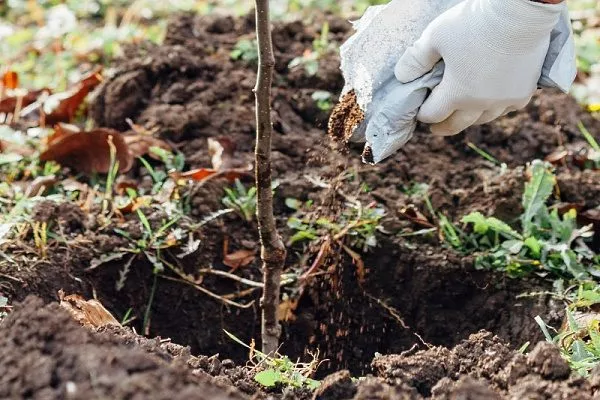
Add only one fertilizer to the soil: humus or compost, wood ash or mineral fertilizers.
For greens
When planting root parsley, apply manure fertilizers, and when planting leafy greens, apply mineral and organic nutrients.
Recommendations:
- Choose a site on elevated ground to avoid flooding from spring runoff. Prefer locations with good lighting.
- It's best to prepare a site where tomatoes, onions, cabbage, garlic, or cucumbers were previously grown. It's not recommended to sow seeds in a site where carrots were previously grown.
- Dig the area to a depth of 25 cm and level it.
- Prepare the beds so that there is a distance of at least 20-50 cm between rows, depending on the quantity.
- The furrow size should be 2 or 2.5 cm.
Use dry fertile soil and sand to fill the plantings.
Planting dates and selection of planting material
Begin preparing for winter sowing as early as late September or early October. This includes digging, fertilizing, and forming the beds. Selecting seeds and purchasing planting material is equally important.
Planting flowers
Many gardeners prefer to plant flowers in the fall so that the first shoots will begin to appear in the spring, gradually growing and delighting with their vibrant colors.
Tulips
| Name | Ripening period | Disease resistance | Demanding of light |
|---|---|---|---|
| Authority | Average | High | Average |
| Hit parade | Early | Average | High |
| Juan | Late | High | Low |
| Yellow Emperor | Average | High | High |
| Little Princess | Early | Average | Average |
The tulip is considered the king of spring flowerbeds. It is a bulbous flower, boasting hundreds of species and varieties, and a wide range of colors. It blooms from mid-April to early June.
Sow seeds in mid-September or early October, when temperatures are no higher than 6-11 degrees Celsius. Choose a sunny spot with loose, well-drained soil. Space bulbs 10 cm apart, and rows 20-25 cm apart. You can plant several varieties in a single bed, each blooming at a different time.
Peonov
| Name | Ripening period | Disease resistance | Demanding of light |
|---|---|---|---|
| Karl Rosenfeld | Average | High | High |
| Lemon Chiffon | Early | Average | Average |
| Golden hairpin | Late | High | Low |
| Coral Charm | Average | High | High |
| The Charm of Sunrise | Early | Average | Average |
The herbaceous peony is suitable for winter sowing. It prefers sunny locations and grows well near shrubs and hedges that provide reliable protection from the wind. Avoid planting peonies in excessively waterlogged lowlands.
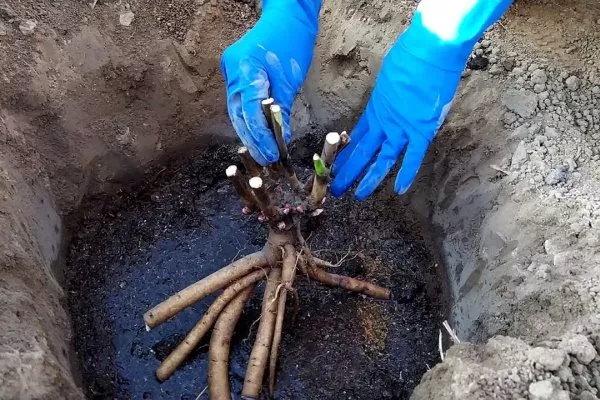
Plant in early September, or mid-September during hot periods. To plant a whole bush, prepare a hole measuring 90 x 70 cm, add drainage to the bottom, and add humus and a phosphorus-potassium fertilizer.
Lily
Flowering occurs from June to August. Sunny sites with loose, fertile, well-drained soil are ideal for growing.
Planting, replanting, and dividing the bulbs should be done in mid-September to early November, when the air temperature is no higher than 10 degrees Celsius. Plant the bulbs in holes filled with coarse, damp sand. Space the bulbs at least 15 cm apart. Cover the bulbs for the winter.
Rose
Roses are a popular plant found in almost every garden. The best time to plant them is mid-September, but they can be planted until early October. They thrive in a sunny, wind-protected area with at least 1 meter of water.
Roses require fertile, well-drained, loose, and moderately moist soil. If your site has poor soil, prepare a nutritious soil mixture 14-20 days before planting: mix loamy soil and organic fertilizer (compost or humus) in a 1:1 ratio.
Narcissus
Narcissus is a delicate flower that thrives in slightly elevated areas without stagnant meltwater, full sun, and wind. Choose planting sites near the trunk with loamy soil, as sandy soil won't provide them with sufficient nutrients.
Three months before planting, add compost or manure. Before planting, apply a balanced fertilizer high in potassium and phosphorus relative to nitrogen. Plant the bulbs at a depth of 10-20 cm, spacing them at least 10 cm apart.
Hydrangeas
Hydrangea, a moisture-loving and sun-loving plant, is very popular. Fall planting should be done in early September in central Russia and until late autumn in the southern region. The plant prefers wind-free, well-lit areas.
The flower requires light, nutritious, slightly acidic, and quickly absorbing soil. Prepare the planting hole in advance—3-4 weeks before planting. The hole should be large enough to accommodate the root system, approximately 30-50 cm. Leave at least 70 cm between plants.
Hyacinths
Hyacinths thrive in full sun and sheltered locations. Plant in early December, but avoid overly wet soil, as this can cause the bulbs to rot. If the weather is warm, delay planting until early November.
Prepare the soil in advance—1-2 months before planting, to allow the soil to settle. Dig the area to a depth of 40-50 cm and add organic and mineral fertilizers. Then, begin preparing the planting hole. It should be 10-16 cm in diameter. Space the bulbs 15 cm apart, and the rows 20 cm apart.
Planting shrubs and trees in the garden
Planting trees and shrubs requires special attention to ensure they take root and produce consistent and abundant harvests in the future. Learn about planting guidelines.
Strawberries
Deadlines strawberry plantings Depends on the local climate and weather. Plant early varieties before mid-September, mid-season varieties before mid-October, and late varieties 1-1.5 months before the onset of cold weather.
Choose well-lit areas for planting. In the shade, the berries grow small and tasteless. To plant, loosen the soil, dig holes 10-15 cm deep, and water. Mix the soil with compost and rotted manure for fertilizer.
Strawberries
Garden strawberries are a juicy and healthy berry that many people enjoy. For fall planting, bare-root seedlings are needed from early September to late October. Choose well-drained areas with fertile soil.
A week before planting, dig the area to the depth of a spade, and incorporate rotted manure at a rate of 20 kg per square meter. The optimal planting pattern is 60 x 40 cm. This will make it easier to care for the plants.
Raspberries
To ensure that young raspberries start growing quickly in the spring, take care of planting bushes A month before the first frost. After winter, the soil will be filled with moisture and nutrients. Choose a site with loose soil. Twenty days before planting, add manure or humus.
Dig a planting hole 30 cm deep. Maintain a minimum distance of 80 cm between plants. If your soil is sandy, plant the raspberries in a trench. For heavy soil, it's recommended to plant the seedlings in a raised bed 20 cm above the ground.
Currants
To ensure fruit bushes have time to establish roots before the onset of severe frost, begin planting them from mid-September to the end of October. Choose a slightly shaded area for blackcurrants, and a sunny spot for redcurrants. The bush prefers loamy soil.
Prepare the planting hole: dig a circular hole measuring 40 x 40 cm. Add 20 kg of humus or other organic matter if the soil is infertile. Add 200 g of ash or granulated mineral fertilizers, such as 150 g of superphosphate and 20 g of potassium sulfate.
Gooseberries
Gooseberries are an easy-to-grow crop that can grow anywhere, in any soil type. However, choose a well-lit area and avoid planting in swampy lowlands. Planting time depends on weather conditions, but aim to plant the plant a month before the onset of frost.
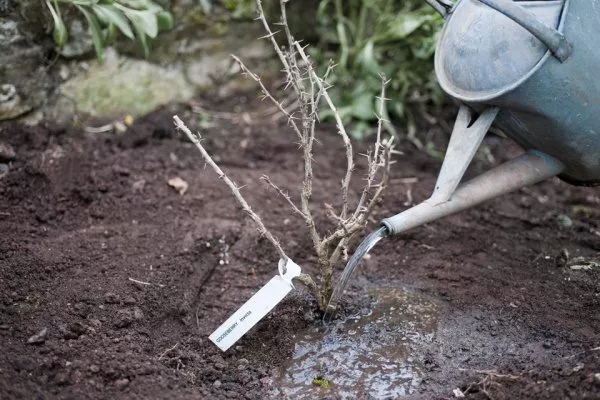
Typically, a hole 30-40 cm in diameter and 40-70 cm deep is prepared for gooseberries. Divide the top layer of soil into 2 parts, mix one with humus or compost, 50 g of double superphosphate, and 45 g of potassium sulfide. This will saturate the seedling with the necessary nutrients. Next, you should preparing shrubs for winter.
Grapes
Grape seedlings will delight you with vigorous growth the following year. Plant them 20-25 days before the onset of sustained frost. Be sure to cover these seedlings for the winter with spruce branches, spunbond, or burlap.
Dig a planting hole—it should be larger than the seedling's root ball. Fill the remaining space with soil and water thoroughly.
Apple trees
It's recommended to plant young apple trees in September or October to allow the seedlings time to take root. Dig a large planting hole, one that's larger than the tree's root system.
Over the next year, water and feed the plant regularly with soluble minerals.
Pears
Plant pear trees from September to October. The plant prefers well-lit, spacious areas and loose, fertile soil. When planting, consider the groundwater level.
Prepare the planting hole: its size depends on the length of the seedling's roots. Set the topsoil aside, remove the subsoil, and mix it with humus, turf, and leaf mold. Add 400 g of superphosphate and 40 g of potassium salt. If your soil is acidic, add 400 g of lime.
Cherries
The optimal time to plant cherry tree seedlings is when daytime temperatures reach 10-15 degrees Celsius and nighttime temperatures range from 0 to 2 degrees Celsius. When choosing a site, choose a well-lit location. You can also plant near a fence.
Prepare the hole for the cherry tree based on the size of the root system. Typically, the planting hole is 60 x 60 x 60 cm. Carry out this procedure two weeks before planting. Also, prepare the soil mixture in advance: mix the topsoil with 20 kg of humus, 200 g of superphosphate, and 30 g of potassium sulfate.
Plums
Plant plum trees 1.5-2 months before the onset of cold weather. Choose a site with a low water table and avoid planting near tall trees. Plum trees dislike acidic soil, so add 500 g of dolomite flour to the planting hole.
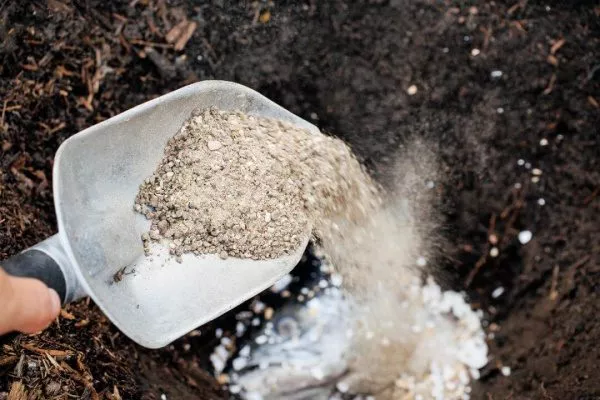
A few days before planting, dig a hole measuring 50x50x60 cm. Add sand and drainage to the bottom. Mix some of the topsoil with fertilizer and return it to the hole.
Planting vegetables in the garden
Planting vegetables in your garden before winter is a great way to harvest next year's crops earlier than with spring planting. You can plant a variety of vegetables in your garden.
Potatoes
Planting potatoes in the fall is risky, but worthwhile. Choose a site protected from wind and stagnant groundwater. To prevent soil pests from damaging the tubers, expose them to sunlight two weeks before planting.
If the potatoes turn green, soak them in a fungicide for 30 minutes. When planting, add 200 grams of ash to each hole, planting two potatoes at a time. Cover the beds with straw, a layer of peat, and spunbond to protect the crop from sudden temperature changes.
Garlic
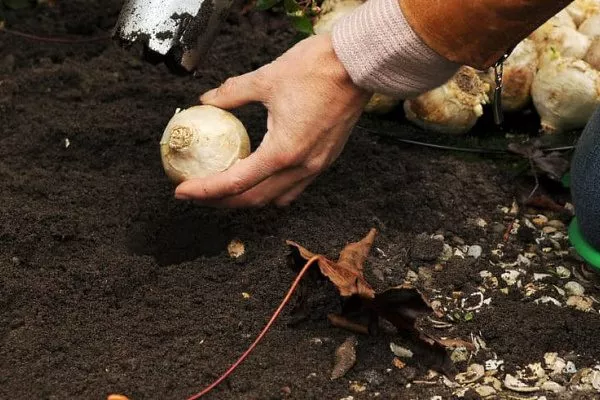
To plant garlic, make furrows and add mineral and organic fertilizers (potassium, phosphorus, and humus). Begin preparatory work two weeks before planting. Select the largest heads of garlic and separate them into cloves.
Make small beds, about 2 m long and 1.5 m wide. Place the cloves 3-4 cm deep into the soil. Plant in well-lit areas.
Luke
Plant onions before the first frost, usually around October. They prefer loose soil. Before fall planting, disinfect the soil with a copper sulfate solution. Also, fertilize with a mixture of peat, wood ash, humus, potassium salt, and superphosphate.
Dig the soil ahead of time to allow it to settle and compact. The beds should be about 18-20 cm high. After the soil has settled, level the area and make furrows 5-7 cm deep. Space the furrows 20 cm apart. Insert the seedlings so that the collar is 1.5-2 cm below ground level. Cover with soil and compact.
Beets
Select a site in advance beet plantingsCarry out the procedure in September-October. The plant prefers a sunny location with light, humus-rich soil with a neutral pH.
Make furrows 3 cm deep, keeping a distance of 8-10 cm between seeds. There should be at least 20 cm between rows. Mulch the beets with sawdust or leaves.
Turnips
Choose a well-lit area with minimal shade. Turnips grow best in peat, loam, and sandy loam soils, but do not grow well in clay soils.
More and more gardeners are growing turnips. Sow the seeds two weeks before the first frost. Sow them at a depth of about 3 cm, leaving up to 10 cm between seeds, but place several seeds in each hole. Leave 25 cm between rows, which yields about 2 grams of seeds per square meter.
Carrots
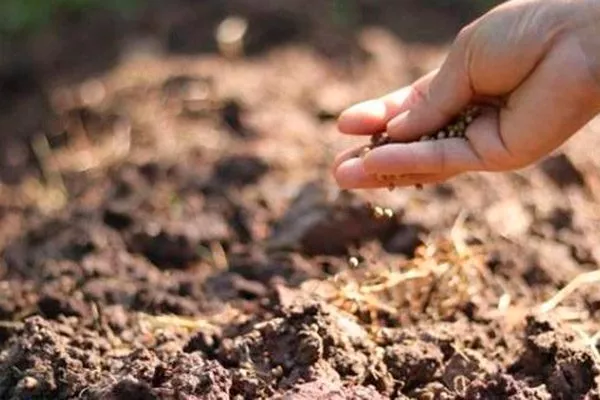
When planting carrots, pay attention to the site you choose: it should be level, sheltered from the wind, and sunny. Avoid sowing seeds on a slope to avoid them being washed away by water during the spring snowmelt. The soil should be loose, light, and fertile.
Keep rows small and use a lot of seeds, as most may not germinate. Keep a distance of about 2 cm between seeds and 15-20 cm between rows.
radish
Get started planting radishes From early September to late autumn (November). Choose a site with fertile soil. It should be sheltered from strong winds and receive good sun exposure, but also partial shade.
Keep a distance of about 3 cm between seeds and 8-10 cm between rows. Make furrows 2 cm deep. Mulch the plantings with peat.
Is it possible to plant greens in the fall?
In the fall, you can plant greens, which will begin to sprout in the warm weather of spring and delight you with a good harvest.
Planting greens in autumn:
- Dill, cilantro and parsley. They'll thrive in the same bed. Plant after the first light frost. After sowing, lightly cover with frozen soil. Use neutral or slightly acidic soil, rich in organic matter and well-moistened.
Make furrows 2 cm deep, spacing them 20 cm apart. Add seeds generously. Mulch the soil. The best dill varieties are: Aromatic Bouquet, Gribovsky, and Green Bunch. Parsley varieties: Vereiskaya, Irinka, and Sakharnaya. Cilantro varieties: Avangard, Borodino, and Picnic. - Celery. Typically, leaf celery is sown in the fall, but you can also use root celery. Place the seeds at a depth of about 1.5 cm. Sow densely, but don't use more than 1 g per square meter.
The best varieties of celery: Root Gribovsky, Apple. - Salad. To get early, healthy greens, start planting in November. In October, dig the bed, remove weeds, and fertilize the soil with humus and superphosphate. Make shallow furrows, cover them with plastic wrap, and store until sowing. After planting, cover with warm soil or peat.
The best varieties of lettuce: Gauguin, Sanzhin, Morozko, Emerald Giant, Cook. - Watercress. Mid-season and late-season varieties are suitable for planting. It's best to plant them in a greenhouse and grow them throughout the winter. Plant them 1-2 cm deep, with at least 20 cm between rows. Sow the seeds in a continuous band, thinning them out after germination.
The best varieties of watercress are: Riga, Dachnitsa, Large-headed, New Year. - Leek. Sow seeds when the air temperature is at least 0 degrees Celsius. Place the seeds to a depth of about 1.5 cm and space them at least 10 cm apart. Leave about 30 cm between rows. The seeding rate is 2 g per 1 sq. m.
- Salad mustard (leaf). It's frost-resistant and easily tolerates frost. Plant seeds about 1.5 cm deep, leaving 25 cm between rows. The seeding rate is 3 g per square meter.
The best varieties of leaf mustard: Ladushka, Volnushka, Prima. - Spinach. Plant from September to the end of November, before severe frosts arrive. Moisten the soil and make furrows 1-1.5 cm deep, leaving 2-3 cm between them. Place the spinach seeds in the prepared holes, then cover them with soil.
The best varieties of spinach: Victoria, Giant, Fat-leaved. - Welsh onion. Plant seeds about 3 cm deep and 20 cm apart. Leave at least 50 cm between rows. Be sure to select a good variety. The seeding rate is 7 g per square meter.
The best varieties: Gribovsky 21, Maysky, Aprelsky 12, Salatny 35. - Sorrel. Plant after the first light frost. Sorrel thrives in sunny areas protected from strong winds. When preparing the soil, add wood ash and organic and mineral fertilizers.
Make a furrow, plant the seeds 2 cm deep, cover with soil, and mulch with straw. Cover with plastic wrap.
The best varieties of sorrel: Nikolsky, Belvilsky, Malachite.
What to do in spring – general rules and recommendations
After winter planting, it's time to focus on your garden and vegetable patch in the spring. Follow these recommendations:
- Tidy up the flower garden. Remove weeds, loosen the soil and water the plants thoroughly to encourage them to emerge.
- Engage in crop enrichment. Apply fertilizer, open the shelters, and remove the plastic wrap from the plants so they can acclimate to the temperature. Regularly weed and loosen the soil to oxygenate it.
- Treat for diseases and pests. To prevent your plants from being attacked by insects, fungi, or other infections, treat them with special preparations.
- Take care of pruning. Shrubs and fruit trees require formative and sanitary pruning. This procedure will shape the crown and remove damaged, diseased, and non-fruiting shoots.
If you want an early spring harvest, start preparing in the fall. This will ensure lush greenery and the fastest ripening fruits and vegetables. By planting flowers in the fall, your garden will be adorned with vibrant colors come spring.