
Sunflowers occupy an important place in agriculture due to their unique properties and the diversity of their varieties. Among the most attractive are varieties with striped seeds, distinguished by their decorative appearance and excellent agronomic properties. They are essential for producing high-quality sunflower oil.
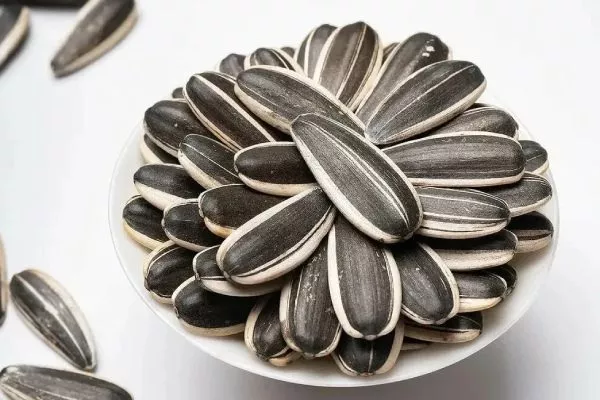
How are striped seeds different from black ones?
Striped sunflower seeds are an oilseed variety intended exclusively for human consumption, unlike some black varieties used for oil production. These seeds are also used in the confectionery industry.
- ✓ Optimum soil temperature for sowing: 8-12°C at a depth of 5 cm.
- ✓ Seed sowing depth: 4-6 cm depending on soil type.
The benefits of striped sunflower seeds
They are characterized by numerous health benefits. They are an important source of energy and micronutrients, rich in vitamins A, E, D, and B, and contain calcium, magnesium, fluoride, and iron. They also help lower cholesterol.
This popular snack is widely available in stores, bars, and restaurants around the world. The seeds are added to salads, sandwiches, and other dishes.
Where do striped seeds grow?
Healthy growth depends on the characteristics of the variety and the climate conditions of the region where it is grown. Striped varieties are cultivated in various parts of the world, from Russia to Argentina. Most are hybrids adapted to specific regions.
This variety loves warmth and is sensitive to strong winds. Due to the large and heavy size of its seeds, hurricanes can cause them to fall prematurely.
Sunflower varieties with striped seeds
Sunflower varieties with striped seeds are resistant to diseases and pests, which plays a significant role in agriculture. The most popular varieties are listed below.
| Name | Plant height (cm) | Oil content (%) | Yield (c/ha) |
|---|---|---|---|
| Aromatic SU | 180 | 49.4 | 11.8-32.2 |
| Duet SL | 150-160 | 48-52 | 21.6 |
| Yenisei | 140-170 | Not specified | Not specified |
| EC Bella | 150 | Not specified | 24-25 |
| EU Genesis | 160-165 | 51.4 | 22.5-23.9 |
| Merlin | 150-160 | Not specified | 30-35 |
| Sweet tooth | 150-170 | 50 | 22.2 |
| Maritsa | 135-142 | Not specified | 30.5 |
| Master | 190-200 | Not specified | 22.2-43.3 |
| MC Siren | 160-170 | Not specified | 21.9-39.7 |
| NK Neoma | 150-170 | 49.7 | 28.5-31.7 |
| HCX 6012 | 170-180 | 49.1 | 24.9 |
| NSH 6006 | 160-180 | 50 | Not specified |
| NSH 6007 | 140-160 | 48-51 | 31.9 |
| NSH 6008 | 160-180 | Not specified | 26.1 |
| NSH 6054 | Not specified | Not specified | 21.5 |
| Nut | 160-180 | 54.2 | Not specified |
| Reina | 160-170 | 48-54 | 22.8 |
| Rimisol | 140-160 | 44.7 | 21.6-32.1 |
| Sanmarin 421 | 165-175 | Not specified | 16-23 |
| SI Laskala | 150-170 | 49.1 | 20.5-49.2 |
| Tunka | 150 | Not specified | 19.9-27.5 |
| Helesan SU | 150-160 | Not specified | 40.4 |
| Nutcracker | 190-210 | Not specified | Not specified |
- ✓ Aromatic SU: high resistance to white rot and broomrape.
- ✓ Duet SL: high oil content (48-52%) and yield (21.6 c/ha).
Aromatic SU
It is a tall plant, reaching a height of up to 180 cm, and does not form lateral branches. Distinguishing features:
- Leaves - orange-yellow color.
- Seeds – with a striped pattern.
- Weight - 1000 seeds weigh 54.2 g.
- Ripening – 127 days after emergence.
- Oil content – high, is 49.4.
- Oleic acid – 75.8%.
- Productivity – from 11.8 to 32.2 c per 1 ha.
This variety is resistant to diseases and pests. It rarely suffers from white rot, is almost unaffected by broomrape in the field, and is slightly susceptible to gray rot, dry rot, and rust. It can be affected by downy mildew and black rot.
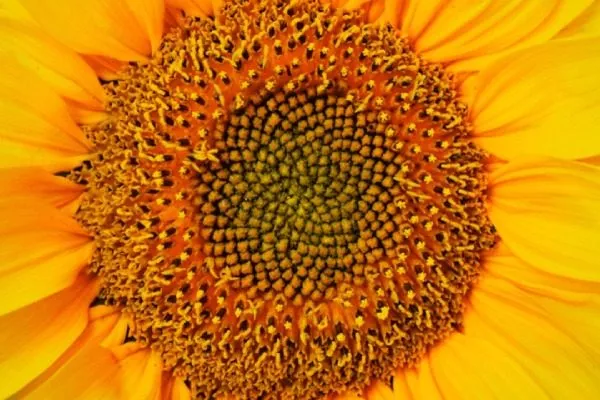
Duet SL
The plant is tall, reaching a height of 150 to 160 cm, without branching. Characteristic features:
- Leaves - Medium-sized, green leaves with very little or no blistering and moderate serration. The leaf cross-section is flat.
- Inflorescences – medium in size, baskets are convex and fully formed.
- Seeds – Predominantly black with distinct gray stripes. The flower heads are turned downwards on a straight stem and tilted.
- Oil content – high, 48-52%.
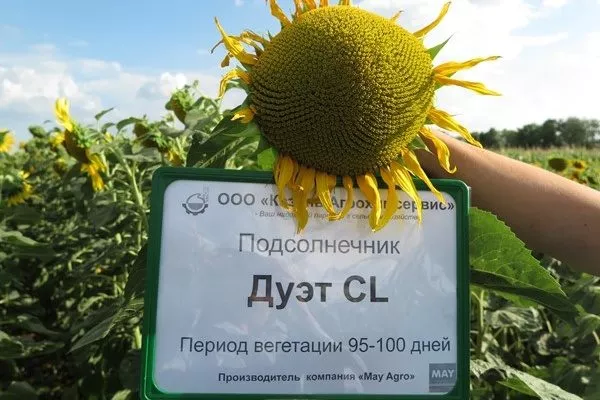
Yenisei
The plant is medium-sized, robust, and lodging-resistant, reaching a height of approximately 140-170 cm, with large foliage and a rough surface. It is a honey plant. The inflorescence is large, 25-40 cm in diameter, slender, and slightly or strongly inclined. The yellow flowers, capable of self-pollination, produce abundant nectar. The seeds are large, oval, black, striped, and well-formed.
The Yenisei variety has a number of advantages:
- Leaves - of considerable size, with a rough surface.
- Inflorescence – large, 25-40 cm in diameter, thin, slightly or strongly inclined.
- Flowers – They produce a lot of nectar, are self-pollinating, and are colored yellow.
- Seeds – large, oval-shaped, well-made.
- Sustainability – to broomrape, drought and frequent rains.
The crop is early maturing. The seeds ripen evenly. Its main drawback is low yield, but with proper care, it can increase.
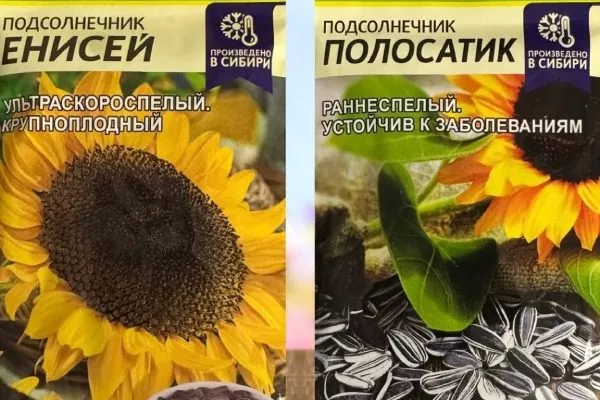
EC Bella
This oilseed variety is characterized by good yields and excellent heat tolerance, making it popular for cultivation in various regions. The plant is tall, reaching a height of 150 cm, without branching. Distinctions from other varieties:
- Leaves - medium-sized, green, with slight bubbling and medium serration.
- Inflorescence – Large, with a diameter of 22 cm, the basket is turned downwards and has a correct slope. The basket is excellently crafted.
- Seeds – medium thickness, broadly ovoid in shape, with a black base color with gray stripes.
The key advantage of the EC Bella sunflower is its yield, averaging 24-25 centners per hectare in various regions, making it one of the most productive varieties.
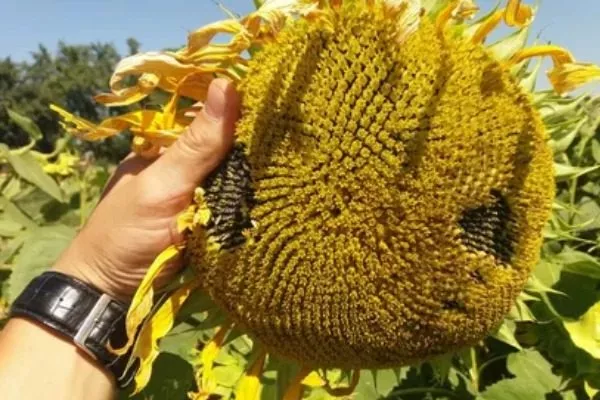
EU Genesis
It belongs to the tall varieties and reaches a height of 160-165 cm. Characteristics of the variety:
- Stem – medium thickness.
- Leaves - normal size, green, with very slight or slight blistering and medium serration.
- Inflorescence – medium-sized, with a diameter of 20-22 cm. The inflorescences are yellow, the baskets are slightly convex and half-tilted downwards.
- Seeds – narrowly ovoid in shape, with a grey base colour and distinct grey stripes.
- Weight - 1000 seeds equal 64 g.
- Oil content – reaches 51.4%.
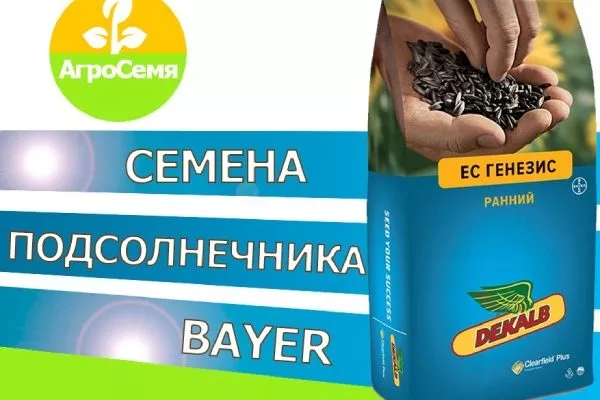
The EC Genesis sunflower is distinguished by its high yield, averaging 22.5-23.9 centners per hectare in various regions, making this variety very attractive to farmers and oil producers.
Merlin
This oilseed variety is characterized by excellent yield and good adaptation to various climatic conditions. It was developed to meet the needs of agricultural producers seeking stable sunflower yields.
Distinctive features:
- Stem – from 150 to 160 cm in height, which makes it medium-sized.
- Branching – absent or weakly expressed. This promotes better concentration of nutrients for seed formation.
- Leaves - medium-sized, green, with moderate blistering and serrated edges.
- Inflorescences – Large ones, with a diameter of 20 to 25 cm, are usually oriented downwards, which facilitates pollination and speeds up the ripening process.
- Seeds – large, oval-shaped, black with grey stripes.
- Productivity – Varies depending on growing conditions and can reach impressive yields, ranging from 30 to 35 centners per hectare.
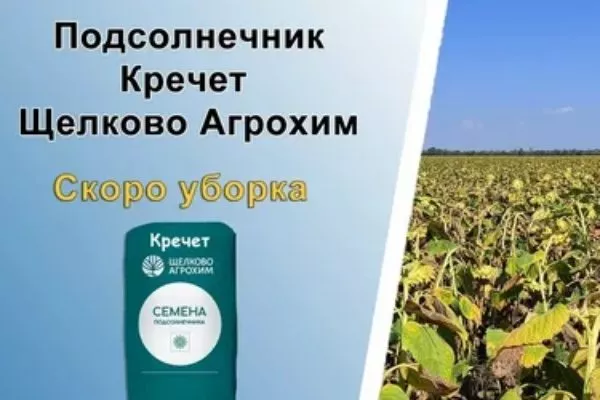
Sweet tooth
Belongs to the confectionery (often called shelling or hulling) sunflower family. This annual plant reaches a height of 1.5-1.7 m and does not form branches.
It is famous for the following features:
- Leaves - Medium-sized, heart-shaped, and plain green. Vesicular areas are absent or weakly visible, and the edges are serrated but irregularly shaped. The cross-section is flat.
- Inflorescences – Large, yellow, with a head always facing downwards. The seed side of the head is flat.
- Seeds – Large, elongated oval-shaped, and predominantly black with a lateral gray stripe, they contain high levels of zinc, thiamine, tocopherol, and iron. Protein accounts for 17.2% of the mass, and oil content reaches 50%.
- Flowering – The harvest season is uniform and occurs in July, August, and September. The period from germination to harvest is 65 to 71 days.
- Flowers – ligulate, and in tubular specimens the stigma does not have anthocyanin coloration.
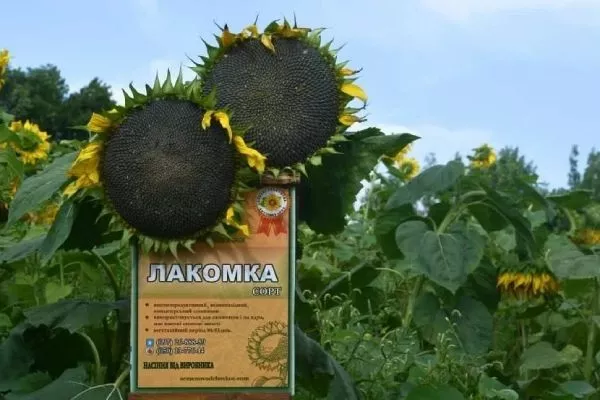
Maritsa
This oilseed variety is early maturing and is characterized by high yields. The plant is medium-sized, ranging in height from 135 to 142 cm, but in some cases can reach 170-180 cm. It has no branches, and the leaves are medium-sized, green, with blistered and serrated edges.
The inflorescence is small, 21-23 cm in diameter. The sunflower yield is 30.5 centners per 1 hectare.
Master
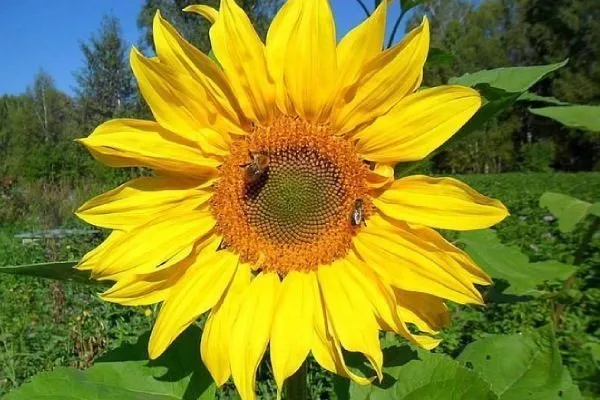
Reaches a height of 190-200 cm. The leaf margin is moderately serrated, irregular, and there are no lateral wing-shaped segments.
Other characteristics of the variety:
- Leaves - heart-shaped, colored green.
- Inflorescence – Yellow. The ligulate flower is elongated and yellow; the tubular specimen is colored the same shade, but without the anthocyanin coloration of the stigma.
- Seeds – They are located in a lateral and marginal position, oval-elongated in shape, black in color with gray stripes.
MC Siren
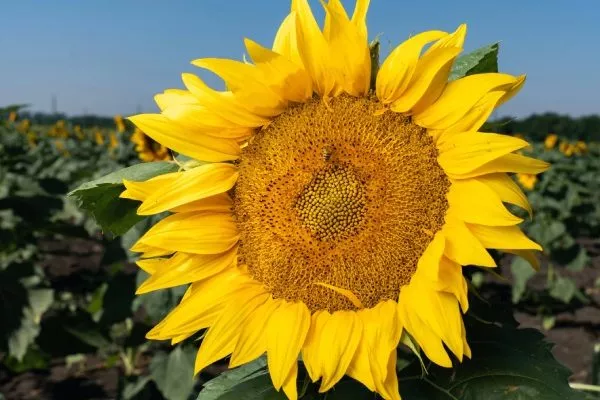
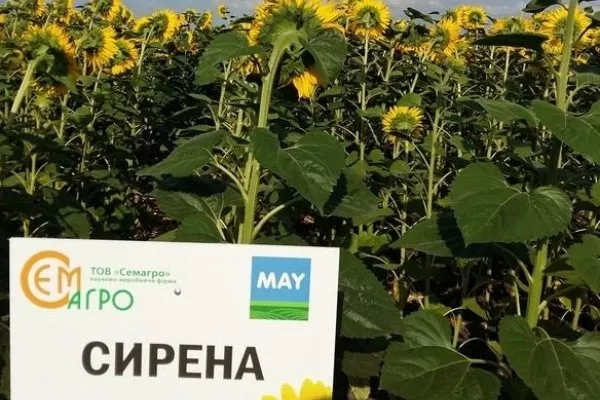
This plant is a medium-sized variety. Stem height ranges from 160 to 170 cm, without branching. Advantages of this plant:
- Leaves - green, with moderate blistering, pubescence in the upper part of the stem is average.
- Inflorescence – Small. The ray florets are orange-yellow, while the tubular florets are orange. The stigma lacks anthocyanin. The flower heads are convex.
- Seeds – small, narrowly ovoid, black in color, with slight gray stripes.
NK Neoma
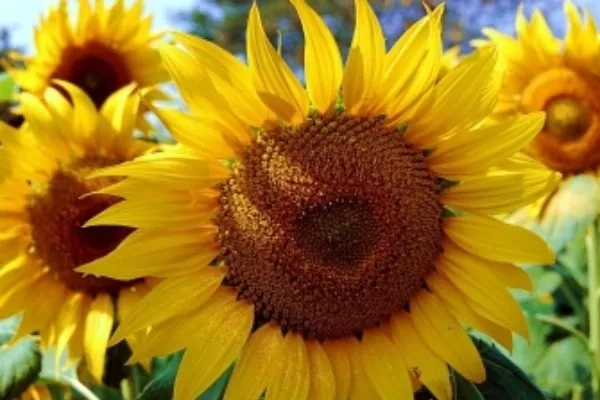
The sunflower plant reaches 150 to 170 cm. The absence of branching makes harvesting easier.
It has many distinctive qualities:
- Leaves - colored green. Bubbling weak, and the edges are serrated. The plant has no ornamental properties.
- Inflorescences – Both the ligulate and tubular flowers are yellow, without a pronounced anthocyanin coloration on the stigma. The flower heads are half or completely turned downwards, and the seed side of the head is convex.
- Seeds – broadly oval, brown with spots and marginal stripes.
- Oil content – is 49.7%.
It is a high-yielding variety – on average, 28.5 to 31.7 centners can be harvested from 1 hectare.
HCX 6012
This sunflower variety is tall, with medium-thick stems. It reaches 170-180 cm in height and is unbranched. It can be identified by the following characteristics:
- Leaves - light green, with slight bubbling.
- Inflorescence – Large, 23-25 cm in diameter, yellow in color. The baskets are small, thin, and convex in shape.
- Seeds – narrowly ovoid in shape, black in color with gray stripes.
- Weight - 1000 seeds weigh 65-70 g.
- Oil content – is 49.1%.
These characteristics make it attractive to oil producers. Yields reach 24.9 centners per hectare.
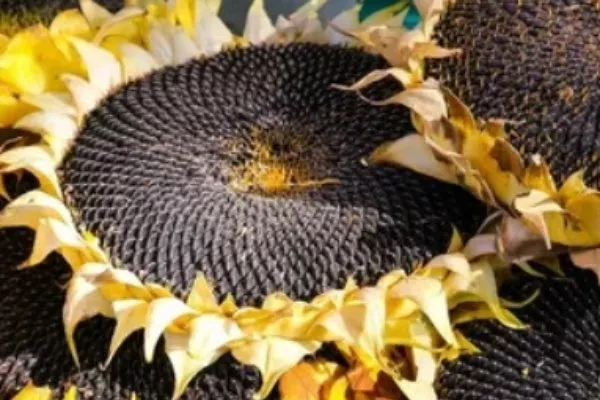
NSH 6006
Sunflowers range in height from 160 to 180 cm. The lack of branching makes them easier to handle and maintain. They are noted for the following features:
- Stem – with a slight pubescence at the top.
- Leaves - Green, with slight to very slight blistering. Serration is present, and the cross-sectional shape can range from concave to flat, with lateral wing-shaped segments.
- Flowering – Early. Ripens 105-107 days after germination.
- Baskets – Narrowly ovoid, with yellow ray and tubular flowers. The stigma has a medium anthocyanin color. The head is half-turned downwards, making it more resistant to various weather conditions.
- Seeds – black with grey stripes, no spots, stripes are in the marginal position.
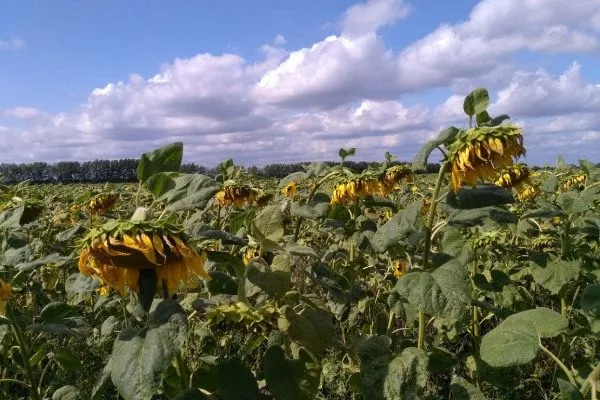
NSH 6007
The sunflower reaches 140 to 160 cm in height. The upper part of the stem is heavily pubescent, making it resistant to breakage in adverse weather conditions.
Features of the culture:
- Leaves - The leaves are green and either devoid of vesiculation or only weakly present. Serration is fine, and the cross-section is flat. Lateral wing-shaped segments are present, and the angle between the lateral veins is obtuse.
- Inflorescences – Medium-sized, with a diameter of 21 to 25 cm. The ray and tubular florets are yellow, and the stigma has little anthocyanin. The flower heads have a flattened seed surface.
- Seeds – Narrowly ovoid, black with gray stripes located at the margins. No spotting.
- Oil content – ranges from 48 to 51%.
- Weight - 1000 seeds weigh between 60-70 g.
The variety yields 31.9 centners per hectare. This subspecies is relatively easy to grow and requires minimal maintenance.
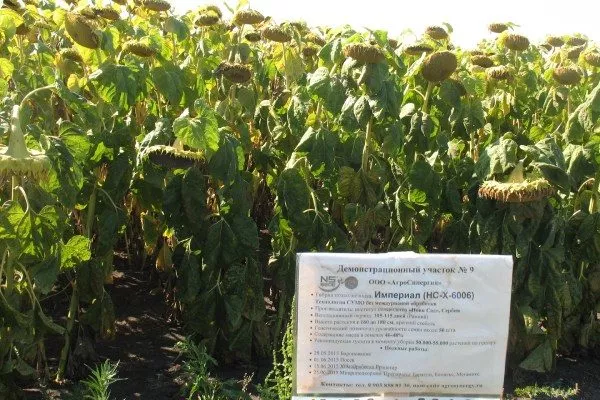
NSH 6008
The plant grows to a height of 160 to 180 cm. It is characterized by a lack of branching. The leaves are small, green, and either lacking or barely visible bulging. The inflorescence is considered medium-sized, with a diameter of 21-25 cm. The flower head is yellow and slants downward.
The seed is flat on the seed side and fully formed. The seeds are narrowly ovoid and elongated. They are black with a gray stripe, and some striping is present. The yield is 26.1 centners per hectare.
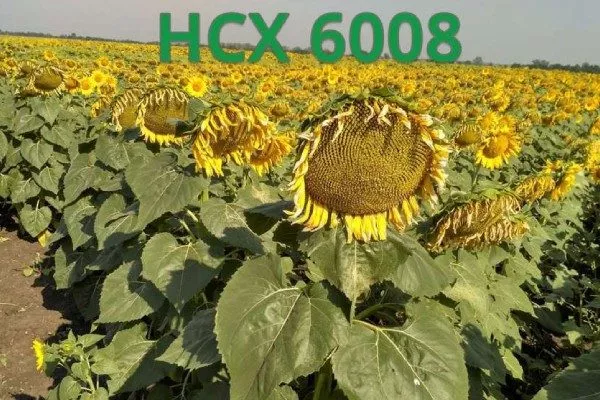
NSH 6054
Sunflower is disease and pest resistant, with a high oil content. It boasts excellent yields, yielding approximately 21.5 centners per hectare.
It belongs to the category of medium-sized plants, which can create inconveniences when using certain methods of soil cultivation or choosing a planting method.
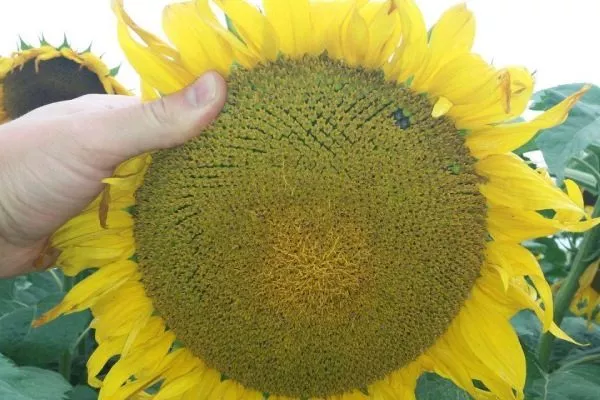
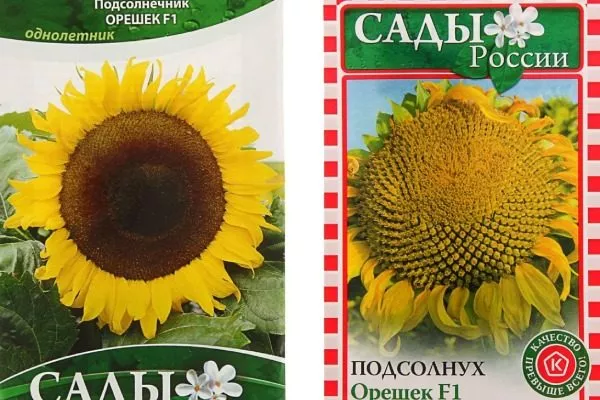
Nut
It is an annual oilseed plant and a honey plant. It lacks branching and reaches a height of 1.6 to 1.8 m. The upper part of the stem is moderately pubescent.
Other cultural features:
- The leaves are heart-shaped and virtually free of blistering. The green foliage lacks anthocyanin pigments, so there are no vibrant color hues.
- The leaves are dull. The lateral segments resemble wings, and there is a right angle between the veins. The serrated margins have an irregularly concave cross-section.
- The ligulate flower is yellow, oval in shape and not colored with anthocyanin.
- The flower head is tubular, with the flattened seed surface facing downward. The elongated fruits resemble a wide oval.
- The black seeds are decorated with grey stripes, without spots.
The weight of 1000 seeds varies from 80.5 to 138.5 g, and the oil content is approximately 54.2%.
Reina
The plant grows tall, reaching 160-170 cm. It has a curved, unbranched stem. This oilseed variety has characteristics that contribute to its successful cultivation:
- Leaves - large and medium, green, with moderate bubbliness.
- Baskets – with a slightly convex shape.
- Seeds – Broadly ovoid. The main color is black, with slight stripes.
- Oil content – ranges from 48 to 54%.
One of the advantages of the Reina sunflower is its yield, reaching up to 22.8 centners per 1 hectare.
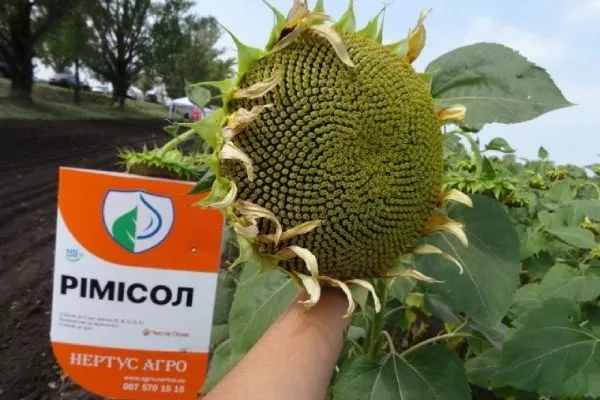
Rimisol
It attracts attention with its tall growth habit, reaching a height of 140 to 160 cm, and the diameter of its inflorescence is from 19 to 22 cm. Other positive features:
- Stem – without branching.
- Leaves - Heart-shaped, light green, without anthocyanin coloration or gloss. The leaf margins are coarsely serrated and slightly blistered.
- Inflorescence – Yellow, with ligulate and tubular flowers of a yellow hue. The anthocyanin coloration of the stigmas is average. The shape of the basket is thin and convex on the side of the seed part; half turned downwards. The inflorescence size is small.
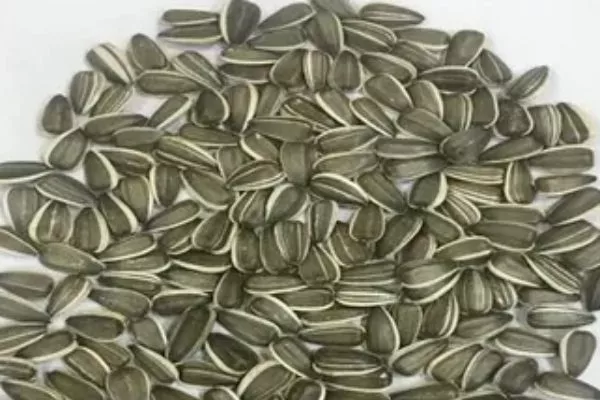
- Seeds – striped, broadly oval formations with gray stripes on a black background.
- Oil content – is 44.7%.
Yields range from 21.6 to 32.1 centners per hectare. Sunflower has a positive impact on the honey community, which is appreciated by beekeepers.
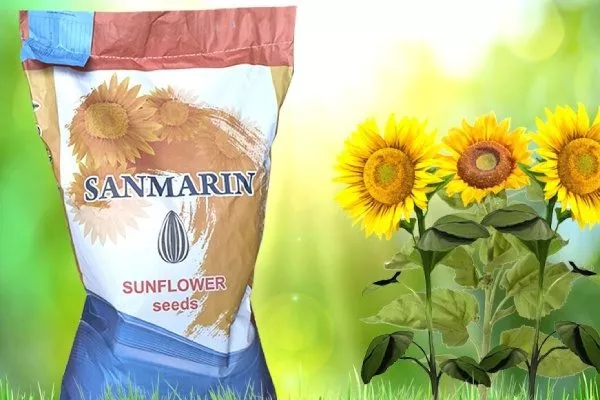
Sanmarin 421
The plant reaches a height of 165 to 175 cm and is characterized by a strong, unbranched stem. The leaves are heart-shaped, light green, and lack anthocyanin coloration and gloss. Blistering is either absent or very weak. The inflorescence is medium in size, 18-20 cm, and its coloration is yellowing.
The heads are flat and downward-facing. The seeds are oval-elongated, black with a gray stripe along the edge and side, and may be striped. The variety's yield ranges from 16 to 23 centners per hectare.
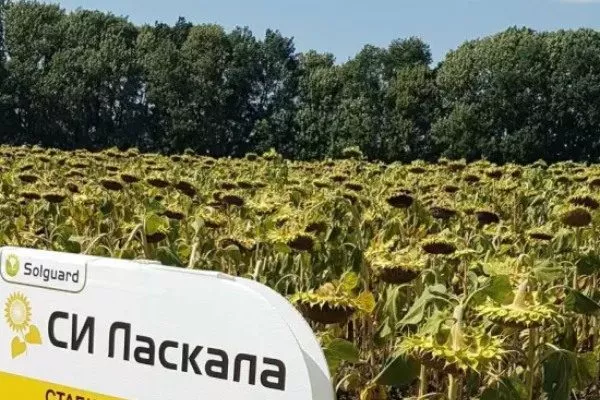
SI Laskala
The plant is tall, ranging from 150 to 170 cm, and has no branches. It has many distinctive qualities:
- Leaves - Large, green, with slight blistering. The upper part of the stem is heavily pubescent.
- Inflorescences – Medium-sized, their diameter ranges from 16 to 18 cm. The ligulate flower is yellow, and the tubular flower is orange. The stigma lacks anthocyanin coloration.
- Baskets – in the form of an inverted cup.
- Seeds – broadly ovoid in shape, the main color is black with gray stripes.
- Oil content – is 49.1%.
- Weight - 1000 seeds range from 53.5 to 60.8 g.
One of the main advantages of this variety is its yield, which ranges from 20.5 to 49.2 centners per hectare. Its disadvantage is its less than attractive appearance.
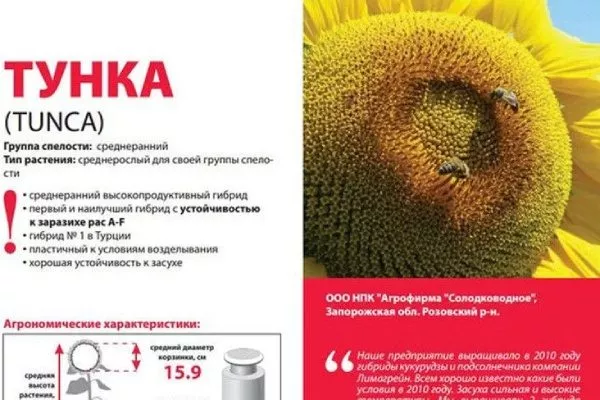
Tunka
It belongs to the tall varieties, reaching a height of up to 150 cm. It is characterized by the following characteristics:
- Straight, unbranched stem.
- The leaves are heart-shaped, green, without anthocyanin and gloss.
- The pubescence of the stem in the upper part can be moderate or strong.
- The inflorescence is medium-sized, approximately 15.9 cm in diameter, and is colored yellow.
- The baskets are convex in shape and half turned downwards. They are oval-elongated.
- The main color of the seeds is black with gray stripes, without spots.
- The variety is adapted to dry conditions and is resistant to downy mildew.
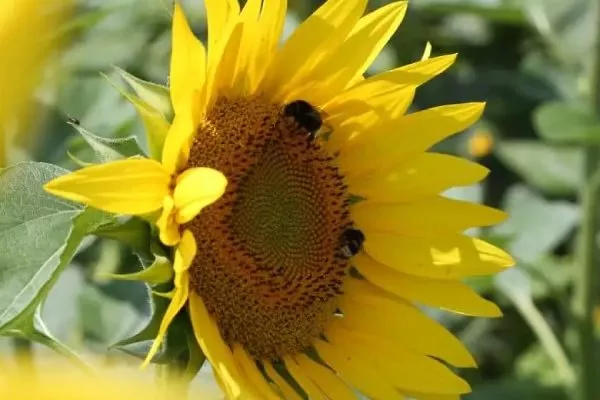
Helesan SU
The growth habit can be described as medium-sized. The plant's height ranges from 150 to 160 cm and it is unbranched. The leaves are green with varying degrees of blistering, from slight to medium.
The yellow inflorescences reach 22 to 25 cm in diameter and have a convex head shape. The inclination angle is approximately 45°. The seeds are striped with faint marginal stripes. Yields reach up to 40.4 centners per hectare.
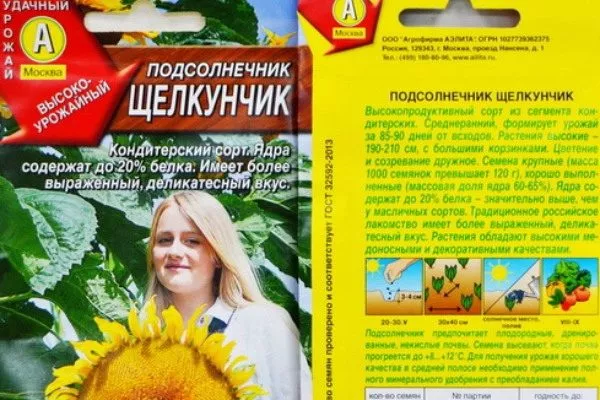
Nutcracker
Belongs to the confectionery sunflower category. This tall plant grows from 190 to 210 cm in height. Its flower head is quite large in diameter, dense, and slightly convex.
Advantages of culture:
- The seeds are oval-elongated. Their skin is black with a characteristic white stripe along the edge.
- The kernels are very tender, with a distinct aroma.
- The mass fraction of the kernel in the seed is from 60 to 65%, and the protein content is approximately 20%.
- From the first shoots to the moment of harvest it takes about 85-90 days.
It is suitable for growing in the southern regions of Russia and in the central part of the country. In the northern regions, it can be planted, but only as an ornamental plant, as the local climate prevents the seeds from fully ripening.
Sunflower varieties with striped seeds are a valuable agricultural resource with several advantages. Their resistance to diseases and pests and high productivity make them an important element in the production of high-quality oil. They are a key component in ensuring food security.