
The Sadko gooseberry is a proven and reliable variety that has proven itself in regions with challenging climates. This prickly gooseberry boasts excellent growing and flavor characteristics and is a great addition to any garden.
The history of the Sadko gooseberry
The Sadko variety was developed by Russian breeders from the All-Russian Selection and Technological Institute of Horticulture and Nursery. It was obtained by crossing the Lada gooseberry and the Seyanets 329-11 variety. Moreover, the Sadko variety inherited the former's high frost resistance.
The Sadko variety was added to the State Register of Breeding Achievements in 1997 and recommended for cultivation in the Far East. This gooseberry can be grown in virtually all regions of the country. Initially developed for areas with warm winters and mild summers, it was later recommended for regions with harsh winters.
Description of the variety
The bushes are medium-sized, vigorous, with a slightly spreading (sometimes compressed) crown. The bush reaches 1.2 m in height. The shoots are erect, strong, covered with sparse, short spines, and begin to bend toward the ground over time.
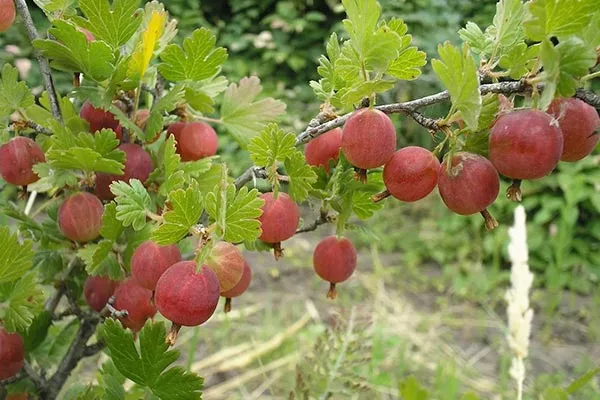
Young shoots grow straight, long, and of medium thickness. Thorns are most often found at the base of young shoots. The leaves are bright green, medium-sized, corrugated, with serrated edges; they turn red in autumn.
Description of berries:
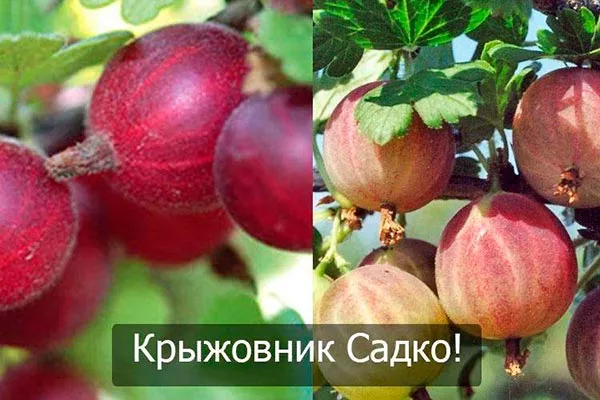
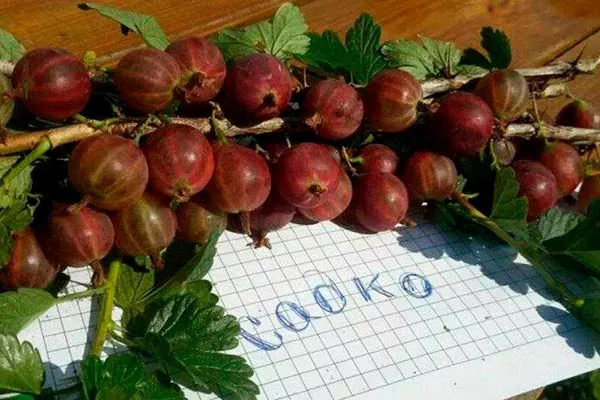
- Colour: from light red to dark red.
- Shape: from round to oval-pear-shaped.
- Weight: on average 3.5-4.5 g (there are specimens of 6-7 g).
Taste and application
The Sadko gooseberry is considered a table variety. Its flavor is sweet and sour. It scores 4 on a 5-point scale. The berries contain 7.5% sugar and 2.2% acid.
This variety has a versatile use: its berries are eaten fresh, used for preserves, and frozen. They also make excellent juices, compotes, jams, preserves, wines, and liqueurs.
Main characteristics
The Sadko gooseberry has a mid-late ripening season. The berries typically begin to ripen in mid-July. The average yield of this variety is 100-150 centners per hectare. A mature bush yields approximately 13-15 kg of berries.
This variety is highly frost-resistant, with bushes able to withstand temperatures down to -35°C without shelter. This gooseberry is also highly drought-resistant, easily surviving dry summers; its berries do not wilt or bake even in extreme heat.
Pros and cons of Gooseberry Sadko
Sadko, along with its advantages, also has a number of disadvantages. Each gardener decides individually how critical these are.
Features of planting Sadko gooseberries
The Sadko gooseberry will grow well and bear fruit if provided with favorable conditions. In waterlogged conditions, shade, or unfavorable surroundings, the bushes will wither and may even die.
How to choose a site?
The variety isn't particularly demanding when it comes to growing conditions; it thrives in clay and loam soils, as well as sandy and sandy loam soils. The bushes prefer sunny, well-lit areas, but will also grow in partial shade. However, it's worth remembering that the less sun, the more tart the berries.
- ✓ The groundwater level should be no closer than 1.2 m to the surface.
- ✓ The site must be protected from northern winds and drafts.
The Sadko gooseberry should not be planted in acidic soils, nor should it be grown in waterlogged or stagnant areas. The site should be protected from drafts and strong north winds. The groundwater table should not be closer than 1-1.2 meters to the soil surface.
Selection and preparation of seedlings
For planting, it is recommended to purchase seedlings from nurseries or specialized nurseries.
Signs of a good seedling:
- Age: up to 2 years.
- The length of the shoots is up to 30 cm.
- Number of shoots: 3-4 pcs.
- The bark is smooth, without defects, light.
- The shoots are up to 5 mm thick, elastic and flexible, and do not break when bent.
- The roots are fibrous and well-developed, with 2-3 woody roots and numerous fine rootlets. Free from blemishes, mold, or signs of insect damage.
- ✓ Use a root growth stimulator when soaking seedlings to improve survival.
- ✓ Pruning shoots to 20-25 cm stimulates the growth of new branches.
Before planting, the seedlings are soaked in water for 24 hours, after adding a growth stimulant. Then, the seedlings are removed from the water, any broken roots (if any) are trimmed, and the shoots are shortened to 20-25 cm. Immediately before planting, the roots are immersed in a clay-manure slurry.
Preparing the planting hole
The planting site is prepared in the fall, and the hole can be dug and prepared a couple of weeks before planting. In the fall, organic and/or mineral fertilizers are added during tilling, deoxidized with lime if necessary, and loosened with sand.
Features of preparing a planting hole for gooseberries:
- Dig a hole measuring 50 x 70 cm. In black soil, the hole can be smaller—40 x 40 cm. If planting multiple bushes, maintain a 1 m spacing between them and 1.5 m between rows.
- Place drainage material (expanded clay, broken brick, etc.) at the bottom of the hole, then add 15-20 liters of humus or compost on top. Add superphosphate (200 g), potassium salt (30 g), and wood ash (300-400 g). Then add the top, fertile soil layer obtained from digging the hole. Mix everything thoroughly.
If the soil is dense, you can add another 10 liters of sand or peat to the potting mix. Cover the hole and leave it to settle.
The process of planting gooseberries
Sadko gooseberry is planted using standard techniques. This is done in the spring—from the first ten days of April to the third ten days of May—or in the fall—from the second ten days of September to the third ten days of October. The exact planting dates depend on specific climatic conditions.
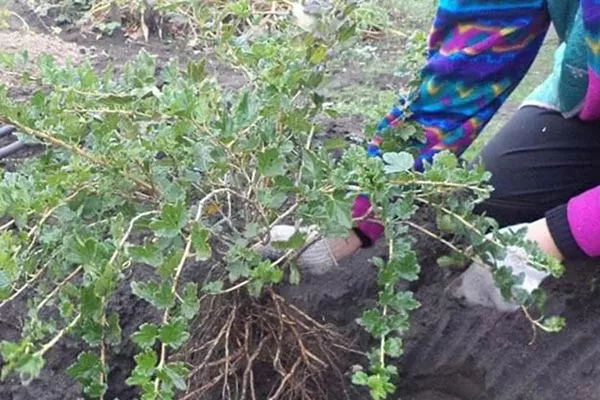
How to plant:
- A third of the nutrient mixture mixed with soil is removed from the hole. Then 10 liters of water are added.
- Place the seedling vertically in the hole, cover the roots with soil, and compact it to eliminate any air pockets. After planting, the root collar should be 7–8 cm below ground level.
- The planted gooseberries are watered with 10 liters of warm, settled water.
- The tree trunk area is mulched with peat or humus. The layer thickness is about 2 cm.
How to take care of it properly?
To obtain a high-quality and abundant harvest when growing Sadko gooseberries, it's important to provide them with timely and proper care. Watering, fertilizing, and preventative spraying are especially important.
Watering
Despite their drought tolerance, neglecting watering is not recommended. It's especially important to water the bushes during flowering and fruit set, as they require more water than usual. On average, 20 liters of water are poured per mature plant. In hot weather, gooseberries are watered weekly; in normal weather, less frequently.

During the berry ripening stage, watering is reduced—this is necessary to ensure the fruits develop sugar content and remain sweet. After watering, the area around the tree trunks is loosened and weeded. If desired, the soil under the bushes can be mulched with hay, straw, compost, etc.
Top dressing
Fertilizing gooseberries begins in the second year after planting. Gooseberries are initially fed with organic matter, and in the third year, with wood ash and superphosphate. Subsequently, fertilizer is applied once every 2-3 years.
Fertilizer rates for Sadko gooseberry:
- superphosphate - 10 g;
- potassium sulfate or potassium nitrate - 15 g;
- urea - 10 g.
Trimming
Every year, old, fruit-bearing branches are pruned from the bushes, and all dry, diseased, and broken shoots are also removed. The best time for this is the second half of autumn. When pruning, use sharp, disinfected tools.
Shoots are trimmed back to healthy tissue. To prevent branches from crossing, pruning is performed on the outer bud. Dead and diseased shoots are cut back to the base (to the ring) and destroyed. Cuts are made even and smooth and must be treated with garden pitch.
Wintering
In southern regions, the Sadko variety doesn't require winter shelter. In harsh climates, mulch the tree trunks with peat, compost, or humus. Apply a 10-cm-thick layer. Then cover the soil with spruce branches, and wrap the bush in a breathable material. It's important not to tie the stems too tightly, otherwise they may rot.
Diseases and pests
The Sadko gooseberry is highly resistant to powdery mildew and leaf spot, but it requires preventative treatment against other diseases, such as Bordeaux mixture. Topaz, copper sulfate, or other insecticides can be used for disease control.
The treatment is carried out in sunny weather. To achieve the desired effect, it is important that there be no rain for 12 hours. Otherwise, the substances will not have time to penetrate the plant tissue.
The most dangerous pest for the Sadko gooseberry is the shoot aphid, but spider mites, sawflies, and moths can also pose a threat. For prevention, spraying the bushes with Fufanon is recommended, and this should be done before the buds open. Actellic, Karbofos, and other insecticides are used to control insect pests.
Harvesting
Gooseberries are harvested in dry weather, in mid-July in the south and 2-3 weeks later in central regions. First, pick the berries growing on the outer branches. To pick the berries on the shoots located inside the bush, bend the branches slightly toward the ground.
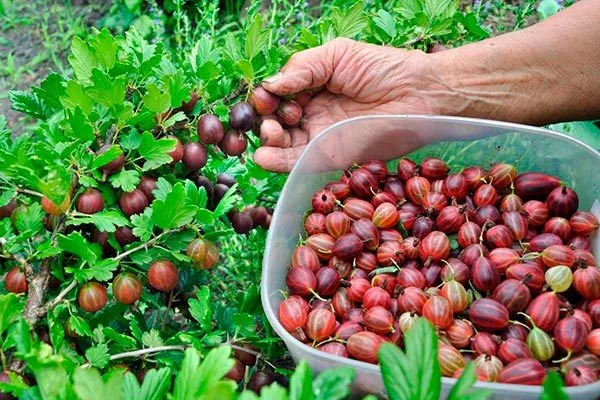
It is recommended to pick the berries when they are technically ripe. They are placed in containers in batches of 3-3.5 kg, no more. The containers are filled to 80% capacity. Berries showing signs of damage are discarded immediately. Sadko gooseberries should be stored in cool, dark places for no more than three weeks.
Reviews
The Sadko gooseberry is a promising and interesting variety that will definitely appeal to lovers of red varieties. Its combination of low maintenance, high yield, and excellent flavor makes it a worthy competitor to other domestic and foreign varieties.