
Rafinad peas are a relatively new sugar snap pea variety from the renowned Gavrish company. They are productive and easy to grow, delicious fresh, and suitable for all types of processing.
History of creation and regions of cultivation
The Rafinad pea variety was developed by Gavrish Breeding Firm, a well-known Russian company. Its authors were S. F. Gavrish, V. V. Morev, E. V. Amcheslavskaya, and O. A. Volok. The variety was officially added to the All-Russian State Register in 2013.
Description of Refined Peas
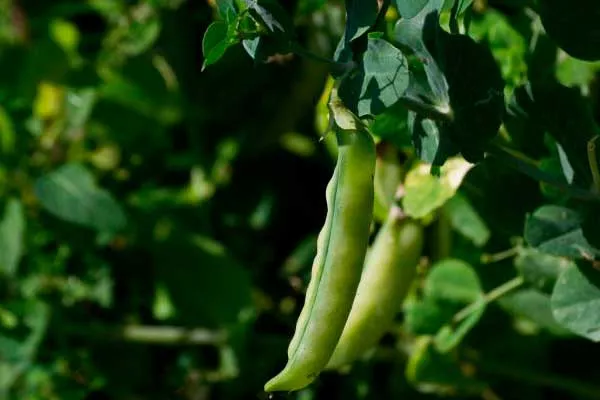
The Rafinad pea plant grows quite tall, with stems reaching 65-85 cm in length. The leaves are medium to large, light green, and covered with a waxy coating. The stipules are medium in size, with a medium-density spotting on their surface, and, like the leaves, they are covered with a waxy layer.
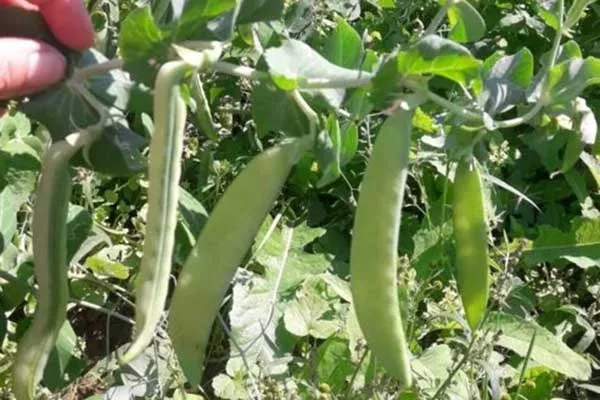
The flowers of the Rafinad pea are large and reddish-purple. The first bean (pod) is located at a height of 30-35 cm from the ground.
Description of the pods:
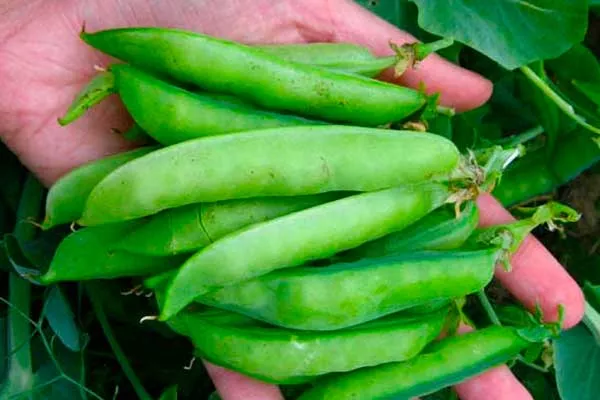
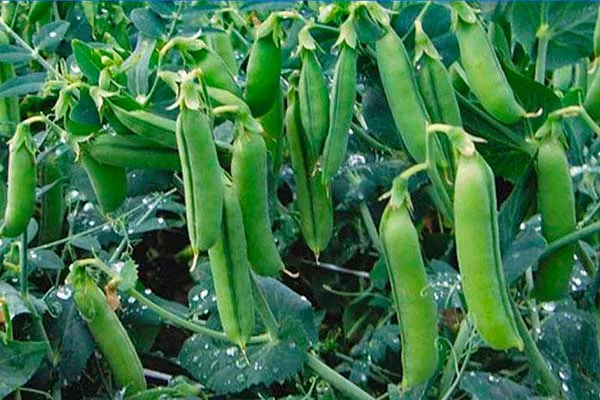
- shape - slightly curved, the apex varies from acute to blunt;
- length - up to 7.5-9 cm;
- color (at the stage of technical maturity) - light green;
- parchment layer - absent;
- the skin is dense;
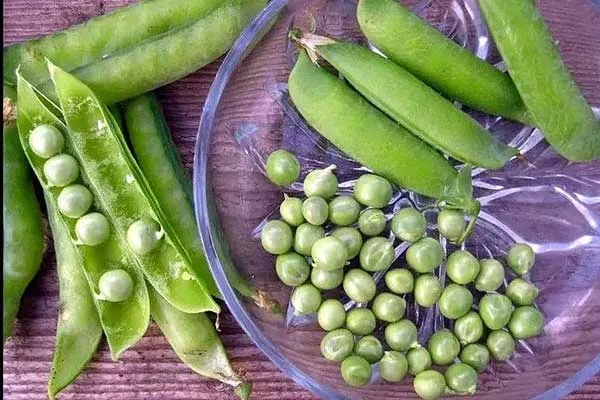
- the number of seeds in one pod is from 7 to 9 pieces;
- the average weight of one pea is 8-9 g.
Taste and purpose
The Rafinad variety is a sugary variety, so it's no surprise that it has an excellent flavor. It can be eaten fresh, used in cooking, canned, and frozen. It's recommended to use peas in cooking before they reach biological maturity, when they're still tender and delicious.
Ripening time and yield
Refined peas are a mid-late variety. The period from germination to bean ripening takes 48 to 62 days. The average yield of peas at technical maturity is 1.1 kg per square meter. Minimum/maximum yields are 0.8/1.5 kg per square meter. The thousand-seed weight is 320-340 g.
Pros and cons
Refined peas have many advantages, but they also have some drawbacks. Each gardener must decide for themselves whether the pros outweigh the cons.
Planting Refined Peas
To grow good, tasty, and juicy peas, it's important to plant them correctly. Planting techniques influence the yield and flavor of the crop.
- ✓ Soil pH should be between 6.0-7.5 for optimal pea growth.
- ✓ The soil must be well-drained to avoid water stagnation and root rot.
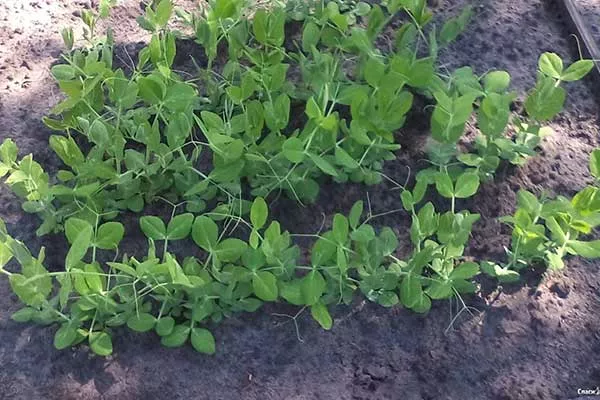
Landing features:
- sowing into the ground is done in April-May;
- planting depth: 4-6 cm;
- planting pattern - 30x15 cm.
It's recommended to plant Rafinad peas in fertile soil, after vegetables that required a large amount of organic and mineral fertilizers. Choose a sunny site with a low groundwater level. Dig and loosen the soil before planting.
Caring for peas
To ensure a good harvest and large pods, Rafinad peas require careful care. The crop itself is not fussy, and this variety also requires little attention; standard agricultural practices are sufficient.
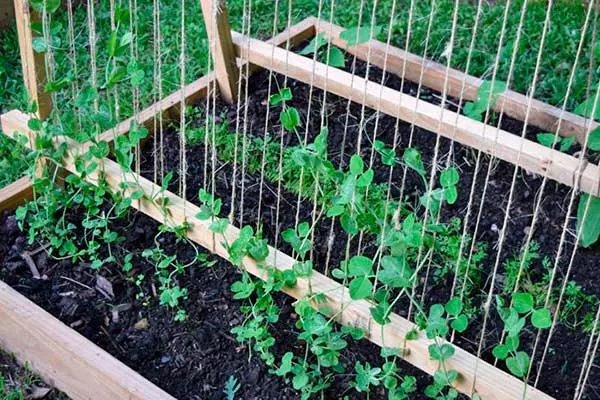
How to care for peas:
- Pea beds are watered regularly, on average 1-2 times a week. The best times for watering are morning and evening. Watering peas is not recommended in hot weather, as water splashing on the leaves can cause sunburn. During dry periods, watering should be increased; during rainy weather, watering is avoided.
- Peas require phosphorus and potassium for abundant flowering and high yields. Phosphorus fertilizers are required until the pods ripen. Plants also require nitrogen, such as urea. Nitrogen-phosphorus fertilizers ensure growth and yield.
- At the initial stage, while the plants are still short, the beds are carefully loosened and weeds are removed at the same time, as they grow very quickly and can choke out the young peas.
- In principle, the Rafinad variety can grow without staking, but this will negatively impact yield. It is recommended to tie the plants to pre-installed supports.
Diseases and pests
Refined peas have a fairly strong immune system, but to prevent diseases and pests, their seeds are soaked in a solution of potassium permanganate before sowing (it can be replaced with 1% hydrogen peroxide at a rate of 1 teaspoon per 1 liter of water).
Under unfavorable growing conditions and due to poor agricultural practices, peas can be susceptible to powdery mildew, rust, and gray mold. To combat these, use Fitosporin-M, Bordeaux mixture, and other fungicides.
| Method | Efficiency | Period of activity |
|---|---|---|
| Insecticides | High | Throughout the season |
| Herbal infusions | Average | Regular use is required |
The greatest threats to peas are the pea moth, bean moth, and potato weevil. To prevent insect infestations, peas are sprayed with insecticides and herbal infusions such as infusions of onion peel, celandine, wormwood, tobacco, garlic, and tansy.
Harvesting
Rafinada pods are harvested in July and August. For food, they are picked when the shells are green and the peas are large and fully formed. For cooking—for porridge and soups, as well as for seeds—they are harvested when the bottom two or three pods on the plants turn brown.
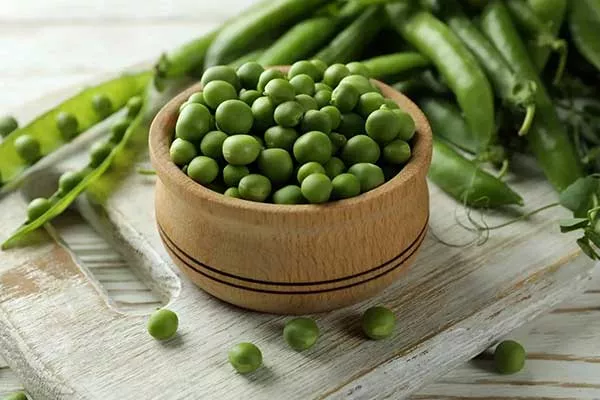
The harvest is carried out in dry weather, preferably early in the morning. The pods are collected once every 2-3 days. After harvesting, the pods are dried. The dried peas are shelled, dried, poured into glass jars, and sealed with plastic lids.
Reviews
The Rafinad pea is a promising sugar snap pea variety that will appeal to lovers of sweet young peas. With proper care, this variety can produce excellent yields; it's versatile and suitable for all occasions.