
Many gardeners prefer to increase the number of seedlings in their garden using various methods. There are numerous methods for propagating fruit trees, each with its own advantages and effectiveness. Some use cuttings, others grafting or sowing seeds. It's important to choose the right method and follow certain guidelines.
Generative reproduction
Generative propagation of fruit trees involves using seeds or seedlings to grow new plants. Seeds are collected from ripe fruits and planted in prepared soil. Seedlings are obtained from cuttings taken from healthy plants.
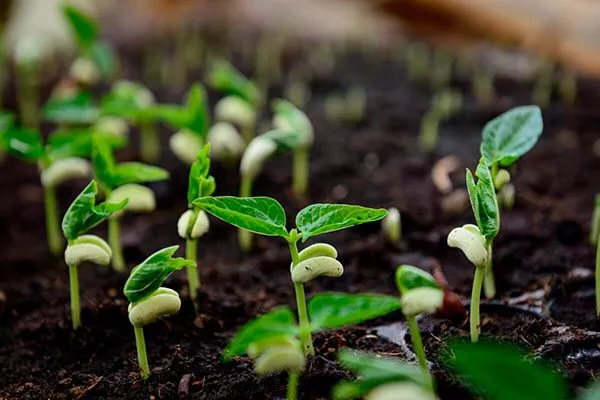
In both cases, genetic material from the parent plants is passed on to the next generation. This allows for the preservation and transmission of desired characteristics and varietal traits.
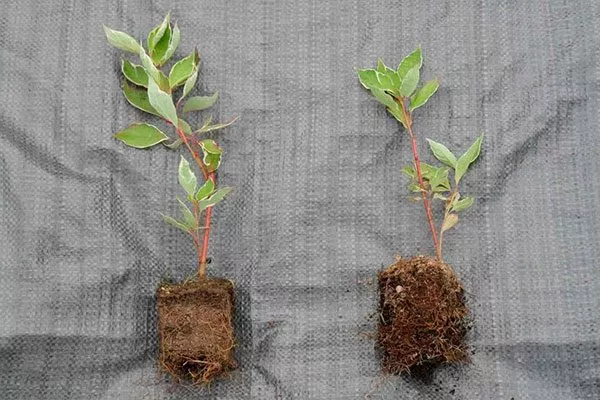
Peculiarities of processing and planting seeds of different crops
| Name | Ripening period | Disease resistance | Frost resistance |
|---|---|---|---|
| Cherry | Average | High | High |
| Felt cherry | Early | Average | High |
| Cherries | Late | High | Average |
| Cherry plum | Early | Average | High |
| Dogwood | Late | High | Average |
Pre-plant seed treatment plays a key role in ensuring successful germination and healthy plant development. This process helps remove germination inhibitors, protect seeds from diseases and pests, and stimulate the initial growth.
- ✓ Soil temperature for germination should be at least +10°C for most fruit crops.
- ✓ The planting depth of seeds should correspond to their size: small seeds - 0.5-1 cm, large seeds - 2-3 cm.
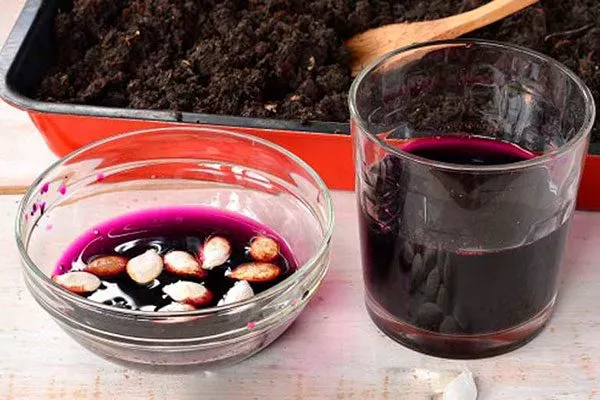
Each crop has its own unique seed processing and planting requirements, ensuring optimal conditions for growing healthy and productive plants:
- Cherry, Felt cherry, Sweet cherry, Cherry plum, Dogwood. Soak the seeds in water for several hours before planting. Plant them in moist sand or nutrient-rich soil to a depth of 1-2 cm.

- Plum, Apricot, Peach. Stratify the seeds to stimulate germination. Then plant them in nutrient-rich soil at a depth of 2-3 cm.
- Apple tree, Pear tree. Stratify the seeds or simply plant them in the ground.
- Honeysuckle, pomegranate. Sow seeds into nutritious soil at a shallow depth without preliminary cultivation.
- Watermelon, Melon, Orange. Sow seeds in prepared soil without special treatment.
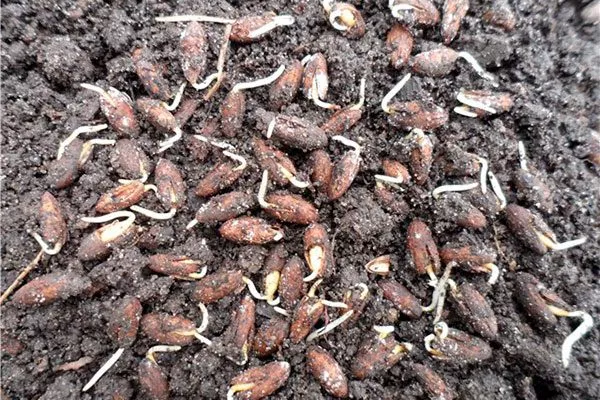
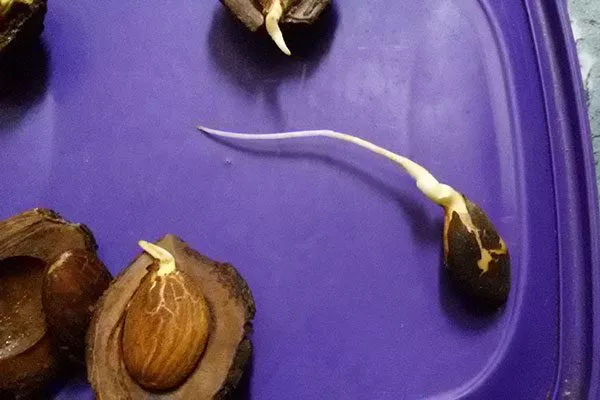
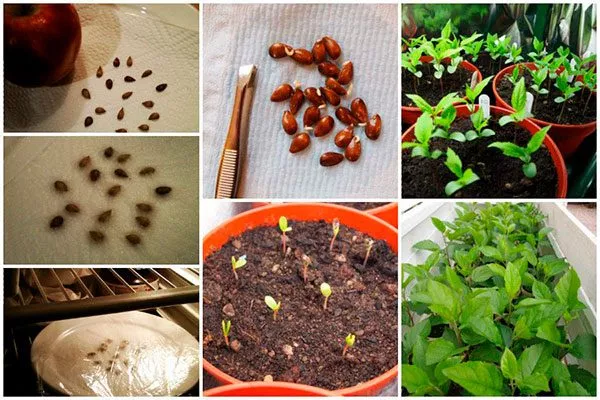
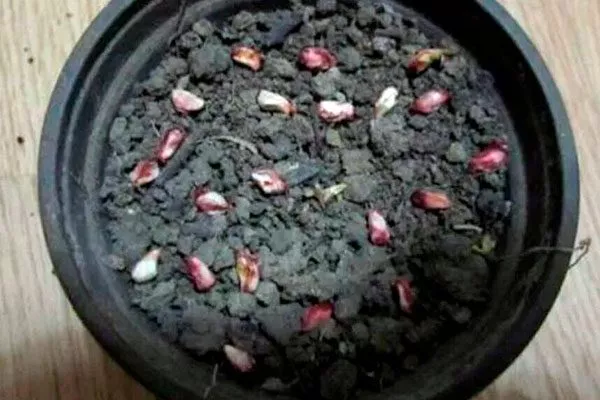
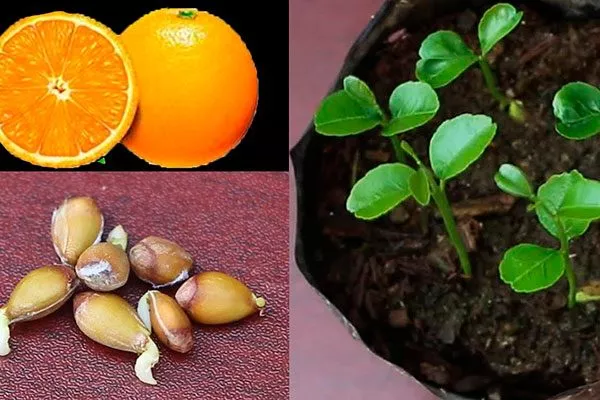
Each crop has its own specific requirements for seed treatment and planting, but in general, it is important to provide suitable conditions of moisture, temperature and planting depth for successful germination and plant growth.
General algorithm of reproduction
Propagation of fruit trees is an important stage in their cultivation, allowing for the creation of new plants with desired characteristics and varietal traits. Regardless of the method, proper processing and planting of the material play a key role in achieving success.
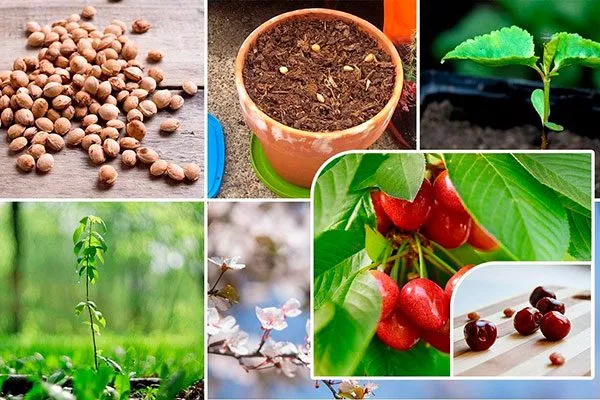
Follow the recommendations:
- Select mature fruits or healthy plants as a source of seeds or cuttings.
- Clean the seeds from the fruit pulp or prepare cuttings by removing damaged or diseased parts.
- Soak the seeds in water to remove germination inhibitors. Make cuts on the cuttings or treat them with a growth stimulant.
- Some seeds require a cold stratification period to activate germination. This can be achieved by placing the seeds in the refrigerator for a certain period of time.
- Prepare a nutritious, well-drained soil. Make sure the soil is fresh and pathogen-free.
- Place seeds in the soil at the depth recommended for each species. Cuttings can be planted in prepared pots or directly into the soil.
- Provide regular watering, moderate lighting and protection from pests and diseases.
- Give the plants time to establish and develop. Monitor the soil and seedlings, providing the necessary care.
When the plants become strong enough, transplant them to their permanent growing location in open ground.
Growing rules before transplanting to a permanent location
Growing fruit trees before transplanting them to their permanent location requires careful care and optimal conditions for healthy growth. Follow these guidelines:
- Use pots or containers with drainage holes to avoid waterlogging.
- Prepare fertile, well-drained soil suitable for the particular type of fruit tree.
- Use a mixture of humus-rich soil and sandy soil to ensure good drainage.
- Make sure the seeds or cuttings are covered with a layer of soil and pressed firmly into the soil.
- Check the soil moisture regularly and keep it moist but not waterlogged.
- Water the plants with soft water, avoiding the formation of puddles on the soil surface.
- Place plants in a sunny spot or provide artificial lighting.
- Monitor the ambient temperature to avoid overheating or overcooling.
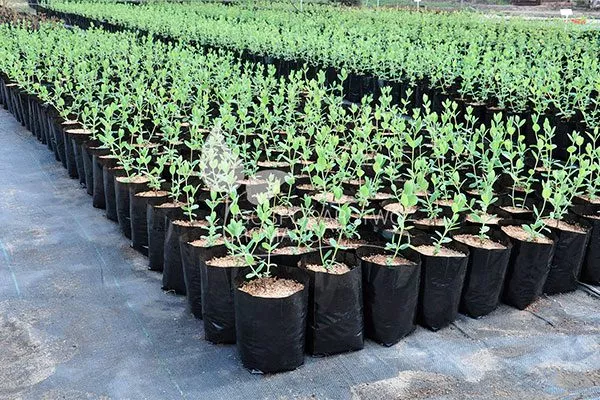
Feed plants with fertilizers to stimulate their growth and development.
Vegetative propagation
Vegetative propagation involves using certain parts of the plant to obtain young specimens.
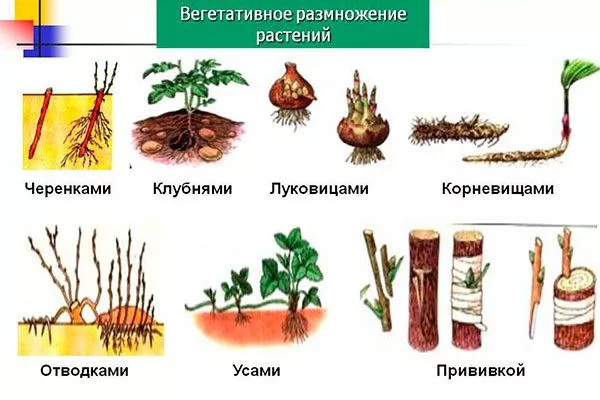
This method uses cuttings, layers, suckers, tubers, rhizomes or other plant parts that retain the genetic identity of the mother plant.
Types
Methods of vegetative propagation of fruit and berry plants are conventionally divided into natural and artificial. Natural methods include rooting rosettes of leaves on runners, apical buds of hanging branches, the formation of root suckers, the formation of root suckers, and division of the bush.
Artificial methods include propagation by cuttings, layering, grafting and the use of meristem cells (clonal micropropagation, or tissue culture).
Mustache
This is a natural process by which new plants form from the decaying stems or roots of the mother plant. Runners are horizontal stems that grow along the soil surface and form new plants where they touch the soil.
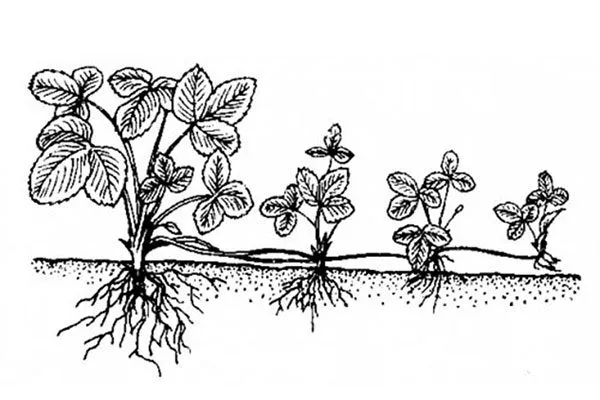
This propagation method is often used for many types of berry bushes, such as strawberries, raspberries, and blackberries. Runners typically begin to form early in the growing season, when the soil warms up after winter.
Propagation instructions:
- Select healthy, vigorous plants that produce numerous runners. Choose plants with a good yield and high-quality fruit.
- Make sure the soil around the plants is fertile and well-drained.
- Wait for new tendrils to emerge. This usually occurs at the beginning of the growing season.
- Place the runners in prepared soil at a certain distance from each other. This will allow each new plant enough space to develop.
- Provide regular watering and fertilization to stimulate their growth. Monitor their development and remove weeds around them to prevent competition for nutrients.
As the new plants develop and become stronger, they can be divided and transplanted to their permanent growing location in the open ground.
Offspring
Root suckers are formed by the growth of adventitious buds on horizontal rhizomes. Toward the end of the growing season, roots begin to appear on these shoots, after which the suckers can be separated from the mother plant.
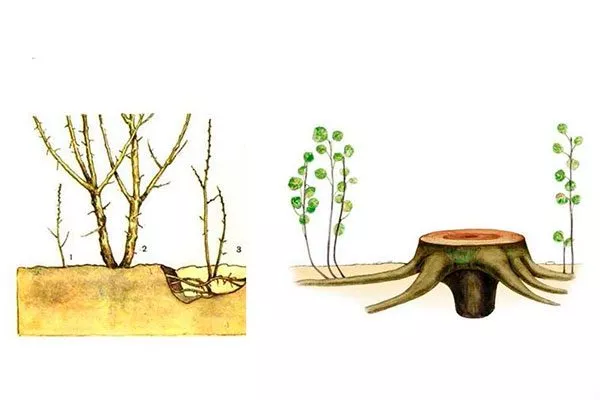
Offspring usually appear during active growth, which most often occurs in spring or summer. Propagation instructions:
- Select healthy, vigorous plants that produce suckers. They exhibit good resistance to diseases and pests.
- Wait for suckers to appear on the parent plants. These can appear on trunks, branches, or roots.
- Separate and inspect them. They should have a well-developed root system.
- Prepare the soil and plant the cuttings in the prepared soil.
- Water new plants regularly to ensure adequate soil moisture. Mulch to retain moisture and suppress weed growth. Provide good light for new plants.
Make sure your offspring get enough nutrients to thrive.
For a visual example, watch this video, which explains in detail how to propagate raspberries using suckers:
Green, semi-woody and woody cuttings
Currants, strawberry rootstocks, pomegranate, fig, sea buckthorn, olive and other crops are propagated by woody stem cuttings, and currants, gooseberries, lemon, strawberry rootstocks, sea buckthorn and others are propagated by green (leafy) cuttings.
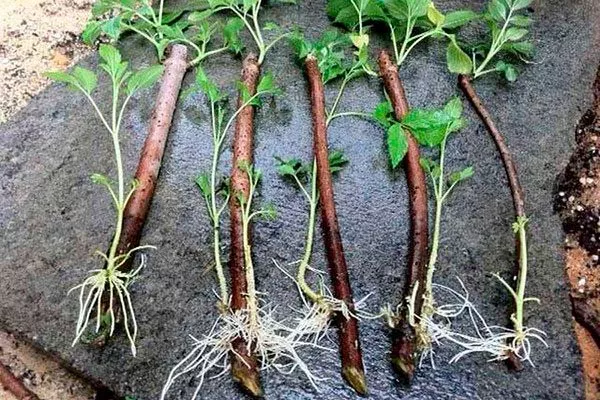
Green cuttings root more successfully than woody ones. Root cuttings are a promising method for propagating raspberries, cherries, strawberry rootstocks, plums, and cherry plums. Due to the difficulty of collecting cuttings, this method is rarely used.
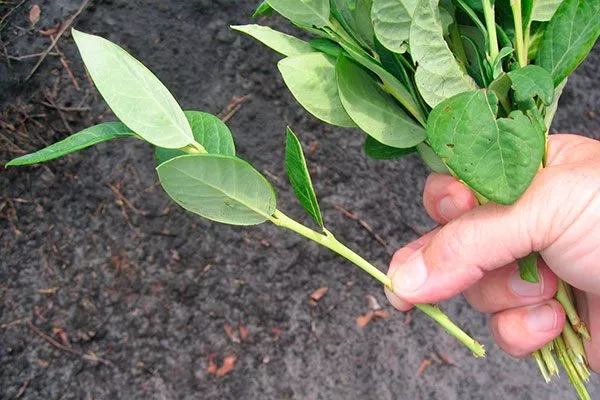
Propagation by green cuttings is accomplished by preparing cuttings using special mother plants. It is preferable to use shoots from juvenile forms or those arising from adventitious buds. Another method involves using cuttings after removing suckers from weak rootstocks.
Follow the instructions:
- Select young shoots with the apical growth point while they are still in the herbaceous stage. If necessary, divide long branches into two sections.
- When planting, space the cuttings 4x5 cm apart and bury the bottom 1-1.5 cm to ensure an upright position.
- Root under artificial intermittent fog under plastic film, which provides the best growing conditions. Monitor the temperature in the plastic greenhouses using electric thermometers, which automatically regulate the water supply to the sprinklers, preventing overheating.
For propagation by woody cuttings, use one-year-old shoots. The use of growth stimulants can slightly increase the percentage of rooted plants.
Below is a video instruction on propagating fruit trees using green cuttings:
Root cuttings
In addition to the methods mentioned above, fruit tree propagation by root cuttings is sometimes used. This method involves removing 5-10 mm of root from mature quince, paradise apple, and dusen plants, or from trees grafted onto them, in an amount that won't negatively impact future growth.
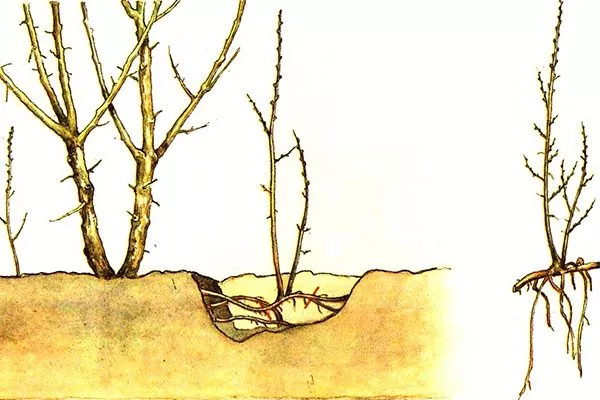
Cut the resulting roots into 8-9 cm long pieces. Plant them in nutritious and well-moistened soil to a depth of 2-2.5 cm.
Layering
These are shoots that root on the mother plant. It is considered one of the oldest methods used in gardening. It relies on the ability of fruit and berry crops to form adventitious roots on shoots without first separating them from the mother plant.
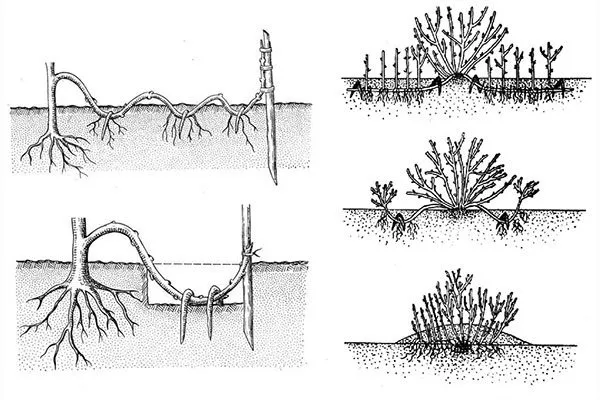
Choose the most suitable method of propagation by layering:
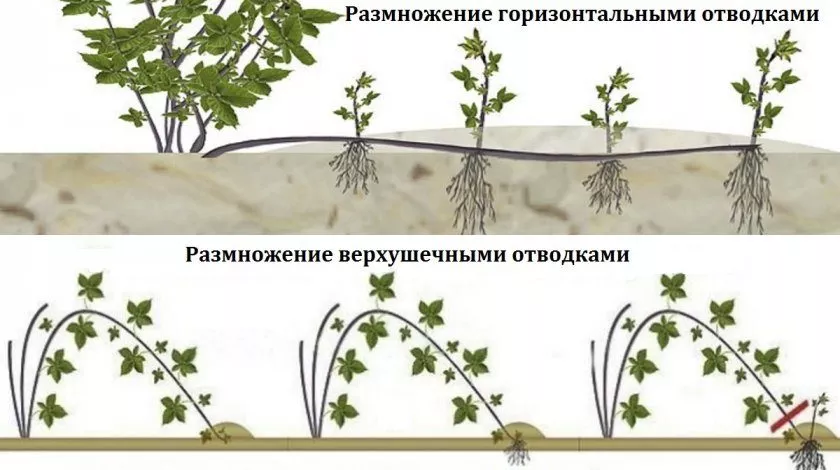
- Horizontal. This is considered the simplest and most effective method for propagating many tree species. Use 1-2-year-old branches, removing leaves from them, leaving only the tops.
Place the shoots horizontally in a specially made furrow 8-10 cm deep, then secure them and cover them shallowly with soil, leaving only the top. When the stem touches the soil, roots form, and new shoots emerge above the surface.
Once the shoots reach a height of 10-15 cm, hill them with moistened soil. Repeat hilling 2-3 times as the shoots grow. Each shoot will produce 1-2 new plants. - Arc. To do this, place a 1-2-year-old branch in the soil, bend it into an arc, and secure it. Roots will form at the bend. Separate the cuttings from the mother plant and plant them in their permanent location in the garden.
- Vertical. This method is primarily used for propagating specialized rootstocks for fruit trees. The mother plants are cut at a height of 3-5 cm from the soil surface, after which the one-year-old shoots begin to grow rapidly.
When they reach 15 cm in height, hill them up so they're buried. Repeat this process several times during the growing season to encourage root formation.
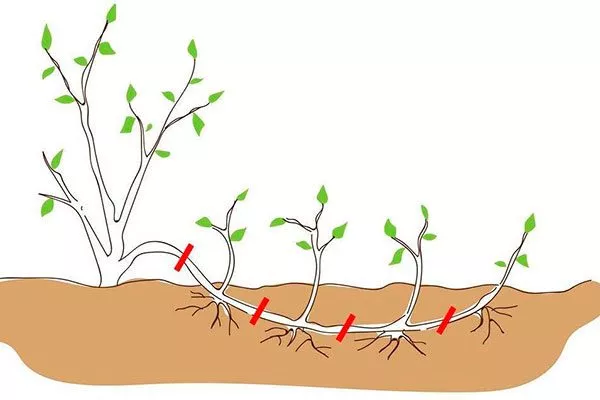
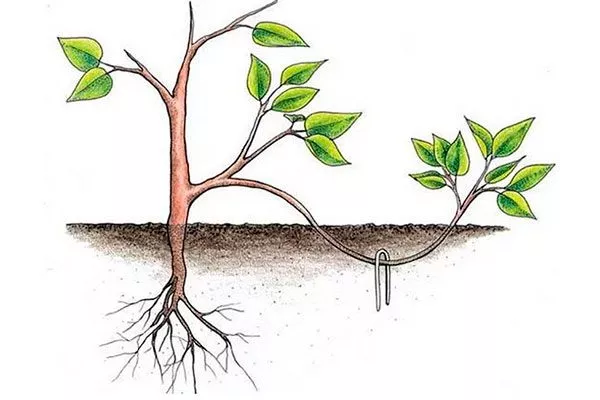
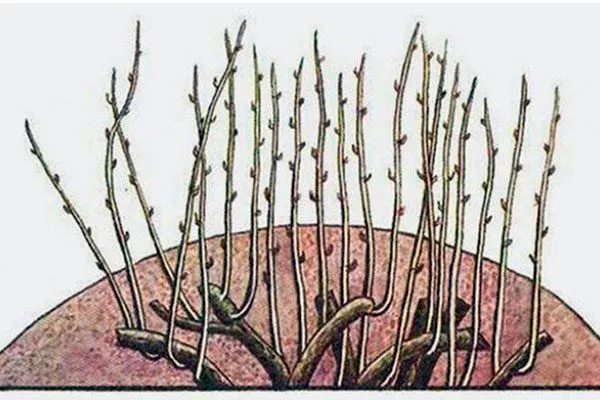
Layers are used to propagate both old and well-proven new varieties of a whole range of plants, both fruit and ornamental: currants, gooseberries, honeysuckle, serviceberry, viburnum, hazel, grapes, actinidia, lemongrass, roses, garden hydrangea, clematis, etc.
Below you will find a video instruction on how to propagate apple trees by layering:
By vaccination
Carry out the procedure during the active sap flow period. In central Russia, this period begins in April and continues until mid-June, depending on the specific tree. Graft stone fruit trees first, before May 1st.
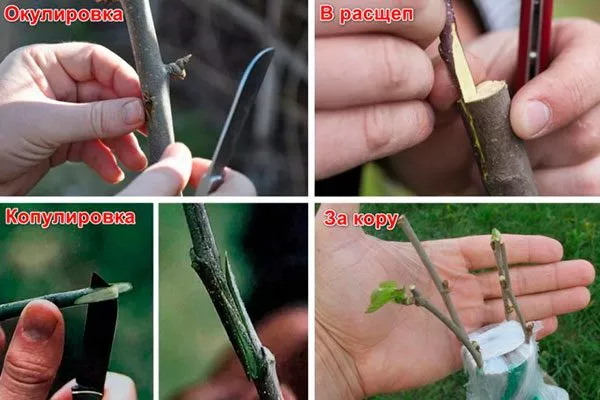
After these, seed trees are grafted. Early autumn grafting with woody cuttings is possible from August 20 to September 10, which is especially recommended for the southern regions of the country. Grafting can also be done in winter, especially indoors, from January to March.
Budding
Bud grafting is typically performed using two main techniques: butt grafting and transect grafting. In both cases, the characteristics of the plants involved must be taken into account.
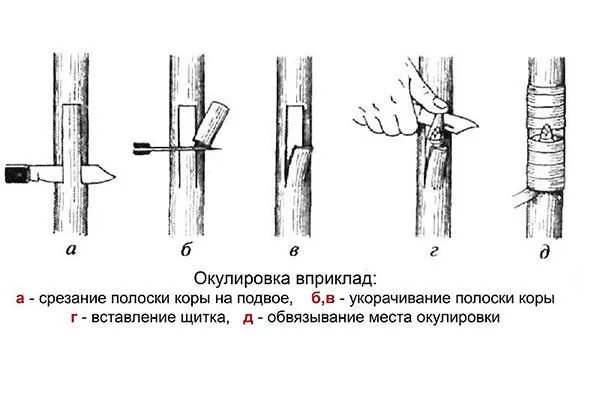
In the rootstock method, a small piece of bark is removed from an internode of the rootstock. A bark bud, cut from the desired petiole, is then placed in this spot. The method involves the following steps:
- Wipe the rootstock internode where the cut will be made with a soft, damp cloth.
- Make a shallow cut on the shoot no more than 3 cm long in the place where you plan to place the new plant.
- From the bark of the petiole, cut off a plate with a bud of the same size as the cut made on the rootstock.
- Place it on the rootstock at the cut site, under the formed “tongue”, ensuring precise alignment with the shoot.
- Wrap the grafting site tightly with tape. The bud can be left exposed or covered with tape. Results are often visible within 15 days.
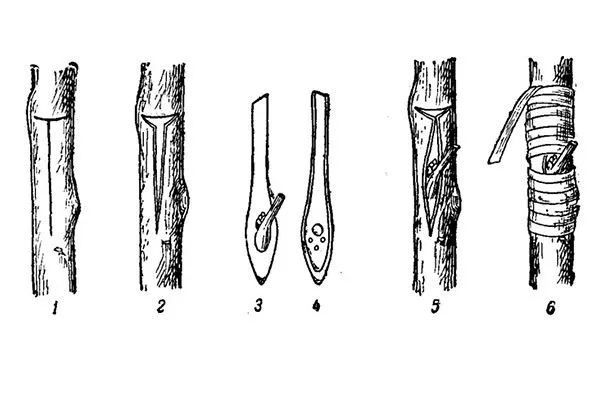
When performing a cut graft, the bud is transferred into the cambium of the selected plant through a cut in the bark. Step-by-step instructions:
- From the petiole of the chosen tree, cut a bud along with a small piece of bark and wood. These pieces should be at least 2-3 cm long and about 0.5 cm wide.
- Make a T-shaped cut in the rootstock, corresponding to the size of the prepared bud. First, cut horizontally through the bark, then vertically, carefully peeling back the edges.
- Place the bud plate into the cut so that the bottom edge is held in the "pocket." Smooth out any excess at the top.
- To ensure a tight fit, wrap the bud with tape, pressing it firmly against the rootstock.
- If the grafting is successful, the cutting will begin to grow in about 15 days in the spring.
Both techniques have their advantages and are used depending on the conditions and preferences of gardeners.
The video below demonstrates how to bud an apple tree to produce new seedlings:
Grafting with a cutting
To obtain cuttings from many fruit and berry plants, it is recommended to use shoots.
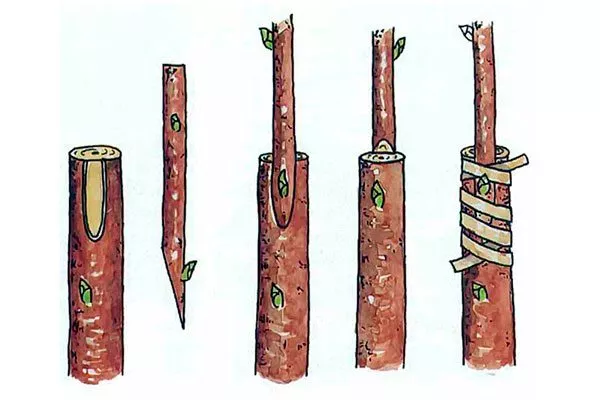
Helpful tips:
- For gooseberries and currants, cuttings are taken from shoots of the 1st, 2nd and 3rd orders.
- To obtain the best results, it is preferable to use typical shoots from last year's growth, especially those located on the sunniest side of the crown.
- The cuttings usually range in size from 5 to 12 cm, with the average being about 9 cm.
- On the cuttings of cherries, pears, plums, and apples, 3-4 leaves are left, on honeysuckle and currants - 2-3 leaves, on gooseberries - 5-8 leaves.
Step-by-step algorithm:
- When cutting the shoots, use a well-sharpened knife or a sharp razor. The bottom cut should be 1 cm below the first bud, and the top cut should be made just above the last bud.
- Remove 1-2 leaves along with the buds from below so that they do not interfere when planting the cutting.
- For better rooting of cuttings, keep them in a solution of Heteroauxin for 10-12 hours.
- Plant the cuttings in containers or pots, using deciduous humus as the rooting medium. Add a 2-3 cm layer of peat and sand on top of the soil.
- Plant at a depth of 3-4 cm, placing adjacent cuttings at a distance of 4-5 cm from each other.
You can learn how to graft fruit trees using cuttings by watching the video:
By dividing the bush
Some fruit crops, such as gooseberries, chokeberries, serviceberries, Japanese quince, lemongrass, etc., form numerous shoots around the bush, which, when separated, can become independent plants.
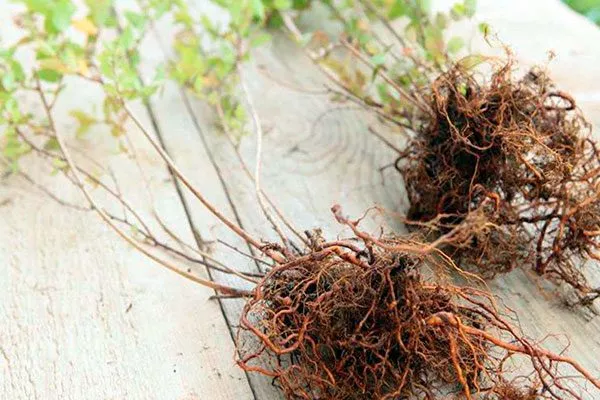
Divide bushes during the dormant period. Dig them up and divide them with pruning shears or a saw so that each section has well-developed shoots and roots. Alternatively, simply separate young shoots with roots from the bush with a shovel and transplant them to a new location in the garden. To encourage the development of more shoots, prune them back to 5-6 buds.
Some varieties of cherry, plum, chokeberry, raspberry, and blackberry propagate by root suckers, which grow from adventitious buds on the roots. In our climate, gardeners widely use this method to propagate various varieties of cherry and plum.
Breeding rules:
- To obtain seedlings, separate the shoots in the spring from the own-rooted, non-grafted plants.
- Select shoots that form further away from the trunk of the mother plant.
- Trim the roots of the separated shoots with a knife, cover the wounds with garden pitch and plant them in a permanent place in the garden.
- Over the course of 1-2 years, shape the plants into the desired crown.
Trees obtained from suckers begin to bear fruit earlier, but have a shorter lifespan.
See how to propagate currants by dividing the bush:
Preparing soil and planting material for transplanting to a permanent location
Preparing the soil for planting is an important step, as it ensures optimal conditions for plant growth and development, as well as a bountiful harvest. Before planting your seedlings, complete a number of important steps:
- Conduct a soil analysis to determine its type, composition and structure, which is important for choosing the correct cultivation method.
- Remove weeds from your plot. Weeds compete with crops for nutrients and moisture.
- Loosening the soil is necessary to ensure proper aeration of the root system. This procedure improves the soil structure and ensures free passage of air and water to the roots.
- Fertilize the soil. Fertilizers will enrich it with essential nutrients, which will positively impact the formation of a high-quality harvest.
- Check the roots of the seedlings and remove any damaged or dry areas. If the roots are too long, trim them slightly.
- Soak the roots in water for several hours. This will help soften the root system and facilitate better adaptation to the new environment.
- The first feeding is 2 weeks after planting, using nitrogen fertilizers.
- The second feeding should be done a month after the first, using complex fertilizers.
- The third feeding is at the end of the growing season, using phosphorus-potassium fertilizers.
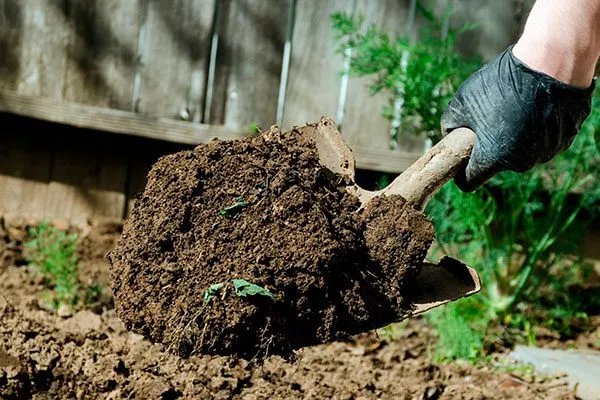
Proper preparation of soil and seedlings before planting in a permanent location creates favorable conditions for their successful development and growth in the future.
Landing rules
Determine a suitable planting location, taking into account light, soil moisture, and the plant's needs. Loose, fertilized, and well-drained soil promotes successful planting. Remove weeds and large clods of soil.
Step-by-step landing:
- Dig a hole deep and wide enough to accommodate the seedling's root system.
- Apply fertilizer to the hole according to the recommendations for the given plant.
- Place the seedling in the hole so that the root collar is at the level of the soil surface.
- Fill the hole with soil and lightly compact the soil around the seedling.
- Water the planted plant generously to moisten the soil and encourage rooting.
- Apply a layer of mulch around the seedling to retain moisture and suppress weeds.
- If necessary, install a support to support the plant.
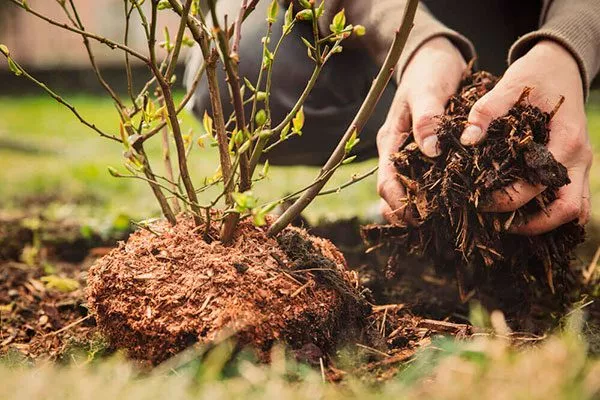
Fruit tree propagation is an important aspect of obtaining large yields of high-quality fruit. There are various methods for increasing the number of seedlings. Each has its own advantages and is suitable for specific crops. The choice of method determines the success of the propagation process and the quality of the resulting plants.