
Fertilizing legumes is based on the principle of eliminating or reducing the dosage of organic matter, so bean fertilizers primarily consist of minerals such as potassium and phosphorus, as well as other micronutrients. Nutrients are applied only according to a specific schedule.
How to fertilize beans?
Beans require molybdenum, potassium, and phosphorus most of all, regardless of the bean species or variety. However, overfeeding beans is also prohibited, as this will lead to negative consequences.
- ✓ The optimal soil pH for beans should be between 6.0 and 7.0. Outside this range, nutrient absorption is significantly reduced.
- ✓ The soil temperature when applying fertilizers should not be below +10°C to ensure the activity of nodule bacteria.
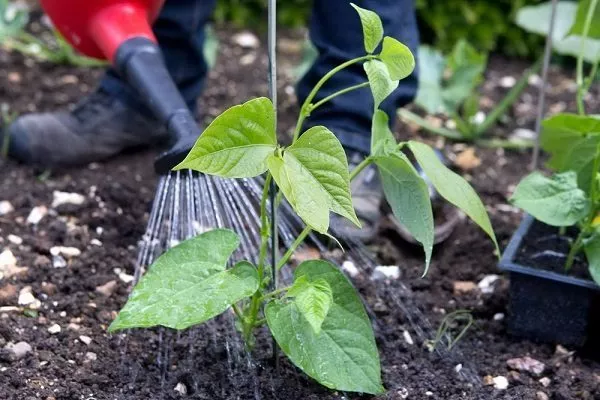
It's best to avoid nitrogen fertilizers altogether. They can be applied if the soil is depleted. This should be done before the ovaries form (ideally during the autumn digging of the beds). It's important to use mixtures (ammonium nitrate, ammonium sulfate, or ammophoska) rather than pure organic fertilizers.
- ✓ Molybdenum is most effective when applied as ammonium molybdate during the early stages of plant growth.
- ✓ Boric acid must be used in strictly specified dosages due to its toxicity when the concentration is exceeded.
Essential micronutrients:
- molybdenum;
- manganese;
- pine forest.
Gardeners are debating boron. While the element strengthens plants, protects against pathogens, and accelerates all processes, it also contains toxic substances. For this reason, only 1 gram of boric acid per 10 liters of water is used as a fertilizer.
Organic food
As mentioned above, beans require the least amount of organic matter. This is largely due to the fact that organic matter attracts pests, especially the bean sprout fly.
Moreover, excessive amounts of compost promote bush lodging and the development of green mass. This leads to the formation of small, sparse pods.
Recommendations for the use of organic fertilizers:
- If the soil has not been fertilized for a long time, add 3 to 4 kg of compost, manure or humus per 1 sq. m in the fall;
- The best option for soil and beans (since it is impossible to do without organic matter) is to apply fertilizer 1–3 years before sowing beans, that is, before the predecessors, which simply need natural fertilizer.
Using manure in its pure form is prohibited (it must be rotted). For information on making compost/humus, watch the video:
Mineral supplements
Not all minerals are beneficial for beans, as the crop has a unique structure and composition, but there are supplements they cannot do without. Without them, growth will be stunted, immunity will be compromised, and a decent harvest will be unattainable.
- ✓ Superphosphate must contain at least 20% of digestible phosphorus to meet the needs of beans.
- ✓ Potassium fertilizers are preferably applied in the form of potassium sulfate to avoid soil salinization.
Nitrogen
Nitrogen is not the best fertilizer for bean plants. Legumes are capable of providing their own macronutrients.
Besides regular photosynthesis, where the plant absorbs nutrients from the air, there's another factor at play. These are nodule bacteria. They're constantly present in the bean root system. Their mechanism of action is as follows:
- microorganisms remove other elements from the plant;
- for their normal functioning, nitrogen accumulation occurs;
- in return, they share it with the roots immediately after their death.
In case of additional fertilizing with nitrogen fertilizers, an overdose occurs.
But in some cases, supplementation will be necessary. When crop rotation rules are followed, the natural formation of this macronutrient does not occur, as the number of such bacteria in the soil is too low. Over time, the soil becomes depleted. It will need to be artificially enriched with nitrogen.
This is done before flowering or during autumn digging. Variations and dosage:
- per 1 sq. m - about 6-7 g of urea;
- per 1 sq. m – 20 g of ammonium sulfate.
Potassium-phosphorus
These are the most important fertilizers for beans. They are used throughout the entire fertilizing season. They promote pod growth and rapid plant development.
What and in what quantity is used (per square meter):
- source of phosphorus Superphosphate - initially 30 g, then 15–20 g is enough;
- potassium sulfate - from 20 to 25 g;
- potassium magnesium sulfate - maximum 30 g.
Additional micronutrients
For full development and fruiting, the crop will additionally require lesser-known elements from the periodic table. The most nutritious are:
- molybdenum - participates in nitrogen metabolism, is added in the form of ammonium molybdenite in a dosage of about 5-7 g per 10 liters of water;
- boron - activates growth processes, boric acid is used (1–2 g per 10 liters of water);
- Manganese - strengthens the immune system, used in the amount of 1 g per 10 liters of water.
How to feed seedlings?
Bean seedlings also require fertilizing. Before transplanting to the garden, the plants are kept indoors for 30 days. During this time, fertilizer is applied twice, 10 days apart. The first time is immediately after the first true leaf has formed.
What can be used:
- Diammophoska. This is a standard solution for seedlings. Dilute 3 g of the substance per 1 liter of water.
- Yeast. An effective folk recipe. To prepare, dissolve 50 g of granulated sugar and 10 g of dry yeast in 10 liters of water. Then, ferment for 2 days in a warm room. Before use, dilute in 40 liters of water.
- Mulch. It doesn't work as quickly as the previous methods, but it's considered a good option. Cut the grass as finely as possible and spread it under the young plants in a box (or separate container).
- Iodine. Use 5-7 days before transplanting into open ground. Add 1 drop of iodine per 3 liters of water.
- Growth enhancers. These medications include Epin, Novosil, Zircon, and similar products. They are used according to specific instructions.
Folk recipes for seedlings and plants in open ground at the growth stage
There are a number of recipes from traditional gardeners that are commonly used for beans during the initial growth stage, that is, during the first 30–40 days. This applies to both seedlings grown at home and young plants in the garden.
Ammonia
Ammonium hydroxide performs several functions simultaneously: it repels pests, suppresses pathogens, and nourishes beans. However, it must be used with extreme caution, as improper dosage can cause severe burns to the bean plant.
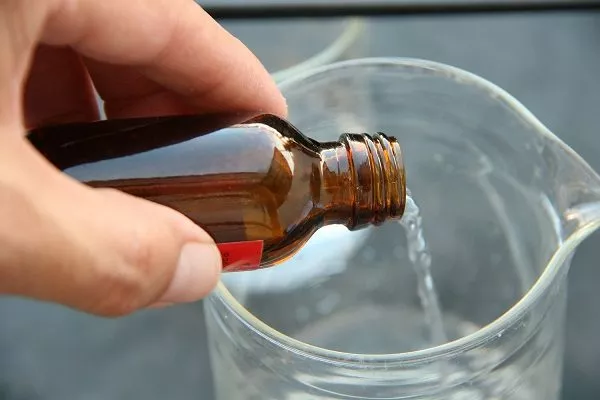
Optimal application recipes:
- Standard. For every 10 liters of water, apply 10 ml of the product. Apply as a root dressing three times during the growing season: at the very beginning of growth, during fruiting, and during active fruiting.
- Nitrogen deficiency. If the soil needs urgent nitrogen supplementation, ammonia is recommended at a dosage of 50 ml per 4–5 liters of water. Apply every 5–6 days until the soil is saturated. Fertilize at the roots.
- Spraying. It is applied to the above-ground part. Dosage: 1 tbsp per 10 liters of water.
- Acceleration of seedling growth. For 10 liters of water - 2 tablespoons of ammonium hydroxide. Spray and watering root zone.
Eggshell
Contains a high concentration of calcium, molybdenum, copper, iron, magnesium, and phosphates. It has a wide range of uses:
- add a pinch to the hole before planting beans, which will enrich the future root system with microelements;
- prepare a solution for watering: infuse the shells of 10 eggs in 5 liters of water for 7 days;
- Dust the bushes with egg flour to prevent insects from appearing;
- Sprinkle under the roots to get rid of slugs;
- Add 0.7–1.0 kg of shells per 1 sq. m to deoxidize the soil and give it a looser structure.
Iodine
It acts as an insecticide, disinfectant, and fertilizer. Its main effect is to enrich the plant with beneficial elements, suppress viruses and bacteria, prevent pest infestations, and strengthen the immune system.
Terms of use:
- do not exceed the concentration of 2 drops per 2 liters of water, otherwise the plant will be burned;
- Apply in the morning, but not in the evening, when the bush enters the dormant phase;
- moisten the soil before watering;
- the solution should be warm;
- use a fine mist sprayer, especially for foliar feeding;
- If you are applying it to seedlings, let them first get stronger after transplanting into open ground;
- To increase efficiency, add some wood ash (ratio: 10 parts solution to 1 part ash).
Directions for use:
- for soaking seeds - 1 drop per 3 liters of water;
- For spraying and root feeding, which accelerates the growth of young bushes and destroys pathogens - 6 to 10 drops per 10 liters of water.
Coffee grounds
Another natural and multifunctional remedy. There is evidence that fresh coffee can acidify soil, but this property is lost after heat treatment.
Why are coffee grounds used?
- to saturate the soil with many microelements, especially nitrogen, magnesium, potassium and copper;
- to improve the structure of the soil (it becomes more crumbly and loose);
- to repel pests;
- as mulch.
Methods of application:
- for seedling substrate - add 1 part grounds to 3 parts of all other components;
- for watering - 200 ml of grounds per 10 liters of water (carry out the procedure every 10 days);
- for mulching - scatter the dry grounds, water with a spray bottle (this creates a dense but breathable crust);
- For compost - when making humus, add a little leftover coffee grounds (the dosage is arbitrary), which will further enrich the organic matter.
Folk remedies after planting in the ground
There are other folk remedies. But they are used after the bean seedlings have been transplanted into the garden or have reached one month of age.
Yeast
Baker's yeast or dry yeast helps strengthen the root system, speed up adaptation to new growing conditions, and stimulate overall plant growth. It also improves the soil's microflora.
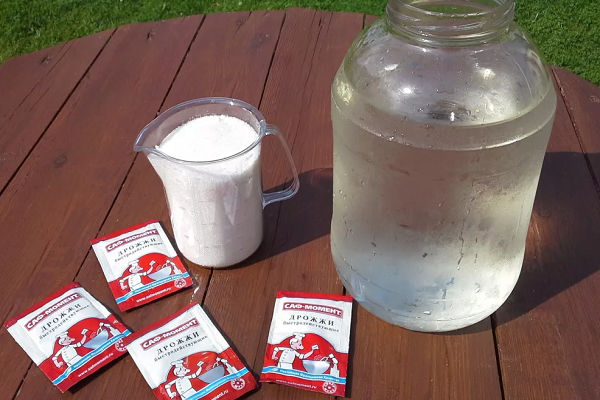
Directions for use:
- “Live” yeast. Place 100 g of sugar and the same amount of yeast (crush them with your fingers or a fork first) into a 3-liter jar. Stir with a wooden spoon, cover with cheesecloth, and leave in a warm place for 8 days.
Before use, dilute 200 ml of starter culture in 10 liters of water. For watering after transplanting, use about 1 liter, and for pouring into the hole, use 0.5 liters. - Dry yeast. They are used identically, but prepared differently. For 3 liters of water, use 2 tablespoons of sugar and yeast, let sit for 2-3 hours, then add enough water to make a total of 10 liters.
Onion peel
Onion peels are enriched with almost all nutrients. They also contain quercetin (a flavonoid pigment), which kills harmful microorganisms.
How to use:
- To prevent the leaves from turning yellow after being transferred to the garden, add 1/4 of a 10-liter bucket of husks to 10 liters of water, and before spraying, mix 10 liters of water and 2 liters of solution;
- To saturate the soil with useful substances, make a solution of 20 g of onion peel and 1 liter of boiling water, and water the root zone.
Banana peel
Banana peels are an excellent choice for feeding beans, as they contain a lot of phosphorus, magnesium, and potassium. They have the following properties:
- builds and strengthens roots;
- promotes rapid adaptation;
- accelerates flowering and growth of green mass;
- ensures photosynthesis;
- promotes better absorption of other nutrients;
- guarantees high yields in the future.
Methods of fertilizing:
- Fresh. Simply place half a banana peel in the hole or arrange it chopped around the transplanted seedling. But even better, lightly bury it in the soil.
- In dry form. This method slows down the action of the beneficial substances slightly. To reduce the time and allow the substances to quickly penetrate the soil and plants, soak the dried bark in hot water (not boiling) before applying. Use in the same way as the previous method.
- Compost tea. This remedy works very quickly and is easy to prepare. Fill a bucket with 7 liters of warm water, add the chopped peels of 6 bananas, and let it sit for 4 days. Then strain and water the root zone.
- Composting. It's used to speed up the process of regular compost, as fruit peels decompose very quickly. It's added to holes or under bushes in the standard manner.
Useful tips on fertilizing with folk remedies
Even modern gardeners enjoy using traditional recipes. They are distinguished by their lack of chemical or synthetic additives, benefiting plants without harming human health.
But in order for the products to truly have a positive effect, listen to the recommendations:
- Be careful with wood ash so as not to increase the amount of alkali excessively when deoxidizing the soil - under such conditions, plants die and seedlings do not take root;
- If there is no ash, add lime in the amount of 300 g per 1 sq. m for deoxidation, but be sure to do this during autumn digging;
- Do not ignore the indicated dosages, otherwise you will get the opposite effect;
- despite the fact that the products act as a fertilizer, use high-quality and always clean ones;
- disinfect ingredients (banana peels, onion skins, eggshells, etc.) with boiling water;
- If you still use store-bought fertilizers, introduce folk remedies in smaller doses.
Fertilizer application steps for soil cultivation
Fertilizing beans too frequently is not recommended, as they naturally contain a significant amount of nutrients. Fertilizing should be done two or three times maximum during the growing season (not including fertilizer applied during gardening and when growing seedlings).
How to feed correctly:
- First time. As soon as the first two true leaves form, phosphorus and potassium are needed. For 1 square meter, 25–30 g of phosphorus and 15–20 g of potassium are needed.
- Second time. This is the period when the budding process begins. Now apply potassium chloride at a rate of 20 g per square meter. If you don't have this product, sprinkle 200 g of wood ash per square meter.
- Third time. Only when necessary. This should be when the pods are ripening. Repeat the phosphorus-potassium fertilization, but this time add 5 g more phosphorus.
Additional nutrition
Sometimes a gardener applies the basic nutrients, but the plants begin to show signs of disease. In this case, it's important to identify which micronutrients, etc., are deficient. The easiest way to do this is to use an agrochemical map. If you don't have one, pay attention to the following signs:
- Nitrogen. If there is not enough of it, the leaves become pale and yellow, and green mass does not grow.
- Potassium. If there is a deficiency, the leaves become heavily wrinkled, curl downwards, then turn yellow and die.
- Phosphorus. Its deficiency leads to darkening of the green foliage and compaction of the leaf blades. Spots appear across the entire surface.
- Copper. A deficiency can be recognized by the wilting of the green parts of the bush and curling of the leaves. Later, the surface becomes covered with light-colored spots.
- Magnesium. Signs of deficiency include leaf edges curling into a dome shape and a change in the color of the leaf edges to a reddish-yellow tone.
- Sulfur. The main symptom is a sharp stop in growth and lightening of all green elements.
- Iron. When it's deficient, the upper leaves are affected. They become very pale, and whitish streaks appear along the veins. As the condition progresses, older lower leaves also change.
- Bor. If this element is deficient, the upper young leaves are also affected, but they do not change color and become severely deformed. Later, they become light-colored.
- Calcium. The root system suffers first. It becomes over-branched, to the point where shoots emerge from the soil. Then the young green mass becomes pale and twisted.
To ensure rapid growth and full pods, beans need to be fertilized, but do it correctly. Avoid overdosing, as this can also lead to plant diseases. If using commercial fertilizer, strictly follow the instructions.