
The main purpose of sowing green manure is to replenish depleted soils. However, this is far from their only function: green manure plants enrich the soil with organic matter, loosen it, repel insects, and improve its health. When choosing a green manure, it's important to consider the plant family it belongs to.
What are green manure crops?
Green manure is a term used to describe plants grown as natural fertilizers. However, they can also be used for food and feed. Representatives of various families can serve as green manure, as long as they perform their intended functions.
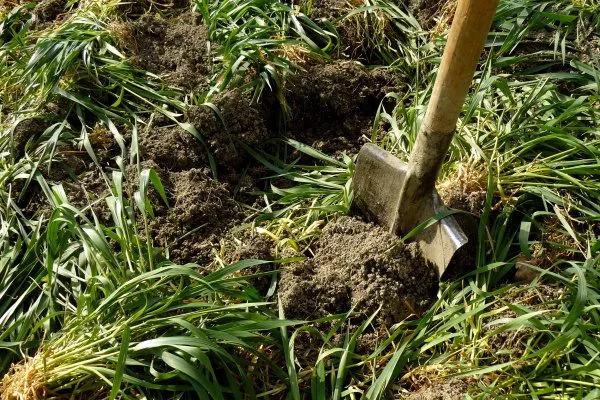
Green manure is first allowed to grow to a certain point, after which it is incorporated into the soil. The plant material, cut and scattered over the plot, and then dug over, gradually decomposes and enriches the soil with nutrients, which will subsequently feed the crops grown.
Benefits of green manure
Green manures are environmentally friendly. But green manures also have other advantages.
Functions of green manure:
- Increase soil fertility. Green manure plants rapidly increase their green mass. As they decompose, humus is formed, which is essential for soil fertility. Where it is abundant, beneficial soil microorganisms and earthworms thrive, which also positively impact soil fertility.
- Suppress the growth of weeds. Green manure crops are sown densely, and they quickly grow green mass. Some green manure crops release substances into the soil that inhibit weed seed germination.
- Improve soil structure. Many green manure crops have roots that penetrate the soil, loosening it and making it more permeable to air and water.
- Minimize the spread of diseases and pests. Among green manure crops, there are species that secrete substances that repel pests.
- Increase crop yields. Many green manure crops are excellent honey plants, attracting insects that pollinate vegetables, fruit trees, and berry crops. This results in more fruit set and enriches the soil with organic matter, which also positively impacts yields.
TOP green manures
There are quite a large number of plants that can be used as green manure. These are primarily cereals, cruciferous plants, and legumes, but there are also representatives of other families.
| Name | Family | Plant height (cm) | Sowing period | Seeding rate (g/m2) |
|---|---|---|---|---|
| Mustard | Cabbage | 25-70 | all season, before winter | 2 |
| Buckwheat | Buckwheat | 60-120 | May-August | 10-15 |
| Sweet clover | Legumes | up to 150 | end of March - mid-April | 2-2.5 |
| Peas | Legumes | depends on the variety | early spring | 20 |
| Phacelia | Borage | 15-120 | end of March - beginning of September, before winter | 10 |
| Vetch | Legumes | depends on the variety | July, end of October | 15 |
| Lupine | Legumes | up to 200 | before winter | 20 |
| Rape | Cabbage | depends on the type | April, second half of August | 1.5 |
| Alfalfa | Legumes | up to 80 | early April, mid-July - mid-August | 1.5 |
| Oilseed radish | Cabbage | depends on the variety | April-August, before winter | 3-4 |
| Oats | Cereals | 60-170 | spring, August-September | 150-200 |
| Clover | Legumes | depends on the type | late spring - early summer | 1-2 |
| Winter rye | Cereals | up to 100 | autumn | 20 |
Mustard
Belongs to the Brassicaceae family. This annual herb grows to a height of 25-70 cm. Flowers, white or pale yellow, are borne in clusters. Common white mustard is used as a green manure.
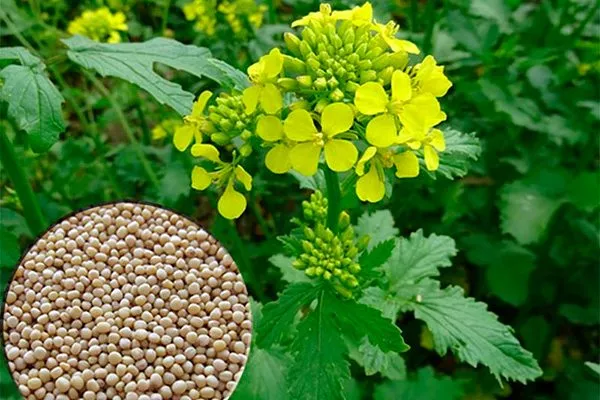
The roots release sulfur into the soil, repelling soil-dwelling insects—mustard is a deterrent to mole crickets, slugs, wireworms, and other insects. Mustard is sown throughout the summer and before winter. The seeding rate is 2 g per square meter. Mowing is done every 40 days.
Pros:
- young leaves can be eaten;
- effectively repels pests;
- inhibits late blight and fusarium;
- can withstand frosts down to -6°C;
- You can sow 3 times per season.
After mowing the mustard, the soil is immediately dug up, and after a couple of weeks the main crops are planted.
Buckwheat
Belonging to the Buckwheat family, this cereal and honey-producing herbaceous crop has hollow, thin stems and beautiful heart-shaped leaves. Flowers gathered in inflorescences attract honey bees.
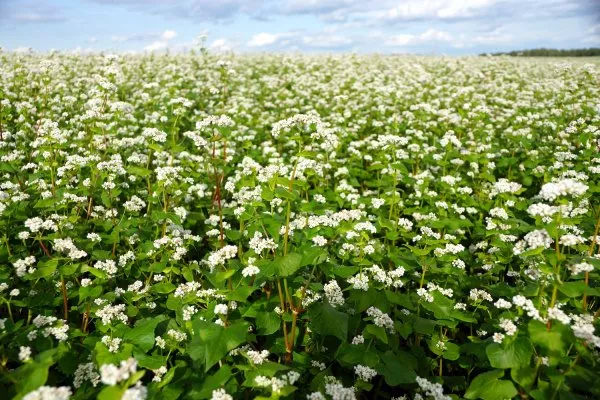
This crop grows poorly in dry soils and is susceptible to cold. It is sown from May to August, mown and dug a month later. The seeding rate is 10-15 g per square meter.
Benefits of buckwheat:
- grows quickly, can be mown 3 times per season;
- suppresses weeds;
- a good predecessor for almost any vegetables and root crops.
Sweet clover
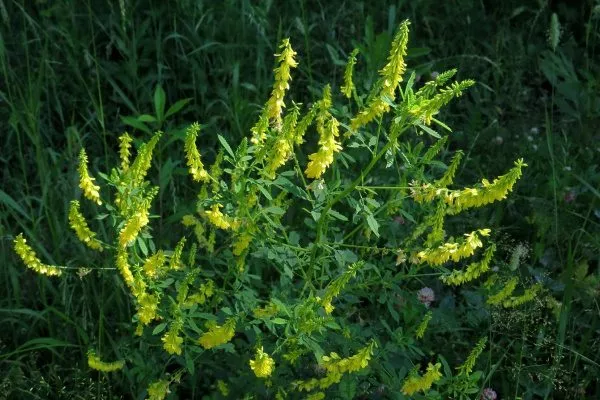
It is used not only medicinally but also as a green manure. Sweet clover has an erect, branched stem up to 1.5 m tall, and small, lanceolate, serrated leaves, clustered in groups of three.
Only the underground part of the sweet clover—the roots—is used for green manure, leaving them to rot in the soil. The aboveground part, which is excessively tough and coarse, is composted. Sowing occurs from late March to mid-April. Mow when flowers appear. It is incorporated into the soil before winter at the end of the second year. The seeding rate is 2-2.5 g per square meter.
Benefits of sweet clover:
- no need to mow;
- can be fed to livestock.
Peas
This climbing herbaceous annual has flexible, fragile stems ending in tendrils. Peas can creep along the ground or climb supports. If planted densely, the shoots support themselves against neighboring stems. The plant's taproots are powerful, capable of penetrating even the hardest soil.
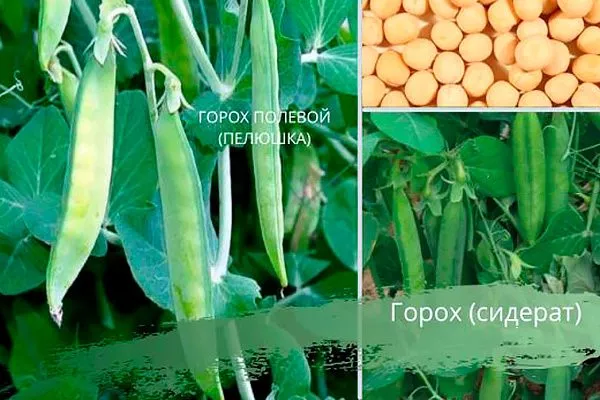
It is planted early in the spring, before vegetables and other crops. The greens are mown after 60-80 days. Peas should not be planted before or after legumes. The seeding rate is 20 g per square meter.
Benefits of peas:
- cold-resistant, withstands frosts down to -4°C;
- saturates the soil with nitrogen.
Phacelia
This herbaceous annual has erect, sparsely branched stems. The leaves are pinnately toothed, and the flowers are numerous and pleasantly scented. Phacelia grows from 15 to 70 cm tall, reaching a maximum height of 120 cm.
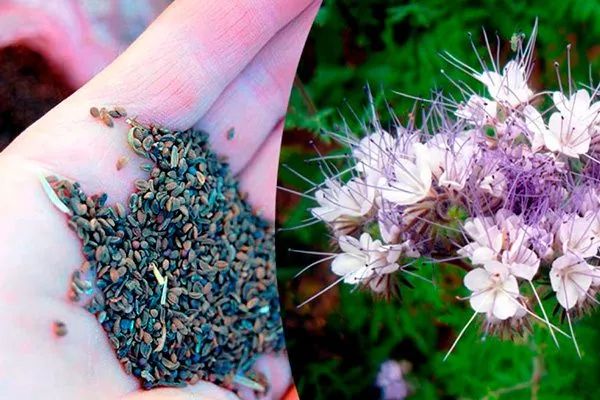
Phacelia is sown from late March to early September. Winter sowing is also practiced. The rate is 10 g per square meter. Mow every 1-1.5 months.
It grows quickly and blooms 1.5 months after germination. Its blooms are very spectacular, so phacelia can also serve as a decorative plant.
Advantages of Phacelia:
- good honey plant;
- repels wireworms, nematodes, woodlice, caterpillars and locusts, it is also poorly tolerated by aphids, grain beetles and weevils;
- is a good soil deoxidizer;
- unpretentious, tolerates droughts and cold weather well;
- decorative;
- Cut greens can be used as mulch.
The greens can be mowed before the phacelia blooms. It is recommended to till them into the ground before planting potatoes.
Vetch
A climbing legume capable of covering the ground with a dense green carpet. Its roots contain nodules containing nitrogen-fixing bacteria that capture atmospheric nitrogen from the air and convert it into a form easily absorbed by plants.
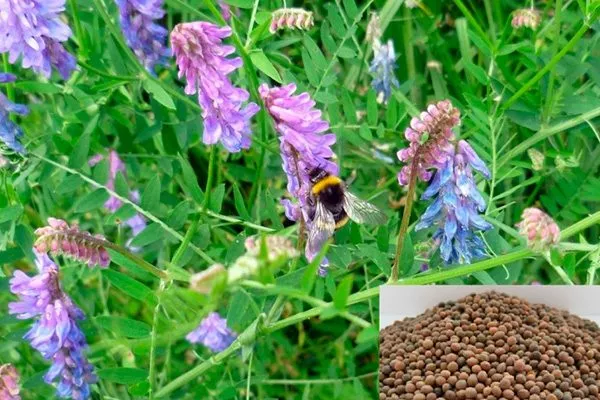
Vetch is sown in July or at the end of October. The seeding rate is 15 g per square meter. This climbing plant is recommended to be sown alongside other green manure crops, so that it will creep over oats, barley, mustard, rapeseed, or phacelia. Vetch does not tolerate drought well.
Advantages of wiki:
- promotes the accumulation of nitrogen in the soil;
- makes phosphates available to plants;
- protects the soil from erosion.
Vetch is sown everywhere except in areas previously used for legumes—beans, peas, and broad beans. It is mown and dug over after 40 days.
Lupine
A tall legume with stiff, straight stems. The maximum height of this subshrub is 2 meters. The leaves are compound, palmate, and umbel-like. Yellow, white, and blue (narrow-leaved) lupines are most often sown as green manure. The taproot can extend 2 meters deep.
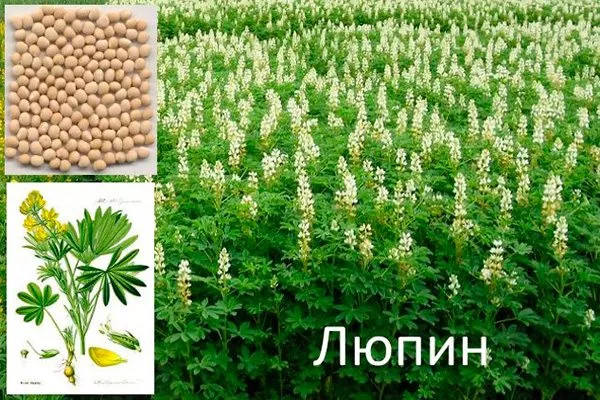
Lupine and root nodule bacteria form a symbiotic relationship. The plant accumulates nitrogen in the soil, which is easily absorbed by plant organisms. Lupine is sown in frozen soil before winter, and it emerges rapidly in the spring. It is recommended to sow after nightshades. The seeding rate is 20 g per square meter.
Benefits of lupine:
- enriches the soil with nitrogen;
- converts phosphorus into a form accessible to plants;
- loosens the soil well;
- repels mole crickets and cockchafer larvae;
- decorative.
Lupine can be planted in May and mowed and dug in during the pod formation phase. This green manure should only be planted after legumes.
Rape
There are two types of rapeseed: winter and spring. They are sown in winter and spring, respectively, but they share the same effect: they enrich the soil with phosphorus, sulfur, and organic matter.
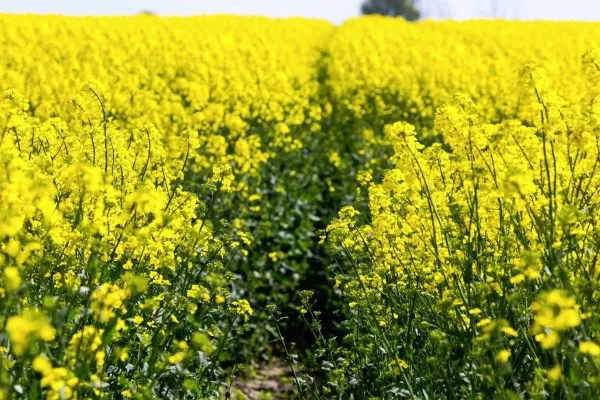
Rapeseed is sown in April or from the second half of August. The seeding rate is 1.5 g per square meter. It serves as a good precursor to potatoes, reducing the crop's disease incidence by almost 20%. Do not sow rapeseed before or after cruciferous crops.
Advantages of rapeseed:
- attracts honey-producing insects;
- kills wireworms;
- inhibits pathogens of potato diseases;
- Rapeseed sown before winter serves as a snow-retaining crop.
Alfalfa
Two types of alfalfa—blue and yellow—are used for green manure. This perennial forage plant enriches the soil with nitrogen and grows up to 80 cm in height. It has a thick, robust stem and a deep-seated rhizome. Maximum green mass production occurs in the third to fourth year.
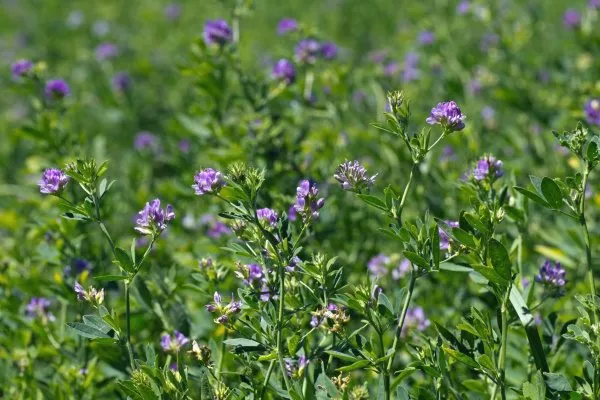
Alfalfa is sown in early April or from mid-July to mid-August, and mown on the 35th to 45th day—at the budding stage—then during the budding period. The seedings are dug over in the second year, in the fall. The seeding rate is 1.5 g per square meter.
Benefits of alfalfa:
- grows in any soil;
- easily tolerates drought and heat;
- a good predecessor for any vegetable crops;
- improves soil structure, reduces its acidity.
Oilseed radish
Instead of regular radish, oilseed radish is used as a green manure. It enriches the soil with organic matter and disinfects it. Radish is sown 3-4 times during the season—from April to August. This green manure can also be sown before winter.
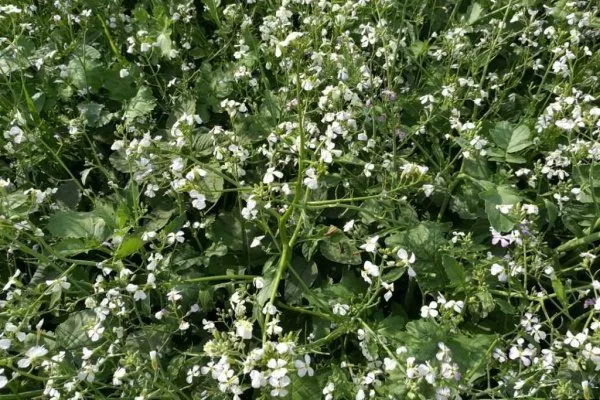
The sowing rate is 3-4 grams per square meter. Radish is harvested 1.5-2 months after sowing. It is the best predecessor for potatoes. Do not sow before or after cruciferous crops.
Benefits of radish:
- loosens the soil well;
- repels wireworms and nematodes;
- suppresses couch grass and other weeds;
- prevents the development of potato diseases.
Oats
This herbaceous annual grows 60-170 cm tall, with fibrous, branched roots. The leaves are linear, glaucous, and rough, 25-45 cm long. It enriches the soil with phosphorus and potassium, but provides little nitrogen, so it is recommended to sow it in a pair with peas or vetch.
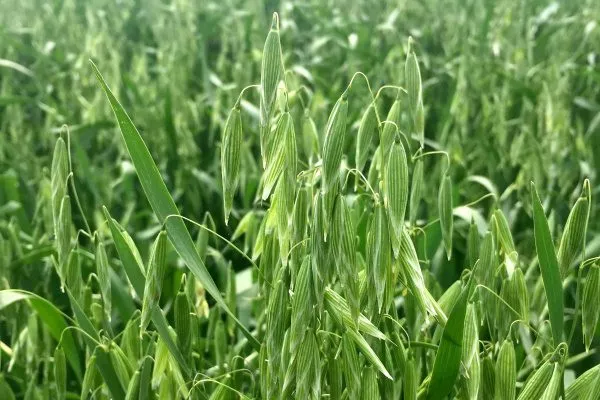
Oats are suitable as a precursor to potatoes only when sown with mustard. It is recommended to sow in spring and in August-September. Spring oats are sown immediately after the snow melts. They are cut and dug in when the plant reaches 15 cm in height. The crop tolerates drought well. The seeding rate is 150-200 g per square meter.
Benefits of oats:
- very effective on clay soil;
- the roots contain substances that prevent the development of root rot;
- repels nematodes;
- loosens the top layer of soil.
Clover
This perennial plant has distinctive trifoliate leaves. Three types of clover are sown: red, white, and pink (hybrid). This green manure grows well in loamy and clayey soils with slight acidity. It has a unique ability to grow and thrive in shade. It does not tolerate drought well and does not thrive in arid, sandy soils.
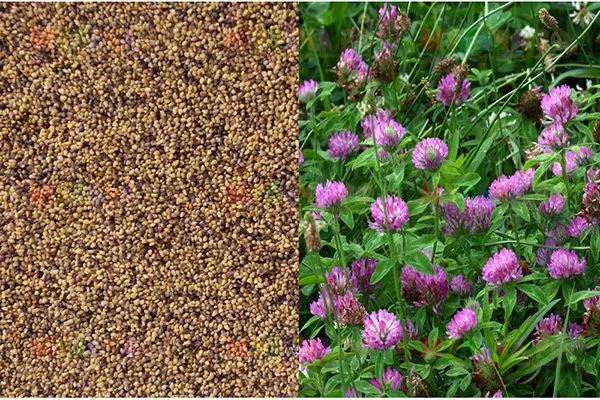
Clover is sown in late spring or early summer. After 2-2.5 months, when flowering begins, it is mown. Clover should be grown in the same plot for at least two years; otherwise, it is not very effective as a green manure. It is not dug into the soil until the end of the second year. The seeding rate is 1-2 g per square meter. It is recommended to sow it in a mixture with phacelia, timothy, and cereals.
Benefits of clover:
- enriches the soil with nitrogen better than all other green manures;
- good honey plant;
- protects soil from erosion;
- can be used as lawn grass.
Winter rye
This annual grass belongs to the Poaceae family. It has a hollow, bare stem, and narrow, glaucous, broadly linear leaves. It grows up to 1 m tall. Its fibrous roots penetrate 1-2 m deep and quickly absorb nutrients, even from poorly soluble compounds. It is recommended to use it in a mixture with legumes in areas with high acidity.
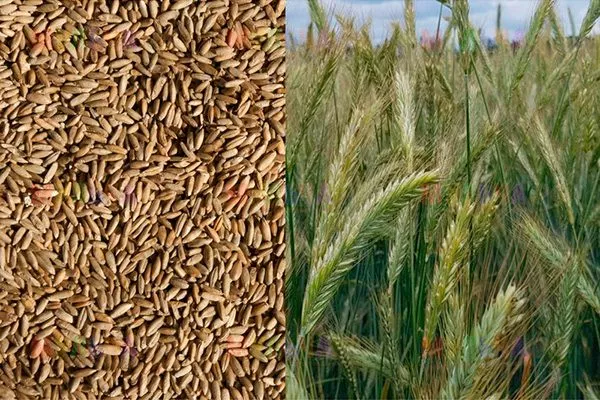
It is recommended to sow in the fall, 1.5 months before the cold weather sets in. In March-April, winter rye is mown and buried. The seeding rate is 20 g per square meter. Rye is an ideal precursor to vegetable crops. It is not sown after cereals.
Benefits of rye:
- enriches the soil with organic matter, nitrogen, potassium;
- cold-resistant, suitable for harsh climates;
- helps get rid of nematodes;
- inhibits pathogenic bacteria.
The best green manure for vegetable crops
The optimal green manure is selected for each vegetable crop. The selection is based on the plant family, the method of nutrient absorption, and other factors.
- ✓ Consider the family of the green manure and the main crop to avoid diseases and pests.
- ✓ For crops with a shallow root system, choose green manure with deep roots to improve the soil structure.
Recommended green manure:
- Cucumbers. Their roots don't go deep, so they need nutrition in the surface layers. The best green manure crops are all cereals, legumes, and cruciferous plants.
- Potato. In addition to legumes and cruciferous plants, flax and phacelia can also be used as green manure for potatoes. It is recommended to sow mixtures such as oats with peas or barley, as well as phacelia with mustard—this mixture will rid the plot of wireworms, which damage the tubers.
- Tomatoes. Green manures are used to loosen the soil, enrich it with nitrogen, and inhibit weed growth. Phacelia is the best green manure for all nightshades. All cruciferous plants, legumes, and cereals are also suitable.
- Cabbage. It prefers nitrogen-rich soils, so it needs green manures that enrich them with this element. Sweet clover, oats, and alfalfa are the best choices.
When to sow green manure?
Almost all green manure crops are hardy and cold-tolerant. Therefore, they are sown from early spring until fall. Even if sown in late August, they will still have time to fulfill their intended purpose, as they are usually harvested a month or six weeks later—around mid-October, just when the soil is ready for tillage. Many green manure crops can also be sown before winter.
Timing of sowing green manure:
- Spring. Most crops are sown in mid-April. In the south of the country or in early spring, it's sown in late March. If vegetable sowing is delayed, green manure can be sown later than usual—in May.
- Summer. Sowing is carried out from June until September. Green manure crops are typically sown in areas where vegetables and other crops are being harvested. For example, after harvesting early radishes or lettuce, it is recommended to sow peas or alfalfa in their place. And after digging up early potatoes, you can sow cruciferous green manure crops.
- Autumn. Winter or subwinter crops are sown. The former are sown around September to allow their green mass to develop before snow falls. Subwinter green manure crops are sown later—in late October or even November. They are mown and dug in the spring, around the second half of April.
How to sow green manure?
Green manure is sown using the same technique: evenly spread over the seeded area and thoroughly raked in. If sown in spring or fall, watering is not necessary. If sown in summer, watering is recommended, otherwise the crops may simply not germinate.
- ✓ Sow green manure crops in moist soil for better germination.
- ✓ Consider the temperature regime: some green manure crops require certain temperatures for germination.
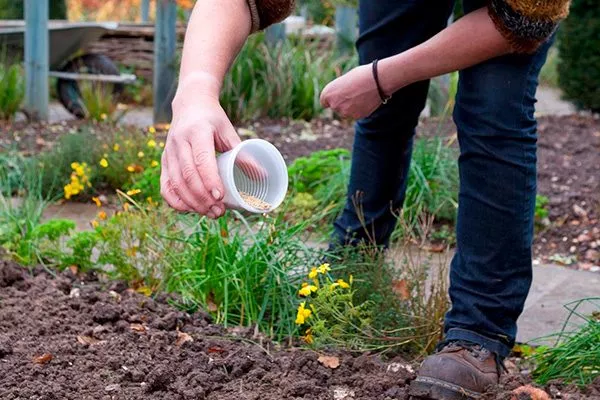
The location for sowing is chosen taking into account the set goals:
- On vacant sites. Here, green manure will prepare it for future plantings and enrich it with useful elements.
- In the garden beds. Here, green manure is sown in the spring, before planting the seedlings. In the summer, it is sown after the harvest and removal of plant debris, so that the beds are not left empty.
- Between the rows. This type of seeding prevents weed growth and soil loss from wind and rain. A dense carpet of green manure will also protect vegetable and garden crops from pests. Finally, after harvesting, the gardener will receive excellent mulch.
- In tree trunk circles. Here, green manure not only acts as mulch and fertilizer, but also decorates the garden.
Controlling diseases and pests with green manure
Most green manure crops have the ability to suppress pathogens and repel pests. When choosing green manure crops for sowing, consider which diseases and pests each one is effective against.
Green manure and its control against pests and diseases:
- Flax contains tannin, which repels Colorado potato beetles.
- Rye roots secrete a substance that repels nematodes.
- The spicy aroma of radish and mustard neutralizes pathogens in the soil.
- Phacelia prevents the growth of fungal infections such as rot, late blight, etc. It also repels wireworms.
- Lupine prevents root rot and scab in potatoes and repels nematodes.
- The fragrant flowering sweet clover prevents wireworms and nematodes from reaching the plantings.
- Alfalfa contains antiseptics that drive out weeds and pests and attract soil bacteria and earthworms.
How and when to clean?
The harvesting method depends on when and why the green manure was planted.
Features of green manure harvesting:
- Green manure plants can be mown before flowering, two weeks before planting vegetables. If the green manure is blooming beautifully, you can leave it in the beds for a while longer to attract honey plants. Green manure should be harvested before it begins to scatter tens of thousands of seeds.
- Green manure crops should mature; their stems are ideal for mulching beds. The seeds will be used for sowing next year. Legumes are harvested after harvest.
- Green manure sown between rows is harvested early to prevent it from growing taller than the main crops. Otherwise, it will inhibit their growth.
The cut tops are plowed into the soil 2-3 weeks before planting the seedlings. The planting depth is determined by the soil characteristics. In light soils, 15 cm is sufficient, while in heavy soils, 6-8 cm is sufficient.
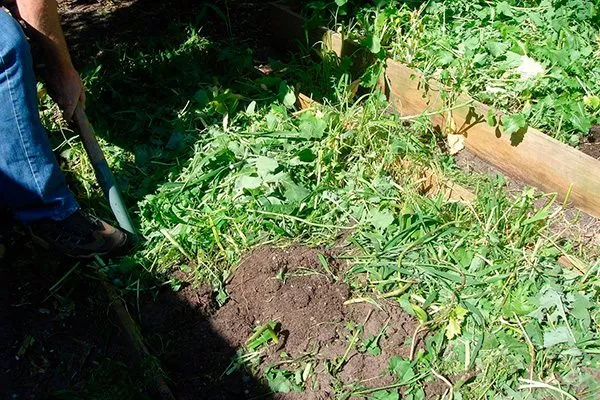
The tops can also be plowed under before winter, digging in the cut tops, stems, and leaves along with the top layer of soil. The green mass, when rotted, will turn into fertile humus.
Frequently asked questions and answers
Many gardeners have never planted green manure in their plots and may even be hearing the term for the first time. They have many questions about sowing and growing these plants.
Questions and Answers:
- Are there any disadvantages to green manure? It's important to remember that green manure crops should not be sown before or after crops with which they belong to the same family. For example, clover, vetch, and alfalfa (legumes) should not be sown before or after beans, peas, and kidney beans. Mustard, rapeseed, and oilseed radish should not be sown in the same area as cruciferous crops such as cabbage, radishes, turnips, daikon, and horseradish. And cereal green manure crops such as oats and rye are not suitable for millet and corn.
- Is it possible to use green manure in a greenhouse? Not only is it possible, it's also very beneficial. Indoor cultivation harbors even more pests and pathogens than open soil, and soil depletion occurs more quickly there.
- Where to buy green manure? Green manure seeds can be purchased at specialized garden centers and online stores selling gardening supplies. These seeds are usually sold in large packages labeled "green manure."
Finally, watch a video about which green manures are best:
The green manure planting plan must be planned in advance. It's important to remember that not every green manure plant is suitable for every crop. If done correctly, you can not only improve soil fertility but also solve several other problems along the way.
Very useful information. Thank you very much. If we use these crops in crop rotation, the effect will be good, especially on soils with very low fertility.