
Liming is a chemical method for normalizing acidic soils, which involves adding lime-type fertilizers: calcite, dolomite, limestone, sugar waste, slaked lime, etc. In addition to regulating acidity, the goal of this method is to increase soil fertility and improve its physical properties.
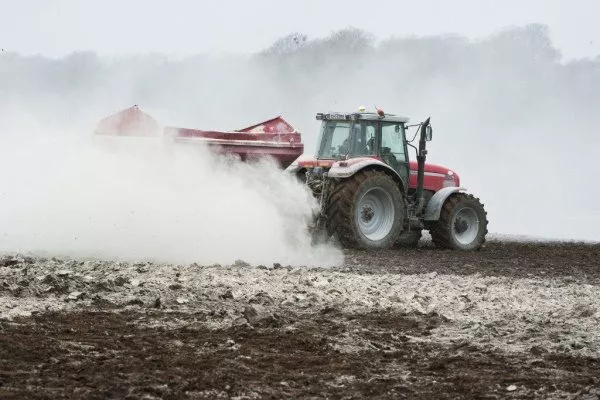
How to determine soil acidity?
| Name | Soil type | Optimal pH | Recommended crops |
|---|---|---|---|
| Sharply sour | Podzolic, marshy, yellow earth, red earth-podzolic | 4.0-5.0 | Acid-loving and acid-tolerant plants |
| Strongly acidic | Podzolic, sub-podzolic, brown, unsaturated forest, yellow soils and red soils | 5.0-6.0 | Acid-loving plants |
| Subacidic | Saturated yellow and red soils, leached chernozems, gray and brown forest soils | 6.0-6.5 | Most agricultural crops |
| Neutral | Ordinary black soil | 6.5-7.5 | All types of agricultural crops |
| Slightly alkaline | Southern chernozems, carbonate soils, dry and semi-desert steppes | 7.5-8.5 | Drought-resistant crops |
| Strongly alkaline | The parent rock of many chernozem and chestnut soils | 8.5-10.0 | Not recommended for trees, especially apple and cherry trees. |
| Sharply alkaline | Solonetz, soda solonchaks | 10-12 | Not suitable for agricultural use without gypsum |
There are several ways to determine acidity level in the soil. But first, let's find out what types of soil there are based on their acidity:
- pH 4.0-5.0. Severely acidic. It occurs more often in humid climates and is typical of podzolic, marshy, yellow earth, red earth-podzolic, and other soils. They are heavily leached of lime, potassium, boron, sulfur, zinc, cobalt, and iodine compounds. Phosphate availability is reduced.
Many agricultural plants require this pH adjustment, but lime should be applied with extreme caution. Soils with this pH are most suitable for acid-loving and acid-tolerant plants. - pH 5.0-6.0. Strongly acidic reaction. Common in soils of humid climates (podzolic, sub-podzolic, brown, unsaturated forest, yellow, and red soils). The state of phosphate, iron, aluminum, manganese, calcium, potassium, boron, cobalt, and iodine compounds is similar to that of strongly acidic soils.
- pH 6.0-6.5. Slightly acidic reaction. Common in humid climates (saturated yellow and red soils, leached chernozems, gray and brown forest soils). Phosphates are readily available, and aluminum and manganese toxicity is reduced or absent. Deficiencies of sulfur, calcium, potassium, boron, cobalt, and iodine are not observed.
- pH 6.5-7.5. Neutral reaction. Typical of ordinary chernozem. Good physical conditions, excellent structure, intense microbiological activity, optimal conditions for phosphorus, nitrogen, and mineral fertilization, and high fertility.
- pH 7.5-8.5 (8.7). Slightly alkaline conditions. Found in southern chernozems, calcareous soils, and dry and semi-desert steppes. Phosphate, iron, zinc, and manganese deficiencies may occur. Zinc and copper deficiencies occur with chronic phosphorus consumption.
Microbiological activity, nitrification capacity, nitrogen supply conditions and the presence of many ash elements are at a good level. - pH 8.5(8.7)-10.0. Highly alkaline conditions. High alkalinity is typical of the parent material of many chernozems and chestnut soils. In this case, alkalinity does not significantly affect agricultural crops, but is detrimental to trees, especially apple and cherry trees.
- pH 10-12. Severely alkaline conditions. Found in dry climates. These can include solonetz and soda solonchaks. Reduced phosphate availability, iron and manganese deficiencies, and excess boron are possible.
The soils are characterized by unfavorable physical conditions, lack of structure, and inhibition of microbial activity. They require high doses of gypsum; otherwise, they are unsuitable for agricultural use.
Below are the methods by which the acidity level is determined.
Table vinegar
What you'll need for the experiment: a soil sample, a little regular vinegar, and plastic wrap (or any other surface you don't mind damaging). How to perform the test:
- Place a handful of garden soil on the oilcloth.
- Pour a few drops of regular vinegar on top. If:
- bubbles and a slight hissing sound appear - the soil is neutral or alkaline and does not require liming;
- There is no reaction - the soil is acidic.
Cherry or currant leaf tea
What you'll need: a soil sample, 5 cherry or currant leaves, 200 ml of hot water, and a liter jar. How to perform the test:
- Place the leaves in a jar, pour boiling water over them and wait until the water cools to room temperature.
- Then add some soil to the container. If the soil is acidic, the liquid will turn reddish; if it's neutral, it will turn greenish (the leaves will appear to bleach); if it's slightly acidic, the water will turn blue.
Grape juice (not wine)
You'll need: a soil sample, 50 ml of grape juice (purely natural, no additives), and a clear container. How to test:
- Pour grape juice into a jar.
- Collect some soil in the container with the juice. If there's no reaction, the soil is acidic. If foam and air bubbles appear, and the liquid changes color, the soil is alkaline or neutral.
Soda
What you'll need for the experiment: a soil sample, baking soda, clean water at room temperature, and a container. How to conduct the test:
- Mix some soil in a container with water to form a paste.
- Add a little baking soda and wait a few seconds. If bubbles appear on the surface and begin to fizz, the soil is acidic. If no reaction occurs, the acidity is normal.
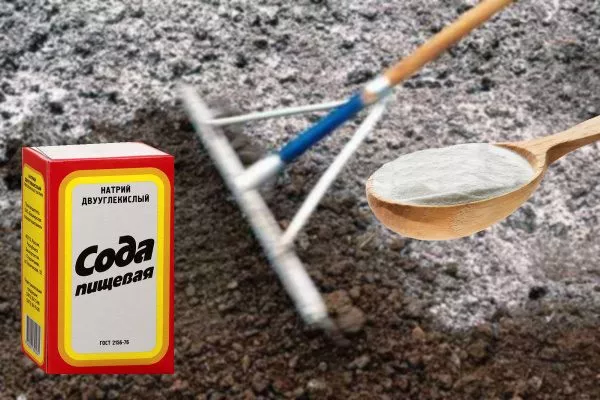
Using a strip of litmus paper
To test acidity, you can purchase special indicator paper (litmus paper)—you might remember it from your school chemistry classes. You'll also need a soil sample, a regular beaker, and 50 ml of distilled water.
How to perform the test:
- Place the soil in a clean glass.
- Add distilled water and shake well for 5 minutes.
- Let the resulting solution sit for one hour, shaking regularly. Then, dip a marker paper into it. If the indicator:
- turned pink – the soil is moderately acidic;
- became greenish-blue - slightly acidic;
- Neutral primer will show blue color.
- To accurately determine the condition of the soil, compare the resulting shade with the scale on the litmus paper package.
By indicator plants
Weeds growing in the soil can indicate increased soil acidity. For example, buttercup, mint, plantain, and sorrel thrive in highly acidic soils. However, the presence of quinoa, clover, coltsfoot, and field grass indicates neutral or slightly acidic soil.
More information about the relationship between growing weeds and soil acidity can be found in the table:
| Indicator plants | pH indicator | Acidity |
| White sweet clover, field bindweed, spring adonis, garden sow thistle | 6.5-7.5 | neutral |
| Unscented chamomile, meadow cornflower, field birch, dog violet, creeping couch grass | 4-5.5 | medium sour |
| 5.5-6.5 | slightly acidic | |
| Green and sphagnum mosses, creeping buttercup, white mustache, heather, wood sorrel, field horsetail, grasshopper, nettle, primrose, fireweed, and prickly pear | less than 4 | highly acidic |
When and why is soil liming used?
When the soil's cation exchange capacity is filled with positively charged hydrogen ions (which is what happens when acidity is high), nutrients such as nitrogen, phosphorus, and potassium will not be available to the soil, which negatively impacts plant growth and development.
Liming will provide the following benefits:
- reduction of the toxicity potential of Mn2+ and Al3+;
- increased microbial activity;
- improvement of physical condition (better structure), symbiotic nitrogen fixation and taste;
- It is an inexpensive source of the nutrients Ca 2+ and Mg 2+, which are deficient at low pH.
To ensure timely soil liming, you can calculate the economic impact of the procedure—the payback period and net profit. To do this, you need to calculate the costs of purchasing the lime mixture and its distribution, as well as the fruit yield in the years following liming.
Obviously, if lime is applied to very acidic soils and lime-sensitive crops (vegetables, forage crops and potatoes) are planted in them, the fastest return will be achieved.
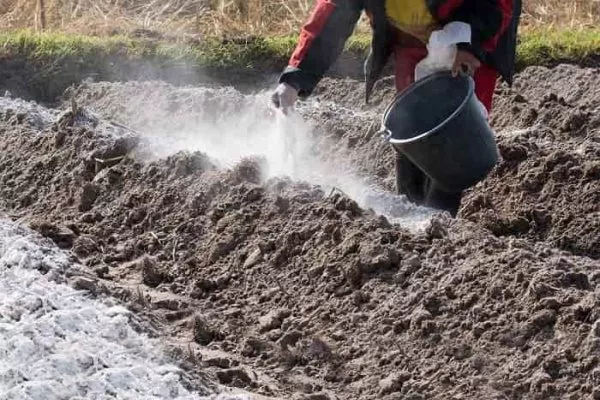
Types of lime fertilizers
There are two main types of liming materials. The first is "calcite limestone." This is lime that contains only calcium carbonate (CaCO3), calcium hydroxide [Ca(OH)2], or calcium oxide (CaO). It is used as a standard and has a CCE rating of 100. Other materials are evaluated against it.
- ✓ Consider the magnesium content of your soil before choosing between calcite and dolomite lime.
- ✓ Check the particle size of the lime material: smaller particles react faster with the soil.
The second type contains a large amount of magnesium carbonate (MgCO3) and is called "dolomitic lime." This material should be used if the soil is low in MgCO3. Otherwise, calcite lime is better. Dolomite can have CCE values exceeding 100, depending on its purity.
Lime fertilizers are also divided into:
- hard limestone rocks that are suitable for use after grinding or firing;
- soft calcareous rocks;
- industrial waste with a high percentage of lime in its composition.
Features of soil liming
The amount of lime required depends on several factors. They are as follows:
- soil acidity and its mechanical composition (in highly acidic soils, lime is added in higher doses);
- type of lime fertilizers and the depth of their application;
- time elapsed since the last application of fertilizer.
The most common and effective lime fertilizer is ground limestone. However, other materials with varying lime content are also used:
| Name of the fertilizer | Amount of lime in the composition, % |
| Peat ash | 10-50 |
| Belite flour | 80-90 |
| Slaked lime | 135 |
| Sugar beet factory defects | 75 |
| Carbide lime/sludge | 140 |
| Ground dolomites | 75-108 |
| Podzol of tanneries | 110 |
| Ground chalk | 90-100 |
| Burnt dolomite dust | 150 |
| Calcareous tufa | 75-96 |
| Open-hearth slag | 85 |
| Lake lime | 70-96 |
| Cement dust | 80 |
| Dolomite flour | 95-108 |
| Marl | 25-75 |
| Oil shale ash | 65-80 |
| Peat tuffs | 10-50 |
| Gas lime | 120 |
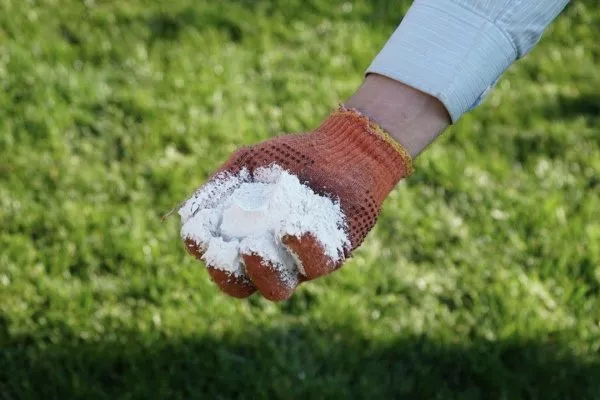
The rate of application of ground limestone to the soil
The application rates for ground fertilizer in the table are based on the conditions of placement at a depth of 20 centimeters and distribution over 1 square meter.
| Soil acidity (pH) | Application rate for clay and loamy soils | Application rate for sandy and sandy loam soils |
| Very strong (pH≤4) | 500-600 grams or more | 300-400 grams |
| Strong (pH=4.1-4.5) | 400-500 grams | 250-300 grams |
| Average (pH=4.6-5.0) | 300-400 grams | 200-400 grams |
| Weak (pH=5.1-5.5) | 300-250 grams | liming is not used |
| Close to neutral (pH=5.5-6.0) | liming is not used | liming is not used |
To correctly determine the amount of lime fertilizer to use, multiply the stated amount of ground limestone by 100 and divide by the percentage of lime stated in the second column of the previous table (where the amount of lime in the different fertilizers is indicated).
- Conduct a soil analysis for acidity and magnesium content 2-3 months before the planned liming.
- Select the type of lime fertilizer based on your soil test results.
- Prepare the soil by removing large stones and roots 1 month before liming.
Methods of soil liming
The procedure can be primary or secondary, and is carried out in different ways. Primary (reclamation) liming is carried out on soils with increased acidity (pH 5.5 or less) to ensure a desired or optimal soil pH. Full doses of materials are used here.
Repeated (maintenance) liming is used to maintain the optimal soil pH created by liming for plants. It should compensate for annual lime losses due to leaching with precipitation and removal with plant waste.
Liming with slaked lime (calcium hydroxide)
Slaked lime is used to treat large trees and shrubs against pests. Slaked lime is also used as a fertilizer, but it's important to determine the soil's acidity beforehand.
What soils are suitable for such liming:
- On which absolute “opponents” of acid will be planted: cabbage, onions, beets, carrots, spinach, alfalfa, celery.
- Those where neutral soil lovers will be grown: lettuce, cucumbers, beans, cereals, corn, sunflowers, grapes.
If the procedure is carried out in the fall, mix the slaked powder into the soil while plowing to activate the composition. The ingredients should be evenly distributed.
For one square meter of highly acidic soil, you'll need 650 grams of slaked fertilizer. For moderately acidic soil, you'll need 520 grams; for slightly acidic soil, you'll need 450 grams.
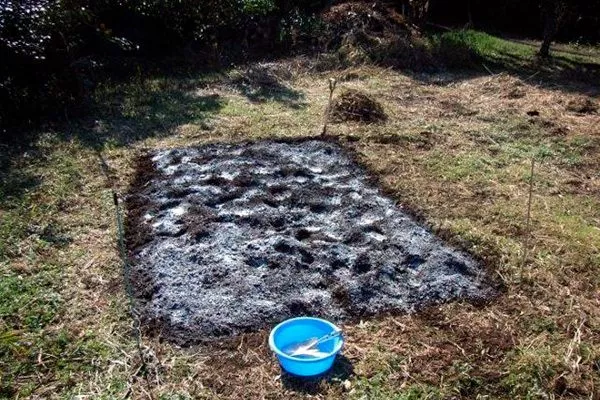
Liming the soil with lime
The soil is usually covered with lime to a depth of 20 cm, but if an incomplete amount is applied (for example, 1/4 of the full dose), it can be covered to only 4-6 cm.
What to do:
- Sprinkle a thin layer of quicklime over the area.
- Add lime and water. Use 3-4 liters of water per 100 kg of fertilizer.
- After half an hour, dig up the soil.
Liming the soil in spring with eggshells
Most gardeners have probably heard about using eggshells in their gardens, but they still stubbornly continue to fertilize their soil with chalk and lime. While these materials also contain calcium carbonate, which is used to deoxygenate the soil, they lack plant-friendly elements such as:
- sulfur;
- phosphorus;
- silicon, etc.
Eggshells contain about three dozen microelements that enrich the soil, loosen its structure, and prevent weeds and surface drying out. This fertilizer can also be applied in the spring before planting; it won't harm the plants.
To use the shells for liming, you need to crush them. This should be done gradually. Once you've collected 1 kg of raw eggshells, you're ready to begin:
- Place a clean, soft cloth (a thick tarpaulin will do) on the table.
- Spread the shells on the surface and leave for an hour or two. Dried shells will crumble faster.
- Crush the shells with a wooden rolling pin, then grind them in a coffee grinder or put them through a meat grinder. This is necessary because large pieces are harmful to the soil—they decompose slowly.
- Place the prepared shell powder into containers and close tightly with lids.
You can make a combined fertilizer (compost) by baking eggshells with ash over a fire or in the oven. This fertilizer will be rich in phosphorus, potassium, magnesium, and calcium carbonate. It's especially beneficial for acidic clay, improving its structure.
How to prepare a liquid fertilizer that is perfect for increasing the yield of cabbage, root vegetables, onions, vegetables, plums, and cherries:
- Pour the powder obtained from the shells into a glass bottle and add water (you don’t have to grind it into dust, but just break it up).
- Close the lid tightly and place the jar in a cool, dark place for 2 weeks.
- After the allotted time, the water will become cloudy and acquire an unpleasant odor. This means the fertilizer is ready.
- Before feeding plants, dilute the fertilizer in a ratio of 1:3 with ordinary water.
Of course, simply using egg powder is not a complete replacement for liming the soil, but if you do it year after year, you can significantly increase the yield on your plot.
When is the best time to apply lime?
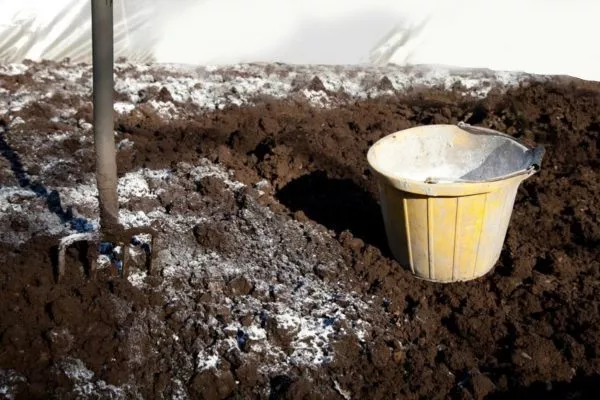
Liming is usually done in the fall. It's best to do this before digging or plowing, as the fertilizer won't begin to work until it's incorporated into the soil.
- Before the cold weather sets in, the lime will have time to complete some of its tasks, and this process will continue until winter.
- By spring, the soil will change significantly: its acidity will decrease, and it will contain more microelements.
In spring, soil is fully limed only if the soil is too acidic and the area will not be planted this season. Otherwise, the lime is spread in a thin layer and dug in. This process is performed three weeks before planting to ensure the active ingredients:
- managed to take effect;
- did not burn the plant rhizomes.
Results of regular liming
Liming acidic soils is a simple, environmentally friendly way to increase the fertility of the soil on your property.
How is the positive effect achieved:
- accelerated absorption of mineral elements;
- activation of the vital activity of some microorganisms useful for garden plants, such as rhizobacteria, etc.;
- preventing plants from absorbing toxic substances – this is especially important in areas close to industrial zones;
- water resistance increases, due to which water and fertilizers do not leave the root system and tubers for a long time;
- the soil is enriched with useful elements (calcium, magnesium, fluorine).
Soil liming is a very important process. It requires careful soil analysis and fertilizer selection, proper preparation and application, careful dosage, and so on. If everything is done according to the recommendations, the soil will improve, its normal acidity will return, and as a result, the soil will become more favorable for crops growing there, and yields will increase.