
The Atlant pumpkin is a global giant among pumpkin crops. Fruits weighing up to 150 kg have been registered worldwide. This late-ripening variety matures in a maximum of 130 days from planting. The bush is quite spreading and vigorous. Its thick skin allows for long shelf life.
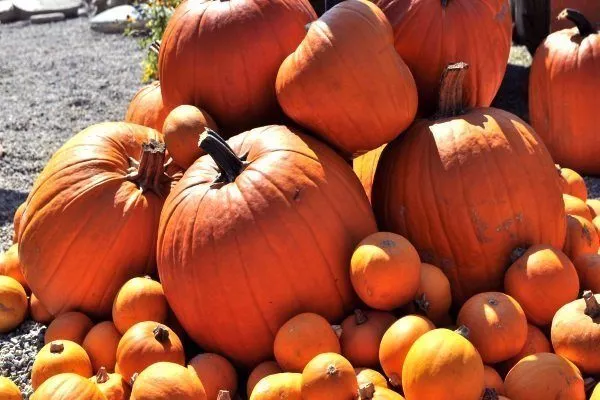
The Atlas pumpkin is a giant among pumpkins.
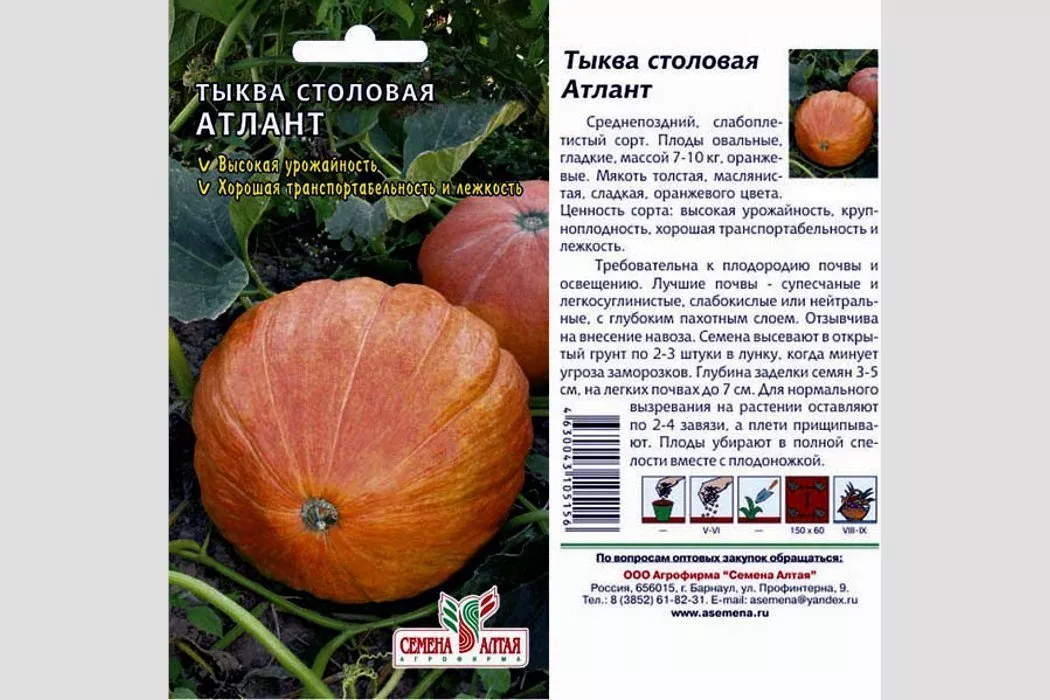
Pumpkin seeds Atlant
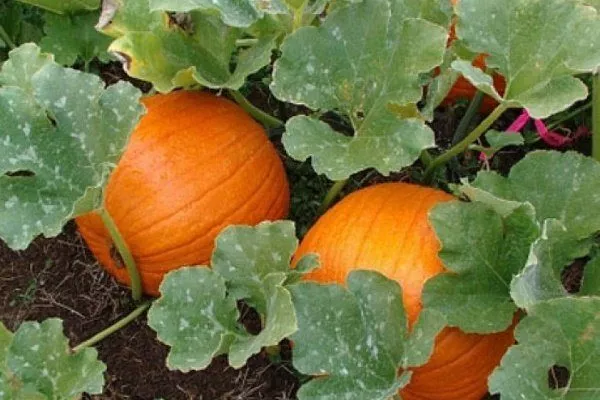
Pumpkin bush Atlant
General characteristics of the variety
Atlant is considered a sweet variety, containing 15% sugar, 20-22% starch, and vitamins E, B2, B1, and C. It is used in desserts, porridges, casseroles, baby food, juices, and jams. When needed, it is also used as feed for farm animals.
- ✓ The optimal soil temperature for planting Atlant pumpkin seeds should not be below +10°C.
- ✓ To prevent diseases, it is necessary to observe crop rotation, not planting pumpkin after related crops (cucumbers, zucchini) for at least 3 years.
The bush has a medium-sized, climbing habit, with round, dark green leaves and pointed tips. It is grown outdoors using both seedlings and direct-seeding methods. Seeds are sown for seedlings in April, for the garden in May, and transplanted into the garden beds in May. Sowing is done using the square-nest method.
Description of fruits:
- The atlas is characterized by a thick orange crust, without any specific pattern.
- The pumpkin shape is oval-round, the surface is slightly segmented or completely smooth.
- The pumpkin is divided vertically into segments.
- The pulp is juicy, tender and yellow in color.
- The aroma is distinct.
- The average weight is 20-30 kg, but under the most favorable conditions, pumpkins can reach up to 60-150 kg.
The yield of the Atlant variety is quite high – 240-280 centners can be harvested from 1 hectare.
Pros and cons
Among advantages the following can be noted:
- excellent yield and shelf life;
- increased transportability;
- excellent taste;
- sweetness (allows you to make juices and cook dishes without adding regular sugar);
- juiciness of the pulp;
- ease of growing and care;
- storage duration.
Features of cultivation
Atlantis is typically planted in open ground, but when planting this variety in northern regions, seedling cultivation is preferred. Before sowing, the seeds must be prepared. This is essential for achieving a high yield. Here's what to do:
- Manually sort the seeds, discarding any hollow ones. If you don't have time, simply place the seeds in a container of water, wait 15-20 minutes, and discard any that float to the surface. These will be the empty seeds, which will not germinate.
- To disinfect the seeds, which will protect against future infection, prepare a weak solution of potassium permanganate (manganese). Soak the seeds in it for half an hour.
- It's advisable to soak the seeds before planting to speed up the sprouting process. To do this, moisten several layers of cheesecloth with water, place the seeds inside, and roll them up. Place the cheesecloth on a container (plate, bowl) and leave at room temperature until the seeds sprout (approximately 2-3 days). Be sure to keep the cheesecloth moist enough to prevent it from drying out.
- Once the sprouts appear, they can be planted in soil, depending on the method used. It's recommended to harden the seeds first, which will increase their cold tolerance and allow them to adapt more quickly to the garden. To do this, place the seeds in the refrigerator (not the freezer) for 24 hours.
| Method | Advantages | Flaws |
|---|---|---|
| Seedling | Early harvest | Risk of root damage during transplantation |
| Seedless | Less stress for plants | Late harvest |
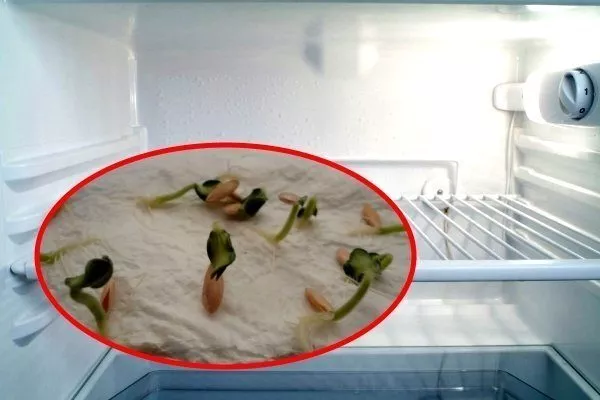
Planting seedlings
The Atlant pumpkin does not transplant well, as all pumpkins have delicate root systems. This requires gardeners to use special containers that will allow the plant to be easily transferred to the garden bed. These can include peat cups and pots (no additional fertilizing is required for seedlings), plastic cups, or specialized cassettes.
Rules for growing seedlings:
- Prepare the soil. It can be purchased at specialty stores (universal substrate) or prepared at home. To do this, mix garden soil, sand, peat, and sawdust. Disinfection is essential. The soil can be baked in the oven for 20-30 minutes or poured with boiling water, then dried.
- If you are using a plastic container instead of a peat one, treat it with a manganese solution, after which you lay the soil.
- The seeds are planted to a depth of 3 cm.
- The soil is watered with warm water, the container is covered with film until the first shoots appear.
- You need to put 2 grains in one hole.
- During growth, the seedlings are watered as the soil dries out. Avoid overwatering, as this will cause the seeds to rot.
- The seedlings should be placed in direct sunlight, i.e., on the sunny side. If the weather is unfavorable, be sure to turn on fluorescent lights, as this pumpkin variety thrives on lots of light.
Planting in open ground is possible once the soil temperature reaches 10-13 degrees Celsius. If light frosts are forecast, cover the seedlings transplanted into the garden with plastic overnight.
Planting seeds in the ground
When sowing seedlings in open ground, pay attention to weather conditions—there should be no strong wind or rain. It's best to plant in the morning or evening, when it's not too hot. Here's how to plant:
- In the fall, the garden is prepared. This involves digging up the soil and adding compost or manure.
- In spring, it's advisable to dig the beds again to a depth of 20 cm. If this isn't necessary, simply loosen the top layer and remove weeds. Wood ash should also be added. If the soil is highly acidic, lime should be added.
- Now you need to level the surface and dig holes according to the pattern 80x80, 70x70, 90x90 or 100x100 cm.
- Pour a small amount of water into the holes and place a couple of seeds.
- Sprinkle with soil and moisten again.
With any method of growing the Atlant pumpkin, thinning is carried out after the first leaf appears. This involves selecting the weakest seedling and removing it by cutting the trunk right down to the root. Pulling it out with the root system is not recommended, as this will damage the stronger vegetable.
Caring for the Atlas pumpkin
If you don't follow proper pumpkin care, you won't be able to get a decent harvest, achieve excellent flavor, or avoid disease. Here's how to care for the Atlas:
- Pumpkins tolerate drought well, but to maintain juiciness, they require constant watering. This can be done once a week, but apply 6-8 liters of water at a time. This same dosage can be divided into two. Continue this process until fruiting begins, after which the watering amount is reduced by 2-3 times.
- After watering, loosening and weeding are necessary. This ensures the root system receives oxygen and prevents grass from sucking nutrients from the soil. Furthermore, weeds carry many pests and diseases, so they should be kept out of the garden beds.
- Watering with tap water is prohibited, as it contains many substances harmful to plants. To avoid negative effects, the water should be allowed to settle for at least three days. The best option for watering is rainwater, which can be collected in a container during rainfall.
- Fertilization is an important process. Bordeaux mixture, copper sulfate, liquid manure, chicken manure, and wood ash are used. Organic fertilizers are applied after the formation of three leaves and until fruiting. Next, superphosphate or ammonium nitrate should be added.
- Since Atlas tends to twine and spread, the bushes need to be trained. This is achieved by pinching and removing side shoots. If the foliage is overdeveloped, meaning the leaves are covering the fruit, preventing them from blooming, they should be removed.
Diseases and pests
The Atlant variety is most often affected by the following diseases and pests:
- Bacteriosis. It manifests itself as wilting of the green parts of the plant, soft fruit, and the presence of spots. Copper oxychloride and Bordeaux mixture are used for treatment and prevention.
- Powdery mildew Characterized by a whitish coating on the foliage, followed by drying and damage to the stem. The main cause is an excess of nitrogen in fertilizers, so the disease can be eliminated with colloidal sulfur.
- Root rot, white, gray. Roots, foliage, stems, and pumpkins are affected. The best treatment is to add dry soil, as the main cause is overwatering.
- Viral mosaic It's common but untreated because the virus is fatal to humans. Symptoms include the formation of a mosaic pattern on fruits, stems, and leaves.
- Spider mite. Stems and foliage are affected. Control agent: Chloroethanol.
- Aphid Found on leaves. It can be removed with a soap solution and malathion.
- Slugs They can be found anywhere on the plant. Treatment involves creating wet traps using rags, cabbage leaves, etc.
General preventive measures against pest attacks and disease development:
- do not over-water the soil;
- eliminate thickening;
- carry out timely weed removal and loosening of the soil;
- to form a bush;
- accumulate fertilizers;
- disinfects seed material, soil, and tools;
- If there are any infected elements, remove them from the plant immediately and burn them.
Possible difficulties
Potential problems and advice from gardeners:
- The ripening time of pumpkins depends directly on the bush's shape. If the bush has too many vines and foliage, the fruits don't receive enough nutrients and light. The tops should be pinched off as early as a month after planting the seeds.
- Pumpkin size depends on the total number of fruits on a single plant—the more fruits there are, the lighter the pumpkins will be. Therefore, gardeners recommend growing no more than 2-3 pumpkins on a single plant. To prevent the formation of mold-causing microflora, place boards or other material under heavy fruits. Simply put, pumpkins should not touch the ground, especially during rainy summers.
- The root system nourishes the plant. Therefore, the larger it is, the better. To encourage root suckers, it is recommended to bury the shoots in a layer of soil, which will encourage root formation.
- It is advisable to plant the Atlant pumpkin after legumes, potatoes, and greens.
- To protect against insects, experienced gardeners use whey and a weak solution of potassium permanganate.
- Be sure to untangle the strands.
- If summer conditions are unfavorable, be sure to purchase growth stimulants such as Zdraven, Zircon, etc.
Harvesting and storage
Atlanta pumpkins are harvested in September, usually in early to mid-September. For long-term storage, the pumpkins are cut with the stems attached, then thoroughly dried outside or in a dry room. After this, they are stored permanently.
What conditions should there be:
- temperature conditions – maximum +8 degrees;
- air humidity – 75-80%;
- the room is cool and ventilated;
- The bottom of the container is lined with dry newspapers, sawdust or straw.
Before storing, each fruit must be inspected for damage and wiped with a dry cloth.
Reviews
The giant Atlant variety is popular throughout the CIS and internationally where pumpkins are grown. It's easy to grow yet high-yielding, delicious and attractive, easy to transport, and has a wide range of uses due to its high sugar content.