
The "Rossiyanka" pumpkin is a productive variety that attracts gardeners with its large, bright orange fruits with sweet flesh. Let's learn how to plant and grow this large-fruited pumpkin and how to achieve high yields.
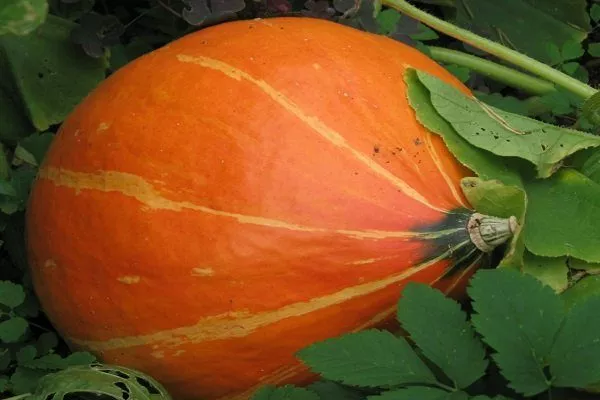
The Rossiyanka pumpkin is resistant to diseases.
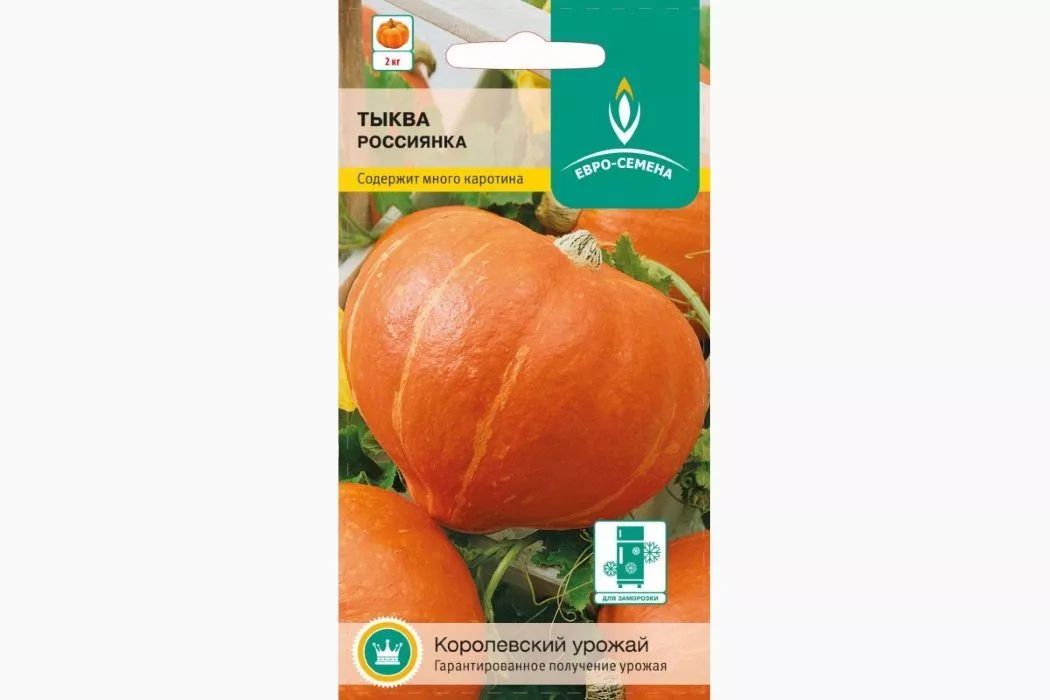
Pumpkin "Rossiyanka"
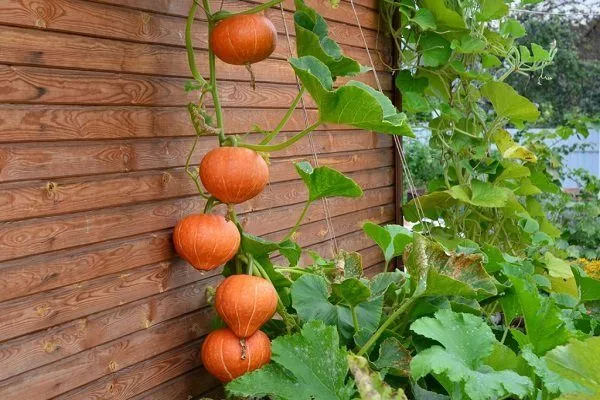
The Rossiyanka pumpkin has a pleasant taste and aroma.
Characteristics and description of the "Rossiyanka" pumpkin
"Rossiyanka" is a large-fruited, self-pollinating, early-ripening variety. Its excellent agronomic characteristics have made this pumpkin one of the most popular in Russia.
Brief description of the "Rossiyanka" pumpkin:
- Plant. A compact, climbing plant. The main stem grows up to 3 m in length. Three to four lateral shoots branch off from it. The shoots are 7-8 m long. The stem is rounded, covered with stiff hairs.
- Leaves. Large, light green.
- Roots. Powerful, they go into the ground to a depth of up to 2.5 m. The roots grow laterally to 4 m.
- Flowers. Large, yellow-orange in color.
- Fruit. Large, turban-shaped. The bark is brittle, smooth, and glossy. The pulp is loose, slightly juicy, orange, and fiberless. The skin and pulp are the same color. The seeds are whitish and smooth. The pulp has a sweetish flavor and a melon-like aroma.
Growing regions
The Rossiyanka variety was developed by Russian breeders specifically for cultivation in unfavorable climatic conditions. It was included in the State Register in 1999.
The Rossiyanka pumpkin is recommended for the following regions:
- Volga-Vyatka.
- East Siberian.
- Central.
- Far Eastern.
This variety is grown throughout almost all of Russia, including the Northwest, Siberia, and the Urals. Its early ripening period makes it suitable for growing in regions with short summers.
Ripening time
The "Rossiyanka" pumpkin is a mid-season variety. The ripening period, from germination to full maturity, is 90-100 days. Ripening times vary by region, depending on planting time.
Productivity
The "Rossiyanka" variety is known for its high yield. With proper care, a single bush can yield 20-25 kg of fruit. Large-scale cultivation yields up to 30-35 tons of pumpkins per hectare.
The average weight of a single pumpkin is 3.5-4 kg. There are even record-breaking pumpkins – some gardeners have managed to grow fruits weighing 30 kg or more.
Resistance to diseases and pests
The "Rossiyanka" variety is characterized by moderate disease and pest resistance. This pumpkin is particularly susceptible to aphids and fungal diseases, which are controlled with chemicals and folk remedies.
Purpose of the variety
The fruits are versatile and delicious, used in a wide variety of dishes—porridges, juices, salads, soups, and baked goods. The flesh is tender and has a melon-like aroma.
The pulp is rich in fats, proteins, carbohydrates, vitamins B, PP, and C, and carotenoids. It is rich in calcium, iron, and magnesium salts, and contains trace elements such as copper, zinc, and cobalt. It is suitable for dietary nutrition.
Advantages and disadvantages of the variety
The advantages of the Rossiyanka variety include:
- Consistently high yields.
- Excellent taste.
- Long-term storage.
- Pleasant taste and aroma.
- The fruits are the same size.
- Disease resistance.
- Tolerates transportation well.
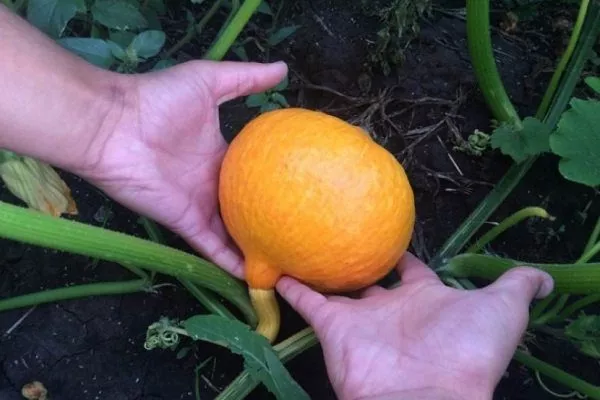
Growing a crop
Pumpkins are grown in two ways: from seedlings and by direct sowing of seeds into the ground. The seedling method is popular in regions with late springs and short summers. The second method, direct sowing, is used primarily in the southern regions of Russia.
Timing of sowing seeds
The time for sowing seeds depends on the climate zone and cultivation method:
- Sow seeds when the soil temperature is above 15°C. Seeds will not germinate at lower temperatures.
- The seeds are sown for seedlings so that they can be planted in 20-25 days. into open ground.
- In the central zone, sowing begins in mid-May, and in regions with a harsher climate, in the last ten days of May. In the southern regions, sowing begins in April.
Seed preparation
Pumpkin seeds have a very dense shell, so it is recommended to soak them before planting:
- Wrap the seeds in a cloth soaked in water.
- Dampen the fabric occasionally. Keep at room temperature.
- Once the seeds sprout, place them in the refrigerator. This will harden them off well, increasing the adult plants' cold tolerance.
Growing seedlings
Due to the sensitivity of its roots, pumpkins do not tolerate transplanting well. To relieve stress, seedlings are grown in 10-cm diameter peat pots, then transplanted into the open ground along with their containers.
When buying peat pots, pay attention to their composition – it should be listed on the packaging. They should contain at least 50% peat. Cheap pots may contain compressed paper. Seedlings grow poorly in counterfeit pots and often die during transplantation.
If you don't have peat pots, prepare regular containers. Fill them with store-bought all-purpose potting soil or a 1:1 mixture of peat and sand. No fertilizer is needed.
The procedure for sowing and growing pumpkin seedlings:
- Moisten the soil before planting.
- Plant two seeds in each pot. Plant them 2 cm deep, cover with soil, and firm them down to prevent the seeds from sprouting along with the seed coat, which can hinder the seedlings' development.
- Cover the pots with something transparent, such as film or glass. The optimal temperature is between 23 and 25°C.
- When seedlings appear, 4-5 days after sowing, choose the strongest of the two. Remove the second.
- Remove the film/glass and reduce the air temperature to +18-+20 °C so that the sprouts do not stretch out and the root system develops vigorously.
- Water the seedlings as the soil dries out. Approximately once a week.
- A few days after germination, the temperature should be raised again to +20-+22 °C.
- After 20-25 days, if weather conditions permit, the seedlings can be planted in the ground.
To promote seedling growth, they are fertilized several times. First, apply liquid organic fertilizer, then mineral fertilizer.
Rules for soil preparation
Pumpkins prefer loose, fertile, well-drained soils. They grow worst in damp, clayey, and acidic soils.
- ✓ Soil pH should be between 6.0-6.8 for optimal growth.
- ✓ The soil should have high moisture capacity, but without stagnant water.
Soil preparation procedure:
- In the fall, dig the area you're preparing for pumpkin planting to a depth of 20 cm.
- Add 5 kg of humus, 30 g of superphosphate and 15 g of potassium chloride per 1 sq. m. during digging. If there is no humus, it can be replaced with manure (7 kg per 1 sq. m.).
- To improve soil looseness, add a bucket of sand and peat per square meter. For acidic soils, add wood ash—approximately 1 liter.
- There is no need to dig up the soil in spring; it is enough to loosen it, remove weeds and water it with hot water.
- The soil is leveled with a rake in March, and it should remain in this condition until May – until the seedlings are planted.
If the soil hasn't been prepared in the fall, dig it up two days before planting to a depth of half a spade, add 20 g of ammonium nitrate per square meter, and make holes.
Pumpkins grow well after potatoes, onions, legumes, and root vegetables. It is not recommended to plant them after cucumbers, squash, melons, and watermelons.
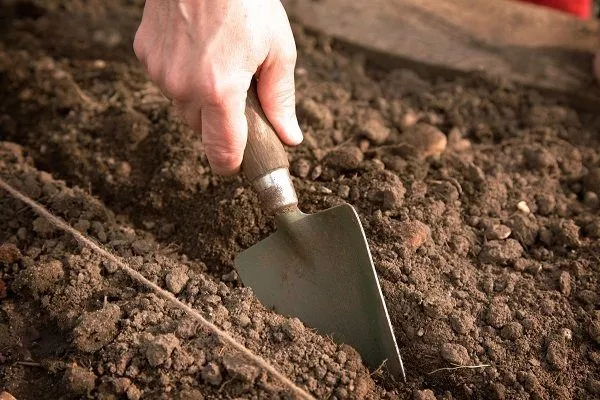
A step-by-step guide to planting pumpkin seedlings in the ground
Only healthy and strong seedlings are planted in the ground, their signs are:
- stem – short, thick, strong;
- internodes are short;
- three developed true leaves of a rich green color.
Planting order:
- Dig holes in advance. The depth should be 8-10 cm. The distance between adjacent holes should be 80 cm. The distance between rows should be 1.5-2 m.
- Water the seedlings the day before planting to make them easier to remove from the cups. If the seedlings are grown in peat pots, watering them in advance is not necessary.
- Begin planting in the evening. Carefully remove the seedlings from their containers and transplant them into the holes. Be careful not to damage the roots. Transfer the seedlings in peat pots to the holes along with the containers.
- Plant the seedlings deep up to the cotyledon leaves.
- Water generously with warm water.
- Sprinkle with soil and mulch with hay dust, chopped straw, or sawdust.
- Create borders around the holes to prevent water from spreading when watering. Some gardeners use old tires instead.
- If you are unsure about night temperatures, cover the plantings with film until stable warmth sets in.
Planting seeds in open ground
To plant pumpkin seeds in open ground, holes are prepared according to the same scheme as for seedlings - 80 cm between bushes and 1.5-2 m between rows.
The procedure for sowing pumpkin seeds:
- Add 5 liters of water to each hole. Once the water has been absorbed, you can begin planting.
- Place 3-4 sprouted and hardened seeds per hole, with the tips facing down.
- The planting depth is 7-8 cm. If the soil is heavy, the planting depth is reduced to 4 cm.
- Cover the holes with mulch—compost or peat. Make sure the layer is 2 cm thick.
- To speed up germination, cover the seedlings with plastic film with small slits. This will also protect the crops from frost.
- When the shoots appear, remove the excess ones - you should leave only one sprout per hole, the strongest and healthiest one.
Corn and legumes can be planted near pumpkins. However, squash and cucumbers should be planted as far away as possible, otherwise cross-pollination will reduce the fruit's flavor.
Caring for the Rossiyanka pumpkin
The Rossiyanka variety is easy to grow and requires little care. Growing involves standard care. The only care requirement is pinching the shoots.
Features of watering
Watering– is the most important agricultural practice in pumpkin care. The plant's large leaves increase moisture evaporation. The plant requires regular watering.
Features of watering the Rossiyanka variety:
- The recommended watering rate after planting is 3-4 liters per square meter. As the pumpkin begins to grow, the rate increases to 6-8 liters, and then to 10 liters.
- If there is no rain, then the frequency of watering is 2 times a week.
- Water the pumpkin only with warm, settled water.
- Water should not come into contact with leaves and stems.
- Watering is especially important during flowering and fruit formation periods.
- During the fruiting period, watering is reduced to once a week. This will allow the fruit to accumulate more sugars and form a strong rind.
Water deficiency causes pumpkin fruits to become smaller.
After watering, the soil is loosened and weeded to a depth of 5-6 cm.
Fertilizing
Quantity pumpkin fertilizing It depends on the soil characteristics. Fertile soil will benefit from two applications per season, while depleted soil will require three to four applications.
- The first feeding should be carried out 10 days after planting the seedlings, using a solution of mullein (1:10).
- The second feeding should be carried out at the beginning of flowering, using a complex mineral fertilizer.
- The third feeding should be carried out during the period of fruit formation, using wood ash.
Timing and features of pumpkin fertilizing:
- Fertilize for the first time when the leaves are 5-6. You can feed the plants with vermicompost or any other organic matter.
- The second is during the period of active growth of the shoots.
- Further fertilizers are applied every two weeks.
- It is recommended to alternate mineral and organic fertilizers.
- At the beginning of fruiting, add wood ash at a rate of 80-100 g per hole.
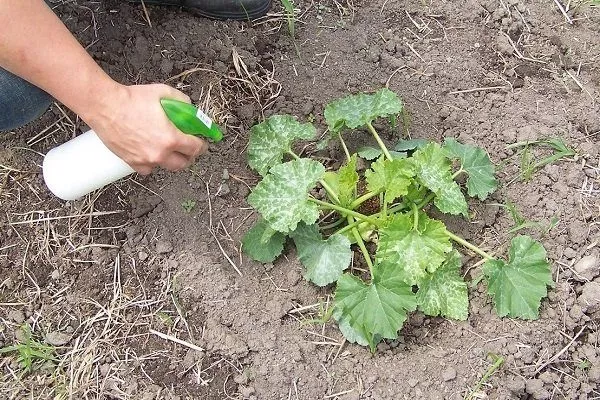
Fertilizers used:
- Organic. They reduce soil acidity and improve its microflora. Use 1-2 liters of liquid organic fertilizer per plant. To prepare the solution, dilute manure, compost, or cow dung with water at a ratio of 1:10. It's important to avoid getting the liquid fertilizer on the leaves.
- Mineral. It's important to alternate different fertilizers to avoid excess of any one element. Mineral fertilizers are recommended during flowering and fruit ripening. The composition of mineral fertilizers:
- The first mineral fertilizer is a solution of ammophoska and urea (15 g per 10 l of water).
- The second fertilizer is a combination of superphosphate and phosphorus fertilizers. Use 20 g of each per 10 liters of water.
- The third fertilizer is a potassium sulfate solution. Dissolve 30-40 g in 10 liters of water.
Formation of bushes
When the main stem produces 1-2 fruits at least 10 cm in diameter, it should be pinched. Then, pinch off the side shoots; their length should not exceed 50-60 cm.
Rules for bush formation:
- After each fruit there should be 4-6 leaves left.
- To ensure large fruits, no more than 5 ovaries should remain.
- Pinching is done in the morning.
- Tools – pruning shears, knife, scissors.
- At the same time as pruning, the stepsons are removed.
- Excess leaves are removed to prevent shading of the fruit.
Pollination of bushes
If it rains during the flowering period, pollination problems may arise. In this case, the gardener should help the plants:
- They pick male flowers.
- Carefully touch the male flowers to the female ones.
The male flower differs from the female flower in that it has a tall, thin stem and lacks a compaction – an ovary.
How to harvest and store crops?
Pumpkins are harvested when they reach biological maturity. Harvest times depend on the growing region and the current weather. In most regions, harvesting begins in September. The key is to harvest the fruit before frost.
When harvesting, focus more on the condition of the pumpkins than on the calendar. Ripeness is determined by their appearance and the condition of the entire plant:
- yellowed and dried leaves;
- dried stalk;
- bright orange peel color;
- hard crust.
Cleaning features:
- pumpkins are harvested in dry weather;
- the fruits are carefully separated from the stems without damaging the skin;
- stalk length – 5-6 cm;
- Immediately after harvesting, the fruit is dried in the sun, if the weather is good - outdoors, in rainy weather - in a dry room.
- Only healthy, undamaged pumpkins should be stored. They should have intact stems. Pumpkins with dents or other damage should be consumed immediately; they are not suitable for long-term storage.
- The best place to store pumpkins is in a ventilated cellar or basement.
- The optimal storage temperature is from +3 to +10 °C. Humidity is 60-85%.
- The fruits are laid out on shelves or racks with the stems facing up, on top of a straw bed.
- Adjacent pumpkins should not touch each other.
- It is not recommended to store fruits near pumpkins, as the ethylene they emit is detrimental to the storage of the fruit.
During storage, pumpkins ripen—their sugar content increases, and their flavor becomes much better than immediately after harvest. The flesh of the Rossiyanka variety reaches its peak sweetness by December.
Diseases and pests: symptoms, control, prevention
The Rossiyanka variety is susceptible to powdery mildew, anthracnose, root rot, bacterial blight, and other fungal diseases. The treatment strategy for all diseases is the same: timely spraying with appropriate fungicides and destroying the affected parts of the plant.
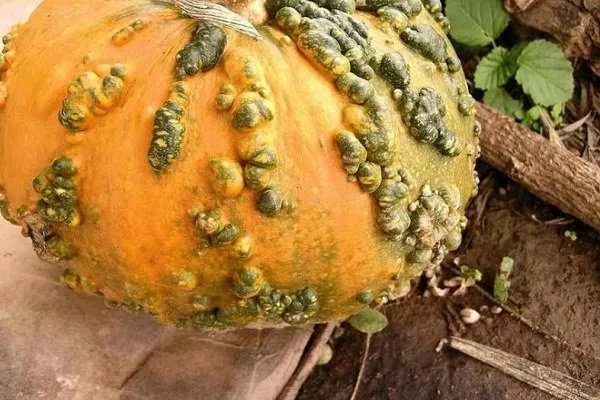
Diseases and pests of the Rossiyanka pumpkin:
| Diseases/pests | Symptoms/damage caused | How to fight? |
| Root rot | Root rot leads to the death of the bush. | As a preventative measure, spray with a solution of copper sulfate or ash. |
| Tobacco mosaic | Spots on leaves and stems. | Spray with Bordeaux mixture or Fundazol. |
| Bacteriosis | There are spots on the leaves, the fruits are soft. | Spray with copper oxychloride. |
| Powdery mildew | A whitish coating on leaves and stems. | The plantings are treated with Topaz. |
| Melon aphid | The pests live in colonies on the plant, sucking the sap from the leaves, inflorescences, and stems. The leaves curl, the plant weakens, and often dies. | For spraying, folk remedies are used—wormwood infusion, soap solution, onion peel decoction. Or they spray with chemicals such as Karbofos or Actellic. |
Preventive measures against diseases and pests:
- Weeds are pulled out in a timely manner and the area is weeded regularly.
- Reliable planting material is planted.
- Do not exceed the norm and frequency of watering.
- Avoid overdosing on nitrogen fertilizers.
- Crop rotation is observed.
Possible difficulties
When growing Rossiyanka, the following difficulties may arise:
- If pinching isn't done in time, the bushes will develop a multitude of small pumpkins. Due to a lack of nutrition, they don't have time to grow or ripen. The solution is timely bush shaping.
- Uncontrolled application of mineral fertilizers can harm the plant. Excess nitrogen causes fruit to wilt, so caution should be exercised when applying calcium nitrate, ammonium nitrate, and other nitrogen-containing fertilizers. The solution is to alternate organic and mineral fertilizers, observing the correct dosage.
Tips from experienced gardeners
Gardeners with experience growing pumpkins offer the following tips for getting a bountiful harvest:
- Reduce soil acidity by adding lime and wood ash.
- Plant only sprouted seeds in the ground.
- Plant pumpkins in raised beds.
- Planting of seedlings should be done in calm, cloudy weather.
- Water the plantings with warm water, it should not be colder than +20 °C.
- Spray the plants with whey diluted in water.
A video review of the Rossiyanka pumpkin can be seen in the following video:
Farmers' reviews of the variety
Growing the Rossiyanka pumpkin is a time- and money-saving endeavor. Large and consistent yields, excellent presentation, good shelf life, and excellent flavor make this variety a profitable choice for both home-grown and commercial use.