
The Chamomile pumpkin boasts a number of unique characteristics and is distinguished by its exquisite aroma. It is highly sought after by vegetable lovers due to its vibrant flavor, large fruits, and rich orange hue. Chamomile is a bushy plant with long stems, traditionally cultivated outdoors.
The History and Origin of the Chamomile Pumpkin
In the 19th century, Europe first learned of the Chamomile pumpkin. During the same period, researchers and breeders were working to create diverse varieties with unusual qualities. In a German laboratory, a breeder discovered unusual patterns on one of the pumpkins.
After extensive analysis, it became clear that this was no mere coincidence, but the result of unique genetic changes. Scientists spent considerable time studying the structure and characteristics of the vegetable, naming it "Romashka" (Chamomile) due to its resemblance to the flower of the same name.
Chamomile immediately gained popularity among farmers and gardening enthusiasts. Today, it is cultivated throughout the globe and is used in cooking, as a decorative element, and in the cosmetics industry. Its unique appearance and rich nutritional content make it a favorite of many.
Description of fruits and plants
It is distinguished by its elongated stems, and the leaves are colored a rich greenish hue. Two to three stems form from the root system.
Other characteristic signs:
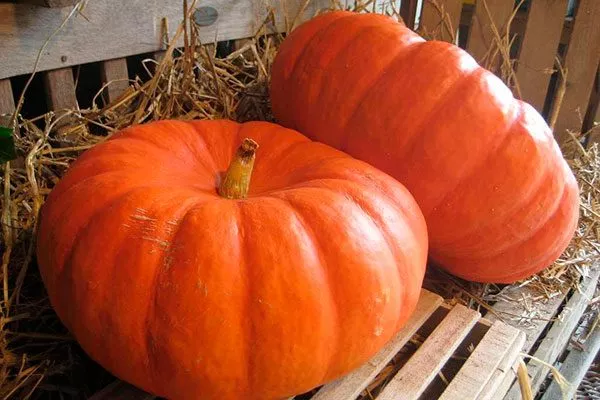
- the shape of the fruit resembles a slightly flattened circle;
- the weight of a ripe pumpkin ranges from 3 to 8-8.5 kg, which indicates its rather large size;
- color – orange-red;
- the pumpkin is divided into segments;
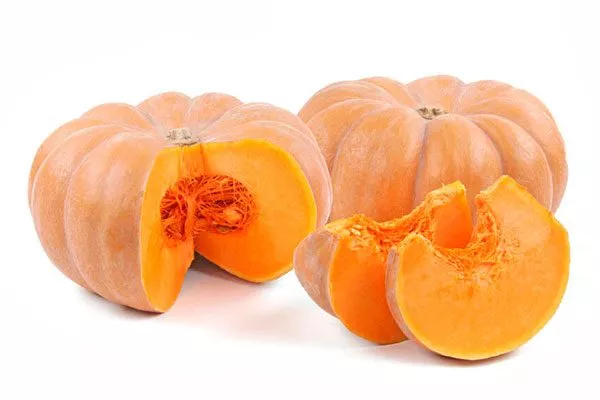
- the pulp has a rich orange hue and reaches a thickness of 10 cm;
- fruits with an unusual and memorable texture - their surface is covered with bumps of various sizes and shapes, which gives them a textured appearance and makes them stand out from other varieties;
- The sweet pulp is ideal for creating delicious drinks, porridges, casseroles, and the like. The pulp can be dried, frozen, and cured.
Chamomile is an excellent choice for children's diets and dietary nutrition, as it has a number of beneficial properties due to its rich composition:
- Chamomile is enriched with vitamin C, which has powerful antioxidant properties and helps strengthen the immune system. Regular consumption will boost the body's defenses, reduce the likelihood of viral and bacterial infections, and reduce the risk of colds and flu.
- It's also rich in vitamin A, which is essential for skin health. This vitamin helps improve skin tone and texture, preventing wrinkles and other signs of aging.
- Pumpkin contains beta-carotene, which is converted into vitamin A in the body. Beta-carotene has a strong antioxidant effect, protecting the skin from the threat of free radicals and promoting its preservation and health.
- Chamomile is a rich source of fiber, which is essential for healthy gastrointestinal function. Fiber promotes normal bowel function, prevents constipation, and helps optimize the overall digestive system.
- Contains digestive enzymes that enhance nutrient absorption and promote digestive efficiency. Eating pumpkin may be key to preventing stomach problems, indigestion, and dysbiosis.
Key Features
Chamomile is a mid-season variety. Seeds are sown in early spring, and the time from sowing to harvest ranges from 80 to 100 days, so the harvest can be completed by early autumn, provided the crop is properly cared for.
To determine whether the fruit is ready for harvesting, you should pay attention to a number of criteria:
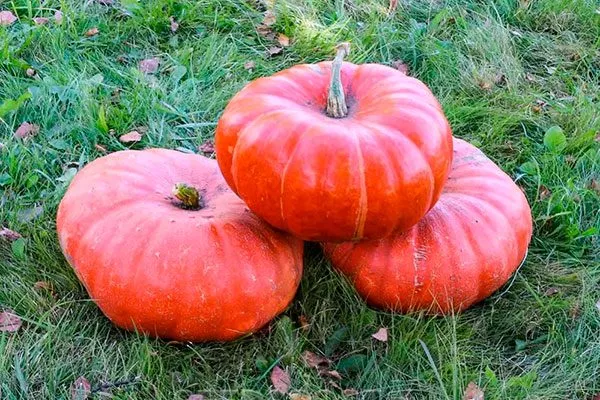
- evaluate the color of the pumpkin - it should be a rich orange;
- inspect the stem – it should be dry and hard;
- An important indicator of readiness is the sound the pumpkin makes when lightly tapped – it should be dull and pleasant.
Don't expect all the pumpkins on a single plant to ripen at the same time. Ripening occurs gradually, so harvest the fruits as they ripen. It's recommended to use a sharp tool to separate the pumpkin from the stem, leaving a small stub attached to the stem to increase shelf life.
Sowing seeds and growing seedlings
Before sowing, thoroughly disinfect all containers and tools. It's preferable to rinse new containers, while used ones should be soaked overnight in a disinfectant solution of one Deochlor tablet per 5 liters of water and then thoroughly dried.
- ✓ Check the seeds for germination by placing them in water: good seeds will sink to the bottom.
- ✓ Please pay attention to the expiration date of the seeds: the optimal shelf life for the Chamomile pumpkin is no more than 4 years.
The ideal time for sowing seeds in the central part of Russia is the last ten days of April or the first of May. In more favorable climates, where pumpkins can be planted outdoors as early as early May, seeds for seedlings should be sown between March 20 and April 5.
Work process:
- Prepare the substrate. To create the ideal mixture, use 25-30% three-year-old peat with a neutral pH, the same amount of turf soil, 30-35% humus, and 5% rotted sawdust or coconut mixture. Add 0.5 teaspoon of Trichoderma Veride powder to every 10 kg of soil mixture.
If you like, you can create your own substrate recipe, but it's important that it's lightweight and well-aerated. The soil should be thoroughly mixed. - Prepare 300- to 500-ml containers with drainage holes. Place the soil in them and spray it with warm, settled water until completely wet.
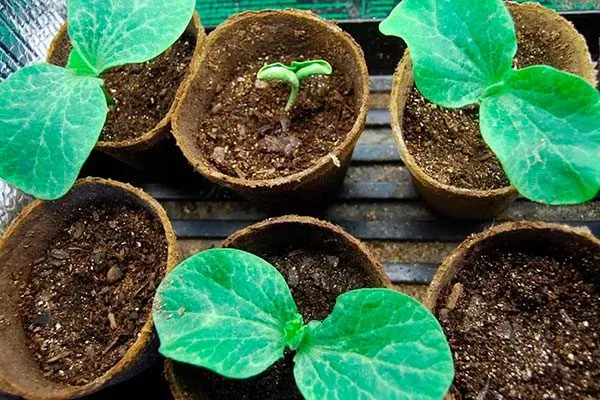
- Place one seed in the center at a 45-degree angle to a depth of 2 cm and cover with a layer of dry soil. Lightly compact the soil around the seed. No overhead watering is required.
- Cover the seedlings with film until the shoots appear.
- When the sprouts appear, remove the cover and move them to a warm place with a temperature of about 22 degrees during the day and up to 17-18 degrees at night.
During the growth of seedlings, two additional feedings are necessary:
- The first is carried out 10 days after germination using a solution of calcium nitrate.
- The second - 10 days after the first, but using any complete mineral complex containing all the necessary nutritional elements.
Transfer
The soil in a greenhouse or vegetable garden should be moist, rich in nutrients, and easily mixed. To achieve this, it is recommended to add 25 kg of compost per square meter. Be sure to add a mineral fertilizer. The best option is Fertican Universal or Fertican for spring and summer plantings, which should be used at a rate of 75-85 g per square meter.
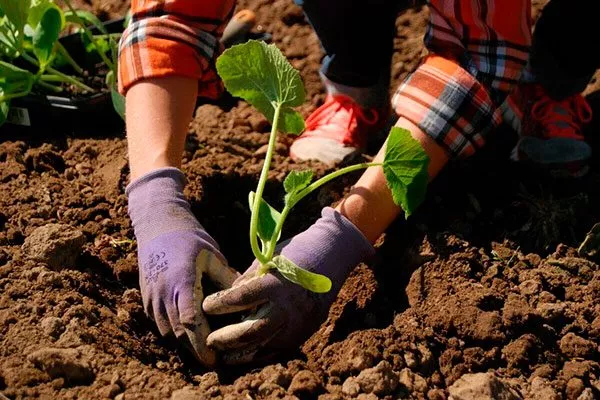
The transplant process:
- Create beds about 20-25 cm high, which will help the soil warm up faster.
- In them, form deep holes, the dimensions of which correspond to the height of the containers where you grew the seeds and the width of the root system of the seedling with a lump of earth.
- Plant in the standard way, then water, cover the soil in the bed with peat and protect it with a non-woven “blanket”.
Five days after planting, once the pumpkins have adapted to their new location, lay a layer of straw around each plant, removing the non-woven covering. Coarse sawdust or wood shavings can also be used.
As the pumpkin grows, it will form shoots that will support the harvest. These shoots will rest on a layer of straw or hay and will not lose their flavor due to contact with the soil. During rainy periods, this protection will help prevent rot of the ovaries and mature pumpkins.
Further care
To produce large pumpkins, it's recommended to leave only one or two stems and remove all excess shoots. Once each vine produces three fruits, pinch them off. This approach will focus nutrients on developing pumpkins rather than foliage.
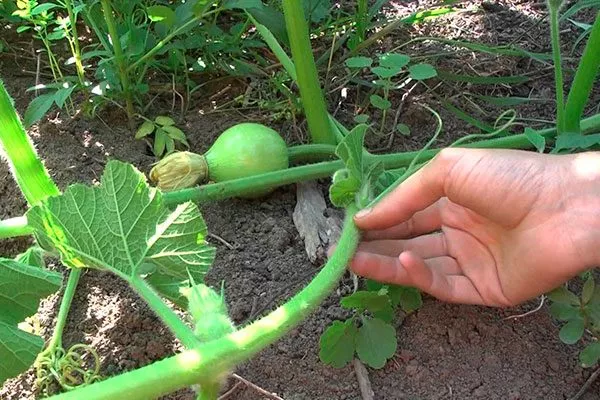
Apply water around the bed, not near the roots. It's best to create a shallow channel around the bed where you'll water. This will allow the roots to sense water from a distance and gravitate toward it, thereby strengthening their structure.
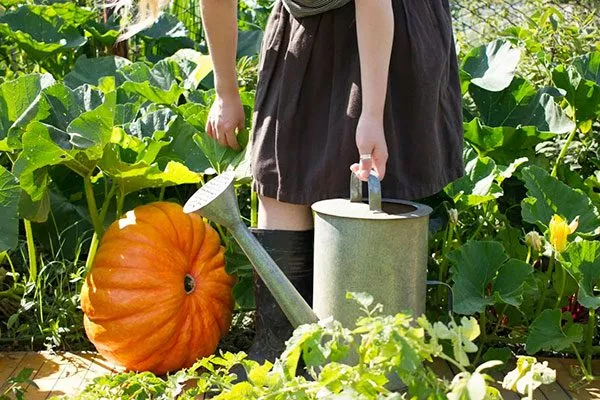
Special attention should be paid to feeding, which is carried out according to the following scheme:
- The first fertilizer application is applied when the plant has formed 5 leaves. Use nitrogen.
- The next time is when shoots begin to form, and then every 10 days. In these cases, complex mixtures will be needed.
- In June, it is preferable to use compost or slurry, mixing it with water in a ratio of 1:10.
- From July they switch to mineral nutrition:
- first – 2 tablespoons of ammonium sulfate per 10 liters of water;
- second – potassium sulfate in the amount of 2 tablespoons per 10 liters of water;
- third – 1 tbsp. of potassium monophosphate per 10 liters of water;
- Fourth, a mineral complex for pumpkins, squash, and cucumbers, such as products from Agricola, Zdraven Turbo, and other similar products, which should be diluted according to the fertilizer instructions.
- Pumpkin also responds well to foliar feeding, using urea (carbamide) at a rate of 1 teaspoon per 10 liters of water. This fertilizer is recommended to be applied every two weeks.
- To ensure long-term preservation of pumpkins, it is recommended to spray them with calcium nitrate at a rate of 2 teaspoons per 10 liters of water, every month.
Resistance to diseases and pests
The Chamomile pumpkin has good resistance to various diseases. However, it is sometimes susceptible to attack by fungal pathogens, such as anthracnose, powdery mildew, and various types of rot. These diseases primarily occur in conditions of excess moisture.
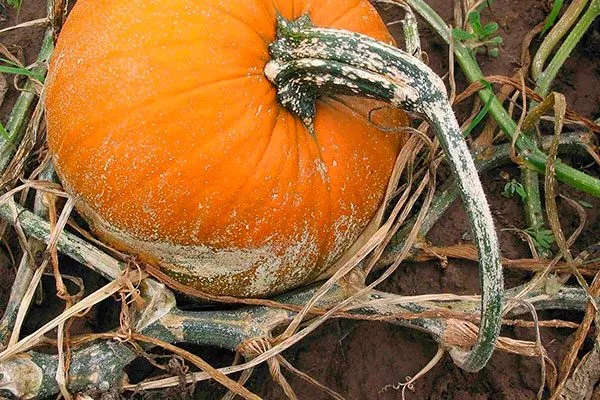
To save affected plants, it is necessary to carefully remove leaves with significant damage and then treat them with fungicides.
Melon aphids, wireworms, and weevils are among the pests that pose a serious threat to this pumpkin. To eliminate them, first remove them by hand and then treat with insecticides.
Reviews
The Romashka pumpkin is a true cultivar, not a hybrid, allowing you to harvest your own seeds for sowing next season. This variety is characterized by good yields, excellent disease resistance, and tolerance to various weather conditions.