
The Prikubanskaya pumpkin has been available on the market for many years and remains popular. It is prized for its healthy and tasty fruits, ease of care, and attractive appearance. You can learn about other benefits and growing methods for this variety in this article.

Prikubanskaya pumpkin
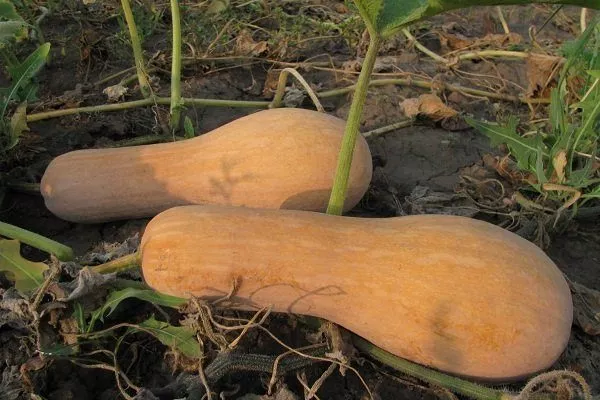
Prikubanskaya pumpkin is easy to care for.
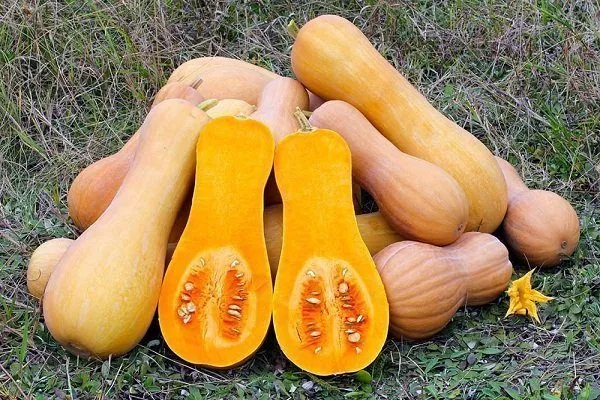
The Prikubanskaya pumpkin has tasty flesh and thin skin.
History of origin
The Prikubanskaya pumpkin is a nutmeg variety of the vegetable crop. Its homeland is believed to be South America.
The variety was developed by Krasnodar breeders and has been available for sale since 1998.
Distinctive characteristics and features
The main features are:
- Color. The skin of the vegetables is orange, and the flesh inside is a more intense reddish color.
- Form. The fruits are oblong, thicker closer to the stalk.
- Bush. The shoots are of medium length and do not grow more than 4 m. The leaves are pentagonal, dark green.
- Taste. The pulp is juicy and sweet.
Characteristics table:
| Weight, kg | Ripening time, days | Storage, months | Yield, kg per 1 sq. m. | Time for planting seedlings, month | Time of transplantation into the ground, month | Time of sowing seeds in the ground, month |
| 2-5 | 95-140 | up to 3 | 2 | 4-5 | 5-6 | 5-6 |
Pros and cons
Among the positive aspects of growing this variety:
- Benefits. Vegetables contain virtually no cholesterol and minimal calories, making them recommended for dietary purposes. They help improve cardiovascular health.
- Easy to prepare. The skin peels off easily. The inside is soft and cooks quickly.
- Unpretentiousness. The variety does not require special care.
- Transportation. Pumpkins do not spoil during long-distance transport and have a good shelf life. Therefore, they can be grown for commercial use.
But one should also pay attention to the disadvantages:
- Restrictions apply. Not recommended for consumption in large quantities by people suffering from urolithiasis.
- Average resistance. Vegetables are sensitive to temperature changes.
Features of cultivation
You can get a good pumpkin harvest only if you follow certain recommendations.
Seedlings
This method is more suitable for northern regions.
Preparation
What to do:
- Sprout the seeds. To do this, heat water to 40 degrees Celsius (104 degrees Fahrenheit) and soak the seeds in it for about 4 hours. Remove them and wrap them in damp cheesecloth or any other material until they germinate. This usually takes 3 days, during which time you'll need to constantly moisten the cloth.
- Prepare a container. It's best to use small peat pots. They're safe for transplanting seedlings into the ground.
- Create the soil. Mix peat, sawdust and humus in a ratio of 2 to 1 to 1. You can use a ready-made store-bought mixture.
- Plant it. Fill the pots with soil and water. Make holes up to 5 cm deep and place two seeds in each. Cover with soil. The weaker seedlings will need to be removed after germination.
- ✓ The optimal soil pH for pumpkin seedlings should be within 6.0-6.8.
- ✓ The soil must be well-drained to avoid water stagnation and root rot.
Caring for seedlings
Actions:
- Select a location. Place the container with seedlings on the brightest windowsill.
- Maintain the temperature. Before seedlings appear, keep the temperature at 18-25 degrees Celsius. After they appear, keep the temperature at 15-18 degrees Celsius.
- Water it. As needed. Keep the soil slightly moist.
- Feed them. One week before planting, dilute the mullein with hot water in a ratio of 1 to 10. Let it sit for 4 hours and then mix it again with water in a ratio of 1 to 5.
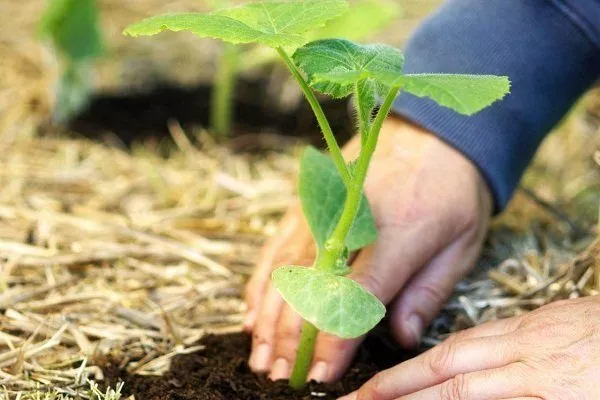
Transplantation into the ground
This is done when the plants have developed 2-3 leaves. It's best to do this at the end of May, when the weather has warmed up and the soil has reached 18 degrees Celsius.
The steps are as follows:
- Selecting a site. A bed previously used for growing potatoes, beans, or onions is suitable. Melons are considered poor predecessors, as the soil may harbor diseases and pests harmful to pumpkins.
The site should be well-lit and protected from the wind. If the region is cold, pumpkins can be grown indoors. In this case, it's best to maintain a temperature of 20-25 degrees Celsius.
- Preparing the soil. In the fall, dig up the beds, add 3 kg of humus, 200 g of lime and 30 g of mineral fertilizers per 1 sq. m.
- Transfer. Dig holes 10 cm deep, leaving at least 60 cm between them. Place the seedling in its peat pot in the hole. Water thoroughly.
- Protection. To protect plants from the cold, you can cover them with film until warm weather sets in.
- ✓ Healthy pumpkin leaves should be dark green, without spots or signs of wilting.
- ✓ When replanting, the root system should be white and elastic, without signs of rot.
Into open ground
In southern regions, seeds can be planted directly into the soil.
Things to consider:
- Time. Sowing in open ground is carried out when the outside temperature reaches a stable level of 20-25 degrees.
- Way. Dig holes 5 cm deep and plant two seeds in each hole to remove weaker seedlings later. Leave 80-90 cm between plants. Cover with soil and water.
Care
Prikubanskaya pumpkin requires proper care.
Watering
What are the features:
- Water temperature. Not less than 20 degrees.
- Quantity. 5-6 liters per 1 plant.
- Watering method. Down to the root.
- Frequency. Before the formation of ovaries - once a week, after - once every 2 weeks.
- Soil cultivation. After adding water, loosen the soil well.
Top dressing
Fertilizers for pumpkins are entered 2-3 times:
- 1st. Nitrophoska. After the 5th leaf appears.
- 2nd. Mullein. During the formation of whips.
- 3rd. Wood ash. During flowering.
Bush formation and weeding
Before the shoots appear, weeding should be done regularly; after that, there is no need, as moving the shoots can harm the pumpkin.
The crop forms 2-3 fruits, all excess ovaries are pinched during growth so as not to waste the plant's energy.
Potential difficulties when growing
The following difficulties may arise:
- Temperature changes. A sudden cold snap can slow vegetable growth or even kill them. Therefore, it's crucial to cover them with protective film when temperatures drop below normal.
- Groundwater. If the groundwater table is close to the surface, pumpkins should not be planted. Since the plants have long roots, excess moisture can lead to rot and death.
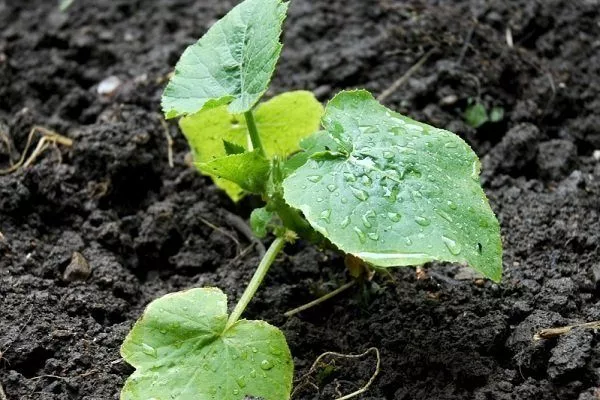
Pest and disease control
The following are dangerous for the Prikubansky pumpkin:
- Anthracnose. A fungal disease that primarily affects greenhouse plants. It is caused by high humidity. Overwatering is also harmful. Leaves and stems become covered with pinkish spots, and the plant dries out and dies.
It can be prevented by controlling the humidity level and carrying out preventative spraying with Bordeaux mixture.
- Bacteriosis. Dark green spots appear on the surface of the leaves. The plant subsequently dries out, and the fruits become misshapen. A copper sulfate solution will help protect the pumpkins. Damaged vegetables should be removed and burned.
- Melon aphid. Insects suck the juice from pumpkin leaves, causing them to dry out. Spraying with chamomile infusion and promptly removing weeds can help control this problem.
- Slugs. They live in the soil under pumpkins, chewing holes in the fruit and leaves. You can distract the pests by planting burdock in the area. You can also sprinkle the soil with ash or spray it with a solution containing ash.
Harvesting, storage and use of crops
The technology is as follows:
- Time. The harvest of the Prikubansky pumpkin fruits usually falls at the end of August, beginning of September.
- Way. The vegetables don't need to be picked; they are cut with a sharp knife or scissors, leaving 3-5 cm of stem.
- Storage. It is necessary to let the pumpkins ripen. Before storage They are dried in the sun for 2 weeks and only then stored in a cool place.
- Application. The fruits can be consumed in any form, but most often they are steamed, baked, or added to porridge.
If you harvest the pumpkin prematurely, it will quickly begin to spoil and rot.
Tips from experienced gardeners
Farmers' guidelines will help increase yields:
- Selection of seeds. It's recommended to use seeds that have been stored for at least 2-3 years. They germinate better. Before planting, sort them out, discarding any small or empty ones.
- Hardening of seeds. This is necessary when preparing seeds for sowing outdoors. Immediately after germination, they are wrapped in a damp cloth and placed at the very bottom of the refrigerator to soak for up to 5 days.
- Timely watering. During the flowering period, it is better not to water the pumpkin, as the pollen becomes heavy and bees cannot carry it.
- Growing large pumpkins. To do this, it is necessary to remove all the ovaries except one, so that all the plant’s energy goes to the formation of this particular fruit.
Reviews
Gardeners' opinions on growing Prikubansky pumpkin.
To get a good harvest of Prikubanskaya pumpkin, you need to choose the right plot, prepare the seedlings promptly, and remember to care for them properly. Only by following all the recommendations can you grow tasty and healthy vegetables.