
The Povarenok pumpkin is a versatile variety from Russian breeders. As its name suggests, the fruits are small, individually portioned, and easy to use in cooking. This variety is productive, easy to grow, and delicious, making it a popular choice among gardeners.
The History of the Povarenok Pumpkin
The Povarenok pumpkin is a product of domestic selection. It was developed by specialists at Semena i Selektsiya LLC. This variety is suitable for cultivation in all regions of the country.
Description of the variety
The plant has strong, upright stems and robust, large, green leaves, slightly pubescent. The bushes reach 0.6-0.7 m in height. The flowers are large, yellow, about 10 cm in diameter. The fruits of the Povarenok pumpkin are small and individual.
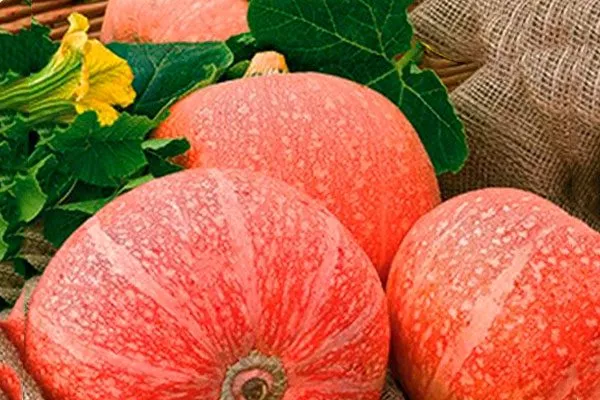
Brief description of fruits:
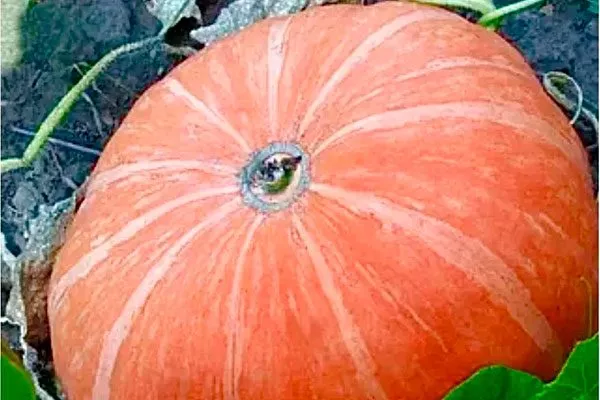
- Crust color: pink with marble pattern.
- Form: rounded.
- Pulp: bright orange.
- Weight: 0.7-1 kg.
Taste and purpose of fruits
The Povarenok pumpkin's flesh is very juicy and sweet, with a delicate texture and a pleasant pumpkin aroma. With a dry matter content of 15-18%, this variety is ideal for healthy eating.
Characteristics
The Povarenok variety has excellent agronomic characteristics, allowing it to be grown in a variety of climatic conditions:
- Ripening periods. An early-ripening variety, it takes 90–100 days from germination to ripening of the first fruits.
- Productivity. Depends on growing conditions, plant care, and agricultural practices. Under favorable conditions, 3.5-4 kg of fruit can be harvested per square meter.
- Frost and drought resistance. It's a heat- and light-loving variety. It has a standard level of cold tolerance and resistance to heat, temperature fluctuations, and other adverse environmental factors.
- Disease resistance. This variety has good resistance to most common pumpkin diseases. It is not susceptible to fungal, bacterial, or viral infections, but under unfavorable weather conditions and without preventative spraying, plants can be affected by powdery mildew, bacterial blight, root rot, and other diseases.
Pros and cons of the Povarenok pumpkin
The Povarenok pumpkin has many qualities that are impossible to overlook. This variety has only recently appeared on the market, but is already enjoying enviable popularity among our gardeners.
Landing features
Proper planting is the key to successfully growing the Povarenok pumpkin. It's important to select a suitable site and plant it correctly, according to generally accepted agricultural practices. This pumpkin can be grown in two ways: direct seeding and seedlings.
How to choose a site?
Choose the sunniest and warmest spot for planting the Povarenok pumpkin. Ideally, the pumpkin beds should be slightly elevated to prevent water from pooling and stagnating. In areas with strong winds, it's important to protect the pumpkin site from cold gusts.
- ✓ The site must be protected from northern winds by natural or artificial barriers.
- ✓ Groundwater should not rise higher than 1.5 meters to the surface.
Soil preparation
The soil for pumpkins is prepared in the fall using standard techniques: clear the area of plant debris, spread fertilizer, and dig. It is recommended to add 10 kg of humus, manure, or compost per square meter during digging. It's also a good idea to add mineral fertilizers to the soil, such as potassium chloride and superphosphate, at 30 g and 60 g per square meter, respectively.
Before digging, it's recommended to assess the soil's acidity. This can be done using special litmus strips. If the soil is acidic, add slaked lime or dolomite flour. For heavy and clayey soils, add coarse river sand to loosen the soil.
In the south, the soil is simply leveled with a rake in the spring and holes are dug for planting. In temperate regions, beds are formed—1.5-1.7 m wide and 20-25 cm high. Before planting, the soil is watered with warm water.
Sowing in open ground
Pumpkins are sown outdoors in mid-May. By this time, stable warmth has already set in in the south. In more northern regions, planting occurs in late May or later. Generally, it's more effective to plant pumpkins from seedlings, as this will yield an earlier harvest and ensure the fruits have time to ripen.
Features of sowing the Povarenok pumpkin in the ground:
- The seeds are pre-calibrated, sorted, and tested for germination in a saline solution, then heated in an oven at 60°C. The seeds are also soaked in a growth stimulator and germinated.
- Planting holes are dug in a checkerboard pattern (square-nest method). The optimal sowing pattern is 100 x 100 cm.
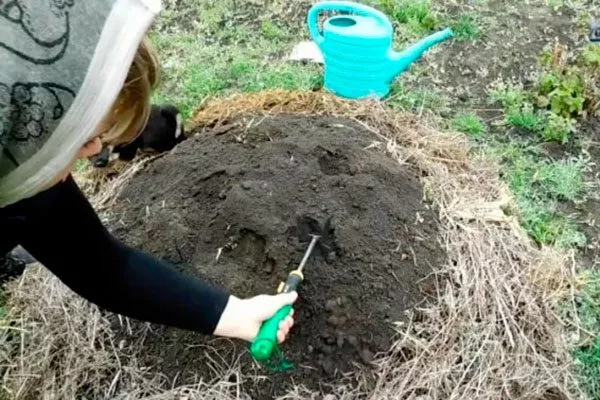
- Dry leaves and organic waste are placed at the bottom of the holes, and compost mixed with the topsoil is placed on top. This creates a fallow heap, into which the seeds are planted.
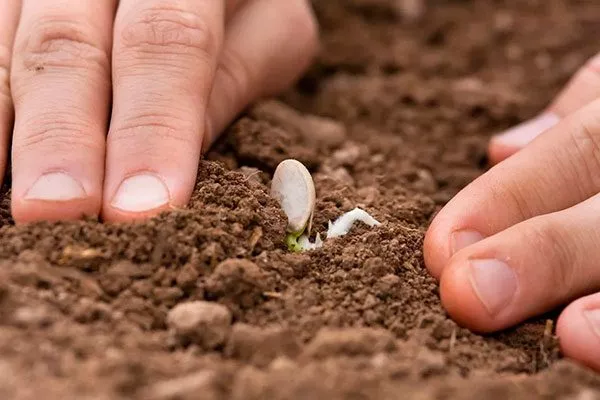
- Place several seeds—3-5—in each hole to ensure germination. The planting depth depends on the soil texture: in loose soil, they are planted at a depth of 7-8 cm, and in dense soil, at a depth of 4-5 cm. Cover the seeds with loose soil, lightly compact it, water, and cover with plastic wrap until germination occurs.
Growing seedlings
Seedlings are grown for 20-25 days before planting. Sowing times vary by region, but typically occur in April-May. Count 25 days from the expected planting date and sow the seeds in pots.
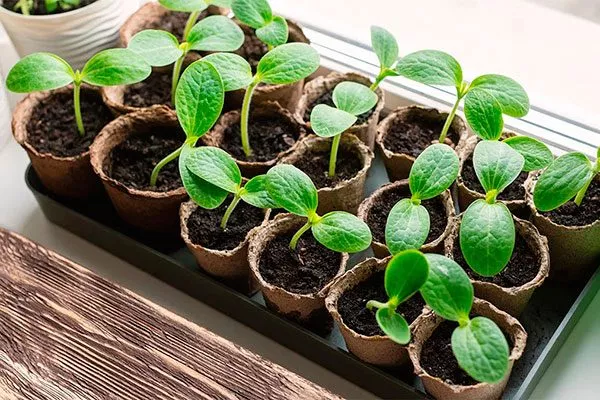
Features of sowing seeds for seedlings:
- It's best to sow pumpkins in peat pots or other self-decomposing containers. This is because pumpkin seedlings don't transplant well, taking a long time to establish and adapt to a new location. Damaging the roots will cause stunted growth and poor fruit production.
- If peat pots are unavailable, use regular pots or cups. No need to transplant the pumpkins. Sow three seeds in each container. Plant them about 2 cm deep in moist soil. After planting, cover with loose soil and water with warm, settled water.
- The crops are covered with transparent film and placed in a warm room. They are aired daily to prevent condensation.
- Once the seedlings emerge, the covering material is removed. The pots with the seedlings are placed on a well-lit windowsill.
Planting seedlings in the ground
For 3-4 weeks, the seedlings are carefully looked after, maintaining the most favourable temperature conditions, providing the seedlings with watering and lighting.
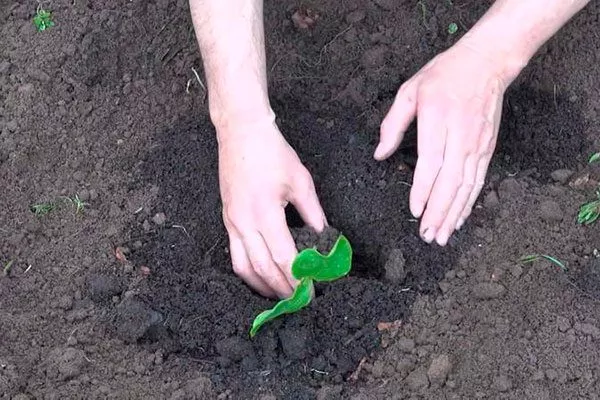
Features of seedling care:
- Pumpkin seedlings should receive at least 12 hours of light per day. If natural light is insufficient, artificial light is used.
- After removing the cover, the room temperature is lowered to 10–12°C to prevent the seedlings from becoming elongated and weakened. After 3–4 days, it is raised again to 18°C during the day and 13–14°C at night.
- Water the seedlings with warm, settled water heated to 25°C. Apply water directly to the roots, avoiding the leaves. The potting soil should not dry out, but it should also be kept slightly moist. The best time to water is in the morning.
- Fertilize seedlings once, or twice at most, if growth is an issue. The intervals between fertilizing are 7-10 days. Pumpkins require very little nitrogen; they need more potassium and phosphorus.
- The first feeding is applied 10 days after germination. You can use, for example, manure diluted in water 1:10. Nitrophoska can also be used for feeding.
- A week before planting the seedlings in the ground, the hardening process begins. The seedlings are taken outside for half an hour at first, then for 1-2 hours, gradually increasing to 10-12 hours a day.
Care instructions
Caring for the Povarenok pumpkin is easy, even for the most inexperienced gardeners. The variety requires standard gardening practices, such as watering, fertilizing, loosening the soil, etc.
Watering
The Povarenok pumpkin requires increased watering during the initial stages of growth. In May and June, watering is more intensive, 1-2 times per week. During the active growth period, watering becomes even more frequent—2-3 times per week. In hot weather, pumpkin beds are watered more frequently and more intensively.
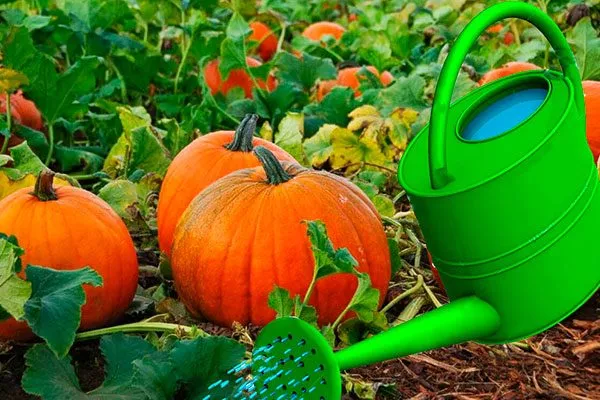
It's important to prevent the soil from drying out during fruiting. Watering should then be reduced and stopped completely a week before harvesting. Otherwise, the fruit may crack or store poorly due to excess moisture. Warm water should be used for irrigation.
Top dressing
Pumpkins are fertilized 3-4 times per season. If the soil is poor, low-fertility fertilizers are applied more frequently. When planting pumpkins from seeds, the first feeding occurs when they have five true leaves, and the second after flowering. If pumpkins are grown from seedlings, they are fertilized more frequently—3-4 times.
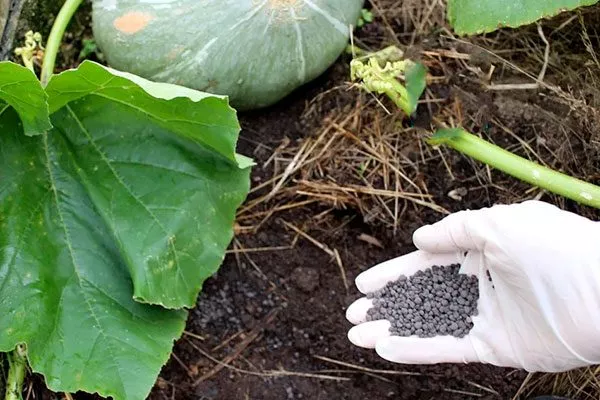
For top dressing, use mineral fertilizers such as urea (for the first feeding), potassium sulfate, superphosphate, and ammophoska (for the second and third feedings). Organic fertilizers such as mullein or bird droppings are also added, as well as complex fertilizers containing potassium, phosphorus, nitrogen, and various microelements that promote plant growth and development and increase their resistance to disease.
Loosening and weeding
Loosening and weeding are essential when growing pumpkins. At the beginning of the growing season, it is recommended to loosen the soil to a depth of about 10 cm, lightly hilling the plants to ensure stability.
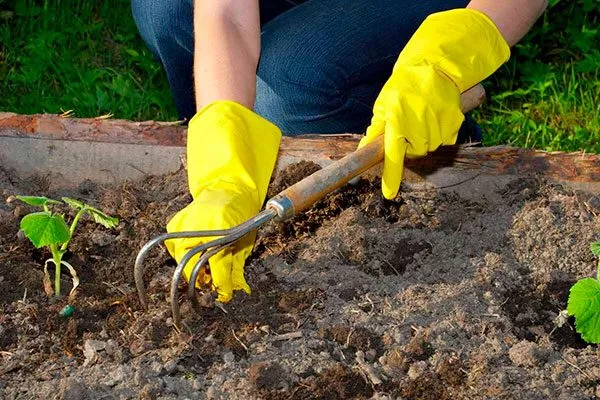
When the plants reach the 5-6 leaf stage, the soil loosening depth is reduced to 6-7 cm. Weeding is carried out simultaneously with loosening. To reduce the need for loosening, weeding, and watering, the beds are mulched with peat, straw, freshly cut grass, etc.
Pest and disease control
The Povarenok pumpkin has a fairly strong immune system, but it can fail in adverse weather conditions, combined with poor agricultural practices and the widespread spread of various infections that affect pumpkin crops. In particular, the variety is susceptible to powdery mildew, for which colloidal sulfur is recommended.
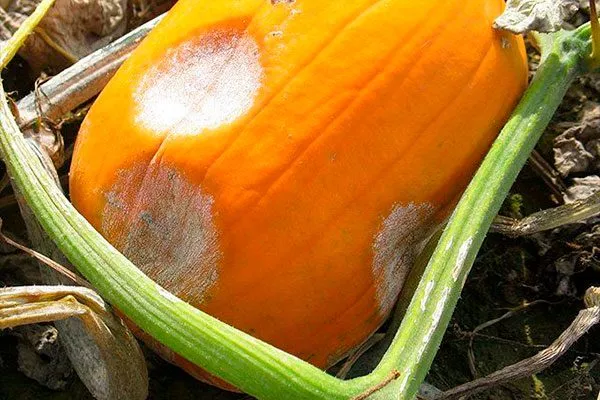
Pumpkins can also be susceptible to bacterial rot, which can be controlled with Bordeaux mixture or copper oxychloride. If signs of root rot appear, treat the soil with wood ash or crushed charcoal.
The most dangerous pests for the Povarenok pumpkin include whiteflies, melon aphids, and spider mites. To combat them, use folk remedies, such as a solution of wood ash or ground black pepper with liquid soap. Various insecticides, such as Karbofos, Fufanon-Nova, and others, can also be used.
How to harvest and store crops?
The fruits are harvested in August-September. Avoid freezing the pumpkins, as they will rot quickly and will not store well. The fruits are carefully cut, leaving 3-4 cm stems. It is not recommended to lift the pumpkins by the stems, as they may break and damage the fruit.
Harvesting takes place in dry weather. The fruits are cleaned of dirt with cloths and left in a dry place for two weeks. Store the pumpkins at 70-75% humidity and at a temperature of 5 to 15°C. The fruits are laid out on the floor or on shelves so that they do not touch each other.
Reviews
The Povarenok pumpkin is an excellent choice for those who prefer growing varieties with smaller fruits. By planting this pumpkin in your garden, you'll provide yourself with a valuable product that can be used to create a variety of culinary masterpieces.