
Pumpkins require a lot of nutrients when growing. Successful cultivation requires fertile soil and additional fertilizer. Various fertilizers are used for this purpose, each with a specific role.
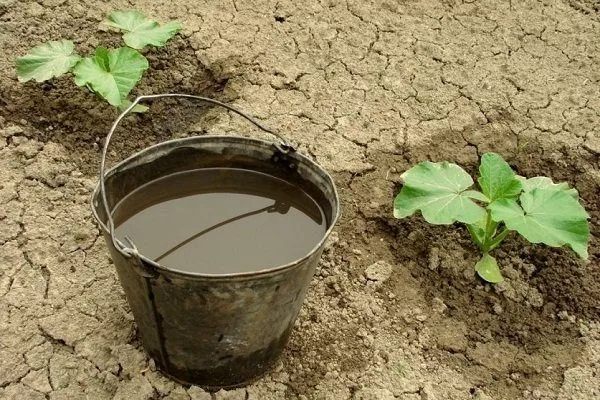
Why do you need to fertilize pumpkin?
Fertilizers are extremely important for pumpkins. They provide:
- optimization of soil composition;
- good growth and development of culture;
- formation of ovaries;
- fruit weight gain;
- stimulation of fruit ripening;
- improving the taste of the crop;
- good harvest;
- reducing the risk of diseases and pests.
- ✓ Soil pH should be between 6.0-6.8 for optimal nutrient absorption.
- ✓ The soil should have a high water-holding capacity, but at the same time be well-drained.
Timing of fertilizer application
The frequency of fertilizing pumpkins depends on many factors. A number of factors need to be considered: soil fertility, pumpkin variety, the method of planting, the appearance of the plants. Based on this:
- if the soil is fertile, then 3-4 fertilizing sessions are enough;
- on depleted soil, fertilizers are applied up to 7-10 times per season;
- varieties with long shoots require more nutrition, so fertilizing is carried out more often;
- When planting pumpkin seeds, it is first fed when it has 5 true leaves, and the next time – after flowering has finished;
- When planting seedlings, more fertilizer is needed: the first time - 1.5 weeks after germination, the second time - a week before transplanting to the garden, the third - 2 weeks after it, the fourth - at the beginning of the formation of vines;
- The appearance of a crop may indicate a deficiency or excess of fertilizers – plantings should be inspected regularly.
The optimal timing for fertilizing also depends on the type of fertilizer used.
Methods of applying fertilizer to pumpkins
Nutrients can be applied in two ways: root or foliar.
Root
This option involves applying fertilizer to the roots. This can be done in various ways:
- Watering the crop at the roots with dissolved fertilizerBefore planting, be sure to water the plants with plain water to avoid burning the roots.
- Applying fertilizer into furrowsThe first time, they should be planted 6-8 cm deep, 15-20 cm from the plant; the second time, the depth and distance from the bushes should be maintained at 10-12 cm.
Foliar
This type of fertilization involves spraying the crop. The fertilizer concentration should be reduced to half that for root application. Fertilizing that is too concentrated will cause leaf burn.
Foliar feeding of pumpkins is best done during severe drought to ensure normal growth. It is also effective during flowering and fruiting.
Foliar feeding is best done in the evening or early morning. This allows the leaves time to fully absorb the fertilizer. If you apply it during sunny hours, the nutrients will evaporate and become useless.
Types of fertilizers for pumpkins
There are several types of fertilizers depending on their chemical composition.
Mineral fertilizers
Fertilizers are called mineral because they contain various mineral salts. Depending on the amount of nutrients they contain, they are classified as simple or complex. The former can contain nitrogen, phosphorus, or potassium, while the latter can be complex or mixed.
Mineral fertilizers play an important role:
- ensuring active growth of culture;
- participation in photosynthesis;
- regulation of water balance;
- increase in sugar content;
- fruit weight gain;
- increasing crop yields.
Minerals are essential for growing pumpkins, but they must be used judiciously. Excessive fertilizers are detrimental to the crop.
If you use only mineral substances, then they are applied three times per season:
- At the stage of formation of two true leavesAmmonium phosphate or urea are good choices for the first feeding. A matchbox of 15 grams of the substance per bucket of water is sufficient. This amount is enough for 20 plants.
- During floweringA combination solution is recommended: dissolve 20 g each of potassium sulfate and superphosphate and 10 g of ammophoska in a bucket of water. This amount is sufficient for 10 plants, watered at the roots.
- When fruiting, the size of the fruits is equivalent to small applesFor the third feeding, it's best to use superphosphate and potassium sulfate. You'll need 15 grams of each per bucket of water.
Urea is also used during dry periods when nutrients are deficient. Foliar feeding is performed by dissolving 10-15 g of the fertilizer in a bucket of water, letting it steep for half an hour, and then spraying the plants.
Another foliar feeding option is 15 g of potassium salt, 30 g of ammonium sulfate, and 40 g of superphosphate per bucket of water. This solution is used as a spray and is effective after inclement weather.
Organic fertilizers
Organic fertilizers are those based on substances of plant and animal origin. This includes manure, compost, peat, and green manure. Their decomposition produces minerals.
Applying organic fertilizers to pumpkins at different stages solves the following problems:
- participation in photosynthesis;
- positive effect on water and air nutrition;
- promoting the development of beneficial bacteria that ensure that the root system receives available nutrients.
Stages of application of organic fertilizers:
- During sowing workAt this stage, it's recommended to use wood ash. Apply it directly to the planting holes; 50-100 g of fertilizer per plant is sufficient. Afterward, water the bed with warm water.
- In the second half of the growing seasonAsh is used as a liquid fertilizer. Use 100 g of fertilizer per bucket of water. Use immediately for watering, without waiting for the particles to settle.
- Before flowering You can feed the crop with a mixture of 10 parts water, 1 part manure, and 2 cups of ash. Apply the resulting mixture to the roots.
- During flowering and fruiting of pumpkin A mullein infusion is good. It should be prepared in advance. To do this, pour warm water over the mullein, using five times the amount of manure. Let the fertilizer sit for two weeks, stirring occasionally. For top dressing, dilute the infusion with 10 parts water. Water the pumpkin at the roots, using 1-2 liters of the mixture per plant. Allow 2-3 weeks between applications.
- When digging bedsAt this stage, cow manure is used again. Fresh manure is suitable for pumpkins only in the fall; rotted manure is used in the fall or spring. In the former case, 4 kg of fertilizer is needed per square meter; in the latter case, ten times less. Another organic fertilizer option is chicken manure. Make an infusion from it by diluting it in 20 parts water. Let it steep for 1.5 weeks, stirring occasionally. Water the bed, keeping a distance from the plants, as the fertilizer can burn the roots.
- ✓ The mullein infusion is ready for use when it acquires a uniform color and there is no strong smell of ammonia.
- ✓ Compost is considered mature when its temperature stabilizes at ambient levels and its structure becomes loose and uniform.
You cannot use only organic fertilizers, otherwise you will experience an excess of nitrogen and a deficiency of potassium, which will lead to the risk of fungal diseases for the crop.
Complex fertilizers
These fertilizers contain a mixture of different nutrients. Their composition is balanced, so it's enough to calculate the correct dosage for a specific crop and planting area.
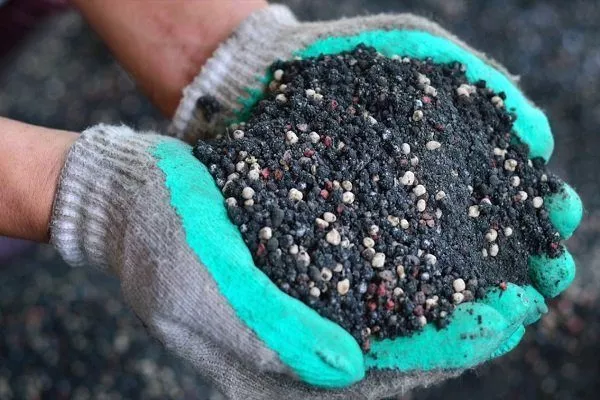
Among the complex fertilizers for pumpkin, the most effective and popular among gardeners are:
- NitrophoskaIt is recommended to apply it dry when the first leaves begin to form. 10 g of fertilizer is sufficient per plant. Sprinkle it, then water the bed.
- AzofoskaA complex mineral fertilizer that can be used for both dry and liquid feeding. For dry feeding, apply 30-40 g of the product per square meter; for liquid feeding, dilute 20-30 g of the product in a bucket of water.
- KemiraThere are different types of fertilizer, but Kemira Universal is suitable for pumpkins. It contains nitrogen, phosphorus, potassium, selenium, and other elements. It can be used for both root and foliar applications. For the first method, dissolve 20 g of fertilizer in 10 liters of water; for the second, halve the concentration. Repeat the application every two weeks. It's best to spray with this fertilizer during flowering and fruiting.
- OracleApply 5 ml of the multi-complex solution per bucket of water. Fertilize three times: at the 3-5 true leaf stage, during active growth, and when ovaries are forming. Leave at least 1.5-2 weeks between applications.
Folk remedies
Many gardeners successfully use folk remedies to fertilize pumpkins. They are no less effective than store-bought fertilizers.
During the flowering and fruiting period of pumpkin, it is effective to apply the following fertilizers:
- Add 150 g of granulated sugar and 100 g of raw yeast to a bucket of warm water, stir until completely dissolved, and let sit in a warm place for 5 days. Add 4 cups of wood ash and 10 liters of water. Water the pumpkin at the roots, 1 liter of the solution per plant.
- Add 10 ml of ammonia per 1 liter of water and stir. Water at the roots, 1 cup per plant.
- Fill a barrel halfway with grass (preferably stinging nettles), add a bunch of dried grass and a shovel of soil, fill the rest with water, and stir. Let it steep for 5 days under plastic wrap or a lid, stirring daily. Dilute the mixture in 10 parts water and water the furrows with 1 liter per plant.
Proper pumpkin fertilization achieves many goals: it optimizes the soil's chemical composition, and the plant receives the necessary elements for good growth and development. With timely fertilization, pumpkins will enjoy a bountiful harvest and large fruits.
I'll definitely use your advice next year. I only tried growing it this year, and it all went wrong. Thank you for the detailed information!