
The Olga pumpkin will appeal to lovers of small vegetables. This variety is characterized by its compact size and light weight—each one weighs no more than 1.5 kg. Its round shape makes it often used for decorative purposes. This popular and sought-after variety boasts excellent flavor and is ideal for a variety of dishes.
History and regions of cultivation
The variety was developed by Russian breeders G. A. Khimich, V. P. Kushnereva, and V. P. Zharova, employees of the Federal Scientific Center for Oncology. In 2008, it was included in the State Register of the Russian Federation.
The crop is successfully cultivated in all regions of Russia. In the central and southern regions, pumpkins are grown in open ground, while in the northern regions, they are grown from seedlings or in greenhouses.
Characteristics of the Olga variety
This is a relatively new variety that is currently receiving close attention from gardeners. It has an attractive appearance: the fruits are small, bright, and attractive. The variety boasts many positive qualities.
Fruit size and color, bushes
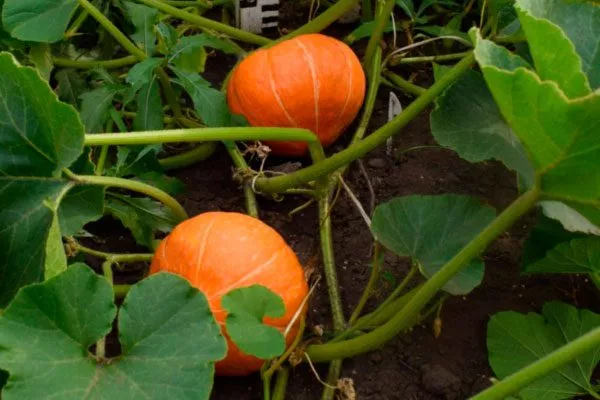
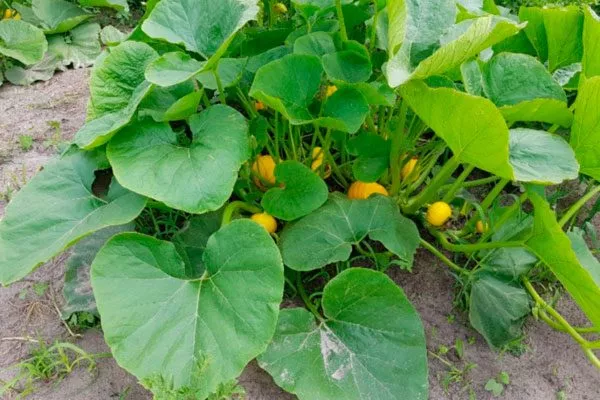
The plant is semi-bushy – the length of the shoots reaches about 1.2 m, they are covered with medium-sized green leaves.
Distinctive features:
- The fruits are small, their weight varies from 1 to 1.5 kg.
- The vegetables have a round shape and a smooth surface.
- Pumpkin color depends on its stage of ripeness. Initially, it has a greenish hue, which gradually turns yellowish, reaching a vibrant color at full ripeness.
- One bush produces 4 to 10 uniform fruits.
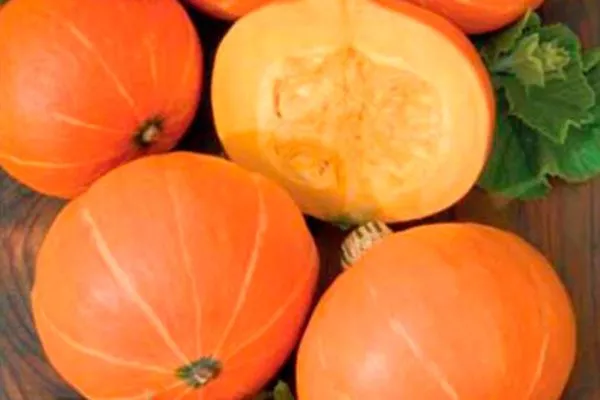
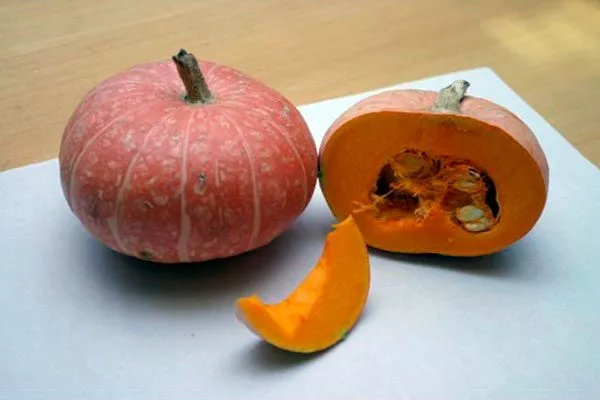
- The flesh is dark orange, crisp, of medium density and juiciness.
- The seeds are small, smooth, white, with a thin elliptical skin.
- ✓ Fruits weigh from 1 to 1.5 kg with a round configuration and a smooth surface.
- ✓ One bush produces 4 to 10 uniform fruits.
Due to their compact size and bright color, vegetables are often used as garden decorations to attract birds and animals.
Ripening, yield and harvesting time
Olga is an early-ripening variety: from germination to harvest, it takes approximately 85-100 days. The harvest period typically falls in August-September.
Productivity:
- Central District – 312-605 centners per 1 hectare;
- Central Chernozem region - 182-331 centners per 1 hectare.
Signs of fruit ripeness:
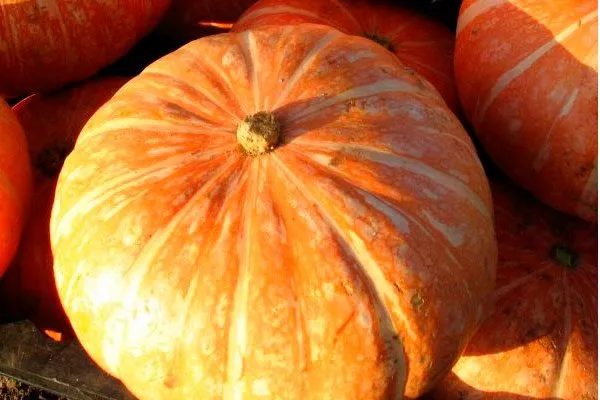
- The skin turns deep orange.
- The vegetable is firm to the touch and does not bend under the pressure of a finger.
- The stem dries out and becomes rough. If it remains green or succulent, this is a sign of immaturity.
Harvest pumpkins as they ripen in dry weather to minimize the risk of rot. After harvesting, place the vegetables in a shady, well-ventilated area to dry. Store them at room temperature for several months.
Taste and culinary uses
The pumpkin has tender, juicy, sweet flesh with a pleasant honey aroma. This variety is ideal for soups, purees, casseroles, pies, and desserts. Olga is also used for preserving: it's used to make jam, juice, compotes, and can also be frozen for long-term storage.
The fruits pair beautifully with other vegetables and fruits, allowing you to create interesting culinary compositions. They are often used for decorative purposes – for decorating autumn interiors or adorning holiday tables.
Who is the producer of Olga pumpkin seeds?
Several producers offer this variety of seeds: Udachny Urozhd (Aelita), Prestige Semena, Uralskiy Dachnik, Pervye Semena, and VNIISSOK. The average price for a small packet is about 25 rubles.
Olga's pumpkin cultivation and care techniques
The optimal time for planting is May-June. Before planting, it's important to prepare the soil, making it loose and fertile. To improve the structure and nutritional value, it's recommended to add compost or humus, as well as fertilizers containing nitrogen, phosphorus, and potassium.
- ✓ Optimal seeding depth: 2-3 cm, with an interval between plants of 50-60 cm.
- ✓ Required temperature for cultivation: +20-25°C during the day and +15-18°C at night.
Preparing the soil and sowing seeds
Before sowing, prepare a well-lit, wind-protected area. Aerate the soil and adjust its pH if necessary.
Follow these recommendations:
- Before planting, pre-germinate the seeds by wrapping them in wet cheesecloth for 2-3 days. Soak them in warm water for several hours before sowing.
- Plant the seeds to a depth of 2-3 cm with an interval of 50-60 cm between plants.
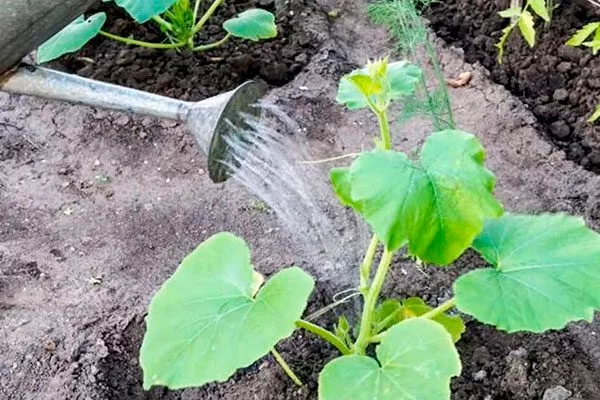
- After sowing, water the beds thoroughly to a depth of 10-15 cm.
- Once seedlings emerge, thin them out, leaving only vigorous specimens. This will reduce competition for resources and ensure optimal growth conditions.
Regular watering, loosening the soil and timely fertilizing promote plant development and the formation of a high-quality harvest.
Growing conditions: temperature and lighting
The optimal temperature for cultivation is 20-25°C during the day and 15-18°C at night. Lower temperatures slow growth, while higher temperatures can cause problems with flowering and fruiting. Therefore, it is important to maintain a stable temperature regime, both in the greenhouse and in the open ground.
Basic requirements:
- Olga prefers bright sunlight, so choose open, well-lit areas for planting. Insufficient sunlight can slow plant growth and affect the shape and flavor of the fruit.
- If you are growing the crop in open beds, choose southern or south-eastern slopes for planting to receive maximum sunlight.
- In the greenhouse, use materials that provide good light transmission, such as special films or glass.
If suitable conditions are created, the culture will develop actively.
Watering and fertilizing
Mulching pumpkin beds is an important agricultural practice that helps improve the plant's growing conditions. Mulch prevents the soil from drying out, reducing the frequency of watering, and retains heat, which is especially important for a heat-loving crop. It also suppresses weed growth.
Use organic materials as mulch: straw, hay, sawdust, compost, or grass clippings. These materials decompose over time, improving the structure and fertility of the soil. You can also use inorganic coverings, such as agrofibre or black film – they retain moisture and heat but do not decompose.
Provide your bushes with comprehensive care. Follow these simple maintenance steps:
- At the beginning of the growing season, watering should be moderate to avoid root rot.
- If it rains, reduce or stop watering, and increase the frequency during dry periods.
- Fertilize plants several times per season. Apply the first fertilizer during the active growth period, using organic compounds or mineral complexes. Repeat the application before flowering to stimulate flower bud formation and improve yield, and then apply it again during fruit ripening.
Diseases, pests
The main diseases of the Olga pumpkin are bacterial blight and powdery mildew. A soap solution is effective for combating them: dissolve 100 g of grated laundry soap in 5 liters of water.
Spray the beds with the solution using a spray bottle, repeating the treatment every 5-10 days. This method helps control diseases without harming the plants and prevents further spread.
One of the main problems when growing crops is pests:
- aphid;
- mealybugs;
- pliers;
- wasps.
To protect against aphids and mealybugs, use insecticides such as Fitoverm, Confidor, and Aktara. Acaricides such as Actellic, Apollo, and Omite are effective against mites. To control wasps, set traps and remove the insects mechanically.
Pros and cons
Before growing a crop, carefully study all its characteristics, features, and even its negative qualities. Olga has many advantages:
Among the variety's minor drawbacks, gardeners note its thin skin, which can easily be damaged, complicating long-distance transportation. Another negative quality is that the vegetables don't last longer than mid-winter.
Reviews
The Olga pumpkin is an ideal choice for those who value an early harvest and ease of growing. This variety boasts excellent flavor, low maintenance, and disease resistance. These compact, soft-skinned vegetables are used for a variety of culinary purposes. The small bushes grow freely in areas with limited space.