
The Marbled pumpkin has been known to gardeners for over half a century. This ancient Muscat variety attracts pumpkin lovers with its pleasant sweet flavor, large fruits, and reliable harvests. Marbled pumpkin is definitely among the top-favorite varieties.
History of creation
The variety was developed by Krasnodar breeders at the Federal Scientific Center of Rice in 1975. It is officially included in the State Register of Agricultural Plant Varieties and Hybrids Approved for Use. The recommended growing region is the North Caucasus.
Description of the variety
The plant is vigorous and long-vineed, reaching 4.5 m in length. The shoots are rough, green, and covered with prickly hairs. The leaves are standard, large, undissected, and dark emerald in color.
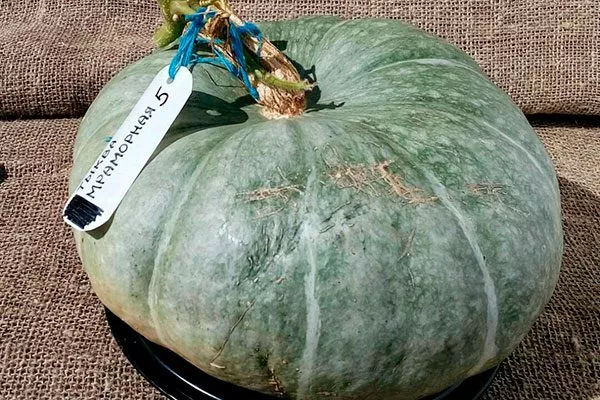
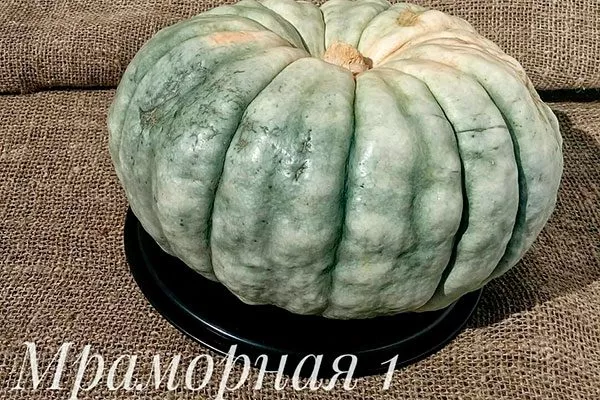
The fruits of the Marbled Pumpkin are large and segmented. The segments and unusual coloring give the pumpkins a unique and attractive appearance. The rind is leathery and has a wrinkled texture.
Brief description of fruits:
- Crust color: grey or dark grey, sometimes with a greenish tint, with specks and stripes.
- Form: flattened
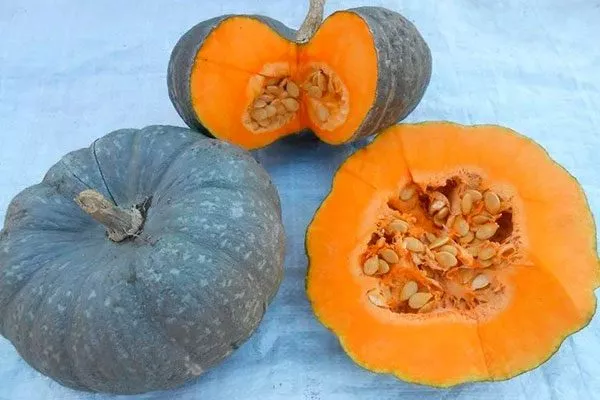
- Pulp: orange, dense, sugary.
- Weight: 4-4.2 kg.
Taste and purpose
The flesh has a firm yet tender texture. It is juicy, meaty, and aromatic. It has a pleasant, slightly sweet flavor. Flavor quality is rated as good to excellent. There are absolutely no sour or bitter notes in the taste.
Chemical composition:
- dry matter - 14-18%;
- sugar - 8-9.5%;
- carotene - 3.7-15 mg%.
The fruit is also rich in potassium, magnesium, and vitamins A, B, and E. Marbled pumpkins are versatile. Their fruits are used in salads, side dishes, soups, desserts, and casseroles. The pumpkin pulp is also canned, pickled, dried, and frozen. This variety is also grown for its seeds.
Characteristics
The Marbled Pumpkin is not only delicious and beautiful, but also has excellent agronomic characteristics, allowing it to be grown in a variety of climates and soils.
Peculiarities:
- Ripening timeThis pumpkin variety is mid-season. The period from germination to harvest is 130–140 days. The harvest is typically around late August or early September.
- Productivity. The average yield of this variety is 16-29 tons per hectare when grown commercially. One bush produces 10-17 kg of fruit.
- Frost and drought resistance. The variety has high resistance to cold and drought, so it can be grown in other regions besides the recommended one (North Caucasus).
- Disease resistance. The large-fruited Marble pumpkin has strong immunity to common cucurbit diseases. In particular, the variety exhibits very high resistance to white rot. However, if cultivation practices are improper, coupled with unfavorable weather conditions, the Marble pumpkin can be affected by powdery mildew, white and root rot, and bacterial blight.
Pros and cons
It's no wonder the Marbled pumpkin enjoys enduring popularity among our gardeners. This variety boasts numerous advantages, but it also has a few drawbacks that are best known before planting.
Landing features
Pumpkin care is simple, but planting is crucial—it must take into account the crop's growing conditions. It's crucial to strictly adhere to planting techniques, especially when growing pumpkins from seedlings.
Selecting a site
Good predecessors for pumpkin include onions, cabbage, potatoes, carrots, beets, and legumes. Pumpkin should not be planted after tomatoes, cucumbers, peppers, zucchini, squash, or eggplant. Pumpkin should be planted in different areas each year. Replanting is only possible after five years.
- ✓ The area should be well lit, without shade for most of the day.
- ✓ The soil should have a neutral or slightly acidic reaction, pH 6.0-7.0.
How to prepare seeds
It is recommended to prepare the seeds before planting. They should be sorted, discarding any defective ones—those that are hollow, damaged, or have spots, etc. Then, the selected seeds are heated in an oven set to 40–45°C.
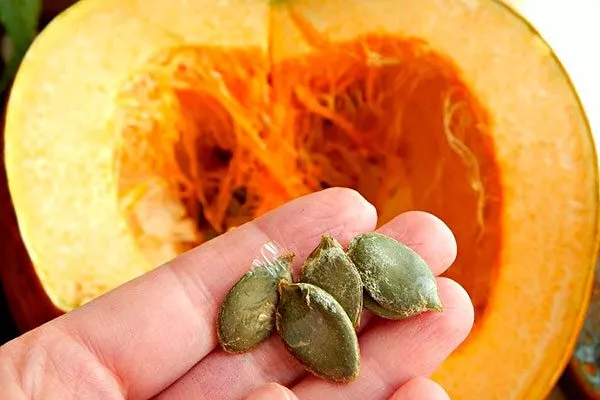
Before planting (overnight), soak the seeds in a wood ash solution (1 tablespoon per 0.5 liters of warm water). Pre-germination is not required for marble pumpkin seeds, as they have a high germination rate. However, experts recommend soaking the seeds in hot water (50°C) for 3-5 hours before planting. This will help them germinate faster and be free of pathogens.
Sowing in open ground
Marble pumpkins are sown outdoors based on climate conditions, air, and soil temperature. The timing varies by region. For example, in the south, pumpkins are sown outdoors from May 10th to 15th, when the soil warms to 14–16°C. In temperate climates, this occurs in late May. In the north, this occurs in early June. The soil should warm to 13°C at a depth of 10 cm.
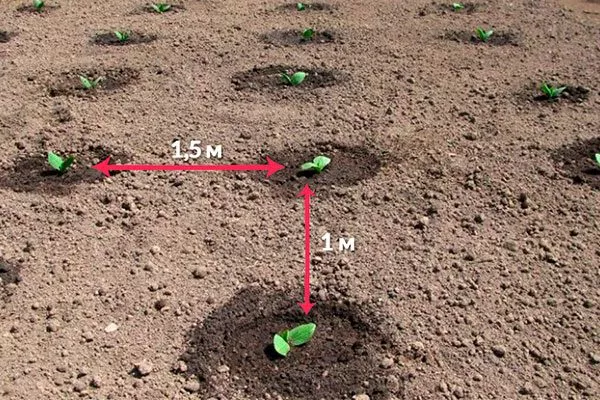
The soil in the area designated for pumpkins is dug over in the fall. Organic matter, such as compost or humus, and mineral fertilizers, are added during the digging. Coarse sand is added to clay soils, and wood ash to acidic soils.
Features of planting Marble pumpkin in the ground:
- The beds are well loosened before sowing.
- For planting, prepare holes about 10 cm deep.
- Grass collected in the spring is added to the holes. It is chopped, mixed, and placed at the bottom of the holes. Humus, a handful of wood ash, and 0.5 teaspoon of superphosphate are added to the grass.
- Place 4-5 seeds in each hole. If the soil is light and loose, plant the seeds at a depth of 3-4 cm; if it's heavy and dense, plant them at a depth of 2-3 cm. Place them with the pointed ends down.
- The seeds are sprinkled with loose soil, compacted, watered with warm water and covered with film.
Seedling method
In regions with short summers, using seedlings allows you to harvest fruit before frost. Sow pumpkin seedlings 30-35 days before the expected planting date.
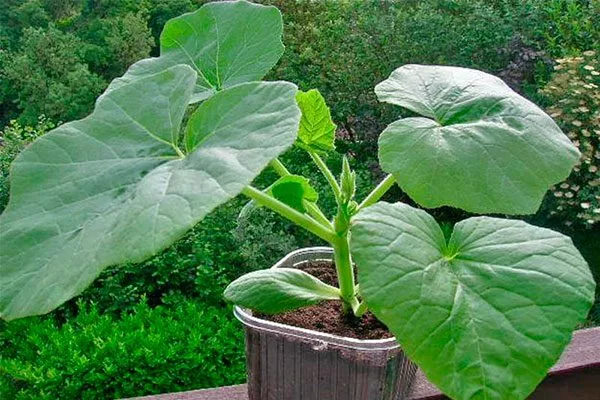
Features of sowing Marble pumpkin seedlings:
- Pumpkin seedlings are grown in regular planting containers or any suitable containers. The main thing is that they have drainage holes in the bottom.
- Fill the planting containers with the prepared substrate. First, add a thin drainage layer of small pebbles to the bottom. Store-bought mixtures are fully prepared for use; they don't require disinfection, deacidification, or acidification.
- Instead of using store-bought soil, you can fill the planting containers with homemade potting soil. For example, a good mixture can be made from 4 parts garden soil, 1 part each of sawdust, humus, and wood ash. The prepared potting soil should be disinfected with a potassium permanganate solution or by heating it in the oven.
- Fill the container almost to the top with the substrate. Moisten it with warm, settled water from a spray bottle. Then plant two seeds in each cup. When seedlings appear, leave one sprout and carefully remove the other.
- The seeds are covered with a thin layer of loose soil and the entire planting is covered with plastic film. The planting containers are placed close to the light.
Until the seedlings emerge, the film is left on, only opened for a few minutes each day to ventilate the mini-greenhouse. The soil is sprayed with a spray bottle to keep it moist.
- Ventilate the mini-greenhouse daily, increasing the time from 5 to 30 minutes by the end of the first week.
- Keep the soil moist by misting it in the morning to avoid overwatering.
- Use phytolamps for additional lighting if natural light is not enough.
Features of seedling care:
- The optimal daytime temperature is +19….+24 °C, nighttime temperature is +14….+16 °C.
- Pumpkin seedlings require plenty of light—this is the key to successful cultivation. Daylight hours should be at least 12 hours. If daylight is insufficient, grow lights can be used to provide supplemental lighting.
- Pumpkin seedlings should be watered only with warm, settled water, at a temperature of at least 25°C. The best time to water is in the morning. The soil should neither dry out nor become overly waterlogged.
- Pumpkin seedlings require additional feeding if they use a commercial substrate. For example, add a 1:10 dilution of mullein directly to the roots. A second feeding should be done two weeks after the first.
- Pricking out pumpkin seedlings is not recommended. The plant has a very sensitive root system, and even minor damage can negatively impact its growth.
- Transplant the seedlings into the ground after the danger of frost has passed. By the time of planting, the seedlings should have at least 3-4 true leaves.
- Before planting, it is recommended to harden off the seedlings: a week before, they are taken outside, initially for half an hour, then the time spent outdoors is increased to an hour, then two, and gradually increased to a full daylight period.
Care instructions
The Marble Pumpkin requires standard care, the quality and regularity of which determines the crop's yield, the size of the fruits, their taste and quantity.
Watering
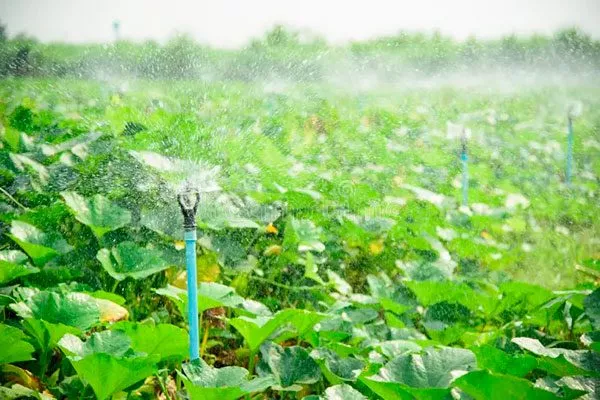
Pumpkins are watered on average three times a week. The frequency depends on weather conditions, rainfall, and soil conditions. Water the pumpkin after the top layer of soil has dried out. The recommended watering rate is 5 liters per plant. The water should be warm and settled. Pour water under the roots, avoiding contact with the leaves.
Top dressing
Pumpkin plants begin receiving fertilizer two weeks after planting. Diluted manure or other organic matter is added, then the bushes are watered with herbal infusion every two weeks. After fruit set, mineral fertilizers, such as monopotassium phosphate, are added. Fertilize twice, 2-3 weeks apart.
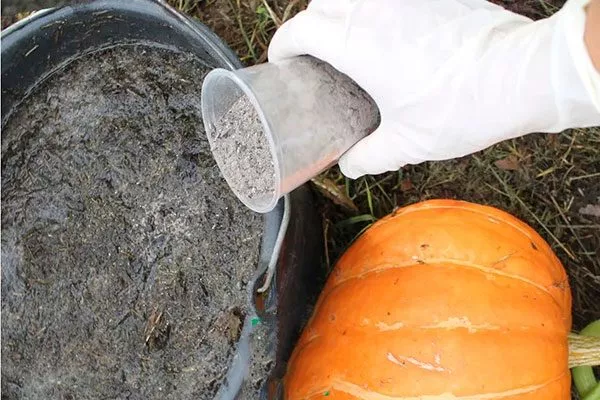
For fertilizing tomatoes, it is also recommended to use growth stimulants, nettle infusion, yeast solution, onion peel decoction, etc. When the fruit ripens, no fertilizer is applied.
Loosening and weeding
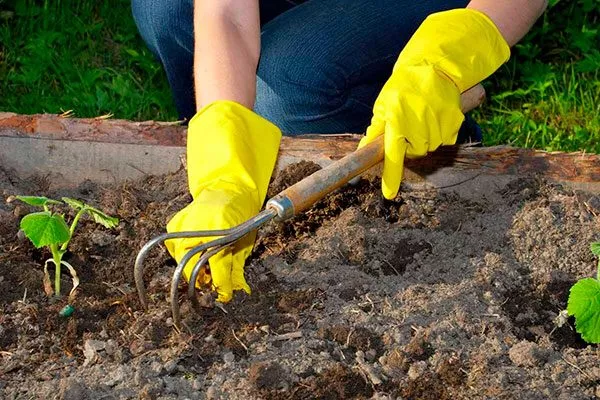
To maintain soil aeration, loosen the soil after each watering to prevent the formation of a hard crust that impedes oxygen supply to the roots. Loosen the soil to a depth of 7-8 cm. This will help flush out weeds. The soil can also be mulched with straw, hay, or other materials. Mulching reduces the frequency of watering, loosening, and weeding.
Pest and disease control
The Marbled Pumpkin has a strong immune system, but is susceptible to fungal and bacterial infections. If signs of powdery mildew (a whitish coating) appear, treat the bushes with Topaz or a colloidal sulfur solution. White rot can be treated with 0.5% copper sulfate, while bacteriosis can be treated with Bordeaux mixture and copper-containing products.
Among the pests, melon aphids and spider mites pose the greatest threat to the Marbled pumpkin. These can be controlled with onion or garlic infusions, as well as broad-spectrum insecticides. Slugs can also cause significant damage to the pumpkin, and can be controlled with various traps and soil sprinkled with ash, pepper, or tobacco.
How to harvest and store crops?
The fruits are harvested as they ripen. The pumpkins are separated from the vines using a knife or pruning shears. The fruits are cut off along with the stems. The harvested pumpkins are laid out indoors or in the sun, depending on the weather, and dried.
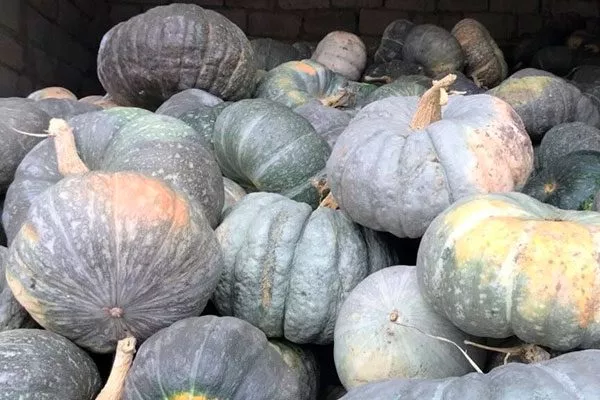
Before storage, each pumpkin is carefully inspected, and any damaged or otherwise defective fruits are set aside for immediate consumption or processing. At temperatures of 15–12°C and humidity of 70–80%, marble pumpkins can be stored for about a year. By spring, the fruits lose some of their vitamins and become less nutritious, but their aroma and nutty notes remain.
Reviews
The Marbled Pumpkin is a truly old and tried-and-true variety that has proven its worth over time. This wonderful pumpkin with its unusual green fruits is practically perfect. Plant it in your garden, and you'll provide yourself with a tasty and valuable product all year long.