
Marbled pumpkins have distinctive features: a veined surface, an emerald green color, and wrinkled skin, giving the variety a marbled appearance. This mid-season variety is quite sweet (13% sugar), rich in micronutrients and vitamins E, C, and A.
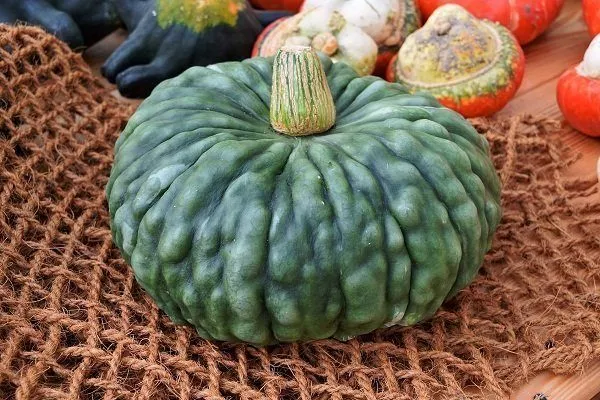
Marble pumpkin
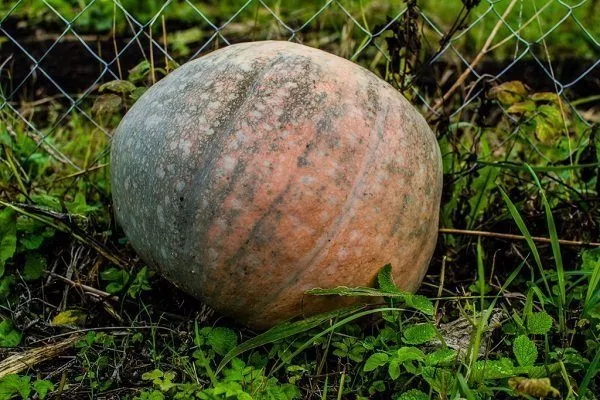
Marble pumpkin is easy to care for.
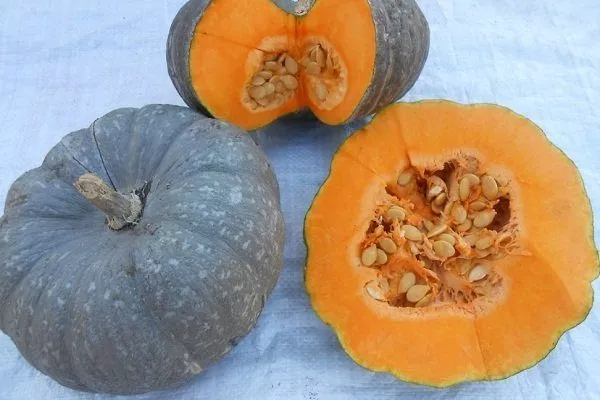
Marble pumpkin has juicy, sweet flesh.
General characteristics
Marbled pumpkin has been grown in Russia for a long time, making it a well-known variety. Its popularity is based on its consistently high yields and excellent taste (the flesh is sweet and juicy). After germination, harvest takes 125-140 days.
The plant's vines are quite strong, long, and sturdy, as pumpkins are large-fruited. The leaves are undissected, large, and dark green. The flowers are a bright yellow, attracting pollinating insects.
The variety is frost- and drought-resistant, making it suitable for cultivation in virtually all regions of the country. However, it is a heat-loving crop (cool weather and low light reduce sugar levels and alter the texture of the pulp). For this reason, it is best grown in the south.
Pros and cons
Main advantages Marble pumpkin:
- high yield;
- fruit size;
- ease of care;
- sweetness;
- pleasant aroma and taste;
- transportability;
- keeping quality;
- beautiful appearance;
- the peel does not crack.
Flaws:
- intolerance to shade;
- need for constant fertilization.
Description of fruits
The appearance and taste of marbled pumpkins depend on climate and weather conditions, as well as the level of care, so it's impossible to obtain exactly the same vegetables under different conditions. The peel is distinctive: it appears quite tough, but cuts easily.
Fruit characteristics:
- the taste of the pulp is sweet, unusual;
- juiciness – high;
- astringency, no sourness;
- the aroma increases with storage and has nutmeg notes;
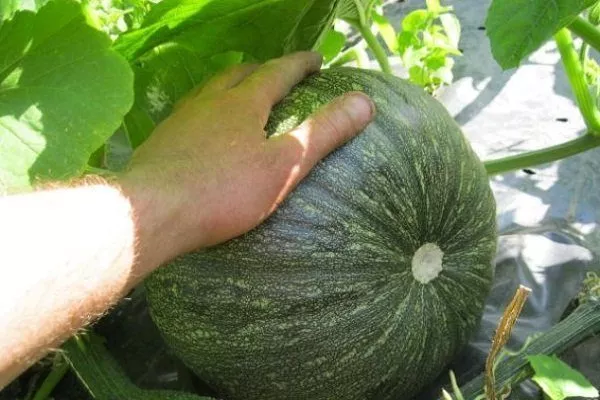
- the skin color is dark gray, when very ripe it is green-gray;
- average weight of pumpkins is 5-10 kg;
- shape – round flattened;
- the surface of the crust contains spots (appear 7-10 days before full ripening) and veins;
- the seeds are cream-colored and up to 3 cm in size;
- The pulp structure is tender, the color is distinctly orange.
Productivity
Marbled pumpkin is considered a high-yielding variety. With proper care and adherence to agricultural guidelines, it can yield up to 20 kg of the vegetable per square meter.
Use of fruits
The variety is universal and is therefore used for the following purposes:
- preparation of first and second courses (porridge, cream soups, casseroles, stews, etc.);
- production of juice, baby food;
- baking pies, preparing desserts;
- adding to salads;
- animal feed.
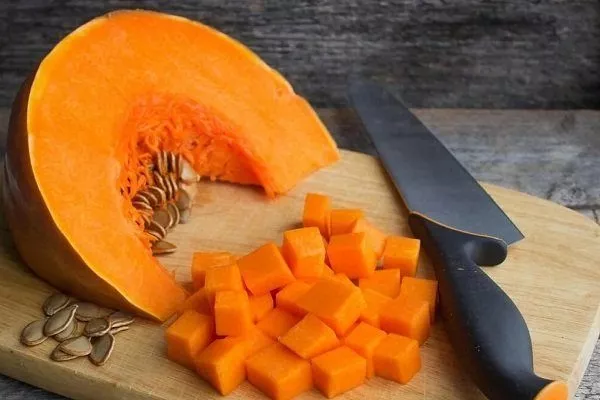
Marbled pumpkin is rich in nutrients, so the pulp is used in cosmetology (smoothing wrinkles) and medicine (it has a positive effect on liver function, improves visual acuity, and restores gastrointestinal function). The seeds are eaten and used to eliminate and suppress helminths in the human body (destroying worms).
Features of cultivation
The key to successfully growing marble pumpkin is fertile soil. If the soil is poor, it will need constant fertilization. The planting area should be prepared in the fall by digging to the depth of a bayonet and adding manure or compost.
- ✓ Soil pH should be between 6.0-6.8 for optimal growth.
- ✓ The soil must contain a high percentage of organic matter (at least 4%).
Preparing a landing site
The yield depends largely on the chosen location – the area should be well-lit, draft-free, and shade-free. The best soil is loamy and sandy loam. If the soil is highly acidic, add lime, peat, and wood ash.
How to properly prepare the site:
- in the fall, dig up the soil, adding organic fertilizers;
- in the spring, dig up the soil again (not too hard, just to loosen it);
- add compost;
- To improve drainage properties, it is recommended to add sawdust or sand directly during planting;
- To prevent the pumpkin from getting sick, it is advisable to disinfect the soil (you can buy Fundazol or water it with a weak solution of potassium permanganate);
- Remove the root system of weeds and household waste from the area.
Seed preparation
The seeds are prepared a couple of days before planting in the ground or for seedlings. Each seed must be manually sorted, discarding any damaged, spotted, or hollow seeds. Marbled pumpkin has a unique property – a high germination rate, eliminating the need for pre-sprouting. Therefore, preparatory measures include the following:
- warm the seeds at a temperature of 40-45 degrees (you can put them in the oven for 3-4 hours or place them on a heating radiator for 12 hours);
- soak the seeds overnight in a solution of wood ash (mix 1 tbsp with 0.5 liters of warm water), leave in a warm place;
- dry the seed material.
Planting seedlings
Pumpkins are grown using seedlings in the northern regions of Russia. A variety of containers are used for planting seeds, including store-bought peat cups, plastic cups, and Tetra Paks used for dairy and fermented milk products. Before adding soil, the containers (except peat containers) are thoroughly washed and dried. Small holes in the bottom are essential for drainage.
The following can be used as a primer:
- Ready-made universal substrate from a specialized store. This soil has the required acidity level and is rich in nutrients, which accelerates the germination process and improves the performance of seedlings.
- Homemade mixture. What you'll need: 4 parts garden soil, 1 part sawdust, 1 part humus, and 1/2 part wood ash. To prevent contamination, disinfect the prepared mixture with a potassium permanganate solution.
Rules for planting seeds and growing seedlings:
- pour a small layer of pebbles into the prepared container (again for drainage);
- fill with soil almost to the top;
- moisten the soil with a spray bottle;
- insert 2 seeds;
- sprinkle with soil;
- cover with thick plastic film;
- expose to the sunny side;
- after 10-12 days, add a mineral complex or organic fertilizer;
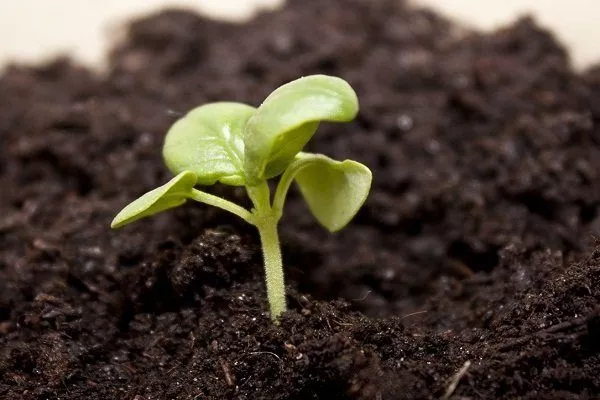
- The seedlings are ready for picking in 20-21 days.
Other rules that are important to follow:
- Throughout this time, it is necessary to monitor the humidity level, periodically watering the seedlings;
- when the first shoots appear, the film is removed;
- The daylight hours for seedlings should be 14-16 hours, so at night the containers are placed under lamps.
When the first 1-2 leaves appear, thin out the seedlings, removing the weak shoots and leaving the strong ones. This must be done carefully to avoid damaging the healthy root. Don't pull out the seedlings; trim them with nail scissors just below the soil surface.
Planting in open ground
Seeds are planted directly in outdoor garden beds in warmer climates. Germination is not necessary, but it is important to follow the preparation guidelines. Soil temperature in the garden should range from 13 to 18 degrees Celsius.
Planting steps:
- dig holes up to 6 cm deep on the site;
- the distance between them should be no less than 60 cm, no more than 1 meter;
- pour two liters of boiling water into each hole (for disinfection);
- when the water is absorbed, add 2 grains;
- sprinkle with soil mixed with organic matter (humus);
- mulch.
Mulching is necessary to retain moisture. If frost or low temperatures are expected, cover the seeds with plastic wrap or a plastic bottle.
Watering
The crop should be watered until the fruits are half-ripe. Initially, young bushes require about 2 liters of water, then gradually increase the amount to 5 liters.
Avoid pouring water directly onto the leaves—only onto the soil surface. It's best to use rainwater or settled water.
Thinning and weeding
Thinning is done after three leaves have formed. Follow the same guidelines as for thinning seedlings.
Weeds are detrimental to pumpkin crops—they spread infections, attract insects, transmit diseases, and absorb moisture and nutrients. For these reasons, weeds are removed.
Weeding should be done weekly until the pumpkin vines and foliage cover the entire plot. Along with weeding, loosen the soil. It's best to do this the following day after watering.
Top dressing
This is an important agricultural requirement. Fertilizer is applied twice a month. For this purpose, the Marbled Pumpkin's favorite fertilizer, mullein, is usually used. It is diluted with water at a ratio of 1:20.
| Type of feeding | Frequency of use | Efficiency |
|---|---|---|
| Mullein | 2 times a month | High |
| Wood ash | Once a month | Average |
| Mineral fertilizers | According to the instructions | Depends on the composition |
Additionally, you can use growth stimulants, nettle tincture, aloe juice, yeast solutions, chicken manure, and onion peel decoction.
Bush formation
The vines of this pumpkin are quite long, so it requires high-quality bush formation:
- It is advisable to remove stepchildren;
- no more than 3 fruits should be left on each stem;
- if the whip is very long, pinch it;
- Also, the vines need to be covered with soil, which eliminates the risk of tangling.
Recommendations from gardeners
Growing tips:
- Crop rotation rules must be followed. Marbled pumpkin should not be grown after cucumbers, squash, or zucchini. The best preceding vegetables are onions and legumes.
- If seedlings are grown in a greenhouse, be sure to install a ventilation system or open the greenhouse for ventilation. Otherwise, the risk of fungal diseases increases.
- Irrigate the beds in the evening or early morning. Watering during the day is strictly prohibited, as it can cause sunburn.
- Avoid over-watering as this will cause rot.
- The variety loves mineral supplements, so add a solution of wood ash.
- It is advisable to loosen the soil to a depth of 7-10 cm.
- Fertilizing the soil is permitted until mid-August, no more.
Diseases and pests
Marbled pumpkin is not a delicate crop, so with proper cultivation practices, it is not susceptible to disease or pest or insect attacks. Under other conditions, the following diseases and pests are most common:
- Powdery mildew Characterized by a white coating on the leaf blade, Topaz, a colloidal sulfur solution, can help eliminate it.
- Bacteriosis Covers the plant with brown spots. Treatment is by spraying with copper-based preparations.
- White fungal rot It is localized on the above-ground part of the crop and is characterized by a flake-like coating. Treatment with a 0.5% copper sulfate solution is required to eliminate the disease.
- Spider mite It's easily identified because the insect forms webs on the plant. Insecticides and folk remedies (such as alkaline garlic or onion tincture) are used for treatment.
- Melon aphid The infection is localized on the ovaries and leaves on the inside. The same methods are used to control it as in the previous case.
- Slugs They eat ovaries, flowers, leaves, and stems. You can get rid of them with traps. To do this, place wet rags or cabbage leaves near the bush.
As preventative measures against diseases and pests, you need to do the following:
- adhere to the rules of agricultural technology and crop rotation;
- plant pepper and tobacco next to pumpkin;
- do not plant the pumpkin too densely;
- monitor soil moisture levels;
- feed with fertilizers to improve the plant’s immunity;
- remove infected elements daily;
- disinfect seeds, soil, and planting containers;
- pull out weeds.
How to harvest and store crops?
Marbled pumpkins are harvested with the stems attached around early September. After removal from the garden, the fruits are laid out indoors or in the sun for several days until completely dry.
Storage conditions:
- shelf life – up to 12 months;
- room humidity – 70-80%;
- temperature range – 5-12 degrees;
- The room must be well ventilated.
Reviews
Marbled pumpkins not only have an attractive appearance but also excellent taste, making them extremely popular. If you follow the proper growing and care guidelines, you can get the maximum harvest in a single season. It's important to follow these guidelines and storage rules, otherwise the fruits will rot.