
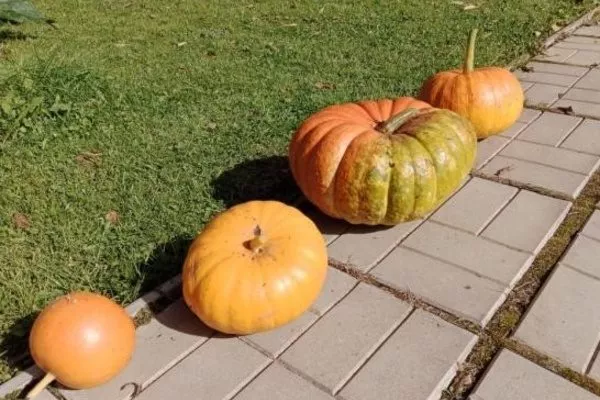
The Matryoshka pumpkin is an early-ripening, non-climbing variety with large, smooth fruits. It can be grown in all regions of the country by sowing directly into the ground or from seedlings. This pumpkin has a fairly good flavor and excellent agronomic qualities.
Who and when bred the Matryoshka pumpkin?
The Matryoshka variety was developed at the Federal Research Center, the All-Russian Institute of Plant Genetic Resources named after N.I. Vavilov. Authors: G. A. Tehanovich, Yu. A. Yelatskov, and A. G. Yelatskova. Read about other top pumpkin varieties for gardening. Here.
Description of the plant
The bushes are compact, making them ideal for areas with limited space, unlike climbing varieties. The main stem is quite short, and the leaves are medium-sized.
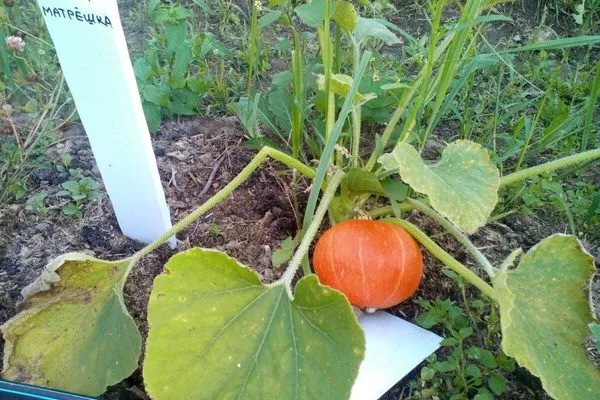
The leaf blades are entire, undissected, and richly green. The lack of dissection allows for more efficient photosynthesis, promoting more vigorous plant growth and development.
Description of fruits
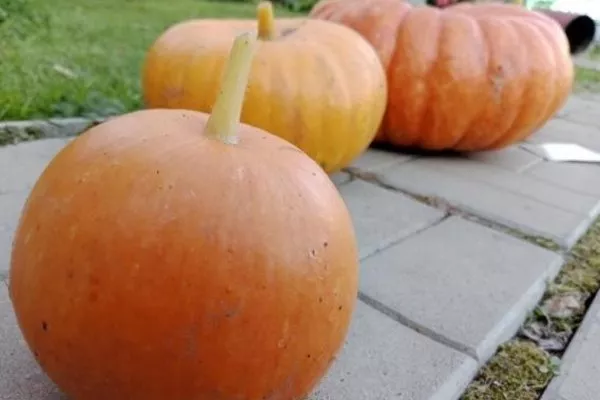
The Matryoshka pumpkin fruits are quite large, with a smooth surface—no ribs or bumps. The rind is quite thin and flexible. The seed pods are medium-sized, and the placentas are of medium density.
Description of fruits:
- Crust color: bright orange, also available with yellow stripes.
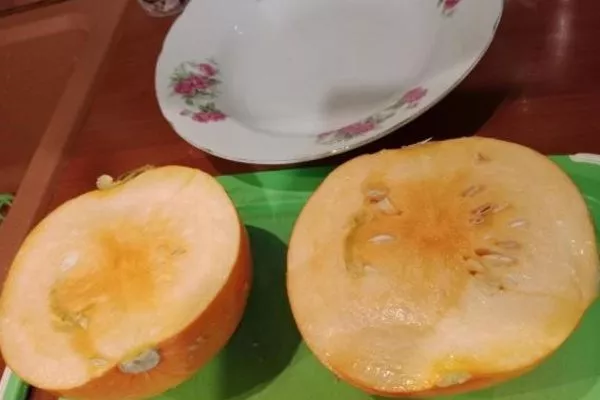
- Pulp color: orange or deep yellow.
- Form: flat-round.
- Pulp: medium density and thickness, slightly juicy.
- Seeds: white, medium-sized and elliptical in shape.
- Weight: 1.8-2.4 kg.
Characteristics
The Matryoshka pumpkin has excellent agronomic characteristics, allowing it to be successfully grown in various regions of the country.
Varietal qualities:
- Ripening periods. It's an early-ripening variety. It takes approximately 80-85 days from germination to harvest.
- Productivity. Yield depends on proper growing conditions and risks, such as frost, drought, etc. On average, 2.8 kg of fruit are harvested per square meter.
- Disease resistance. It has good immunity to many common pumpkin diseases. The Matryoshka pumpkin is also relatively resistant to powdery mildew.
- Cold resistance. It has typical cold tolerance for the crop. It's important to note that the younger the plant, the more vulnerable it is to cold weather. For normal root development, pumpkin requires soil temperatures between 18°C and 23°C, and air temperatures between 20°C and 30°C.
Taste and application
The fruit's flesh is juicy and can have a variety of textures, from densely fibrous to almost smooth, depending on growing conditions and ripeness. The flesh tastes sweet and pleasant, without a bitter aftertaste, and is slightly sugary.
The Matryoshka pumpkin is used for a variety of purposes:
- Cooking. The pulp is used to make soups, porridges, purees, casseroles, and various desserts. Pumpkin puree, in turn, is used to make pie fillings, sauces, and appetizers.
- DecorFully ripened and thoroughly dried fruits can be used to create unique crafts and installations.
Furthermore, the Matryoshka pumpkin's flesh, rich in vitamins and carotene, is ideal for baby food and dietary nutrition. Pumpkin seeds are also particularly valuable—not only are they delicious, but they're also very healthy. They can be eaten as a standalone snack, added to salads, and baked goods.
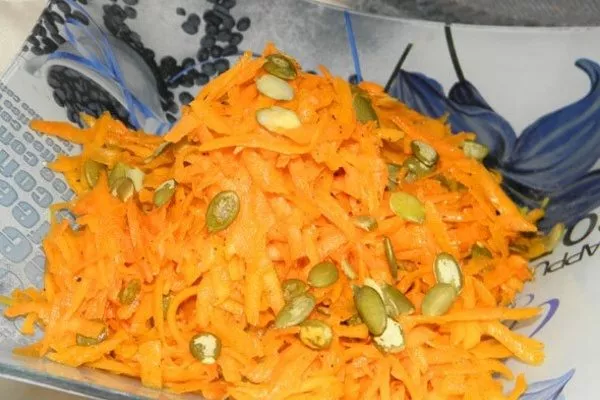
The seeds can be roasted—they acquire a pleasant nutty flavor after roasting. However, it's recommended to eat raw seeds, as they contain more vitamins and nutrients.
Pros and cons
Along with its advantages, the Matryoshka pumpkin also has some disadvantages, which gardeners should be aware of in advance. In any case, this variety has many more advantages, which is why people grow Matryoshka pumpkins. Advantages:
Cons:
Landing
To get a good pumpkin harvest, it's important to follow proper cultivation practices from the very beginning—from planting. It's essential to choose the right location for the pumpkin and plant it correctly, strictly adhering to the planting guidelines.
Seed preparation
Before planting, it is recommended to harden and treat pumpkin seeds (if the manufacturer has not done this or if you are harvesting them yourself), and also soak them.
The seeds are soaked in water at a temperature of +25…+30°C. The following can be added to the water:
- Wooden ash — 1 tablespoon of ash per 1 liter of warm water. The ash solution enriches the seeds with potassium and microelements. Soak for 12 hours.
- Stimulant growthFor example, Epin-Extra, Zircon, or succinic acid. Apply the solution according to the instructions, usually 4-6 hours.
- Aloe juice. It is diluted 1:1 with water. Soaking time is 6 hours.
Harden the seeds after they sprout. Wrap them in a damp cloth and place them on the bottom shelf of the refrigerator. Alternatively, take them out onto the balcony if the temperature there is between 2°C and 5°C. Hardening time is 3-5 days. It's important to keep the cloth the seeds are wrapped in damp at all times. If the seeds need to be treated, you can use a solution of brilliant green (1 teaspoon per 100 ml of water).
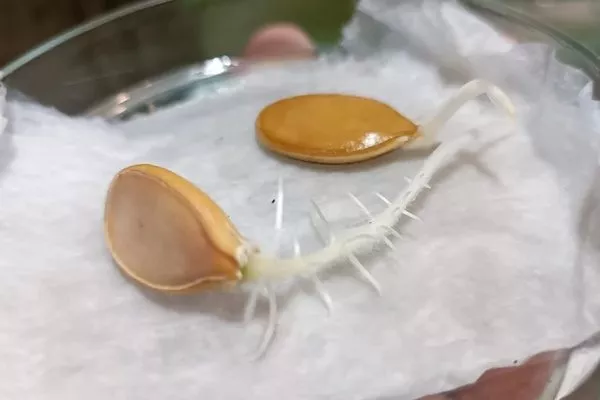
After soaking, the seeds are germinated. They are laid out on a damp cloth, which is placed in a saucer. Bandages, gauze, or paper towels can be used. The saucer can be covered with plastic wrap to prevent water evaporation, but leave a gap for air circulation.
Check the seeds daily. As soon as sprouts about 2 mm long appear, they can be planted. Pumpkin seeds typically germinate in 2-4 days. It's important not to wait until the sprouts are long—they easily break off during planting.
Selecting a site
The Matryoshka pumpkin prefers well-lit areas with fertile and well-drained soil.
Site (landing location) requirements:
- The best soils are loams rich in organic matter, light and loose.
- Optimal acidity is close to neutral (pH from 6.0 to 7.5).
- The best predecessors are potatoes, various root vegetables, eggplants, legumes, corn, peppers, tomatoes, greens (especially onions), and cabbage. Poor predecessors include cucumbers, watermelons, melons, sunflowers, zucchini, and squash.
In the south, where the climate is hot and dry, pumpkins can be grown in partial shade. However, it's important to note that insufficient light results in less sugary fruits and reduced yields.

Site preparation
The soil for planting is prepared in advance. Fertilizers—organic matter (compost, rotted manure, humus) and mineral fertilizers—are added during digging. If the soil is heavy, a loosening agent, such as river sand or peat, is essential.
In acidic soils, add slaked lime or dolomite flour at a rate of 300 g per square meter. Raised beds are created in areas with high groundwater levels.
Planting dates
Pumpkin sowing or seedling planting depends on the soil type, climate, and weather conditions. In temperate climates, pumpkins are planted from late April to mid-May. In the south, pumpkins are planted much earlier—from late March to mid-April.
Direct sowing into the ground
To plant the Matryoshka pumpkin, prepare large holes. They should be wide and deep, as the plant has a strong root system that requires ample space.
Features of planting the Matryoshka pumpkin:
- The diameter of the hole is 40-50 cm. Depth is from 25 cm.
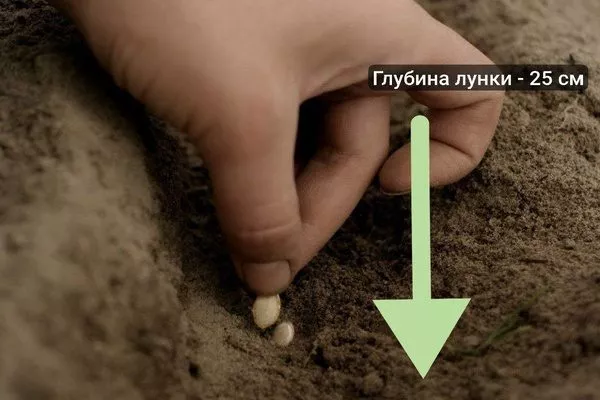
- The intervals between holes are 60-70 cm, and between rows - 100-120 cm.
- Ammonium nitrate (70-80 g), superphosphate (40-50 g) and potassium salt (50 g) are placed in each hole.
- Place 4-5 seeds per hole. Cover the seeds with soil. The planting depth should be between 4 and 10 cm. The lighter the soil, the deeper the seeds should be planted.
- The crops are watered with warm, settled water—1-2 liters per hole. The water should soak the soil to the depth of the seeds or slightly deeper.
- Once the water has been absorbed, the soil is covered with dry earth to slow down the evaporation of moisture and the growth of weeds.
When the sprouts develop several true leaves, thin out the seedlings. The strongest of the emerging sprouts is selected, and the rest are carefully removed.
You can learn more about growing vegetables in open ground. Here.
Growing seedlings
In regions with short growing seasons, pumpkins are recommended to be grown using seedlings. Pumpkin seedlings grow quickly—in 25-30 days, twice as fast as, for example, tomatoes.
Features of growing Matryoshka pumpkin seedlings:
- Plant in individual cups. Pricking out pumpkins is not recommended, as they do not transplant well. The planting container should hold 300-500 ml and have drainage holes in the bottom.
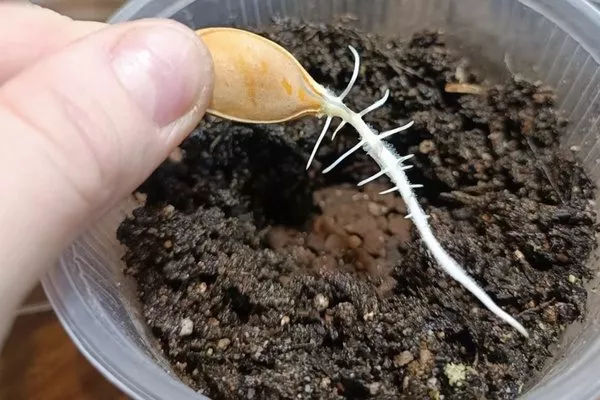
- Fill cups or pots with soil—either store-bought or homemade. A soil mixture can be made, for example, from equal parts of lowland peat, turf soil, and compost. Add about 5-10% rotted sawdust or coconut coir.
- The planting containers are filled with substrate and moistened with warm water from a spray bottle.
- The seeds are planted at a depth of 2 cm, covered with soil, and compacted. The crops are covered with transparent film and kept indoors at a temperature of +25°C.
- After seedlings emerge, the cover is removed and the temperature is reduced to 20–22°C during the day and 17–18°C at night. After a week, the temperature is raised to the original values.
Reducing the temperature after germination helps prevent the seedlings from becoming elongated. Subsequently, the seedlings require careful care—watering, providing warmth and light, fertilizing, etc.
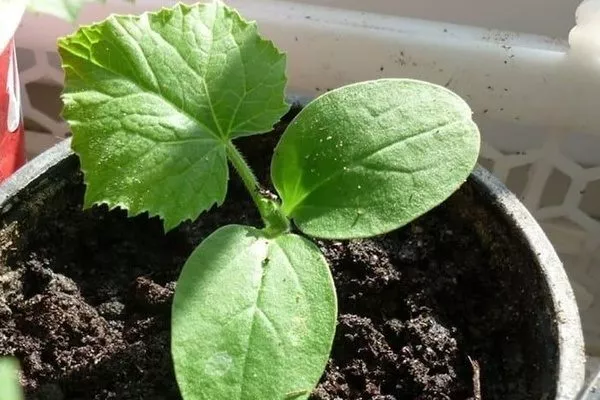
Features of seedling care:
- Watering. Water the seedlings with warm, settled water as the top layer of soil dries out. Avoid getting water on the leaves and stems. It's important to avoid overwatering or drying out the soil.
- Lighting. Pumpkin seedlings require 12-14 hours of daylight. If light levels are insufficient, artificial lighting is used. Grow lights should be placed 20-30 cm from the plants.
- Top dressing. Ten days after germination, the first feeding is carried out with a complex fertilizer. The feeding is repeated after two weeks.
- Humidity The air humidity in the room where the seedlings are kept should be maintained at 60-70%. If the air is dry, place containers of water near the seedlings. You can also hang a wet terry towel over the radiators.
Planting seedlings in the ground
By the time of planting, the seedlings should have 2-3 true leaves and be at least 20 days old. Planting is best done in the evening or on a cloudy day.
Landing features:
- In the area chosen for planting pumpkins, ridges 20-25 cm high are formed.
- Holes are made in the beds to a size that will allow the root system of the seedlings to fit freely, along with the root ball.
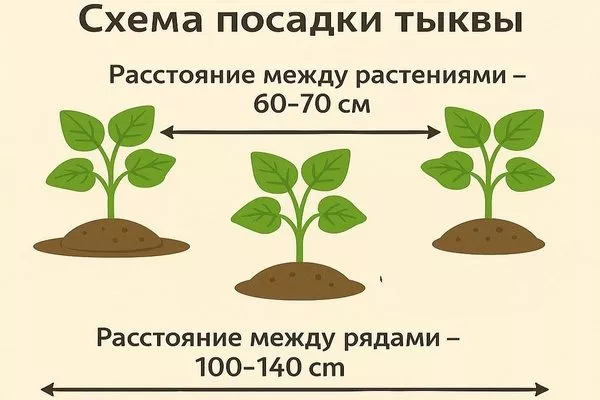
- The optimal planting pattern is 60-70 x 100 cm. Add 2 tablespoons of wood ash and 250 ml of humus to each hole.
- The seedlings are planted using the transshipment method so as not to damage the roots.
- The planted seedlings are watered with warm water, after which the root zone is mulched, for example, with straw.
Care
The Matryoshka pumpkin isn't fussy, but it does require some care. The yield, quantity, and quality of the fruit directly depend on this care.
Watering and loosening
Watering frequency and amount depend on soil and weather conditions, as well as the stage of development and age of the plants. Learn all the nuances of pumpkin patch irrigation. Here.
Features of watering the Matryoshka pumpkin:
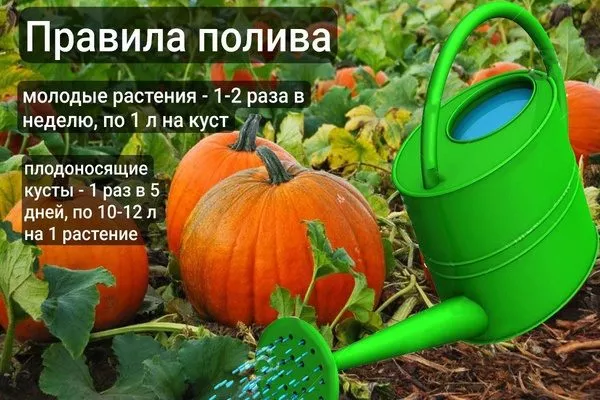
- For the first two weeks, water the pumpkin approximately 1-2 times a week. The recommended watering rate is 1 liter per plant.
- Later (before the first hilling), the water rate increases to 7-8 liters, and in hot weather - up to 8-10 liters per bush.
- After this, the pumpkin is not watered for 3 weeks to stimulate the formation and growth of roots.
- Once female flowers appear and fruiting begins, watering should be done once every 5 days. The recommended watering rate is 10-12 liters per plant.
- Watering is not carried out a month before harvesting so that the fruits accumulate more sugar.
- Water only with warm water, in the morning or evening. Apply water at the roots, and once it's absorbed, mulch the soil.
- If it rains, watering is temporarily stopped. It is resumed when the soil dries out.
After watering, the spaces between rows are loosened to prevent the formation of a hard soil crust, which occurs after watering and rain. The depth of loosening depends on the stage of vegetation: initially, it is 8-10 cm, and at the stage of 5-6 true leaves, it is 6-8 cm. During loosening, the bushes are lightly earthed up to ensure greater stability, and weeds are removed.
Fertilizing
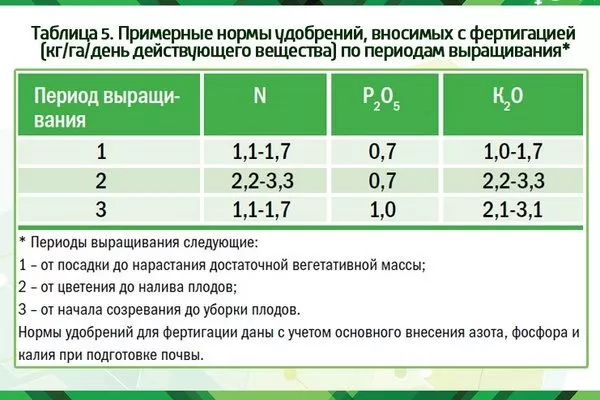
The Matryoshka pumpkin is fed 2-3 times per season, alternating organic and mineral fertilizers.
Approximate timing of fertilizer application:
- 2 weeks after planting the seedlings.
- During the flowering period - to stimulate the formation of ovaries.
- At the stage of active fruit growth – to increase their weight and improve their taste.
At the beginning of the growing season, apply more nitrogen; as the bush develops, its proportion in the fertilizer is reduced, and then stopped altogether. When fruit is forming, plants need phosphorus and potassium.
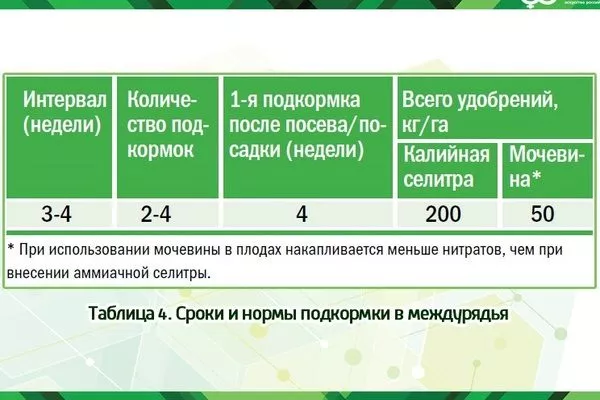
Possible options for fertilizing pumpkin:
- Organic. For fertilizer, you can use slurry or mullein infusion (1:10), herbal infusion, or wood ash solution (250 ml per 10 liters of water). Organic fertilizers are recommended for application to moist soil.
- Minerals fertilizersDuring the active growth period, pumpkins can be fertilized with azophoska or nitroammophoska at 20-30 g per 10 liters of water. This fertilizer promotes root and fruit development. During the fruiting stage, potassium sulfate can be added to increase sugar content and shelf life.
- Folk meansPumpkins respond well to yeast supplements (10 g dry yeast and 1 tbsp sugar diluted in 10 liters of water) – they stimulate root and aerial growth. To improve metabolism, pumpkins can be additionally fed with milk diluted with water (1:10) –
Fighting diseases
The Matryoshka pumpkin has good immunity to most diseases affecting cucurbits, but under unfavorable conditions, it can be susceptible to various infections, primarily fungal. Most commonly, these include anthracnose, white rot, and powdery mildew.
To combat diseases, chemical agents are used:
- "Topaz" - effective against powdery mildew.
- HOM - can be used to control downy mildew and anthracnose.
- Fundazol — A 1% solution is used to combat root rot.
Biological agents:
- Alirin-B — they spray bushes affected by powdery mildew, late blight, gray mold, and black leg.
- Gamair - helps fight bacterial diseases, spotting, bacterial cancer, scab.
- Gliocladin - effective against root and basal rot.
Pest control
Among the pests that most often affect the Matryoshka pumpkin are melon aphids, spider mites, whiteflies, and thrips.
To control pests, use:
- Biological fungicides — Fitoverm, Gaupsin, Bitoxibacillin.
- Folk remedies - soap-ash solution, garlic infusion, mustard solution, calendula and chamomile decoction.
- InsecticidesAgainst spider mites, use Kleschevit, Actellic, Apollo, and other acaricides. For aphids, use products such as Aktara, Confidor, and Fitoverm. For thrips control, use contact and systemic insecticides such as Vertimek and Agravertin.
Harvesting and storage
Matryoshka pumpkins are harvested when they are fully ripe, when the rind has acquired a characteristic orange color. Another sign of ripeness is a dried-out stem at the base. Whole pumpkins, free of cracks and other damage, are selected for storage. For more information on storing pumpkins in winter, read Here.
Storage tips for Matryoshka pumpkins:
- Store the pumpkins in a single layer, making sure they don't touch each other. Place the pumpkins on shelves or racks, stem-side up. Don't place pumpkins on the bare floor or ground; place paper, boards, or similar underneath.
- Pumpkins should not be stored near vegetables and fruits that produce ethylene (gas) - apples, pears, bananas.
- Pumpkins should be stored in a dimly lit or dark area, such as a cellar. The optimal temperature is between 8°C and 10°C. The optimal humidity is 70-80%.
- Pumpkins can be stored indoors, but the air must be dry and the room well-ventilated. Acceptable temperatures: +16…+18 °C.
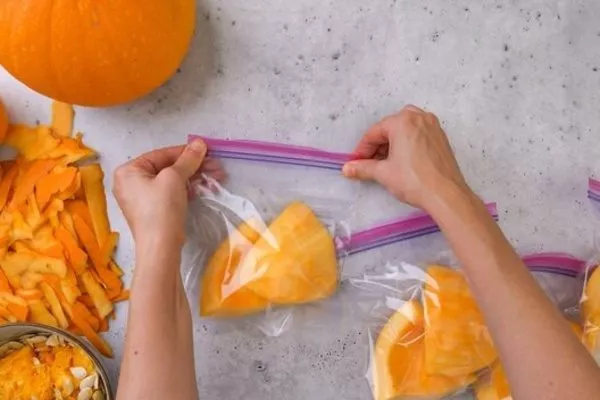
- Pumpkins can be stored in the refrigerator after washing, peeling, and removing the seeds. They can be dried and wrapped in plastic wrap or placed in zip-lock bags. The recommended shelf life is 7-10 days.
- Pumpkin can be frozen, cut into pieces and packaged in plastic bags. It will keep in the freezer for 8-10 months.
Reviews
The Matryoshka pumpkin is an interesting and quite promising variety, versatile in every way. If grown correctly and with proper agricultural practices, the fruits will be truly large and sweet, ideal for a wide variety of dishes.