
The Matilda pumpkin variety is a hybrid brought to our country from Holland. Matilda was developed by crossing other Muscat varieties. As soon as this pumpkin arrived in Russia, it was immediately entered into the State Register, and all its characteristic features were recorded.
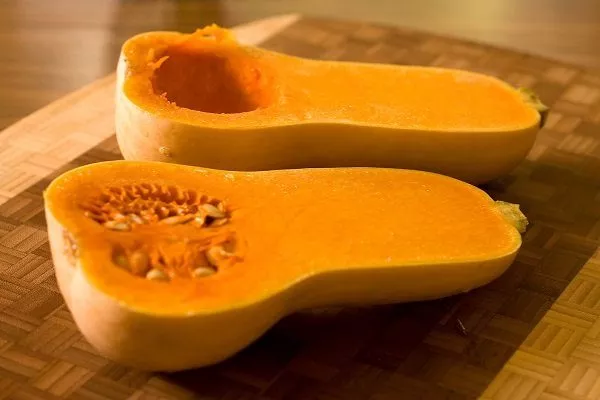
The flesh of the Matilda pumpkin has a delicate taste.
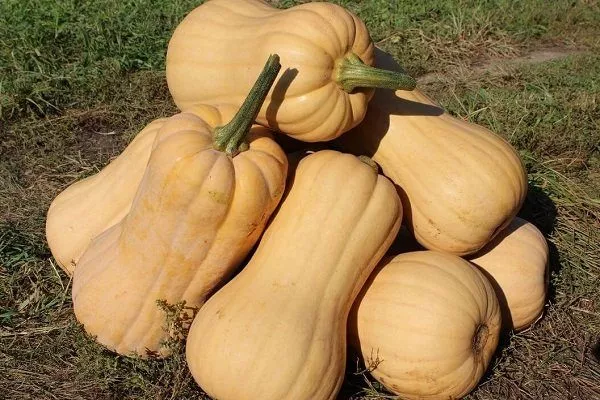
The Matilda pumpkin produces a good harvest.
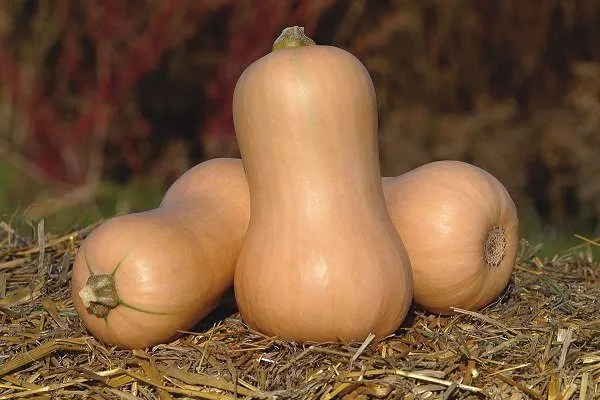
Pumpkin variety Matilda
Description and characteristics of the Matilda pumpkin
This melon pumpkin variety is a mid-early variety. It is characterized by long vines, reaching 5-6 meters in length. These vines produce a large number of female flowers, some of which fall off immediately, while the rest grow and develop.
Main characteristics of pumpkin:
- The fruits are not heavily segmented and are light yellow in color. Rarely, white fruits with a noticeable waxy coating appear.
- The shape varies, with pear-shaped and cylindrical fruits being found.
- The skin is not thick, but the harvest does not lose its presentable appearance during transportation.
- The fruit is not tough and can be easily cut with a knife.
- The smell is characteristically pumpkin-like with a hint of watermelon aroma.
- The pulp is dense, has a delicate taste, and is orange in color.
- A distinctive feature of the Matilda pumpkin variety is a small seed chamber located at the bottom of the fruit; the number of seeds is insignificant.
- The yield is high. With proper care, a single plant can produce approximately 8-10 fruits, each weighing 2-4 kg. If fewer ovaries are left on the bush, the fruit can weigh up to 5 kg.
Purpose of fruits
Matilda pumpkins are suitable for a variety of dishes, the most common of which are porridges, soups, and casseroles. The pulp can be used to make delicious sweets, and the pumpkin is suitable for fillings and can be added to dough for a more piquant and unique flavor.
Crop rotation
The Matilda pumpkin variety is very demanding of the soil in which it will grow, so it's essential to strictly adhere to crop rotation rules. The best predecessors for pumpkins are potatoes, cabbage, onions, legumes, and various root vegetables.
Melons should not be planted after cucumbers, zucchini, or squash, otherwise diseases and pests cannot be avoided.
In some areas, it is common to plant pumpkins next to potatoes, as it is believed that they act as a thickener for the melon crop.
Advantages and disadvantages of the variety
Matilda, like other melon crops, has a number of advantages and disadvantages, and these must be taken into account when growing the plant.
Advantages of the Matilda pumpkin:
- produces a large harvest even with sudden temperature changes;
- excellent taste and smell;
- drought resistance;
- relatively early ripening;
- almost complete absence of seeds in fruits;
- strong immunity.
Matilda produces tasty fruits in any weather conditions.
Planting the Matilda pumpkin
To obtain a rich and healthy harvest, it is necessary to adhere to agricultural practices, including timely planting, seed preparation, and soil preparation.
Selecting soil and location
Don't plant in unprepared soil. Before planting, dig the soil, apply fertilizer, and use potassium, phosphorus, compost, or manure.
When using commercial fertilizers, opt for complex mixtures, as they more fully enrich the soil.
Fertilizer application rate per square meter: humus (2 buckets) + sawdust (0.5 bucket) + ash (1 kg) + nitrophoska (1 cup). Dig the soil to a depth of no more than 0.5 m; for additional disinfection, water the soil with hot water.
Choose a sunny and well-ventilated area for planting the Matilda pumpkin.
- ✓ The site must be protected from northern winds by natural or artificial barriers.
- ✓ Groundwater should not rise higher than 1.5 m to the soil surface.
Preparing seeds for planting
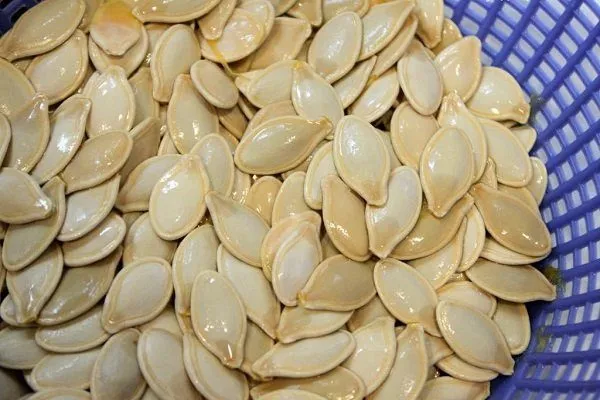
Matilda pumpkin seeds require no pre-planting preparation. Hybrid seeds are sold pre-treated.
There are two ways to plant a pumpkin:
- Seedlings.
- Directly into the ground.
The first method is used by those living in colder regions of the country. Residents of the southern regions can safely sow pumpkin seeds directly. into open ground.
To grow Matilda from seedlings, use shallow pots of varying sizes. Seeds are planted beginning in late April, depending on climate conditions and soil temperature.
The main rule for transplanting seedlings is that they must be at least one month old and the soil temperature must be at least 14 degrees Celsius. It's important to avoid frost by the time the seedlings are transplanted into open soil, but if this is unforeseen, you can cover the sprouts with plastic wrap.
Planting seeds in open ground
Algorithm for planting seeds in open ground:
- Before sowing the seeds, dig the soil thoroughly so that it absorbs as much oxygen as possible.
- Make holes, the distance between which should be at least 150 cm.
- Place the Matilda pumpkin seeds in the following pattern: 2 m by 1.5 m.
- Approximately 4 kg of seed material must be planted per 1 hectare of land.
- Place the seeds 5 cm deep.
You can try to obtain high-quality hybrid pumpkin seeds by pollinating the female flowers with male inflorescences collected from the same plant. After pollination, cover the inflorescences with gauze.
Care Features
A high yield is impossible without proper and regular care. First, care for Matilda pumpkin seedlings is essential, including watering and adequate lighting. Before transplanting the seedlings into open soil, they need to be hardened off slightly.
Plants should not be planted too close to each other, otherwise the planting will become too dense and the bushes will not receive the beneficial components they need.
How to water correctly?
Planted seedlings or seeds should be watered immediately. The next watering should be done a week later; this method allows the root system to establish itself more quickly and securely in the soil. After that, watering should be done once a week.
6 liters of water are needed per 1 square meter. As soon as the bushes bloom, needs to be watered every 4 days, 10 liters per 1 sq. m.
You can make a special furrow and pour water into it; this will help the moisture get to the plant's root system faster.
Do not pour water on the leaves and flowers; water only under the root system.
Fertilizing
Planted pumpkin is being fed Twice per season. Use ash, mullein, and various mineral fertilizers. Increased fertilizing is only justified by insufficient soil fertility.
Before flowers form, the plant needs nitrogen fertilizers; after the ovaries form, it needs phosphorus and potassium.
Fertilizing too frequently will negatively impact the plant's development. This will result in the plant producing excessive foliage but few ovaries or fruits.
Harvesting and storage
The first harvest is fastest in southern regions – 3-3.5 months after germination. After harvesting, the plant begins to set fruit again. In temperate climates, the fruit must be harvested before the first frost, otherwise it will freeze and become unfit for consumption.
The fruits should be harvested when they are technically ripe. They are not tasty at this time, and the pulp contains a large amount of starch. The harvest is kept in the cellar until fully ripe. Pumpkins are stored at temperatures above +1 degree Celsius. The fruits are not resistant to sudden temperature changes and will only last for 4 months.
- ✓ The optimal air temperature for the growth and development of the Matilda pumpkin is +22…+28°C.
- ✓ The length of daylight hours must be at least 10 hours to ensure photosynthesis.
Fruits reach biological maturity quickly, but much depends on growing conditions, including air temperature, daylight hours, and soil moisture. The better the growing conditions, the faster the fruit will ripen.
Reviews of the Matilda pumpkin
A video review of this pumpkin variety can be seen in the following video:
The Matilda pumpkin is one of the best varieties of this melon crop. It is easy to care for, produces high yields, and produces delicious, juicy fruits.