
Marina iz Kioja attracts gardeners with its unique appearance and rich flavor. This variety boasts large fruits with bright orange skin that becomes even more beautiful with age. Its high sugar content makes it ideal for various culinary experiments.
Description of fruits and plants
The bush grows vigorously and vines. It produces a sufficient number of buds, but due to the large size of the ripening fruits, it is recommended to partially thin the flower stalks.
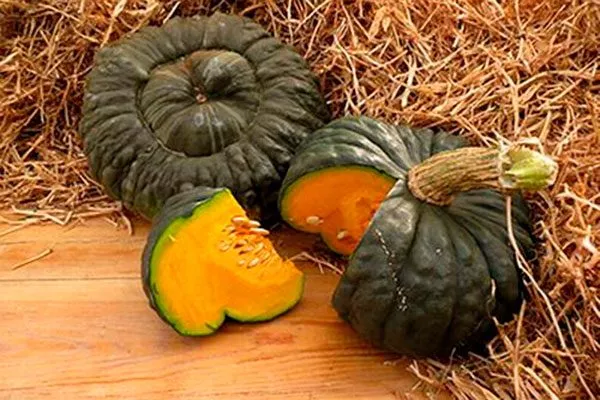
Distinguishing characteristics:
- The vegetables have a round shape, flattened at the edges, sometimes taking on the appearance of a turban.
- The weight of one fruit varies from 10 to 12 kg.
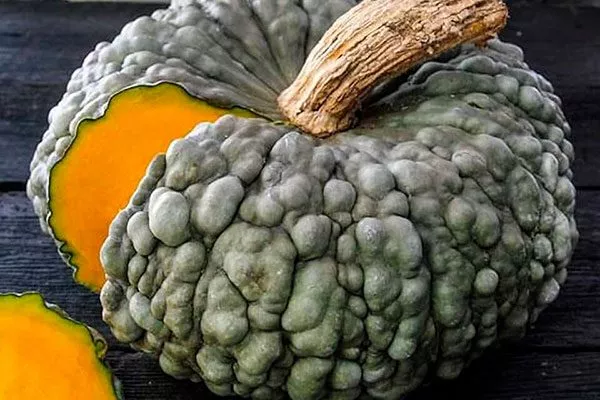
- In the early stages of development, pumpkins have a smooth skin. As they ripen, deep grooves, ribbing, warts, and wrinkles appear on the surface.
- When ripe, it takes on a color ranging from gray to blue-green.
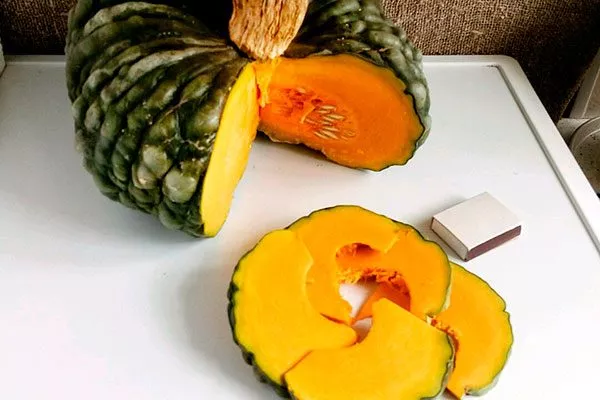
- The pulp is dense, thick, tender, slightly dry, and a rich yellow-orange color.
- ✓ The presence of deep grooves and ribbing on the skin during the ripening process.
- ✓ Skin color changes from gray to blue-green when fully ripe.
Inside, a medium-sized seed nest is formed with small seeds, the number of which does not exceed 25 pieces.
Useful properties and scope of application
This variety is prized for its high content of vitamins, minerals, and other beneficial substances. It has a rich composition:
- Vitamins A, C and E help strengthen the immune system, improve vision and skin condition.
- Potassium and magnesium support cardiovascular health.
- Fiber improves digestion, normalizes metabolism and helps remove toxins.
- Antioxidants slow down the aging process and protect the body from the negative effects of free radicals.
The cultivar is versatile and often used in cooking:
- First and second courses. The pulp is used to make cream soups, casseroles, porridges, and vegetable stews.
- Pastries and desserts. With its rich color and sweet flavor, pumpkin is perfect for pies, muffins, cheesecakes, and puddings.
- Conservation. The fruits are used to make jam, preserves and compotes.
- Drinks. Drinking pumpkin juice or adding its pulp to a smoothie makes the drink healthy and nutritious.
The vegetable is also used in other areas:
- Cosmetology. Pumpkin masks moisturize and nourish the skin, improving its elasticity and evening out its tone. Pumpkin seeds are used for hair and skin care due to their high zinc content.
- Medicine. Eating the fruit helps with anemia, vitamin deficiency, and digestive problems. It is recommended for people with heart, kidney, and liver diseases.
- Agriculture. The remaining pulp and peel are used as pet food, as the vegetable is easily digestible and beneficial for their health.
With its distinctive appearance, firm flesh and rich flavour, the Kioja Marina is ideal for both everyday consumption and fine dining.
Key Features
This is a mid-late variety. Technical maturity is reached 90 days after planting, and full maturity, at which point the pumpkin reveals its best flavor, occurs after 120 days.
Marina iz Kioja is resistant to most diseases, but is sometimes susceptible to the following problems:
- powdery mildew;
- bacteriosis;
- root rot;
- spider mite;
- slugs;
- melon aphid.
Each plant produces 1-2 fruits weighing between 3 and 12 kg. Yield is directly dependent on moisture, warmth, and sunlight. For successful fruit development, it's important to ensure timely pollination of the flowers.
How to grow?
This cultivar is successfully grown both by direct sowing of seeds in open ground and by using seedlings. The choice of method depends on the regional climate. Since this variety ripens late, the plants need sufficient time for the fruit to ripen before the first frost.
Planting by seeds
In areas with warm Septembers, plant seeds outdoors in late May. In regions with cooler autumns, it's preferable to grow pumpkins from seedlings, beginning with seeding in April.
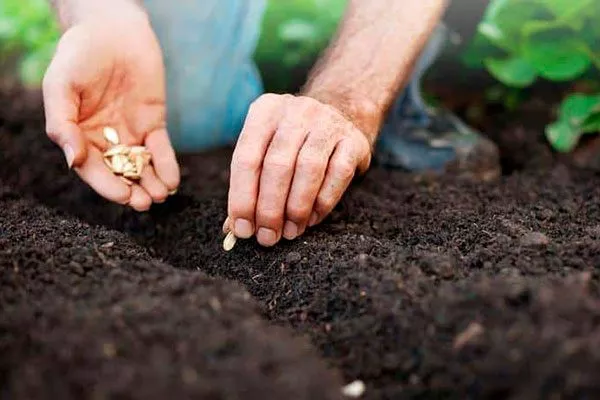
When sown outdoors, the vegetables ripen by the end of August. However, to fully develop their flavor and reach their optimal size, the fruits will need another 2-3 weeks, provided the summer is warm and sunny.
An old compost or manure pile is considered the best place to plant pumpkins, as it provides the plant with the maximum amount of nutrients. Keep in mind that such soils absorb moisture well, so water the plants regularly and thoroughly.
Preparation of planting material:
- Selection. Soak the seeds in a salt solution (3 tablespoons of salt per 1 liter of water) for 5 minutes. Stir, and select the seeds that sink to the bottom—they're viable. Rinse them with clean water and dry them. Discard any that float to the surface.
- Warming up. Heat in the oven for 2-3 hours, gradually increasing the temperature to 60°C. Then soak in a wood ash infusion (2 tablespoons of ash per 1 liter of warm water) for 10 hours.
- Germination. Wrap the seeds in a damp cloth, place them on a saucer and leave at room temperature until they hatch, maintaining moisture.
- Hardening. Place the sprouted seeds in a damp cloth on the bottom shelf of the refrigerator for 12-18 hours, then remove them for 6-8 hours. Repeat this cycle for a week.
You can start sowing:
- Plant seeds when the soil temperature at a depth of 12 cm reaches +10°C.
- Place 2-3 seeds in each hole 5-10 cm deep, then leave the strongest sprout and cut off the rest.
- Pour 1 liter of warm water into each hole.
Planting with seedlings
Prepare seeds for growing seedlings in the same way as for planting in the ground. Then follow these recommendations:
- Mix 5 parts rotted peat, 3 parts composted manure, 1 part turf soil, and 1 part cow dung. Moisten the mixture and distribute it among 10x10x10 cm containers.
- Place one seed 3 cm deep in each container, then lightly moisten with warm water. Cover the containers with plastic wrap or glass and keep at a temperature of 15-17°C at night and 20-25°C during the day until seedlings emerge.
- Transfer the seedlings to a well-lit indoor environment. A week before planting, begin hardening them off by reducing the temperature to 15-18°C during the day and 12-14°C at night.
- Two weeks after germination, feed the seedlings with a solution (1 teaspoon of superphosphate + 0.5 teaspoon of urea per 1 liter of water). Consumption: 100 ml per plant. After another two weeks, use a different solution (1 teaspoon of nitrophoska + 1 teaspoon of wood ash per 1 liter of water).
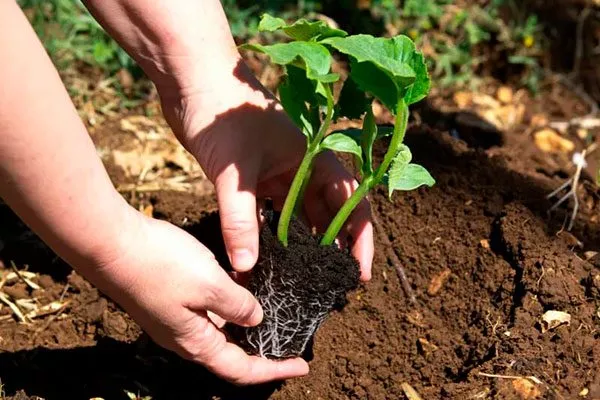
Plant seedlings with 2-3 true leaves in holes deep enough to reach the cotyledon leaves. Water the plants generously with warm water and shade them for a few days to facilitate adaptation.
Care
Caring for the crop is easy if you prepare the soil in advance. This can be done in two ways:
- In the fall, add organic and phosphorus-potassium fertilizers when digging, and in the spring, add nitrogen fertilizers.
- Before digging in the spring, prepare a mixture of 20 kg of humus, 5 kg of sawdust, 20 g of nitrophoska, and 1 liter of wood ash. Apply this mixture on the day of planting or the day before.
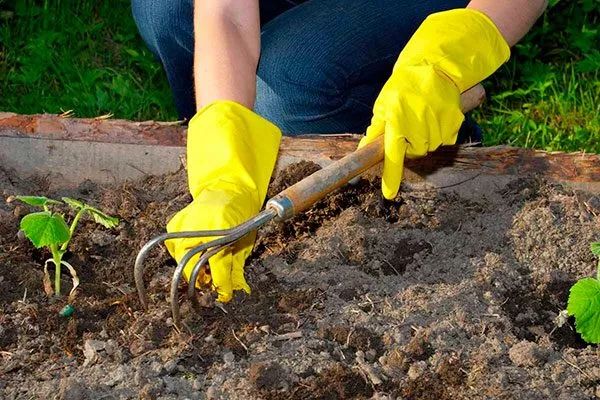
Further care:
- Loosen the soil regularly until the plant has developed full leaves to improve root formation.
- Water generously but infrequently during the period of growth of foliage and fruits, reducing watering during flowering.
- Feed every two weeks with mullein infusion.
- Remove weeds regularly.
- To pollinate by hand, pick several male flowers, remove the petals, and rub the anthers over the stigma of the female flowers, repeating the process several times.
- For optimal growth, leave 2-3 shoots, pinching them when they produce 2-5 large ovaries (15-17 cm). There should be at least 5 leaves above each ovary.
In damp weather, the fruits may rot, so place a plastic board underneath them.
Features of cultivation and possible difficulties
The main difficulty in growing the Marina iz Kioja pumpkin is its late ripening period. If you delay planting, the vegetables may not have time to ripen. Therefore, it's important to strictly adhere to the following timing:
- Sowing seeds for seedlings is in April.
- Planting seeds in open ground is at the end of May.
Growing tips from experienced gardeners
For full growth, the Marina iz Kioja pumpkin requires plenty of space, as its large bushes form vines that can spread over 5 meters. For this reason, experienced gardeners recommend:
- Apply fertilizer regularly to support plant growth and development.
- Provide the pumpkin with sufficient moisture, especially during the period of active fruit formation.
Following these recommendations will allow you to grow strong plants and get high-quality vegetables.
Diseases and pests
The cultivar is easy to grow and has good immunity to plant infections. However, there are a number of diseases that can affect the plant:
- Powdery mildew. It manifests itself as white spots on the leaves. To treat, treat the plantings with sodium phosphate.
- Bacteriosis. It develops in high humidity and appears as light green spots that darken over time, dry out, and develop into holes. Spray affected plants with Bordeaux mixture.
- Root rot. Affects the root collar, often caused by sudden temperature changes or cold watering. Control measures include replacing the top layer of soil around the roots and treating the affected area with ash or crushed charcoal.
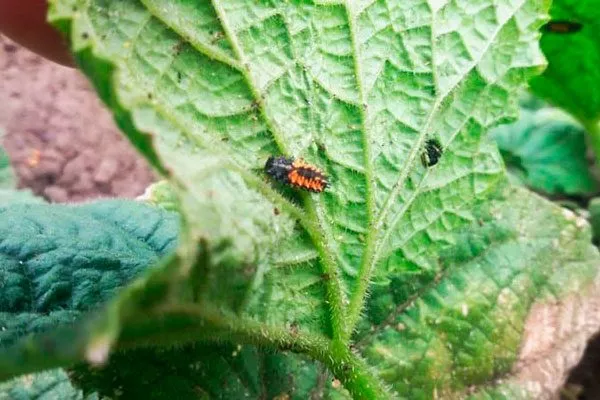
Plants may suffer from pest attacks. Use garlic infusion to combat spider mites and melon aphids, and remove slugs by hand or kill them with Mega and Groza.
Harvesting and storage
Harvest vegetables no earlier than late September, before the onset of frost, in dry weather. Follow these recommendations:
- After harvesting, leave the fruits in a moderately warm room for 1-2 weeks to ripen.
- Carefully remove the pumpkin, leaving a stem at least 10 cm long.
- Only fully ripe specimens with thick and intact skin are suitable for storage.
- Vegetables with thin skins that have not yet fully ripened can be used for processing or fed to animals.
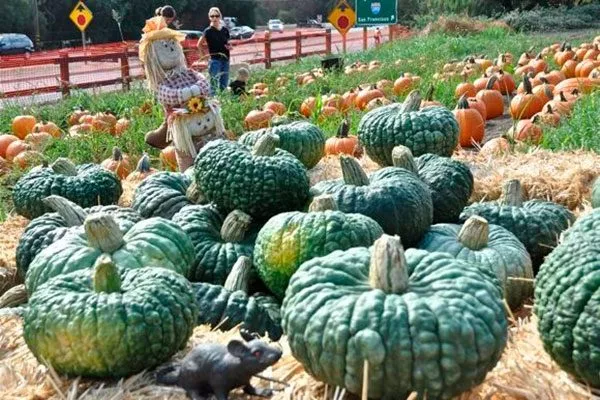
This cultivar has excellent shelf life—under the right conditions, the fruits retain their flavor for up to 1.5 years. During storage, their sugar content increases, and the skin gradually turns bright orange.
Pros and cons
Before growing a crop, carefully study its positive and negative qualities to avoid potential difficulties. The advantages of the Marina iz Kioja variety include:
Among the negative characteristics, gardeners note a long ripening period, difficulties in peeling the ribbed skin and cleaning the soil from the holes and furrows of vegetables.
Reviews
Marina from Kioja impresses with its flavor and excellent shelf life. The fruits have an attractive appearance and a pleasant taste. Growing pumpkins is quite simple, but it's important to follow certain guidelines to boost the plant's immunity and increase its chances of growing larger. Careful care and proper planting timing will help you achieve a great harvest.