
The Hazelnut pumpkin is one of gardeners' most beloved and unusual varieties, earning its reputation thanks to its distinctive, nut-like flavor. The fruit contains a wealth of beneficial minerals that boost the immune system.
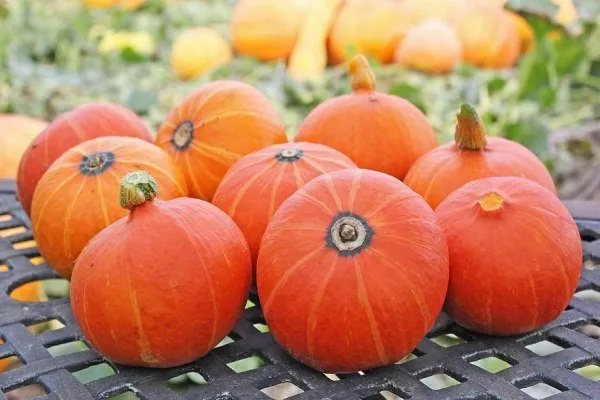
Hazelnut Pumpkin
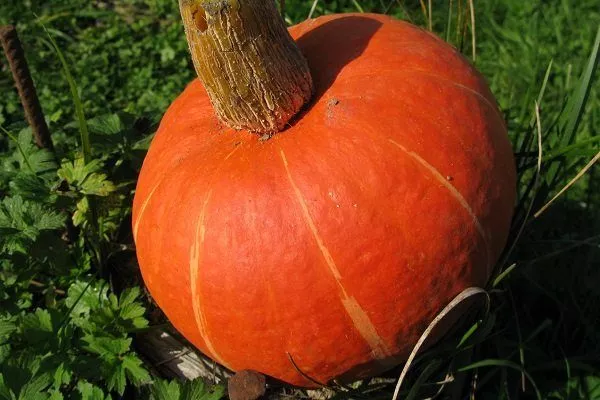
Hazelnut pumpkin has a long shelf life
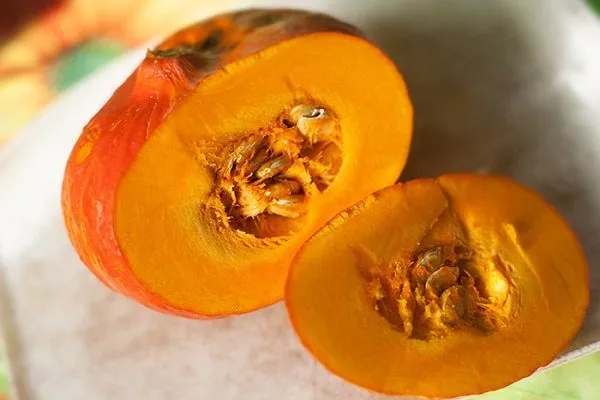
The Hazelnut pumpkin has a sweet, aromatic flesh.
Description and characteristics of hazelnut pumpkin
The main feature of this variety is its unrivaled pumpkin flavor with a nutty note.
- ✓ The variety has high drought resistance due to its deep root system.
- ✓ The fruits have a unique nutty flavor that intensifies after proper storage.
Main characteristics of pumpkin:
- Pumpkin easily tolerates dry days; its root system penetrates so deeply that it can obtain moisture for itself.
- It belongs to the early varieties, the harvest is produced on the 100th day after emergence.
- The foliage is large and lush.
- The weight of one fruit is approximately 1.2-1.4 kg, there are pumpkins weighing up to 2 kg.
- The skin is dark orange in color, with a red tint.
- The peel walls are very thick, so the fruits are stored for a long time and are not damaged during transportation.
- The pulp is relatively sweet and very aromatic.
- The shoots are developed and reach 4-5 m in length.
- Inflorescences are orange in color.
Advantages and disadvantages of the variety
Advantages of the variety:
- the fruits retain their appearance for a long time;
- average yield;
- versatility of use in cooking;
- undemanding in constant watering and care;
- good transportability;
- compactness, medium fruit size;
- long shelf life;
- Thanks to its high starch content, pumpkin does not fall apart or become overcooked.
Features of planting and growing
Even a novice gardener can grow the Hazelnut pumpkin. However, it's important to follow the standard guidelines.
Landing time
Pumpkins are planted using two methods: seedlings and directly into the ground. Seedlings are sown in mid-April, and transplanted seedlings are transplanted. into open ground They are carried out a month later. By this time, the weather should have stabilized and the soil should have warmed up to 15 degrees.
By mid-May, spring frosts will no longer return, so you can transplant the pumpkin into open soil.
If sowing outdoors, it should be done in mid- to late May. Specific planting dates vary depending on the regional climate and weather.
Selecting a location and soil
The Hazelnut pumpkin is an easy-to-grow crop; it can grow in any soil, but fertile soil is best. A member of the melon family, it requires as much sun as possible. Choose sunny, warm locations.
- ✓ The optimal soil pH level should be between 6.0-6.8 for maximum nutrient absorption.
- ✓ The soil must have good drainage to avoid water stagnation and root rot.
Don't forget about crop rotation rules: don't plant pumpkins after other melons (wait 5 years). Diseases from some melons can quickly spread to and destroy other melons.
Pumpkins produce an excellent harvest when planted after green manure crops such as cabbage, soybeans, peas, beets, beans, lentils, and peanuts. Avoid planting pumpkins after zucchini, potatoes, cucumbers, and sunflowers.
Prepare the soil in the fall:
- First, remove the soil: pull out all the grass, dig up the soil and loosen it.
- Add organic fertilizer to unfertilized soil: 5 kg of rotted manure or compost per 1 sq. m.
- If the soil is acidic, then you need to add 300 g of ash, 30 g of phosphorus and 20 g of potassium per 1 square meter.
- In the spring, as soon as the snow has completely melted, remove any remaining weeds and dig the soil to a depth of about 60 cm.
After completing these procedures, level the area with a rake. Make the beds high; heavy soil should be compensated for by making each bed at least 0.25 m high. Leave 50 cm between the beds.
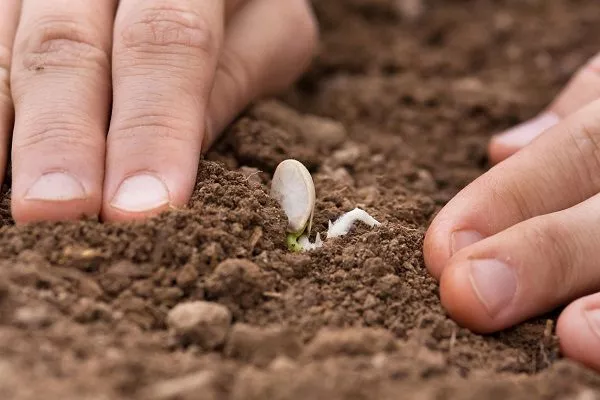
Sowing seeds in open ground
Seed sowing algorithm:
- Prepare the seed. First, treat it with a weak solution of potassium permanganate. This process takes about an hour, then let it dry.
- Before sowing, dig up the beds thoroughly and add organic fertilizer to the soil.
- Make holes of varying sizes (from 5 to 12 cm) in the soil. This method will help you save more seeds.
- As soon as you plant the seeds, mulch the bed using straw or sawdust.
- Cover the crops with plastic film, removing it every day for a couple of hours to allow air to air out. Remove the covering material completely when the air warms up and the soil becomes tepid.
Seedling method
This method is more effective because the seedlings take root faster. It's suitable for northern regions. It's best to plant the beds on the south side of the plot.
Pumpkin growing algorithm using seedlings:
- Prepare the soil mixture. The soil for seedlings should be permeable; you can buy it or make it yourself from equal parts sand, soil, and peat.
- Find seedling containers. Peat pots or cardboard cups are suitable. Peat pots can be planted directly into the soil, so the seedlings' root system won't be damaged during transplantation.
- Place 2-3 pumpkin seeds in each glass and water the soil lightly.
- Wait for the first shoots to appear, then transplant them – remove weak shoots and leave only 1 seedling in each glass.
After the first shoots appear, a month must pass, and then the seedlings are transplanted to a permanent location.
Hazelnut Pumpkin Care Guide
This variety is low-maintenance, but without watering, loosening the soil, and weeding, the pumpkin will die. Monitor the plant's growth and behavior; if you notice it wilting or changing its appearance, you need to reconsider your care. Changes in plant development can be caused by a lack of beneficial minerals and components, as well as over- or under-watering.
Basics of watering
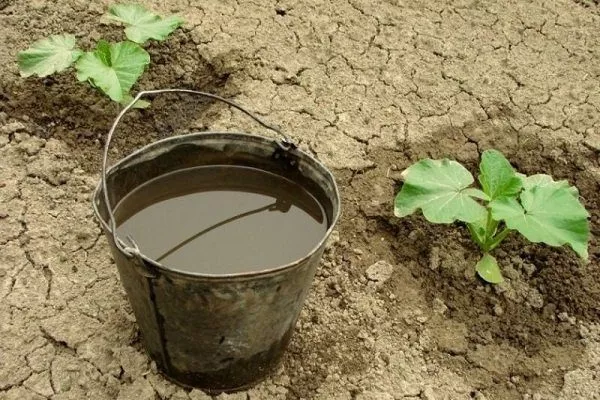
Despite the fact that the Hazelnut pumpkin is able to obtain its own moisture, it still watering The plant prefers irrigation and moist soil, but excessive moisture is unacceptable, as it can be susceptible to various fungal diseases.
Each plant requires 6-9 liters of water, watering in the evening or morning. Stop watering during fruit ripening to avoid excessive waterlogging.
Pollination
Pollination occurs naturally, with bees acting as pollinators. Just make sure there are equal numbers of male and female flowers on your plants.
Fertilizers: types and quantities
For the first 10 days after planting, pumpkins don't need any fertilizer, especially if you've fertilized the soil beforehand. Fertilize with nitrogen, potassium, and phosphorus. The amount and timing of application depend on the plant's development. Avoid overdoing it with nitrogen, as it's responsible for the development and growth of foliage, and too much will prevent the pumpkin from bearing fruit.
Pumpkin loves organic fertilizers, which are added during planting, growth, and development. pumpkin fertilizing include rotted manure, humus, droppings and compost.
Fertilizer application rates per 1 sq.m:
- Organic: 5-6 kg.
- Minerals: potassium (15-22 g), phosphorus (24-32 g).
- Complex: 60-65 g.
Pinching out stepsons
This procedure is only performed if the vines are growing very quickly. If the pumpkin is spending a lot of energy producing greenery and is not producing fruit, pinching is necessary:
- there should be 3-4 ovaries left on each shoot;
- When cutting the whip, make sure that there are at least 4 leaves above the last ovary.
Harvesting and storage
The fruits can remain in the area until the first frost, so harvesting can be postponed until mid-September, depending on the region where the plant is grown.
Fruits are considered ready for harvesting if:
- the stalk is dense and hard;
- the color of the fruit is rich;
- the pumpkin is hard with a thick skin;
- the leaves turn yellow and wither.
Hazelnut pumpkins are perfect for display in an apartment or even a kitchen, making them ideal for use as a decorative element. Their compact size and light weight mean they don't require a lot of space. storing pumpkins, and they will last for about 8 months.
Diseases, pests and prevention
The Hazelnut pumpkin variety is a hybrid, so it has a fairly strong immune system and is not susceptible to pest attacks.
Common pumpkin diseases and pests and control methods:
| Pests/diseases | Symptoms of damage | What to do? |
| Anthracnose | The appearance of yellow-brown spots on the leaves. | Before sowing, treat the seeds with an ash infusion (20 g per 1 liter). It's impossible to get rid of the disease; only preventative measures will help. |
| Powdery mildew | A fungal disease that causes small white spots to appear on the leaves. | Treat the bushes with colloidal sulfur (25 g per 10 liters of water). Burn all heavily infested bushes. |
| Aphid | Whole colonies of aphids settle on leaves and stems. | Use an infusion of chamomile and wormwood. |
To combat these diseases, you can also use an unsaturated solution of Bordeaux mixture or a product based on laundry soap.
Chamomile and wormwood infusions help get rid of aphids. You can sprinkle pumpkin leaves with ash, which will repel pests for a long time. Potato peel infusions also help repel insects.
You can see what the Hazelnut pumpkin looks like and learn about its cultivation in the following video:
Reviews of Hazelnut Pumpkin
Growing the healthy and delicious Hazelnut pumpkin in your garden is easy. It requires little care, has a strong immune system, and is tolerant of sudden temperature changes and weather conditions. This pumpkin variety produces a rich and reliable harvest.