
Large-fruited pumpkins are prized for their excellent flavor and rich vitamin content. Many varieties are known today. The largest specimens can weigh over 100 kg, while the smallest ones weigh less than 1 kg. Learn about growing and caring for these plants in this article.
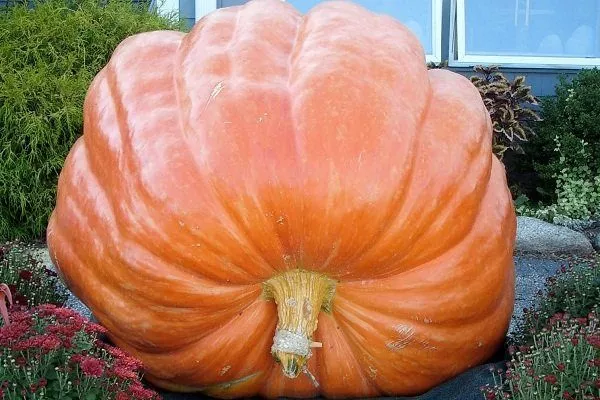
Large-fruited pumpkins can weigh up to 100 kg.
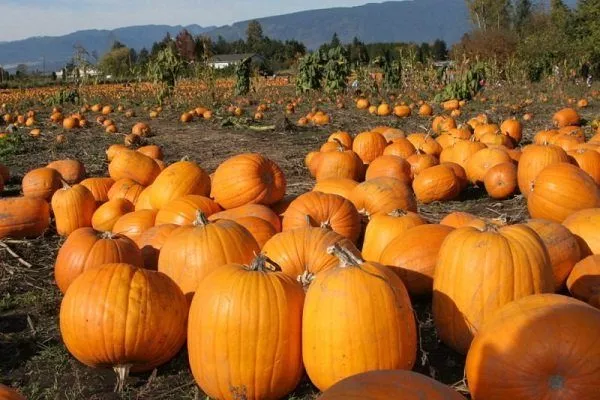
Large-fruited pumpkin
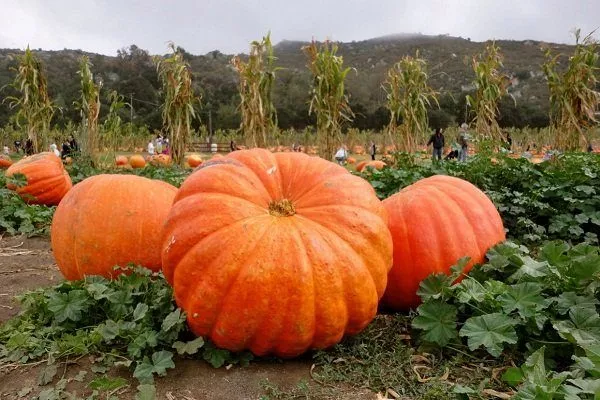
Large-fruited pumpkin has a very sweet taste.
Description
The large-fruited pumpkin is considered to have originated in tropical America. It only appeared in Europe in the 16th century. Today, this variety is popular throughout the world.
Among the main parameters:
- Weight. Large-fruited pumpkin varieties weigh between 0.5 and 100 kg, with the average being 50 kg.
- Bush. The leaves are large and dark green.
- Fruit. They can be round, elongated, or oval. Color ranges from white to bright orange or greenish. The seeds inside are milky or brownish in color.
- Taste. Generally not very sweet, but some varieties have sugar content that exceeds watermelon.
- Benefit. Large-fruited pumpkins are often used for medicinal purposes. They have laxative and diuretic effects and are also rich in vitamins.
- Ripening periods. Most varieties mature within 80-140 days after planting.
- Storage. These fruits have a strong fleshy skin, making them suitable for long-term storage. storage and long-distance transport. They are valued for their resistance to low temperatures and ease of care.
Features of cultivation
There are several key points to consider when growing pumpkins.
Seed preparation
Before landing, preparation is necessary:
- Sorting. Sort the seeds, select only the largest ones. Remove any damaged or empty ones.
- Heating. Spread the selected material in a layer no more than 10 cm thick. Heat for about 5 hours at a temperature of 40 degrees.
- Soak. Mix 1 liter of water with 2 tablespoons of ash. Throw in the seeds and wait 10 hours.
- ✓ The water temperature for soaking seeds must be exactly 40 degrees, otherwise the effectiveness of growth stimulation is sharply reduced.
- ✓ The ash concentration in the seed soaking solution should be 2 tablespoons per 1 liter of water; exceeding this concentration may negatively affect germination.
Gardeners recommend placing the seeds in a cool place for a few additional hours.
You can avoid carrying out the described procedures if you take seeds that have been stored for 2-3 years after harvesting.
To prepare them for planting you need to:
- put in water at 40 degrees for 3-4 hours;
- wrap in a damp cloth and leave for 2-3 days, constantly monitoring the humidity level.
All the above manipulations are necessary for 2 reasons:
- Growth stimulation. Sprouted seeds produce shoots faster.
- Protection. They become more resistant to pests.
Choosing a landing site
When choosing a location in the garden bed, you need to consider the following features:
- Location. It's best to grow pumpkins in a sunny, wind-protected area. A south-facing spot is ideal.
- Availability of support. Most varieties tend to weave, so provide support in the form of a wall or fence.
- The right soil. The soil must be nutritious and loose, since pumpkin grows poorly in acidic soil.
In the fall, the soil should be dug over and fertilized. You'll need compost and superphosphate. Apply 4 kg of compost and 30 g of superphosphate per square meter. Lime will help reduce soil acidity.
- Predecessor cultures. It is better to plant after tomatoes, beans or carrots.
It is not recommended to plant in a bed where cucumbers were previously grown.
- Neighborhood. Pumpkin grows well next to beans and corn.
Planting seeds
Large-fruited pumpkin seeds can be planted in two ways.
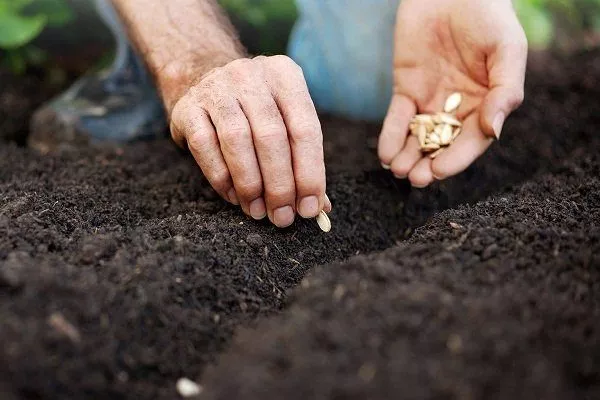
Into open ground
This is usually done in April. Ensure there is at least 1 m between plants. Dig a hole 3 cm deep and plant 2-3 seeds.
Sowing seeds in open ground is more suitable for residents of southern regions.
Seedling
The procedure is carried out 20 days before planting in the ground.
There are several stages of planting seedlings:
- Preparing the soil. It should consist of peat and sand. The soil is moistened before and after planting.
- Capacity. It's best to use separate pots. Ideally, they should be made of peat to avoid damaging the roots during repotting. If they're plastic, it's best to line the bottom with a layer of sawdust.
- Landing. For seedlings, plant 2 seeds per container at a depth of 2 cm.
- Temperature. For 1 week after planting the seeds for seedlings, you need to maintain a temperature of about 25 degrees, then reduce it to 18.
- Care. After two weeks, you need to add fertilizer. Cow manure mixed with water in a ratio of 1 to 10 is suitable.
Planting seedlings
If the seedlings are ready for planting, they meet the following characteristics:
- Stem. Thick and strong enough.
- Leaves. At least 3-4 strong leaves on each plant.
Rules:
- Before planting, the soil in the garden bed must be watered with hot water;
- a pattern is used similar to that used for sowing seeds, but the holes are dug to a depth that will accommodate the plant root or a peat pot;
- If the seedlings grew in peat pots, there is no need to remove them, just slightly reduce the volume of the bottom and sides;
- the seedlings should be deepened into the ground up to the cotyledons and watered again;
- To provide protection, the seedlings are covered with film.
Formation of bushes
When forming bushes, follow these recommendations:
- the pumpkin is formed in the form of a single stem;
- to avoid overgrowth, the top bud is pinched off before the inflorescences appear;
- Excess shoots should be removed as soon as they reach 7 cm;
- no more than 3 ovaries are left.
Proper shaping will help direct all the bush's energy towards the growth of fruits, not shoots.
Care
The rules of care require special attention.
Watering
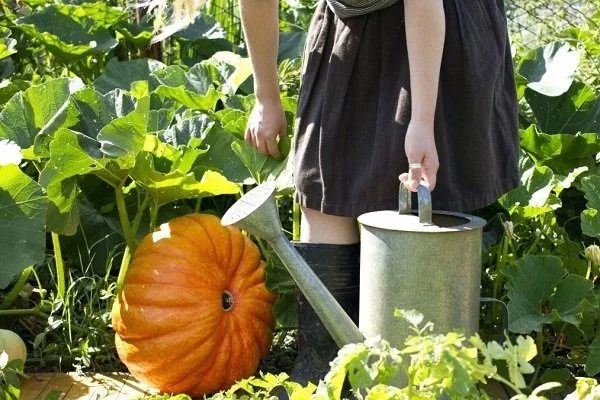
Watering the pumpkin It is necessary to water it often, especially during the flowering and fruit formation period, when the plant requires more vital energy and uses water more intensively.
Watering features:
- the optimal water temperature is 20 degrees;
- 1 adult plant requires about 1 bucket of water;
- If you pour cold water on a pumpkin, it may die;
- in hot weather the plant should be watered every other day;
- The soil moisture level must be monitored constantly.
Top dressing
Fertilizers should be applied immediately after loosening the soil.
Please take into account:
- Growth rate. If the plant is growing slowly, nitrogen can be added as early as 20 days after planting. Phosphate and potassium are needed for better fruit development.
- The weather. In rainy weather feed the pumpkin dry fertilizers, while in dry conditions, on the contrary, liquid ones.
- Time. During the growth period, the following fertilizers are added:
- 1st – carried out as soon as the 5th leaf has formed. Apply mineral or organic fertilizers.
- The second application is after the ovaries have formed. Superphosphate or ash are suitable. Ash is needed at a rate of 300 g per 1 sq. m.
- First feeding: 10 days after emergence, use a solution of mullein (1:10).
- Second feeding: at the beginning of flowering, add superphosphate (30 g per 1 sq. m).
- Third feeding: during the period of fruit formation, use ash (300 g per 1 sq. m).
Powder
This is another way to improve pumpkin growth and development. When the plant's vines reach 1 m, carefully untangle them and arrange them in the same direction. Then, cover the vines with soil every 30-40 cm. This will help protect the stems from strong gusts of wind and provide additional nutrition.
Pollination
Pumpkins, like any other flowering plant, are pollinated by bees. But if the insects rarely visit your plot, you can carry out the procedure yourself. To do this:
- pick a "male" flower;
- remove all the petals from it;
- apply to the "female" part for a few seconds.
It is recommended to carry out the procedure in the morning, when the flowers open.
Protection from diseases and pests
Among the insects that can be dangerous for large-fruited pumpkins:
- Melon aphid. They attack leaves and ovaries, causing them to curl and rot. The insects have an oval-shaped body and are yellowish or greenish in color.
To get rid of them, you need to pay special attention to removing weeds. You can also spray the pumpkin with a mild soap solution.
- Spider mites. Insects suck the sap from pumpkin leaves, making them wither, and then cover them with webs. This leads to the complete wilting of the plant.
Spraying with onion or garlic infusions will help deal with ticks.
- Woodlice. They attack plants starting from the bottom.
Constant monitoring of humidity levels will help prevent this from occurring.
- Springtails. They damage the leaves by gnawing holes in them.
Timely loosening will help against pests.
The following diseases also need to be monitored:
- Root rot. It is a fungal disease that leads to the death of the root system, cessation of plant growth and its wilting.
To avoid the development of the disease, it is necessary to control the quantity and quality of water and maintain the optimal frequency of feeding.
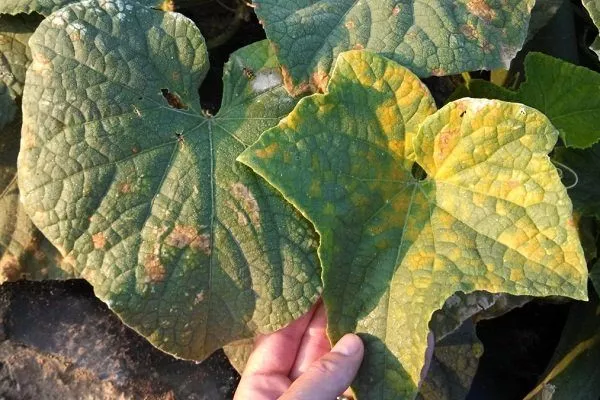
- Anthracnose. The plant is covered with brownish spots, starting from the leaves. Over time, these begin to rot and fall off.
Timely removal of diseased plants will help prevent the spread of the disease.
- Olive spot. Water-soaked spots appear on the surface of the bush and quickly increase in size. This leads to the death of the ovaries and changes in the shape of the fruit.
It can be prevented by spraying the plant with Bordeaux mixture.
- Powdery mildew. Initially, small light spots appear on the leaf surface, gradually merging into one. The disease eventually leads to leaf death. Fungal spores may be present in the soil or carried by the wind.
To prevent this, you need to pay attention to soil preparation and spray the plant with hay infusion.
- Mosaic. The leaves become covered with spots ranging from white to greenish.
Insects can be carriers of the virus, so it is necessary to protect the pumpkin with insecticides.
Additional tips
The following recommendations will help protect fruits from damage:
- For hanging fruits. If pumpkin vines climb a fence, it's quite natural for the resulting pumpkins to hang above the ground. Given their large size, this could damage the stems and cause the pumpkins to fall. Therefore, it's best to be on the safe side and secure them in sturdy mesh bags to the fence until they ripen.
- For lying fruits. Pumpkins left on the ground, especially during periods of high humidity, are vulnerable to rot and insect attacks. These problems can be avoided by placing a board or sheet of plywood under the pumpkin.
Harvesting and storage
The pumpkins should be harvested from the garden before frost sets in. It's best to do this on a dry, sunny day, but if the weather is rainy, keep the pumpkins under cover to dry before storing.
In this case, the following rules are followed:
- Cut the pumpkins carefully using sharp scissors or a knife. Do not pick the pumpkins. Leave 3-5 cm of the stem.
- It's recommended to harvest pumpkins when they're ripe. These fruits have thick skins that don't dent when pressed.
- If the pumpkin hasn't had time to ripen yet and frost has already arrived, you can keep it in storage until conditions improve, and then take it outside for 20 days and leave it in the warm sun.
- Store the harvest in a cool, dry place. If all conditions are met, you can enjoy the fruits all winter long.
The best varieties
There are several popular varieties of large-fruited pumpkin.
| Name | Disease resistance | Soil requirements | Ripening period |
|---|---|---|---|
| Titanium | High | Nutritious, loose | 140 days |
| Dawn | Average | Black soil | 110 days |
| Baby | Low | Sandy | 80 days |
| Parisian gold | High | Nutritious | 115 days |
| Candy | Average | Black soil | 110 days |
| Chit | High | Sandy | 115 days |
| Big Max | Average | Nutritious | 130 days |
| Little Red Riding Hood | High | Black soil | 100 days |
| Russian woman | Low | Sandy | 100 days |
| Sweet chestnut | Average | Nutritious | Early |
| Atlas | High | Black soil | 140 days |
| Pampushka | Low | Sandy | 110 days |
| Corkus | Average | Nutritious | 110 days |
| Azure | High | Black soil | 115 days |
Titanium
Among the characteristics of the variety:
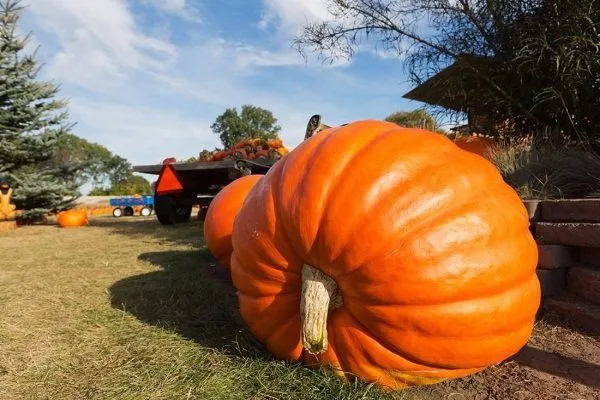
- Size. One of the largest representatives of this variety. The average fruit weight is 100 kg, but under good conditions, even more can be grown.
- Bush. Titan produces long, spreading vines, so plants are usually planted at a distance of 2 m from each other.
- Ripening periods. It ripens, on average, within 140 days.
- Fruit. The shape is round, with several segments. The skin is usually orange.
- Pulp. It's slightly darker in color than the shell. It contains few seeds. The flavor is pleasant, but somewhat bland. Therefore, this variety is usually grown by those who want truly large fruits.
Dawn
Parameters:
- Size. The weight of the fruits usually does not exceed 7 kg.
- Ripening periods. The harvest can be obtained within 110 days after emergence.
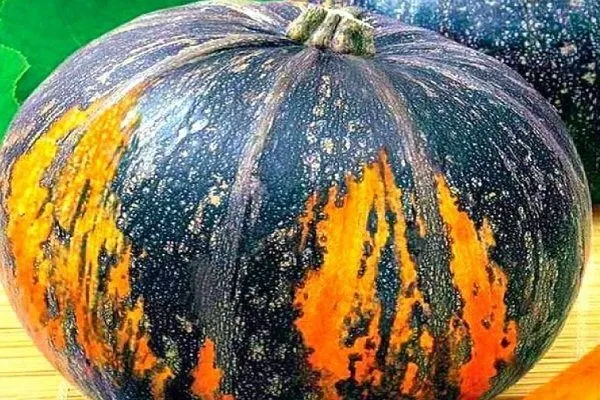
- Fruit. They have a rounded, slightly flattened shape with a segmented surface. Their skin is decorated with a pattern of dark and orange stripes.
- Pulp. It's bright orange in color. It has a good density, but isn't particularly juicy. However, this doesn't affect its excellent taste. It's rich in vitamins.
- Productivity. It has a good yield. Under the right growing conditions, 300 centners of pumpkin can be harvested from one hectare.
Baby
Description of the variety:
- Size. It may weigh only 3 kg, but this does not make the pumpkin the smallest representative of its variety.
- Bush. Small, with neat leaves.
- Ripening period. Reaches maturity quickly – just 80 days after planting.
- Fruit. The shape is flattened. The skin color is gray with a brown tint.
- Pulp. Orange in color. It has excellent flavor characteristics—crisp and sweet, containing a large amount of carotene.
- Productivity. Very small. Only 3.5 kg of pumpkin can be harvested from 1 square meter.
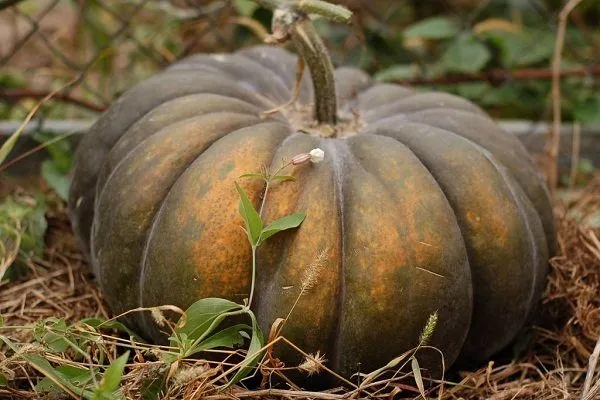
Parisian gold
Peculiarities:
- Size. Pumpkins can reach 15-20 kg in weight, but the average is 10 kg.
- Bush. It grows on large, spreading bushes with long shoots.
- Ripening period. The harvest can be obtained as early as 115 days after germination.
- Fruit. The shape is round, flattened, segmented.
- Pulp. Yellowish-orange in color, dense, and slightly sweet. Its flavor does not spoil, but rather improves with long-term storage.
- Taste qualities. The fruits have a high nutritional value. They can be used to make juices, purees, boiled, and baked.
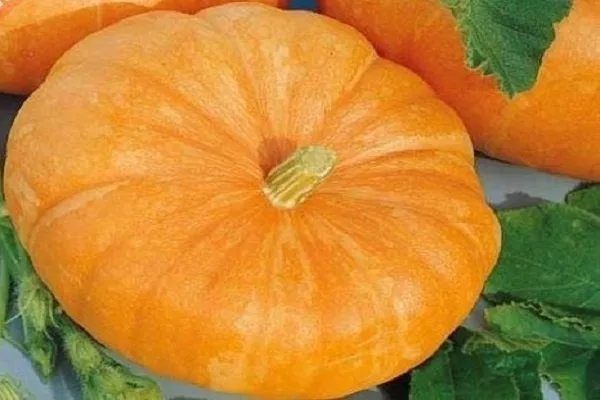
Candy
What is remarkable about the variety:
- Size. Compared to other members of this variety, this pumpkin is small, weighing only 2.5 kg.
- Bush. It has numerous long stems. The plants have large, bright green leaves. Each bush can bear up to 8 pumpkins.
- Ripening period. Ripens in 110-115 days.
- Fruit. The shape is round. The color is rich, reddish-orange.
- Pulp. Orange in color, dense, crunchy, and rich in juice, making it ideal for eating raw.
- Productivity. The harvest is high on black soils. Almost 500 centners of pumpkin can be harvested from one hectare.
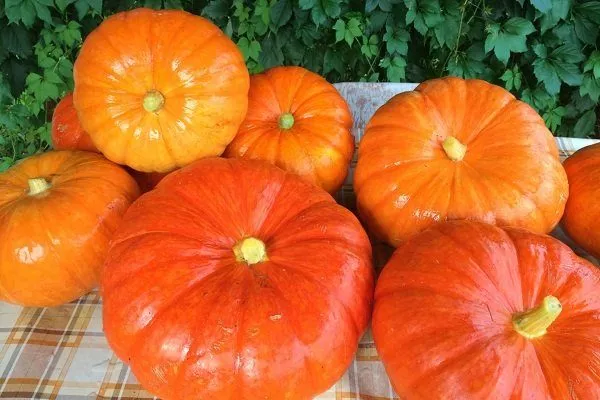
Chit
Please pay attention to the following features:
- Size. The fruits are quite small, weighing no more than 3 kg.
- Bush. Medium size with long spreading shoots and large green leaves.
- Ripening period. Chit reaches maturity in 115 days.
- Fruit. Round, neat, segmented. The outer color is greenish-gray. When fully ripe, the skin is very thick.
- Pulp. Bright orange. It has an excellent flavor. Thanks to its sugar content, it can be used to make jam.
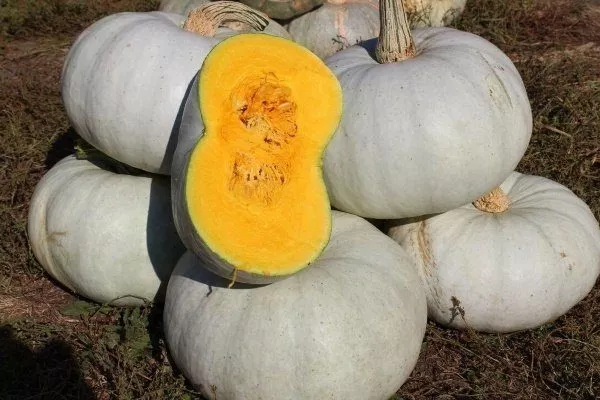
Big Max
What you need to know:
- Size. In good conditions, the fruit weight reaches 20 kg, but on average, you can grow a pumpkin weighing up to 10 kg.
- Bush. The plant is characterized by its high climbing habit. The leaves are large and light green.
- Ripening period. The fruits can be harvested 130 days after planting.
- Fruit. The shape is round, without clearly defined segments. The skin is orange, interspersed with cream-colored spots.
- Pulp. Bright orange in color, it has low dry matter, is dense, and slightly sweet.
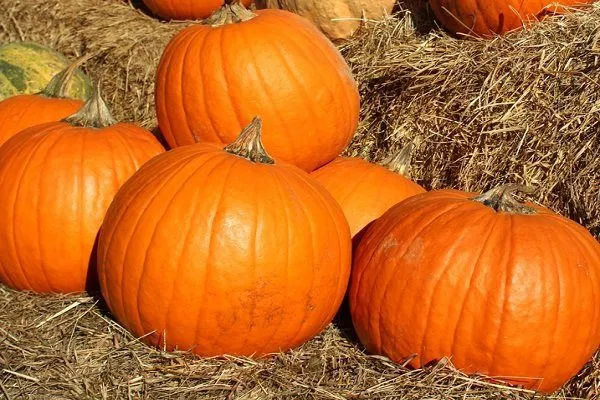
- Productivity. Quite high. You can harvest about 700 centners per hectare.
Little Red Riding Hood
Distinctions of this variety:
- Size. They grow to a weight of up to 5 kg.
- Bush. Compact, with shoots that can reach 4 m in length. The shoots are quite tenacious and will completely encircle the support.
- Ripening periods. They ripen quickly, in just 100 days.
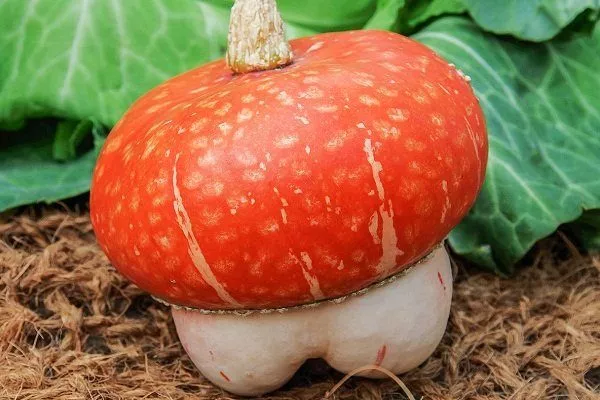
- Fruit. Due to its striking appearance, this variety is often used as an ornamental. The fruits are shaped like a mushroom or a head with a "cap" on top. This also accounts for the distinctive color of the skin. The pumpkins are light-colored on the bottom and bright orange on the top.
- Pulp. Orange. It has a good flavor. It can be eaten raw or in prepared dishes.
Russian woman
What's interesting about the variety:
- Size. It can reach 4 kg, but more often fruits weighing no more than 2 kg are collected.
- Bush. Compact, with small, neat lashes.
- Ripening period. Early ripening. Fruit can be harvested as early as 100 days after planting.
- Fruit. The shape is wider at the top and elongated towards the bottom. The skin is a bright orange color with barely noticeable furrows.
- Pulp. Orange, dense, and pleasantly flavored, it's used in a variety of dishes and eaten fresh.
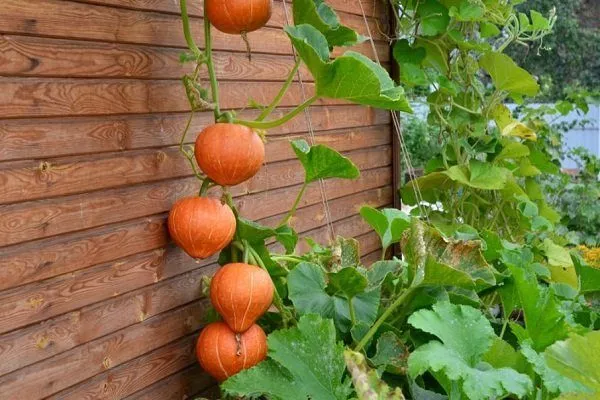
You can see the fruits of the Rossiyanka variety and learn about its main characteristics by watching the video below:
Sweet chestnut
The following facts are known about the variety:
- Size. Very small pumpkins, weighing less than 1 kg.
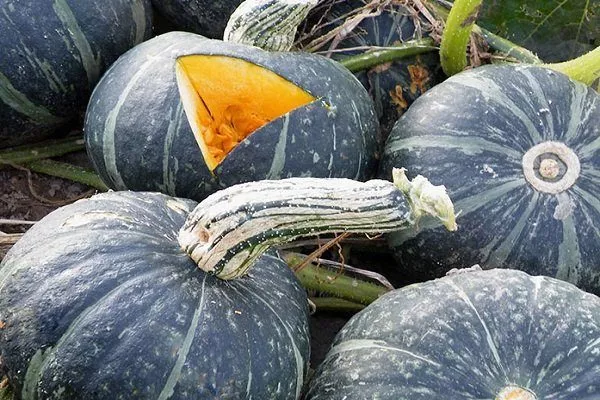
- Fruit. The skin is green with whitish spots.
- Ripening periods. It is an early variety. The growing season lasts from April to August or from May to September.
- Pulp. Yellowish, has a chestnut scent. Juicy and sweet to the taste.
- Storage conditions. The keeping quality of the fruits is assessed as good.
Atlas
Variety information:
- Size. Pumpkins usually weigh around 10 kg, but under particularly favorable conditions it can reach 70 kg.
- Bush. The plant has only 1 main shoot and is classified as a weak climber.
- Ripening period. Atlas It takes a long time to ripen. The harvest can be collected approximately 140 days after planting.
- Fruit. They have a round-oval shape. The skin is orange and smooth.
- Pulp. Golden-orange in color. Dense, slightly oily, slightly sweet.
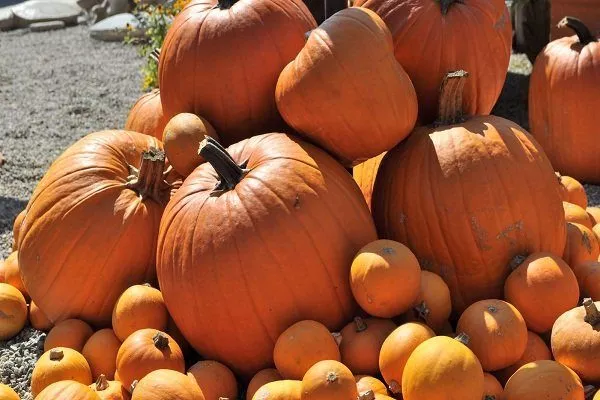
- Productivity. During the season, you can harvest about 240 centners of pumpkin from 1 hectare.
Pampushka
Key Features:
- Size. The weight of a pumpkin is about 5 kg, but sometimes the fruits can reach 10 kg.
- Bush. The plants have very long stems and can grow up to 10 m.
- Ripening period. The fruits reach full maturity in 110 days.
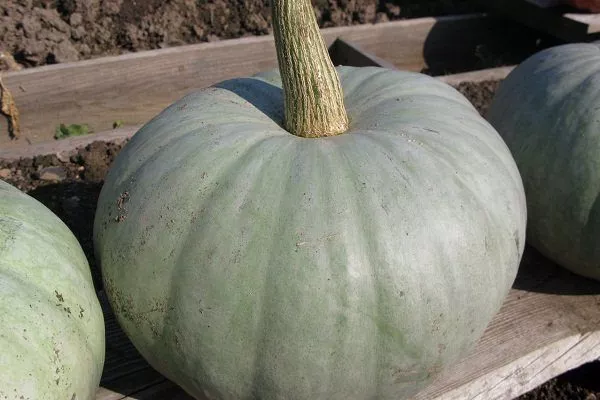
- Fruit. Rounded. The skin is greenish-gray.
- Pulp. Orange. Juicy to taste.
Corkus
What's interesting about the variety:
- Size. Weight reaches 5 kg.
- Bush. The plants have one long stem and several short ones. The leaves are medium-sized.
- Ripening period. It takes 110 days to reach full maturity.
- Fruit. Round and neat in shape, with indistinct segments. The skin is dark green.
- Pulp. Yellowish in color, dense in structure, sweet in taste.
- Productivity. Average – about 200 kg can be collected from 1 hectare.
Azure
The characteristics are:
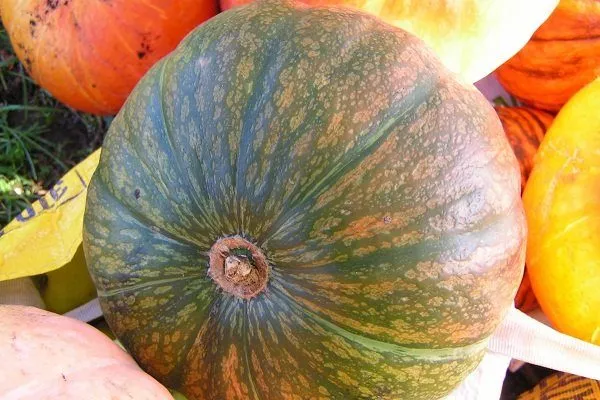
- Size. Reaches 6 kg in weight.
- Bush. With 1 main shoot reaching 7 m and many smaller ones.
- Ripening period. Ripens in 115 days on average.
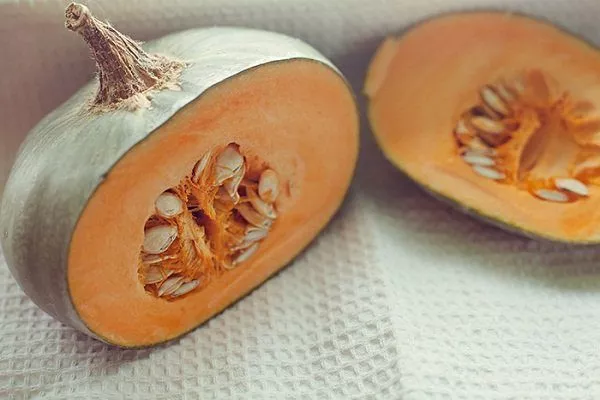
- Fruit. They have a round, slightly flattened shape. The skin is wrinkled and gray-green in color.
- Pulp. Bright orange. Dense, very juicy, and slightly sweet.
Reviews
Learn more about large-fruited pumpkins and their varieties with reviews from people who have already grown this crop:
Large-fruited pumpkins are grown all over the world. These varieties are prized for their large size, excellent flavor, marketability, and transportability. Growing large-fruited pumpkins in your own garden is easy if you follow all planting and care guidelines.