
Despite its name, the fruits of the "Kroshka" pumpkin are quite large and, most importantly, exceptionally tasty. We'll learn how to plant and grow this variety, how to achieve high yields, and how to preserve the fruit until spring.
Pumpkin Kroshka: description and characteristics of the variety
Despite its name, the "Kroshka" variety is a medium-sized table variety. The plant is relatively compact, so it doesn't require a large area for cultivation.
"Kroshka" was developed by breeders in the Astrakhan region in the 1980s. The variety was added to the State Register in 1996.
Brief description of the variety:
- Plant. Climbing type. The main stem is strong and long, reaching 3 m or more in length. The leaves are lobed, undissected, and rich green.
- Fruit. Large, round, and slightly flattened, they reach 40 cm in diameter. The rind is thin, grayish in color, and dark green when cut. Pale pink spots appear on the gray background. The flesh is moderately juicy, deep orange or yellowish, and occupies most of the fruit.
- Seeds. Oval, yellow, large, with a hard, smooth skin. Suitable for planting.
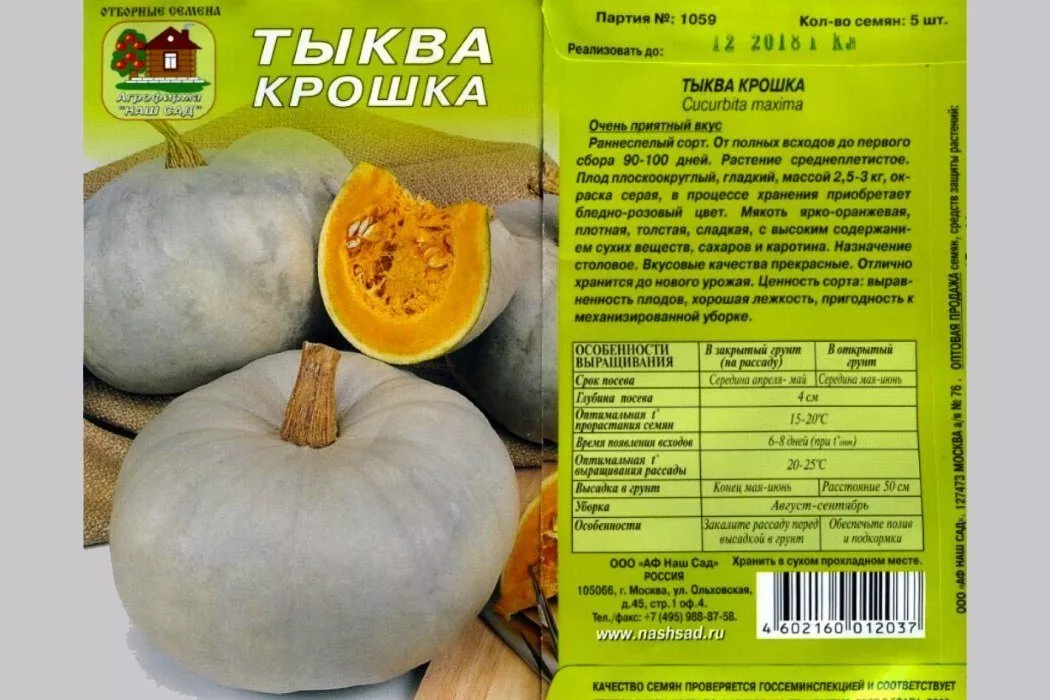
Pumpkin seeds Kroshka
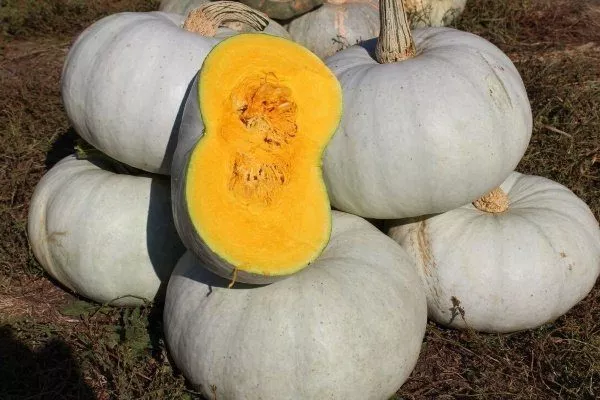
Pumpkin Crumb
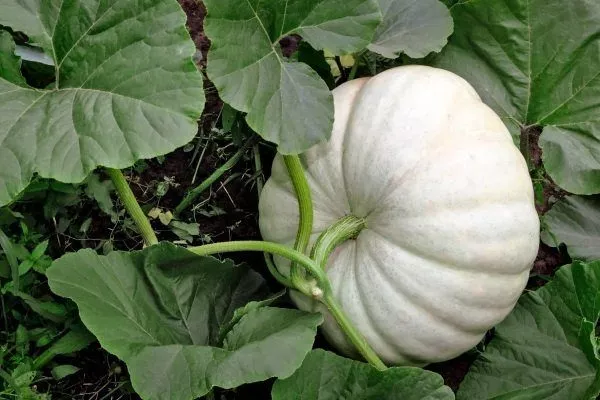
The tops of the Crumb pumpkin reach three meters.
The "Kroshka" pumpkin is a "portioned" variety. A single pumpkin is ideal for preparing a meal for a small family.
Main characteristics of the "Kroshka" variety:
| Characteristics/parameters | Description/Meaning |
| Ripening category | mid-season |
| Period of full ripening | 120-130 days |
| Productivity | 3-4 kg per 1 sq. m |
| Storage | keeps well even at room temperature |
| Fruit weight | 2.5-4 kg |
| Transportability | good |
| Resistance to diseases and pests | high |
| The taste of the fruit | sweetish, honeyed |
| Aroma | melon |
| Purpose | universal – used in cooking and the food industry |
100 g of raw pumpkin "Kroshka" contains 9.2% sugars and 12 mg of carotene.
Advantages and disadvantages of the variety
The flesh of the "Kroshka" pumpkin is much sweeter than that of most varieties. This pumpkin also has other advantages:
- Thanks to the dense rind and pulp, the fruits have good shelf life and can be easily transported over long distances;
- high immunity to most diseases, in particular to anthracnose;
- frost resistance – tolerates short-term frosts well;
- pleasant taste and honey aroma;
- undemanding to care;
- stable yield.
The pulp of the "Kroshka" is very tasty; it is used to make soups, side dishes, salads, pies, casseroles, and sweet pastries.
Flaws:
- small fruits - but this is a subjective disadvantage, since many people like small fruits;
- unpresentable appearance - due to the grey rind, this pumpkin is not used for decorative purposes, it is intended exclusively for table use;
- may be affected by powdery mildew.
Planting the Kroshka pumpkin at home
The Kroshka variety can be grown from seeds and seedlings, but good growing conditions are essential. Let's learn how to choose a site for Kroshka and how to plant it.
Selecting soil
Soil requirements:
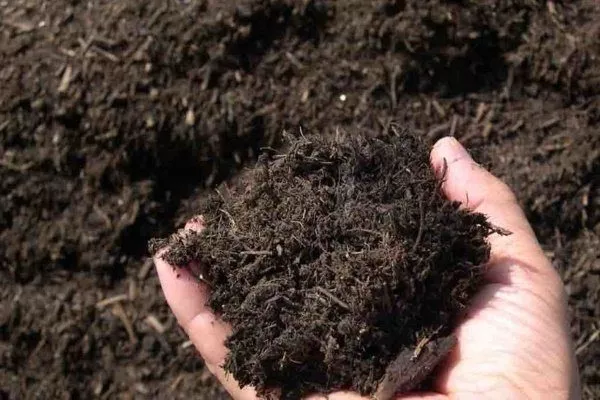
- Pumpkins prefer fertile soils with a high humus content. They grow well in light loam and sandy loam soils.
- Large, tasty pumpkins won't grow in poor, sandy soil. Such soils require ample amounts of humus, as well as clay and turf.
- Growing pumpkins in heavy, slow-draining, or waterlogged soils is not recommended. It's best to plant them on elevated sites to prevent flooding.
- Optimum soil acidity is pH 6.5-6.8.
Crop rotation requirements
It is recommended to grow pumpkin after:
- legumes;
- cabbage;
- Luke;
- beets;
- carrots.
It's not recommended to plant pumpkins in areas previously occupied by sunflowers, potatoes, and melons (cucumbers, squash, melons, and watermelons). Potatoes and tomatoes are considered poor neighbors for pumpkins. Pumpkins thrive well with legumes and corn.
Pumpkin is a cross-pollinated crop, so different varieties cannot be grown nearby.
Pumpkin can be grown again on the site only after 4 years.
Optimal conditions
Optimal growing conditions:
- Illumination. The culture prefers sunny areas, protected from drafts and winds.
- Humidity. The plant requires regular watering during flowering and fruit set. Optimal air humidity is 40–50%, and soil humidity is 70–80%.
- Temperature. The optimal temperature for development and fruiting is from +18 to +25 °C.
Soil preparation
It is worth adhering to the following recommendations:
- In the fall, the soil is dug over, adding organic fertilizers such as manure or compost. The recommended rate is 5 kg per square meter. Superphosphate is also added in the fall if the soil is not fertile enough. The recommended rate is 100 g per 5 square meters.
- In spring, the soil is dug up and loosened again.
- If necessary, if the soil is highly acidic, add lime, chalk or wood ash.
The amount and composition of fertilizers are calculated and selected individually for each soil type. Clayey and dense soils require the addition of humus or compost, peat, and river sand.
On dense and moist soils, beds at least 25 cm high are arranged; on loose soils, you can do without beds.
Preparing seeds for planting
For planting, use purchased or home-grown material. The "Kroshka" variety is not a hybrid and retains its varietal characteristics when propagated by seed.
- ✓ Seeds must be no older than 3 years to ensure high germination.
- ✓ Preference should be given to seeds collected in the previous season, as they have the best germination energy.
Preparing seeds for planting:
- Select good seeds—you want smooth, thick specimens. Set aside any flat or misshapen ones.
- Check the seeds for germination by placing them in water for 3-4 hours. Remove any seeds that float to the surface—they are not suitable for sowing.
- Soak the seeds to speed up germination after sowing. Otherwise, sprouts may take several weeks to emerge. Place the seeds in warm water (40°C/104°F) for 1-2 hours.
- Soak the seeds for 20 minutes in a potassium permanganate solution (100 ml of water per 1 g of solution). Rinse with clean running water.
- Wrap in a damp cloth. Periodically moisten with room temperature water.
- Once the seeds sprout, place them in the refrigerator for 3-4 days to harden them. Keep in mind, however, that the temperature should not fall below 2°C.
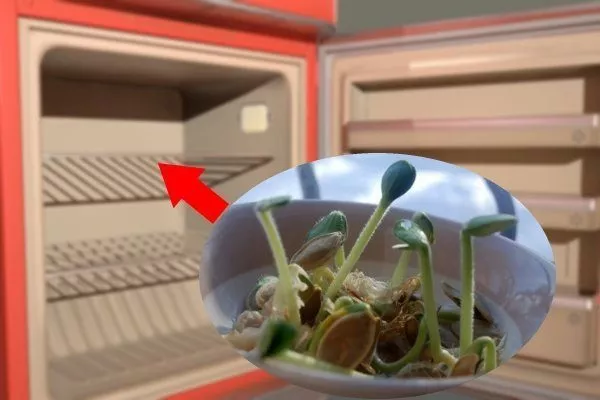
Sowing seeds for seedlings
Growing pumpkins from seedlings is common in regions where there's a risk of spring frost. Sow seeds for seedlings in early April. However, the local climate dictates the time needed. About a month should pass from sowing to planting.
Seedlings can be grown on a windowsill, in a hotbed or greenhouse.
The procedure for growing seedlings at home:
- Place a drainage layer of approximately 4 cm at the bottom of the planting containers.
- Fill pots with at least 0.5 liters of capacity with soil or a general-purpose growing medium. Peat pellets and cups for pumpkin seedlings may be too small; the seedlings' roots will quickly sprout and dry out. Choose larger peat-humus pots.
- Plant the sprouted seeds approximately 2-3 cm deep into the soil. If you plant them 3.5-4 cm deep, the seedlings will take twice as long to germinate.
- Place the seedling containers on the windowsill. Maintain a daytime temperature of 25°C and a nighttime temperature of at least 15°C. Seedlings will appear in just 4-5 days.
- Once sprouts appear, gradually reduce the temperature to prevent the seedlings from becoming too tall. Ten days after germination, increase the temperature back to the previous level. This tactic will help grow strong seedlings.
- Water the plantings regularly, avoid over-watering.
- A week after the seedlings emerge, apply fertilizer. This can be organic, such as a 300 ml mullein solution (1:10), or a mineral fertilizer, such as nitrophoska (10 g per 10 liters of water).
- When the seedlings have 3-4 leaves, they are ready for transplanting into open ground.
Transplanting seedlings
Pumpkin is a heat-loving crop, so don't rush into planting seedlings. Wait until the weather becomes consistently warm:
- Daytime temperatures should reach +18 °C.
- Night temperatures should not fall below +10 °C.
In the middle zone, seedlings are usually planted from the second half of May to the beginning of June.
The procedure for transplanting seedlings into the ground:
- A few days before planting, cover the dug and fertilized area with film to allow the soil to warm up.
- Plant seedlings at +13-+15 °C, in cloudy weather or in the evening.
- Dig holes and fill them with some organic matter (compost or humus) mixed with fertile soil. Leave 80 cm between holes. Space rows 1.5-2 m apart. This planting pattern is suitable for medium-sized climbing varieties.
- Water the seedlings the day before planting so they can be easily removed from the soil. If the seedlings were grown in peat pots, there's no need to remove them—place them in the holes along with the containers.
- Water the seedlings generously and sprinkle the roots with soil.
- Mulch the soil sawdust, hay, straw.
- Make earthen edges around each hole to prevent water from spilling out.
Planting seeds in open ground
Pumpkin is grown primarily in southern regions by sowing seeds in open ground, skipping the seedling stage. This method is used in areas where the July temperature does not drop below 18°C.
Before planting seeds in the ground, check for the risk of frost. Sowing can begin when the daytime temperature rises to 18°C and the soil warms to 12-13°C. In temperate climates, planting begins around May 15th.
Sowing order:
- Water the soil before sowing. Wait for it to settle.
- Dig holes according to a 60x60 cm pattern. Depth – up to 10 cm, no more.
- Place 2-3 seeds in each hole, pointed end down.
- Sprinkle with soil and water with warm water.
- Mulch the crops with sawdust, hay, straw.
Experienced gardeners recommend covering the seedlings with plastic film. You can also cover each planting hole with a plastic bottle to protect the seedlings from frost and cold rain.
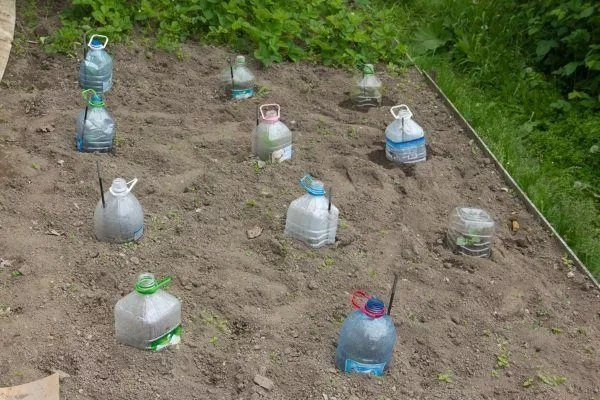
Once seedlings emerge, remove any excess shoots, leaving the strongest ones. If the climate is unstable and there's a risk of frost, don't rush to thin the plantings.
How to care for the Kroshka pumpkin?
Growing "Kroshka" isn't particularly difficult. Like all garden crops, it requires watering, weeding, and fertilizing. The only thing that sets it apart from many other crops is the need for shaping.
Watering the plant
"Kroshka" requires regular watering—every 4-6 days. However, you should make allowance for the weather—on rainy days, reduce watering to once a week.
Watering features:
- Periodically, instead of water, use a solution of onion peel infusion - this way you will not only water the pumpkin, but also prevent pests.
- Water the plants at the roots, being careful not to get water on the stems and leaves to prevent the development of fungal and viral diseases.
- Use warm water, not lower than +20 °C.
- It is not recommended to water the pumpkin in hot weather; it is preferable to do this in the evening.
- Watering rate: 5-6 liters per plant.
Fertilizing
Features of the Kroshka variety of fertilizer:
- The first feeding is applied a week after planting the seedlings.
- Fertilizers are applied every 15-20 days.
- During the flowering period, it is advisable to apply mineral fertilizers.
- Fertilizers are applied after watering or rain to prevent possible root burns.
What and when to feed pumpkin:
- After landing. Take a break between applying mineral and organic fertilizers. Fertilizers are applied:
- Mineral. Dissolve 10 grams of urea in 10 liters of water. You can also add superphosphate, ammophoska, and potassium sulfate—20 grams each per bucket of water. Apply the solution to the roots.
- Organic. Prepare a solution of manure and water (1:10), add 2 tablespoons of wood ash. Shake the mixture thoroughly and water the plant at the roots.
- Before flowering. It is recommended to apply a single-component fertilizer to speed up budding.
- During flowering. Organic matter (4-5 kg per 1 sq. m) and potassium fertilizers (20 g per bucket) are suitable.
- During fruit formation. Complex solutions are used. Approximate composition:
- potassium chloride – 20 g;
- superphosphate – 15 g;
- water – 10 l.
Loosening and weeding
After watering, the beds are loosened—this procedure helps oxygenate the soil. Weeds are also removed during loosening.
Features of loosening and weeding:
- The soil is loosened to a depth of 6-8 cm. It is impossible to loosen it deeper, as this could damage the roots.
- Weeds located near the stem are removed by hand so as not to damage the plant.
- The first loosening is carried out after the first application of fertilizer.
Bush formation
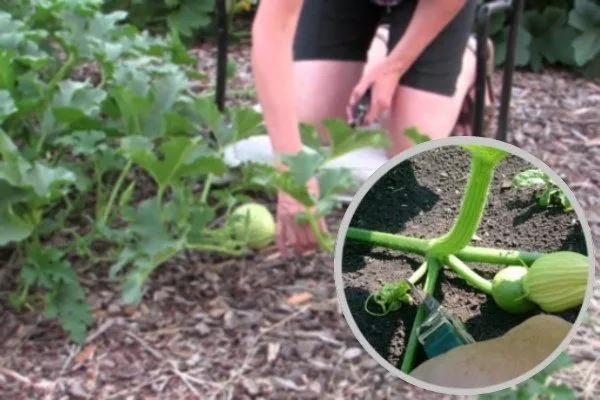
Training is essential for producing large fruits. If excess shoots are not removed promptly, too many ovaries will form on a single plant, resulting in small pumpkins.
Rules for pinching the Kroshka variety:
- When the central shoot grows to 1.5 m, the lateral shoots are pinched off to remove excess ovaries.
- On each lateral shoot there should be no more than 2-3 ovaries and 3-4 leaves left.
Protection from diseases and pests
Diseases and insect pests can cause significant damage to crops, damaging both the plant itself and its fruits.
The emergence of diseases and pests is facilitated by:
- poor, non-disinfected soil;
- improper care;
- unfavorable weather conditions.
Pumpkin pests and control measures:
| Pest | Signs of defeat | How to fight? |
| Spider mite | A small insect, reaching 1 cm in length, attacks the green parts of the plant and fruits. It camouflages itself against the background color of its surroundings. | Compliance crop rotationModerate application of mineral fertilizers. Spraying with Bordeaux mixture, adding wood ash. |
| Whitefly | Tiny white moths, measuring 0.5 cm, congregate on the undersides of leaves. The leaves curl and turn yellow. | Spraying with a solution made from aloe vera juice. Whey may also help. |
| Slugs | They appear in hot and humid weather. They suck nutrients from stems and leaves, causing the plant to wilt and die. | Spraying with copper sulfate and soap solution. |
Pre-sowing seed preparation and treatment can help prevent many diseases. soil disinfection.
Common diseases of the pumpkin Kroshka and control measures:
| Disease | Symptoms | How to fight? |
| Tobacco mosaic | The leaves have large yellow spots. Over time, these yellow patterns spread throughout the plant. | Spraying with "Maxim". Spraying with potassium permanganate. |
| Late blight
| Brown spots on leaves and fruits. Leads to plant death. | Prevention: spraying with Bordeaux mixture and Oxyhom. |
| Powdery mildew | The leaves become covered with a white coating. | Deep autumn digging. Soil treatment with Topaz and Bayleton. Spraying with potassium permanganate (3 g per 10 liters). Treating diseased plants with Topsin, sodium phosphate, and colloidal sulfur. |
Harvesting and storage
Harvesting does not begin until the end of August. Features of harvesting and winter storage fruits of "Kroshka":
- Pumpkins should be harvested before the first frost. If the fruit isn't ripe yet, don't worry—it will ripen in the basement.
- The harvested fruits are sorted. Damaged ones are set aside for immediate use. Whole and unripe pumpkins are sent to the cellar.
- When harvesting, it is important not to tear off the stalk, otherwise the fruit will rot during storage.
- Pumpkins have a shelf life of 50-70 days. Unripe fruits ripen, forming seeds suitable for planting.
- The basement should have moderate temperature and humidity. Cold and dampness are the main enemies of pumpkins.
- ✓ Storage temperature should be between +10°C and +15°C.
- ✓ Air humidity should not exceed 70% to prevent the development of fungal diseases.
Tips from experienced gardeners
Experienced gardeners advise following these rules when growing "Kroshka":
- Water the soil with boiling water before planting - this will destroy insects and their larvae.
- Water the pumpkin beds in the morning and evening.
- Use rainwater for irrigation.
- When growing seedlings in greenhouses, ventilate the room every day.
- Always follow the fertilizer dosage indicated on the packaging.
Farmer reviews of the Kroshka pumpkin
"Kroshka" is a versatile, all-around advantageous pumpkin variety. This pumpkin is easy to grow, produces delicious fruits, and stores and transports well. It can be grown both for home use and for sale.