
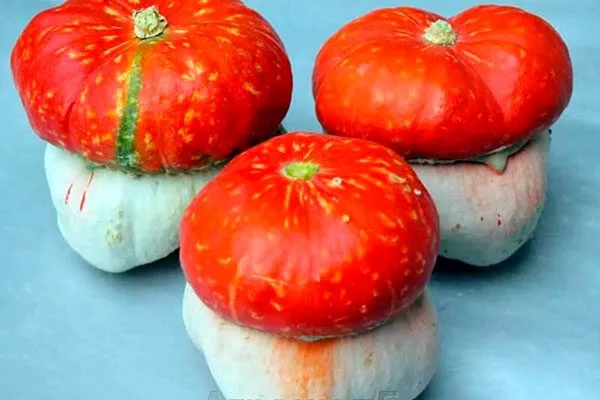
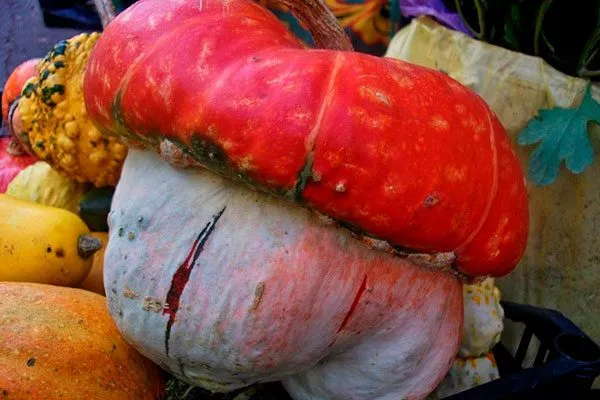
Red Riding Hood is a variety of portioned pumpkin distinguished by its early maturity, good yield, cold hardiness, and resistance to powdery mildew. Its hallmark is the highly decorative appearance of the plants and the fruits they produce. Visually, the vegetable resembles a large mushroom with a white, rounded stem and a scarlet turban-like cap.
What kind is it and how did it appear?
The variety was developed by researchers at the Gavrish agricultural firm. This striking red pumpkin belongs to the ornamental variety, distinguished by its unusual shape and variegated skin, as well as rich orange flesh with an excellent flavor.
Breeders have succeeded in instilling in their creation endurance and stress resistance. It is not afraid of adverse weather conditions:
- cold;
- heat;
- drought.
This vegetable crop grows and bears fruit well in any climate. Gardeners successfully cultivate it almost everywhere in Russia, as well as in Belarus, Ukraine, and Moldova.
Main characteristics
In addition to its decorative appearance and resistance to adverse environmental factors, the turban-shaped pumpkin variety boasts resistance to fungal diseases, particularly powdery mildew, as well as pest attacks (aphids, spider mites, slugs). It also boasts other excellent characteristics.
Description of the bush and fruits
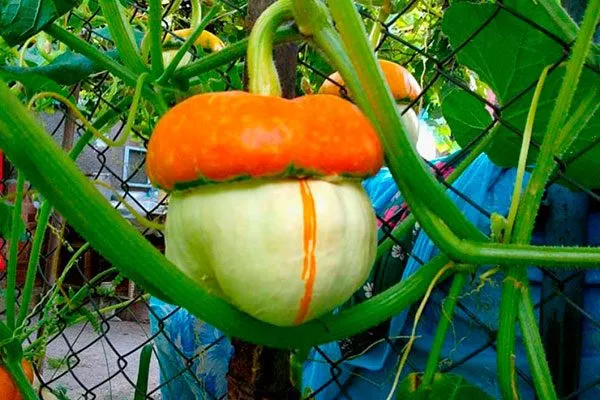
Red Riding Hood plants are very spreading and well-developed. They are characterized by rapid growth. A description of their appearance includes the following characteristics:
- long and strong shoots growing up to 4 m;
- The stems have numerous tendrils-vines (summer residents use them to attach the plant to a vertical trellis in order to save space in the garden bed);
- leaves: small, green, typical for a vegetable crop;
- Flowers: large, bell-shaped.
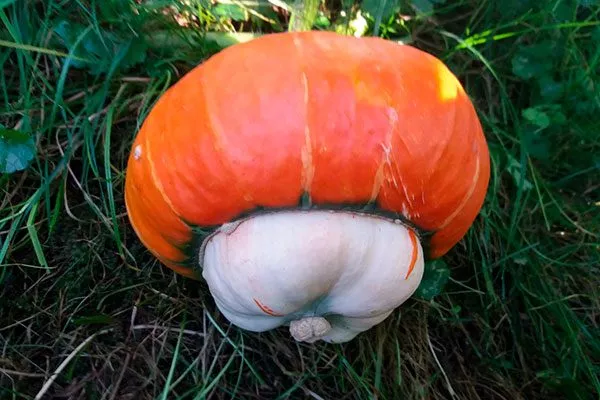
A distinctive feature of this vegetable variety is its unusual appearance. Visually, the pumpkin resembles a mushroom or acorn, topped with an orange-red cap. The cap is shaped like a turban, an oriental headdress. The underside of the fruit is white or pale green.
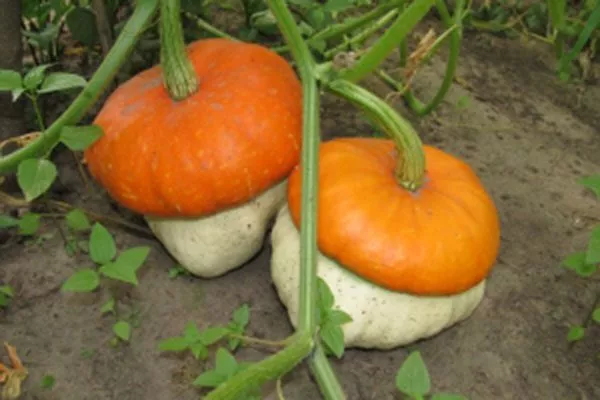
Little Red Riding Hood pumpkins have the following characteristics:
- weight - 2-5 kg (due to the small weight of the fruits, gardeners do not have difficulties associated with their transportation and storage, as is often the case with large-sized vegetable crops);
- diameter - 10-20 cm;
- a hard crust on fully ripe vegetables (during storage it becomes even harder, to the point of “petrification” - the pumpkin cannot be cut with a knife);
- orange-colored pulp, the thickness of which is 6-10 cm;
- low degree of juiciness of the internal contents;
- small seed chamber;
- large seeds.
Can you eat ornamental pumpkin?
Gardeners use this vegetable variety to decorate their garden plots. The bushes are especially well suited for vertical gardening. The decorative dried fruits themselves often serve as decoration for home gardens, flowerbeds, terraces, and kitchen interiors.
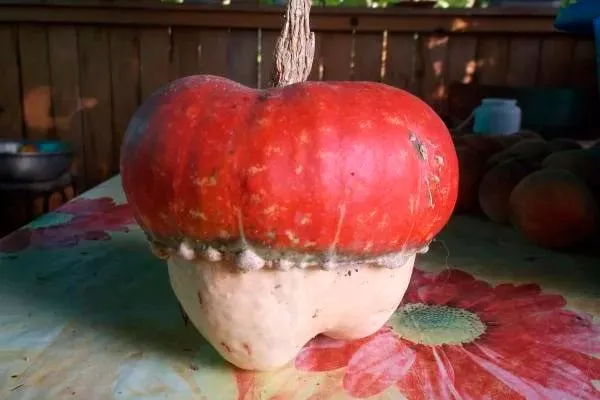
Ornamental pumpkins have also found a home-cooking appeal. Their flesh is tender, sugary, and crumbly, with a wonderfully sweet flavor without bitterness or astringency, featuring notes of nut, melon, and honey. Their flavor is on par with that of the Muscat variety, and even comparable to that of the Spanish guitar.
Housewives use red pumpkin in the following way:
- add it fresh to salads and cold vegetable appetizers;
- Serve grated on a coarse grater, seasoned with sour cream, mayonnaise, lemon juice and vegetable oil (you can use nuts, fresh apples, and carrots as additives to the dish);
- fried in slices, including in batter with bread crumbs;
- extinguish;
- boil;
- freeze;
- canned;
- prepare original jam and marmalade;
- salted.
Little Red Riding Hood (Little Red Riding Hood) produces delicious creamy soups, casseroles, sauces, and side dishes. It's an excellent addition to porridge, particularly millet or rice porridge. The fruits are also suitable for baby food and dietary nutrition. They can be combined with meat, fish, other vegetables, and greens. Spices and herbs add a more piquant and vibrant flavor.
The most beneficial vegetable is fresh. It's rich in vitamins A, C, and E, minerals, fiber, and other nutrients essential for health. Eating it can help cleanse the body, strengthen the immune system, improve vision, improve the condition of skin and hair, and aid weight loss.
Productivity and ripening time
Red Riding Hood is a high-yielding early variety. Its characteristics are as follows:
- fruit ripening period is 100 days;
- bush productivity: 10-20 pumpkins;
- yield - 40-60 kg from 10 sq. m of garden bed;
- good shelf life and transportability.
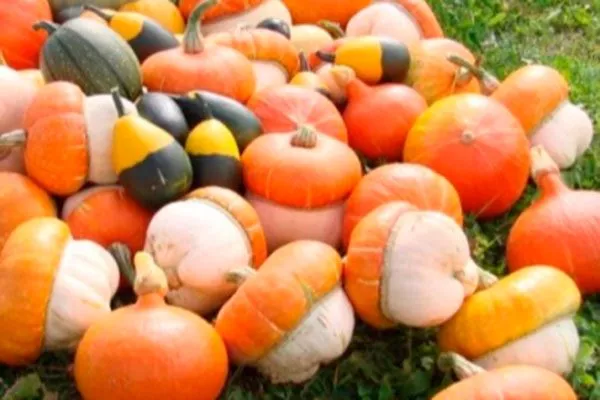
Gardeners ripen pumpkins harvested unripe at home ("in storage"). If left on the floor in a living space, they will reach full ripeness by December. Their flavor will be excellent.
Features of cultivation
Gardeners cultivate red pumpkins using both seedlings and direct sowing. In the former case, sowing occurs in March-April. Peat pots are used for growing the seedlings, as the crop does not tolerate transplanting. They are transplanted to the garden bed in June in the central part of the country, and to a greenhouse in Siberia and the Urals.
The second method for growing ornamental vegetables is only applicable in southern regions. There, gardeners sow the seeds directly into the soil in the garden bed. This work is carried out in late April, after ensuring that the air temperature has stabilized at 10°C.
- ✓ Optimum soil temperature for sowing seeds: +10°C.
- ✓ Seed sowing depth: 3-5 cm.
Preparation of seed material
Red Riding Hood seeds, taken from fully ripened fruits, are large, yellow-orange in color, and have a glossy sheen. They tend to maintain good germination for 7-8 years. Before sowing, gardeners perform the following procedures:
- sorting (the largest and most beautiful specimens, full-bodied, without defects or damage, are selected for planting);
- soak (place the seeds in a bowl filled with warm water and leave them in it for several hours);
- germination (keep the planting material on a saucer with a damp cloth in a warm place until shoots appear);
- hardening (the sprouted seedlings that you plan to plant immediately in open areas of the garden need increased cold resistance).
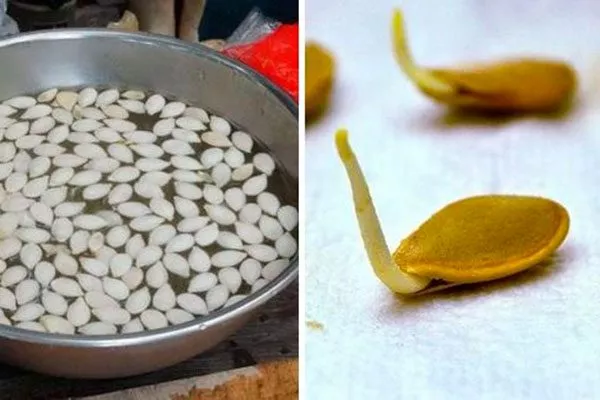
The best way to harden pumpkin seeds before sowing is to leave them on the bottom shelf of the refrigerator. This helps increase their cold resistance and resistance to sudden temperature changes. To do this, first keep the seeds in a warm place (18-20°C) for 8 hours, then move them to a cool place (1-2°C).
Selecting soil
Grow the Red Riding Hood variety in a bed with fertile, loose soil that is neutral or slightly acidic. The optimal pH is 6.5 to 7.5.
Select a spot in your garden for pumpkin planting that meets the following requirements:
- sunny;
- protected from drafts and gusty winds;
- not flooded by groundwater;
- used last season to grow good predecessors to pumpkin: garlic, beans, peas, beans, cabbage, onions, green manure crops.
Choosing a wise site will help prevent crop diseases. Pay particular attention to crop rotation. Avoid planting a Red Riding Hood bed where you previously grew nightshades (tomatoes, eggplants, peppers), watermelons, melons, zucchini, cucumbers, carrots, and turnips.
Before planting vegetables, improve soil fertility by adding organic matter. Add manure to the soil. Apply 5 kg per square meter.
Landing
If you're growing vegetables using seedlings, sow the seeds directly into individual cups or peat pots filled with a general-purpose, store-bought growing medium. Follow these timelines:
- in March or April;
- 20-25 days before the planned date of transferring seedlings to a permanent location.
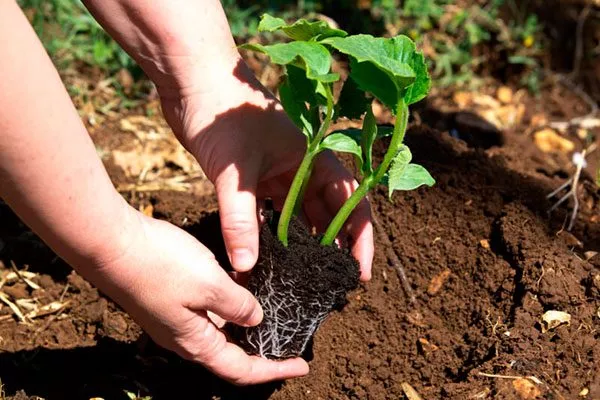
Plant one sprouted seed in each individual container with fertile soil. Cover the seedlings with plastic wrap. Leave them in a warm place. The optimal temperature is 18-25°C. At night, the temperature should be lowered to 15-18°C.
Once the seedlings emerge, remove the covering material. Move them to a cooler room (15-18°C during the day, 12-13°C at night) with plenty of diffused light. Provide proper care for the seedlings, including the following:
- moderate watering;
- careful loosening of the soil under the plants;
- hardening (start increasing the cold resistance of seedlings 14 days before moving them to the garden bed; first, leave the plants on the veranda with the window open, and then take them outside for 15-30 minutes).
Transplant pumpkin seedlings into an open area of the garden. Do not disturb the root ball. Add a small handful of wood ash and some compost (250 ml per plant) to the prepared holes. Do not bury the root collar of the plants. Follow the following pattern:
- distance between rows - 1 m;
- between plants in a row - 0.5-0.8 m.
To finish, water the pumpkin seedlings with warm water and mulch the bed with dry straw, peat, or compost. If the threat of frost has not yet passed and the average daily temperature does not exceed 15°C, be sure to cover the planting with plastic film.
From late April to early June, direct sowing of Red Riding Hood seeds in open ground is possible in the south. Follow the planting pattern described above. If you plan to grow the variety vertically (on trellises), the distance between the holes can be reduced to 0.3 m.
Watering and fertilizing
Although turban gourds are drought-tolerant, they require adequate watering to ensure abundant fruiting. Follow these guidelines for proper care:
- water the bed with the red vegetable as the top layer of soil dries out;
- use warm, settled water;
- water at least once every 7-10 days;
- 30 days before harvesting, stop moistening the soil under the pumpkin bushes (if you continue to “water” the plants, the pulp of the fruits will become watery, and their shelf life will suffer);
- Do not waterlog the bed to avoid root rot and the death of the crop.
This ornamental pumpkin variety responds well to fertilizing. For best results, follow the nutrient application schedule:
- a few weeks after transferring the seedlings to the garden bed, water them with a solution of cow manure;
- after 14 days, use herbal infusion to fertilize the crop (use it every 2 weeks until the ovaries appear);
- When fruits begin to form on the bushes, apply potassium monophosphate in the form of a solution (10 g of fertilizer per 10 liters of water) twice at intervals of 15-20 days.
- Two weeks after planting the seedlings, add a solution of cow manure.
- Use herbal infusion every 14 days until ovaries appear.
- After the fruits have formed, apply potassium monophosphate twice at intervals of 15-20 days.
Bush formation
Stimulate the development of side shoots by pinching the main stem. Perform this procedure once the main stem reaches 1 m in length. This ensures the pumpkin bush develops properly. This is essential for ornamental vegetable varieties.
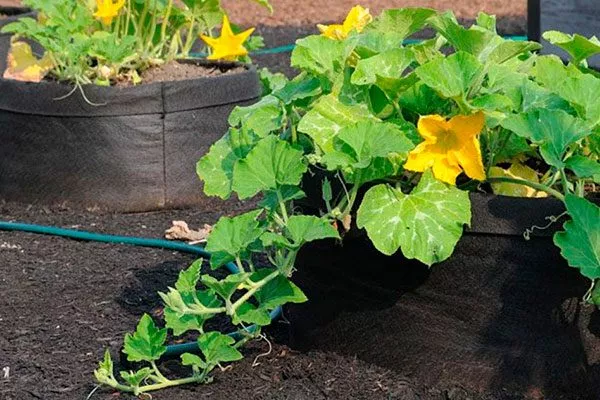
Experienced gardeners use Red Riding Hood plants to create hedges or green walls. To achieve this, they support the turban-shaped variety with supports or trellises made of wood or metal, or they train them along a fence or secure them to a trellis on a veranda.
Prevention of diseases and pests
Red pumpkin is susceptible to the same diseases as table varieties. If you strictly adhere to proper cultivation practices, you can avoid these diseases. This variety has good resistance to powdery mildew and pests such as aphids, slugs, and spider mites.
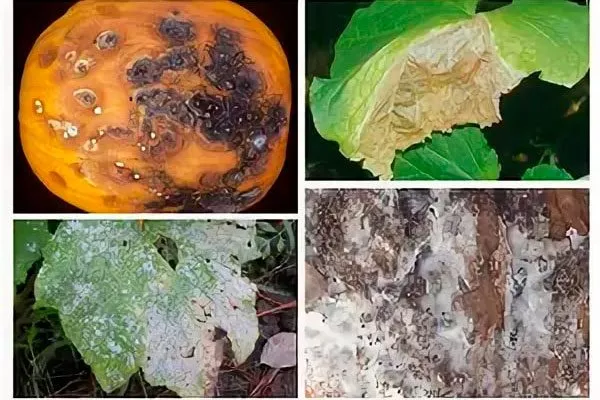
To prevent pumpkin beds from being damaged by diseases and parasites, take the following measures:
- observe crop rotation standards;
- remove weeds in a timely manner and remove plant debris from the site;
- Inspect your plantings regularly;
- remove those parts of the bushes that show signs of infection and damage by pests;
- stick to the watering regime;
- do not refuse to apply fertilizers;
- Store seeds properly and carry out pre-sowing treatment;
- Do not plant the red vegetable too densely.
Timely and competent prevention will allow you to do without the use of chemicals (fungicides, insecticides) when growing turban-shaped pumpkin.
Harvesting and storage
Begin harvesting ripe red-capped pumpkins in late August or early September. Wait until the stems harden and turn brown.
If you plan to use the harvested fruits as decorative elements, treat them accordingly. Follow these steps:
- Wash the pumpkins in a baking soda solution or wipe the skin with rubbing alcohol. There's no need to cut them open to remove the seeds.
- Leave the fruits to dry in a warm, well-ventilated area.
- After 1-2 months, the Little Red Riding Hood harvest will be ready for use in creating various plant compositions and for garden decor.
To ensure the best possible preservation of the harvest of red vegetables intended for consumption, follow these rules:
- Select ripe pumpkins with hard skins for storage in the cellar, collected on a dry, fine day before frost (they should have whole, dry stalks and no damage);
- dry them in the sun for 5-7 days;
- leave them in a dark room with air humidity of 75-80% and a temperature of +5-8°C.
Pros and cons
The Red Riding Hood pumpkin attracts the attention of domestic gardeners not only with its unusual appearance (variegated coloring and unique mushroom shape), but also with many other positive characteristics:
Reviews
Red Riding Hood is an unusual pumpkin variety popular with Russian gardeners. Its bushes are a delight to the eye with their decorative qualities. They are heat- and cold-resistant, drought-tolerant, and resistant to powdery mildew and pests. The fruits are beautiful, turban-shaped, red and white, and have a delicious flavor.