
The decorative pumpkin "Korona" is versatile – it can be used for both interior and landscape decoration, as well as for consumption. It is highly cold-hardy and an annual plant. It fits perfectly into vertical gardening, decorating hedges and verandas. Its unusually shaped and colored fruits can be stored for a long time indoors.
Description of the bush and fruits
This pumpkin variety is characterized by rapid growth and long branches that can extend 250 cm or more. The fruits are crown-shaped and weigh between 100 and 300 g. Their color ranges from bright yellow-orange to a muted green.
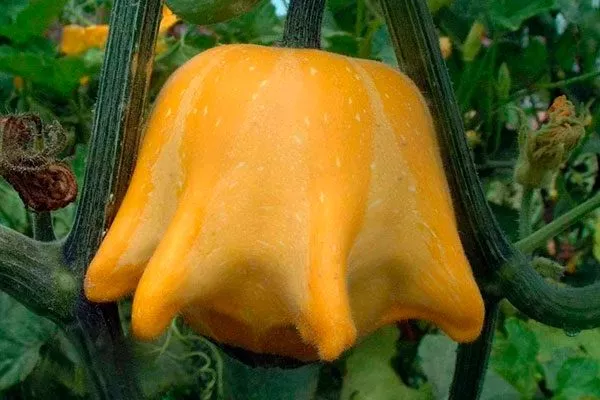
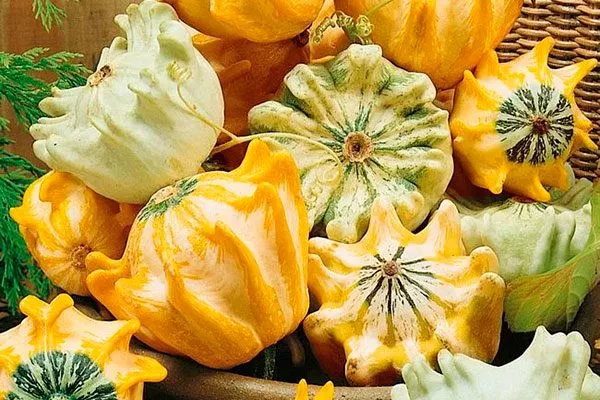
The crown is used in both decorative arts and cooking. Its rich, sweet flavor allows the pulp to be used to make jam or compote, as well as in a variety of dishes (cream soups, milk porridges, desserts, etc.).
Characteristics
Pumpkins require plenty of light to develop sweet fruit and ensure good productivity. Ripening occurs in late autumn, when the fruits reach full maturity and develop vibrant colors.
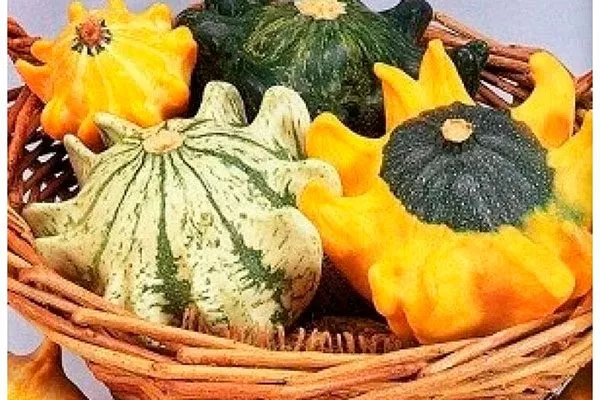
There is no exact data on the characteristics of the cell, but it is known that it:
- easy to store and transport, which is achieved thanks to the reinforced crust;
- highly terrifying;
- late-ripening;
- not too demanding in cultivation;
- universal in use (not only fruits, but also green mass are used);
- fast growing;
- resistant to diseases and pests.
Growing
For Corona to thrive, it's important to select fertile, moist, and well-aerated soil. Sunny, open areas are ideal, although partial shade is acceptable in arid climates.
Growing features:
- Pumpkins require soil rich in organic matter, preferring chernozem sandy loams, light loams, and pure chernozem soils. They thrive in compost heaps.
- It feels best in soil with neutral acidity from 6 to 7.5 pH.
- If groundwater is close to the surface, raised beds are created for the pumpkin.
- Farmers begin sowing Korona pumpkins in mid-April, maintaining a row spacing of 250-280 cm and a plant spacing of 90-100 cm. Four to six plants are planted per 10 square meters of land.

- It is characterized by increased sensitivity to temperature fluctuations, especially when young plants are involved. Hard-barked Coronas have a greater ability to withstand cold.
But special attention should be paid to the soil temperature regime, since normal development of the root system requires conditions from +18 to +24 degrees Celsius.
In cooler soil, root growth slows. The optimal air temperature for this plant ranges from 20 to 30 degrees Celsius. - For planting soil, use a mixture of neutralized peat with a pH of 5.5-6.5, leaf soil and mature compost in a ratio of 1:2:1.
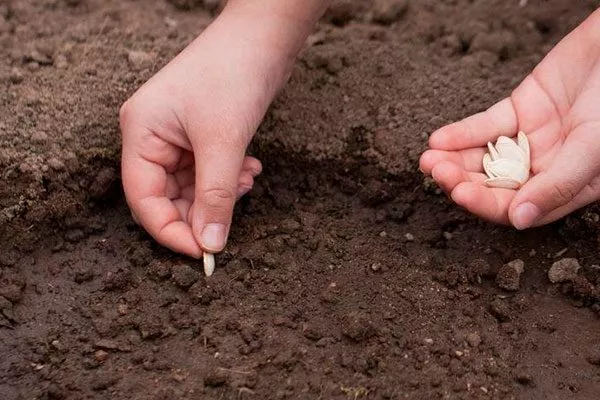
- Sow 20-25 days before transplanting. If the seeds haven't been treated by the manufacturer, soak them in a potassium permanganate solution for 30 minutes.
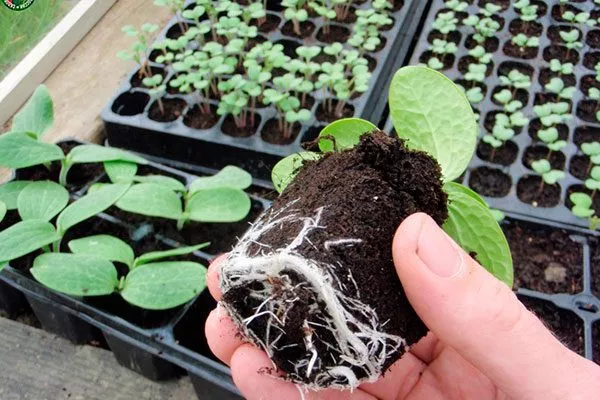
- Pumpkins don't tolerate transplanting, so they should be sown in individual pots. It's best to purchase peat pots that fit deep into the plant's roots.
- As soon as the seedlings appear, they should be moved to the sunniest place on the windowsill or under phytolamps for optimal development.
- The process of plant adaptation to lower temperatures is called hardening. It begins immediately after leaves begin to form, provided the outside temperature does not drop below 18 degrees Celsius. Hardening begins with a one-hour exposure to fresh air, increasing the time by one hour each day.
- Some crops are good predecessors for pumpkins, such as garlic, beans, peas, cabbage, potatoes, onions, beans, and green manure. However, tomatoes, watermelons, eggplants, melons, squash, carrots, peppers, cucumbers, and turnips are considered undesirable.
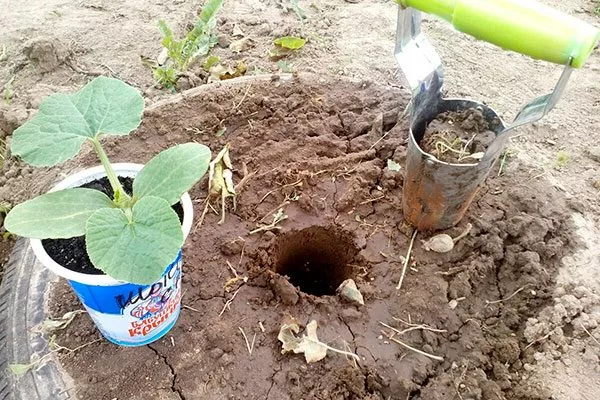
- Before replanting, add 2 tablespoons of charcoal and 200 g of humus to each hole.
- Transplant seedlings carefully to minimize the risk of damaging the root system. Avoid burying the root collar.
- After planting, the plant must be watered with warm water and mulched with dry straw chips.
Caring for pumpkins
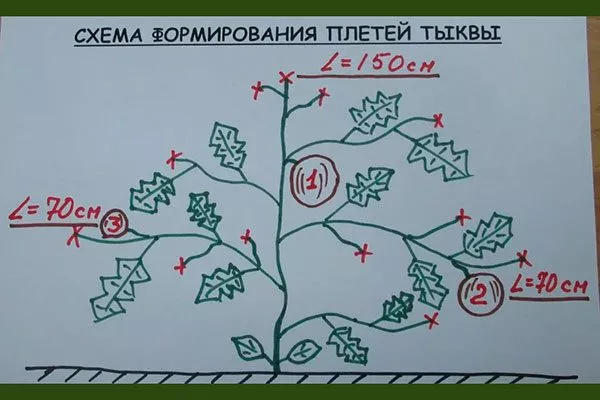
To ensure confident pumpkin growth, carefully monitor the stem development. The variety is trained into three stems, preserving three buds on the main stem and one or two on the side stems, after which pruning is performed. It is advisable to place dry manure or boards under the bushes.
Other events:
- Fertilizing begins two weeks after transplanting, using compost. Then, water the pumpkin every two weeks with a herbal solution. Once buds appear, switch to a mineral mixture: 10 g of monopotassium phosphate dissolved in a bucket of 10 liters of water. Fertilizing is repeated twice, 15-18 days apart.
- Watering should be moderate to prevent overwatering of the roots and the development of diseases. Typically, watering is done every 8-10 days. A month before harvest, watering should be stopped to prevent waterlogging and rotting during storage.
Reviews
The Korona variety is a climbing plant ideal for decorating outdoor railings, gazebos, and pergolas. This crown-shaped vegetable is an exotic pumpkin variety with a striking appearance—its fruits are star- or umbrella-shaped and have excellent flavor.