
The Konfetka pumpkin is a selective variety developed in Russia for cultivation in non-chernozem zones. With its unusually sweet taste and caramel aroma, this pumpkin quickly gained universal recognition. Its distinctive feature is its high sugar content, which is why it is cultivated for baby food.
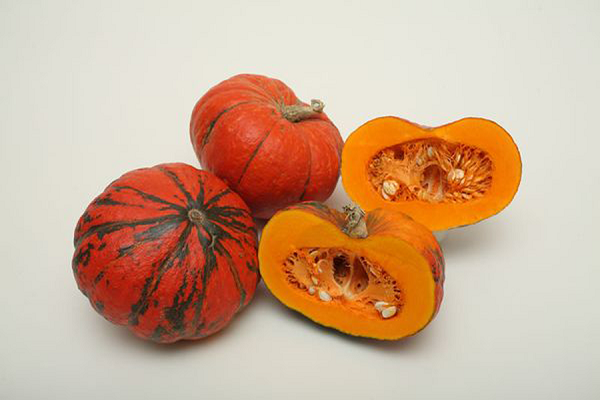
The Konfetka pumpkin has juicy and sweet flesh.
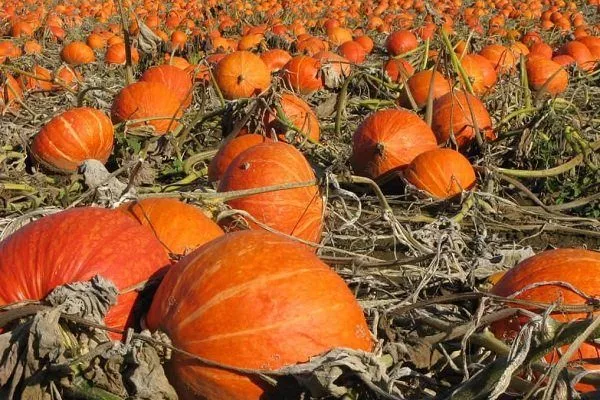
Pumpkin 'Konfetka' is easy to care for.
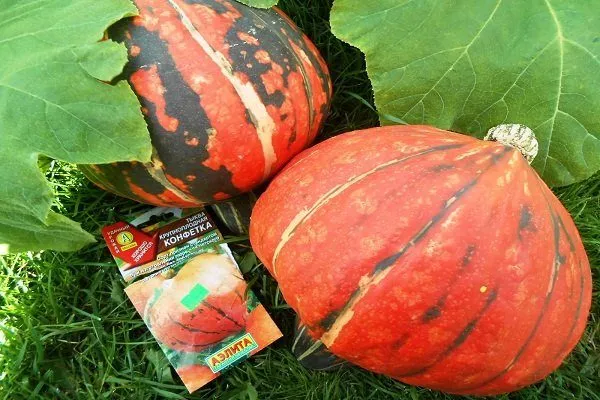
Pumpkin Candy
General characteristics of the Konfetka pumpkin
The candy is divided into subvarieties: the original and the offspring, designated F1, indicating that the seeds cannot be collected at home. The main difference between them is the rind color. The former is bright orange, while the latter is grayish. The flavor is identical.
The candy has a wide range of applications:
- preparation of desserts, sweet porridges and dishes;
- juice production;
- making baby puree;
- preparation of first and second courses;
- feeding livestock in animal husbandry (due to high yields and ease of cultivation).
Pumpkin is so sweet that no sugar is added during production. This allows for lower production costs and higher profits.
Description of fruits
This is a large-fruited crop with segmented fruits. It contains a large amount of nutrients – vitamins, phosphorus, sodium, magnesium, carotene, and ascorbic acid. The sugar content per 100 grams of product reaches 7-8%. The total caloric value is 22 kcal. The variety is easy to transport, and storage Under appropriate conditions, the pulp becomes softer and sweeter.
Description of fruits:
- the weight of one pumpkin varies from one and a half to 10 kg, but there are reports of it reaching a weight of up to 50 kg;
- the skin is thick and rough;
- crust color - gray or bright orange;
- surface – monochromatic or with green longitudinal stripes;
- pulp – orange, juicy, soft;
- the seed nest is small in size;
- the seeds are large.
Description of the bush
Characteristic features of the bush:
- the length of the main stem and lateral shoots is 1.5-1.7 m on average;
- one shoot produces 5-8 fruits;
- flowers - large, yellow in color;
- peduncle – elongated;
- The leaves are heart-shaped, up to 25 cm in size, and green in color.
Productivity
The yield of Konfetka directly depends on climatic conditions: in the southern regions, up to 8 pumpkins are formed on one bush, in the northern regions – 3-5 pieces.
One bush can yield from 3 to 50 kg, depending on the climate, weather conditions, growing region, and the quality of plant care.
Pros and cons
Advantages of Candy:
- high yield;
- early maturity;
- shelf life;
- transportability;
- increased sweetness;
- unpretentiousness;
- wide range of uses;
- rich in nutrients;
- minimal caloric content (can be used for dietary nutrition);
- frost resistance;
- drought tolerance;
- a small seed nest, due to which the vegetable contains a lot of pulp;
- the possibility of cultivation in all regions of the country and under different climatic conditions.
The disadvantages include the following:
- reduced yield in the absence of light;
- need for additional feeding;
- susceptibility to diseases.
Features of cultivation
This variety is not particularly demanding, so even a novice gardener can achieve a sufficient yield. The main thing is to follow the guidelines below.
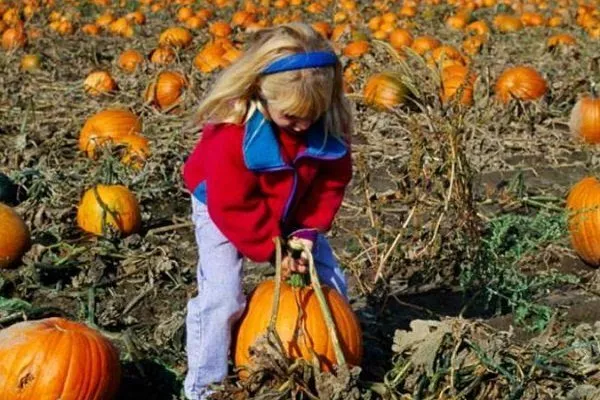
Soil preparation
To grow tasty and juicy fruits, it's important to select the right soil to suit the needs of the Konfetka variety. Proper soil composition and structure are key to consistent fruiting.
Requirements:
- The area should have enough sunlight and space.
- The soil can be any, but it is advisable to give preference to light loam.
- Before planting, the soil is dug up to the height of one shovel blade.
- To enrich the soil, add organic fertilizer. Slurry or compost is suitable for this purpose, at a rate of 6-7 kg of fertilizer per square meter.
- If the soil is too depleted, superphosphate and wood ash are added.
- In fertile soil, fertilizer is applied primarily to planting holes. One cup of wood ash and 50 grams of superphosphate are needed per hole.
Seed preparation
Seeds need to be prepared for planting in open ground and for seedlings. The methods used are the same. Here's what to do:
- First, remove the hollow parts. This can be done manually or by placing the seeds in water (unsuitable seeds will float to the top).
- Since this variety is susceptible to disease, the seeds are disinfected beforehand. You can use a weak solution of potassium permanganate, aloe juice, or hydrogen peroxide diluted in water. Leave for 6-7 hours.
- After treatment, the seeds are soaked in warm water. The liquid is heated to 45 degrees Celsius, and the seeds are placed in it for a couple of hours. This should be done three days before planting.
- After this, transfer the soaked elements to a piece of gauze soaked in water. Leave the material in the room to rest, moistening the cloth daily.
- When the first sprouts appear, the seeds can be moved to a cooler location, which will increase their cold resistance. They can be kept in this location for up to 2 days.
- ✓ The optimal soil temperature for planting seeds should be no lower than 12-13°C, but for better germination it is recommended to wait until 15°C.
- ✓ To prevent diseases, before planting, seeds must be treated not only with potassium permanganate, but also with biofungicides, such as Fitosporin, to enhance protection.
Planting seeds for seedlings
Various containers are used for planting seedlings—peat or plastic cups, wooden boxes, etc. The main thing is to avoid damaging the root system during transplanting. The containers are filled with a well-drained substrate—soil mixed with peat and sawdust.
Rules:
- seeds for seedlings are planted 21-23 days before transplanting into the garden;
- the grains are placed at a distance of 5/10x5/10 cm from each other;
- the seeding depth is maximum 4 cm;
- During planting, lightly water the soil with water at room temperature;
- the container with future seedlings is covered with film and placed on a windowsill where there is a lot of sunlight;
- after the primary shoots have formed, the cover is removed;
- When 2 or 3 full leaves appear, the seedlings are considered ready for planting.
Planting seeds in the ground
How to properly plant seeds directly into the soil:
- the soil temperature should not be below 12-13 degrees;
- most often the planting time falls in the second half of May;
- In the pumpkin plot, it is necessary to make holes that are watered;
- the seeds are planted in them with the sharp end down;
- bookmark depth – 7-8 cm;
- distance between bushes – 90-100 cm;
- distance between rows – 1-2 m;
- 2 to 4 grains should be placed in one hole;
- After the seedlings appear, the sprouts are thinned out (only one stem remains);
- When thinning, it is strictly forbidden to pull out seedlings by the roots, which will damage the root system (excess elements are cut off with scissors).
Watering
The frequency of soil irrigation is determined by weather conditions and climate. To find out whether it is necessary water the pumpkin, it's enough to inspect the soil surface. If dry cracks have formed, irrigation is necessary.
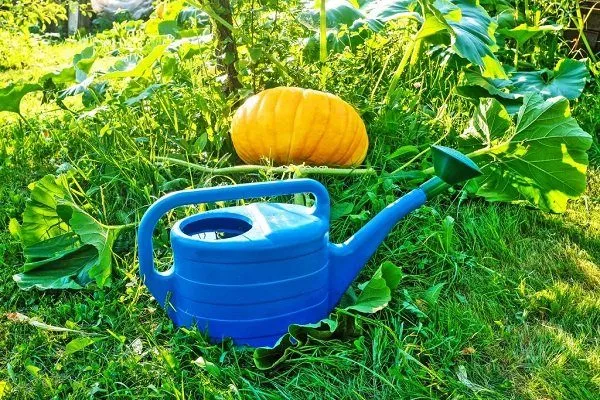
The procedure is carried out in the evening. Water should not come into contact with the leaves. Watering should be stopped 7-10 days before harvest. The water should not be cold.
Weeding and loosening
Loosening the soil is necessary to ensure sufficient oxygen supply to the plant's root system. Weeding is necessary to remove weeds, which feed on nutrients, absorb moisture, and spread diseases and insects.
Loosening and weeding the soil should only be done before the rows close. That is, until the plants begin to intertwine. If planting occurs in mid-May, the final loosening should be done in mid-June. It's best to perform these "procedures" after watering.
Bush formation
Candy doesn't grow as large as other pumpkin varieties. Therefore, there are no special requirements for shaping the bush. Pruning is necessary in the following cases:
- crookedness of shoots;
- presence of disease.
Despite this, many experienced gardeners recommend shaping the bush, arguing that it increases yield. Leave only two shoots, pinching their tips 70 cm from the stem.
Top dressing
Fertilizing the Konfetka variety is a must. Here's how:
- The first fertilizer application is made 14-15 days after planting the seeds or seedlings. Nitrophoska is applied at a rate of 10 grams per plant.
- The second feeding is done when the shoots are forming. Nitrophoska is used again, but the amount is 15 grams.
- During the growing season, apply chicken manure or mullein, diluted with water at a ratio of 1:10. It is essential to thoroughly water the beds before fertilizing.
- During the pumpkin ripening period, water the plants with liquid manure (1:10 with water). Three pumpkin plants require 10 liters.
- Before fruit formation, it is recommended to add ammonium nitrate at a rate of 1 matchbox per 10 liters of water.
- Before planting, add compost or rotted manure to the soil at a rate of 5-6 kg per 1 m² to improve the soil structure.
- Two weeks after the emergence of seedlings, feed the plants with a mullein solution (1:10) to stimulate growth.
- During the flowering period, apply phosphorus-potassium fertilizers to improve fruit set.
Potential difficulties
Quite often, new gardeners encounter problems they can't solve. To find a solution, you can use the advice of experienced gardeners:
- If the soil composition is extremely unfavorable, it's necessary to create raised beds. To do this, bring in new soil, mix it with fertilizer and local soil, and spread it directly onto the pumpkin plot.
- It is not advisable to leave many stepsons, as the plant will not have enough sunlight.
- The vines tend to tangle, which reduces yield. Therefore, they need to be untangled periodically by spreading them across the soil in the desired direction.
- Pumpkin crops draw moisture and nutrients from the soil through their roots, then transfer them to their stems and fruits. To ensure the plant receives more of these nutrients, gardeners bury the shoots to encourage the formation of new rhizomes.
- It's best to plant candy after beans, potatoes, and other root vegetables. Avoid planting if zucchini, cucumbers, or squash were grown in the area last year.
- If the crop is growing slowly, for example, due to unfavorable climate or weather conditions, growth stimulants can be used. These include Mycefit, Zircon, Zdraven, and Magic Watering Can.
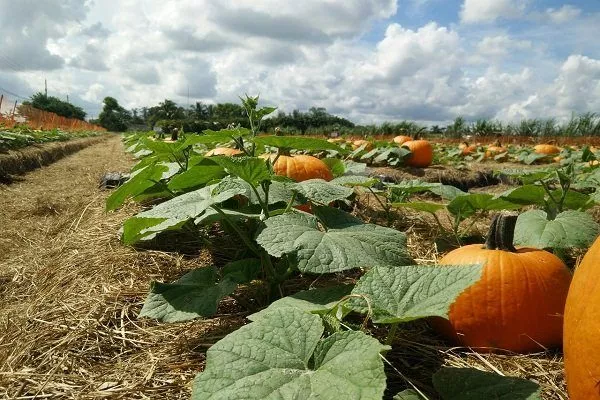
- The candy plant produces large fruits, so it's difficult for the main stem to support the fruit. To make this easier, you can install a support made of boards next to the bush.
Diseases and pests
The most dangerous pests and diseases for Konfetka:
- Powdery mildew. The disease is characterized by a whitish coating on leaves, stems, vines, and fruits. It can be controlled by spraying the affected areas with various solutions:
- copper sulfate in a ratio of 2 grams per bucket of water;
- potassium permanganate – 3 grams per 10 liters of water;
- Bordeaux mixture 1%
- Rot. There are different types: black, gray, root, and white. Different parts of the plant are affected. Treatment involves specialized medications specific to the type of disease.
- Mosaic virus. The ovaries, leaves, and fruits become covered with a distinctive mosaic pattern. Treatment is impossible, as eating infected fruit is prohibited.
- Aphid. The insect settles on the leaves, which subsequently wither and curl. Spraying with Malathion or a soap solution is recommended.
- Spider mite. A sign is the presence of webs on the leaves and stems. This can be eliminated using chloroethanol or an onion peel tincture.
An important condition is preventive measures, which include timely weeding, proper neighborhood, and humidity control.
To protect the plant from fungal and other infections, it is necessary to place a dense material under the ovaries - a sheet of plywood, slate, glass, or a board.
Harvesting and storage
The fruits can be harvested after ripening, which is determined by the following parameters:
- dryness of leaves and stems;
- coarsening of the stalk;
- surface roughness;
- hardness of the skin.
Collection and storage rules:
- The fruits should be cut together with the stems (at least 5 cm).
- Before storage, each pumpkin is carefully inspected for damage and diseases.
- After harvesting, the fruits are placed in a room for a couple of days to dry, after which they are transferred to a cool room for long-term storage (basement, closet, etc.).
- Average ripening period is 120-150 days.
- Shelf life: 10 months.
- Temperature range: from +3 degrees to +15 degrees.
- The humidity level in the room is 70-80%.
Video story about Candy
In this video, agricultural science candidate N.P. Fursov shares his knowledge on caring for the Konfetka pumpkin and explains the special features of this variety:
Reviews
The Konfetka pumpkin variety is considered easy to grow, but it does have its drawbacks, which are more than offset by its advantages. If you're planting Konfetka seeds for the first time, be sure to read the information on planting and care guidelines. Don't forget to check the expiration dates of the seeds, as this affects the yield.