
The Hokkaido pumpkin is a truly striking example of Japanese breeding. This variety produces beautiful, deep orange fruits that are simply breathtaking. This Japanese pumpkin is easy to grow, tasty, and productive—it has everything gardeners value about this crop.
Description of Hokkaido pumpkin
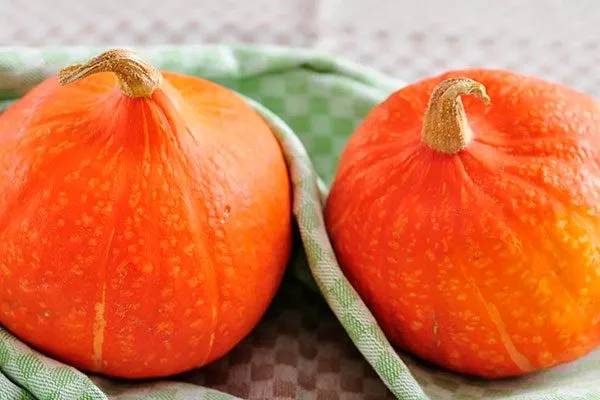
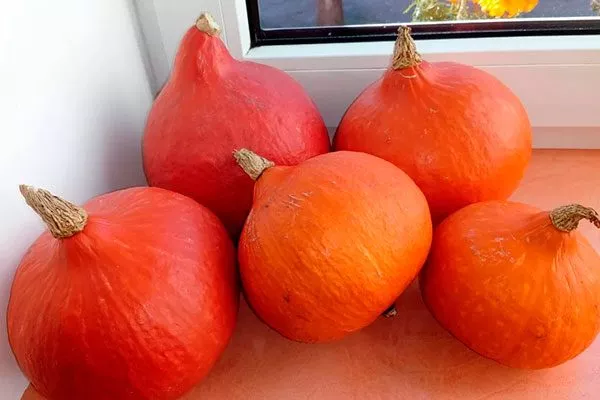
Hokkaido pumpkin bushes are vigorous, with long vines. The shoots are dense, and the leaves are standard and heart-shaped. The plant bears numerous large, rich yellow inflorescences. Hokkaido pumpkin fruits are individually sized, 12-15 cm in diameter, and are very bright and beautiful. Their shape resembles a turban (a type of headdress).
Brief description of fruits:
- Peel color: red-orange.
- Pulp color: orange.
- Shape: turban-shaped.
- Skin: thin, dense.
- Weight: 2-2.5 kg.
History of creation
The Hokkaido pumpkin variety is known to have originated in Japan, but the year of its development is unknown. The pumpkin received its name from one of the Japanese islands, where it was cultivated as early as the 19th century. Currently, the Hokkaido pumpkin variety is grown in many countries, with particularly large plantings of this pumpkin, in addition to Japan, in the United States, Mexico, and South Africa.
The taste of fruits and their purpose
Hokkaido pumpkin flesh is dense and crunchy, with a sweet, nutty flavor. It's neither watery nor fibrous. It contains many vitamins, microelements, and beta-carotene, which is converted into vitamin A in the body.
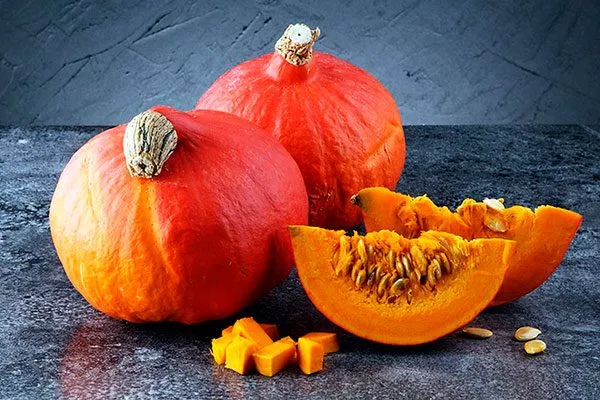
The fruits have versatile uses, making them ideal for a variety of culinary dishes. The pulp of the Hokkaido pumpkin is used to make delicious porridges, soups, purees, jams, and cakes. This wonderful pumpkin can also be eaten fresh.
Characteristics
The Hokkaido pumpkin is a mid-season variety. It takes 100-110 days from germination to fruit ripening. This variety is characterized by good yields, with 4-5 kg of fruit per square meter.
This pumpkin has average cold tolerance and good immunity to major pumpkin diseases. It tolerates heat and prolonged rainfall well.
Pros and cons
It's no wonder the amazing Hokkaido pumpkin is popular in many countries around the world. But before planting this variety in your garden, it's a good idea to familiarize yourself with all its advantages and disadvantages.
Landing
Hokkaido pumpkin is suitable for cultivation in almost all regions of the country, but in the south it is grown primarily by sowing in the ground, and in harsher climates, by seedlings.
Seed preparation
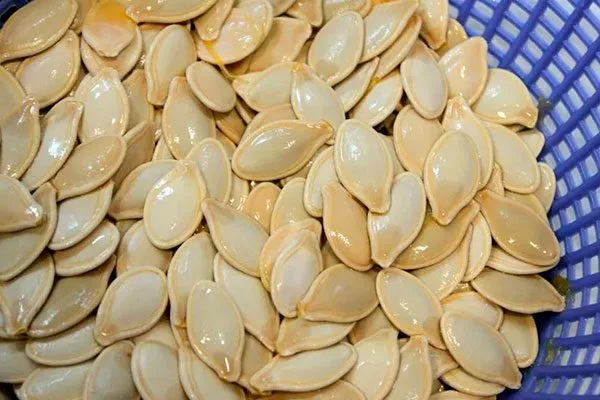
To obtain good germination, healthy, strong and viable plants, it is necessary to properly prepare the seeds.
How to prepare seed material:
- The seeds are sorted, selecting the largest and thickest specimens—they have a greater chance of producing shoots and healthy bushes.
- The seeds are soaked in a disinfectant to kill pathogens. A 1-2% solution of potassium permanganate can be used (1-2 g dissolved in 100 ml of water). If potassium permanganate is unavailable, a 3% solution of hydrogen peroxide heated to 40°C can be substituted. Soak the seeds in the potassium permanganate for 20 minutes, and in the hydrogen peroxide for 10 minutes.
- The seeds are hardened by placing them in the refrigerator for 24 hours. First, they are wrapped in a damp cloth. Warm water is used to soak them.
- It's recommended to germinate the seeds before planting. To do this, place them in a damp cloth or cheesecloth. Once the seeds sprout, you can begin planting.
Pumpkin is a crop whose seeds require pre-sowing warming to improve germination. The seeds are spread on a baking sheet in a 2-cm layer and placed in the oven for 3-4 hours at a temperature of 50 to 55°C. The heat is increased gradually, and the seeds are stirred several times.
Selecting a site
Hokkaido pumpkins are planted in a sunny, spacious area—the long-vine plants require plenty of space and light. The location should be free from drafts and gusty winds. Sandy or sandy loam soils are ideal for the Hokkaido variety. They warm up quickly, allowing the plant to grow quickly.
When planting pumpkins, it's important to follow crop rotation rules. The best predecessors are cereals, tomatoes, potatoes, and legumes. Pumpkins should not be planted in areas previously occupied by squash or cucumbers for at least three years.
Soil preparation
The main preparation of the site for planting is done in the fall. Pumpkins thrive on fertile soil, so organic and mineral fertilizers are added before digging. Before planting, the site is cleared of plant debris, old grass, etc.
In the fall, 4-5 kg of compost or humus can be added to the soil per square meter. Also, 20 g of potassium sulfate or superphosphate can be added to the same area. Various complex fertilizers can be used. Wood ash is added to heavy soils in the fall, and to light and loose soils, in the spring.
To loosen the soil, it is recommended to add coarse river sand or peat along with organic fertilizers. The optimal soil pH is neutral. Pumpkins grow poorly in acidic conditions, and flowering and fruiting are delayed. Ash, slaked lime, and dolomite flour are used to reduce acidity.
Sowing in the ground
The timing of sowing in the ground depends on climate and weather conditions. In the south, pumpkins are sown in late April or early May. When determining the sowing time, the soil temperature should warm to at least +12…+14°C. The air temperature should be between +18…+20°C. At lower temperatures, plastic covers should be used.
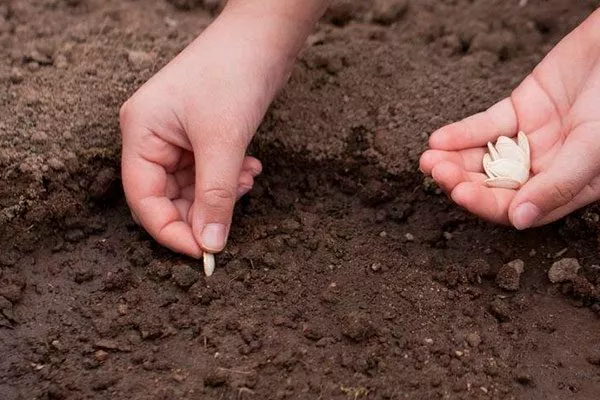
Features of sowing Hokkaido pumpkin in the ground:
- For planting, dig holes 5-10 cm deep.
- It is recommended to use the square-nest sowing method, in which holes are made at the corners of the square.
- Optimal planting pattern: 100 x 100 cm.
- Before sowing, warm, settled water is poured into the holes, approximately 1 liter.
- The seeds are planted 3-5 cm deep. 2-3 seeds are placed in each hole and covered with soil.
- When the shoots appear, the healthiest and strongest sprout is selected and the rest are carefully removed.
- After planting, it is also recommended to water the holes with a solution of Fitosporin (1 tbsp. per 5 liters of water); it disinfects the soil and reduces the risk of diseases.
Seedling method
In the south, pumpkins are easier to grow without seedlings. They produce a harvest during the long, hot summers there without the need for seedlings. In other regions, especially where summers are cool and short, pumpkins are best grown from seedlings. This ensures that the young seedlings are not exposed to the cold and that the harvest has time to ripen.
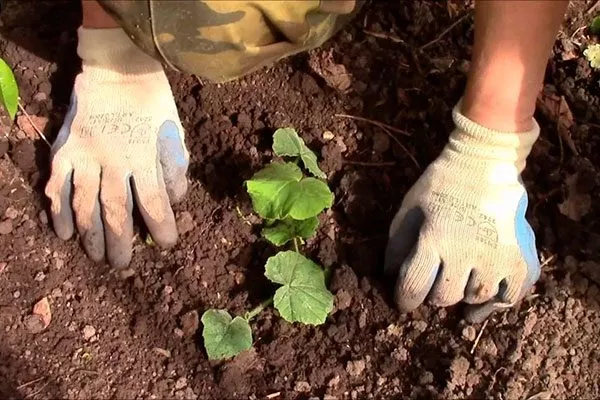
Features of growing Hokkaido pumpkin seedlings:
- Pumpkin seedlings can be grown in any container of suitable size. Individual pots, cups, and even larger containers can be used. The container should have drainage holes in the bottom.
- The containers are disinfected with a solution of potassium permanganate or hydrogen peroxide, thoroughly rinsed with hot water, dried, and then filled with a nutrient-rich substrate. For example, you can use store-bought potting soil such as "Krepysh."
- Instead of ready-made substrates, you can use homemade soil mixtures. There are many recipes, for example, a good mixture is made from lowland peat, humus, turf soil, and cow dung (3:3:3:1). Another good recipe is a mixture of peat, leaf mold, and rotted sawdust (2:1:1).
- The soil in which pumpkin seedlings grow should be neutral or slightly acidic. For looseness, it is recommended to add perlite or vermiculite.
- The seeds are planted approximately 2 cm deep, with the sprout side facing up. Cover the seedlings with plastic wrap and place them in a warm location. The optimal temperature is 25 to 30°C. The warmer the temperature, the faster the seedlings will appear—for example, in as little as 3 days. However, the first sprouts usually appear within about a week.
The timing of sowing pumpkin seedlings depends on climate conditions. In temperate climates, the crop is sown in late April to early May, while in the Urals and Siberia, it's sown in mid-May.
Caring for pumpkin seedlings:
- The seedlings are provided with 12 hours of daylight. If there is insufficient light, artificial lighting is used. If the seedlings begin to stretch excessively (due to insufficient light), the stems are twisted into a ring and covered with soil.
- After removing the film, the temperature is lowered for 3-4 days to +10..+12 °C, then increased to +18 °C. Nighttime temperatures should be 3-4 degrees lower than daytime temperatures.
- Seedlings are watered with warm, settled water. This is done in the morning, pouring water under the roots, being careful not to get it on the leaves and stems. If the soil was prepared at home, add a complex fertilizer; for prepared substrates, a mullein solution (1:10) is added, repeating the process after two weeks.
- Two weeks before, begin hardening off the seedlings by taking the pots outside. First for half an hour, then for 1-2 hours. Before planting, leave the seedlings outside overnight. If the temperature does not drop below 10°C, they will be left outside.
Plant seedlings 20-25 days old. By this time, they should have 4-6 leaves. Dig holes 100x100 cm for planting. Transfer the seedlings carefully, being careful not to disturb the root ball. If this happens, the plant will take a long time to establish itself in its new location and may even die.
Care Features
Hokkaido pumpkins don't require much care; this Japanese variety requires only basic farming techniques. Even the most inexperienced gardeners can easily grow them.
Watering
Watering frequency averages once a week. This frequency depends on soil conditions and weather. In hot weather, watering becomes more frequent. The recommended watering rate is at least 15-20 liters per square meter. During the formation of pumpkin buds, water more frequently.
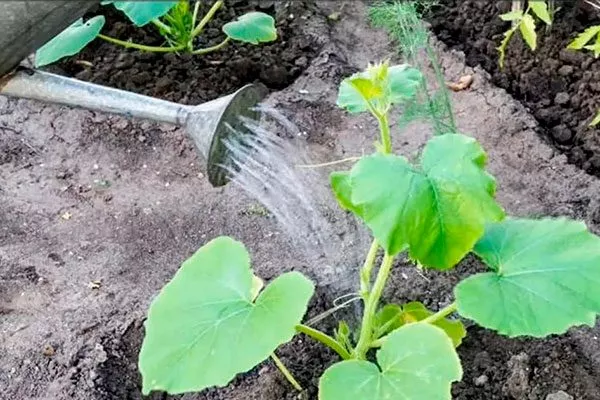
Loosening
To ensure good water and air permeability of the soil, essential for a high yield, it is recommended to loosen it after each watering. Loosening should be done to a depth of 10-12 cm, with no more than 6 cm at the roots. Weeds should be removed at the same time.
Top dressing
Pumpkins respond well to organic matter, so it is recommended to feed them with manure, humus, compost, and chicken manure.
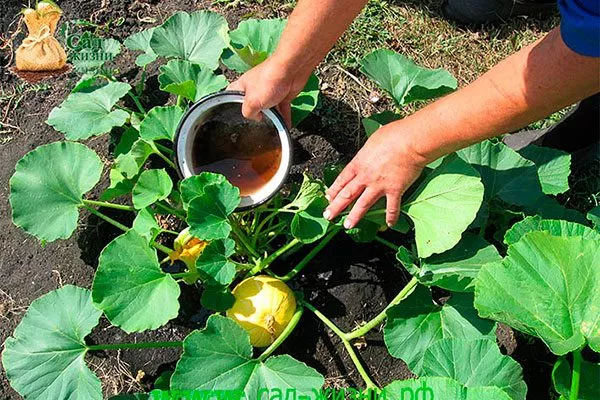
It's best to alternate organic fertilizers with mineral ones—urea, potassium salt, and ammonium nitrate. Pumpkins should be fertilized 3-4 times per season.
Diseases and pests
The Hokkaido variety is resistant to most common diseases affecting pumpkin crops. However, improper cultivation practices and unfavorable conditions increase the risk of infection.
To prevent and treat bacterial blight, plants are sprayed with Bordeaux mixture or copper oxychloride. Powdery mildew is controlled with colloidal sulfur, and root rot is treated with Previkur.
The most dangerous insect pests for Hokkaido pumpkins are aphids, whiteflies, and spider mites. Seedlings can also be attacked by shoot flies. If pests are few, use a soap solution; in severe cases, insecticides are used.
Formation
Hokkaido pumpkins require shaping. If the bush is trained into a single stem, all side shoots are removed immediately after formation, and the top is pinched to slow the plant's growth. This will result in numerous small pumpkins.
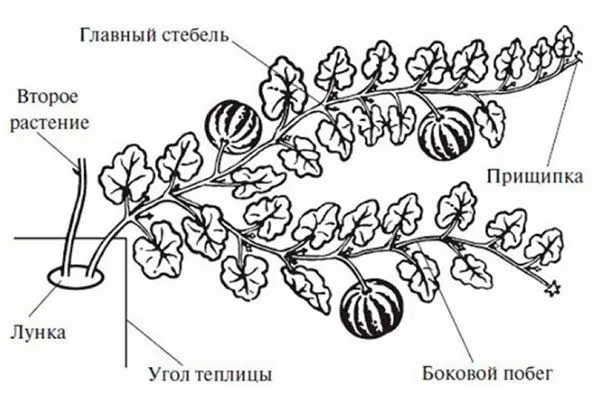
If the plant is trained into two stems, fewer but larger pumpkins will grow. Only two pumpkins are left on the main stem, and one on the side stem. The tops are also pinched. It is also recommended to periodically remove the inflorescences. Two to four pumpkins are left on each bush.
Harvesting
The harvest is in August-September. The fruits ripen unevenly. Harvesting takes place only in dry weather. Ripe pumpkins are cut with a knife or pruning shears, leaving a 3-4 cm stem.
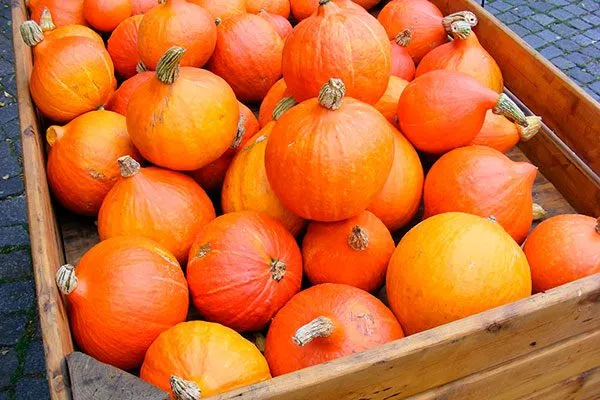
Store the fruits in a dark place at a temperature of +5…+16°C. Adjacent pumpkins should not touch each other. Under favorable conditions, the harvest will last for about six months. After this time, the fruits lose their flavor and quality.
Reviews
Hokkaido pumpkin is a great addition to any garden. Its delicious and beautiful fruits will add new, vibrant, and unusual colors to your life. And you can enjoy new, original, and healthy dishes on your table.