
Halva is a pumpkin cultivar that impresses with its large, delicious fruits. It wins the hearts of not only gardeners and farmers, but also healthy eaters. Characterized by vigorous growth, it reaches impressive heights, making it an excellent choice for those looking to harvest the maximum amount from a single plant.
Description of the bush and fruits
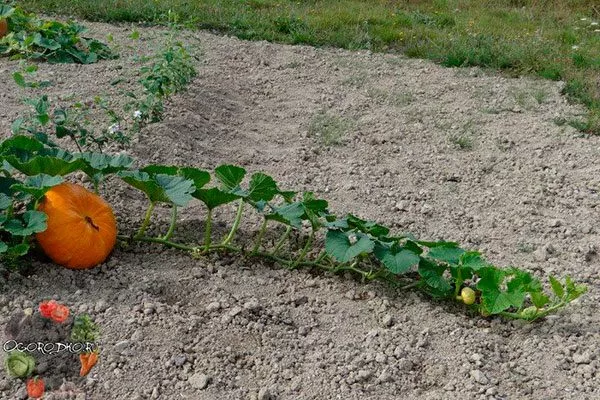
The pumpkin plant has a vining habit, typically growing to 60-70 cm in height, forming a very broad crown. Its leaves are green, large, and somewhat rough to the touch. Each bush can produce up to six fruits.
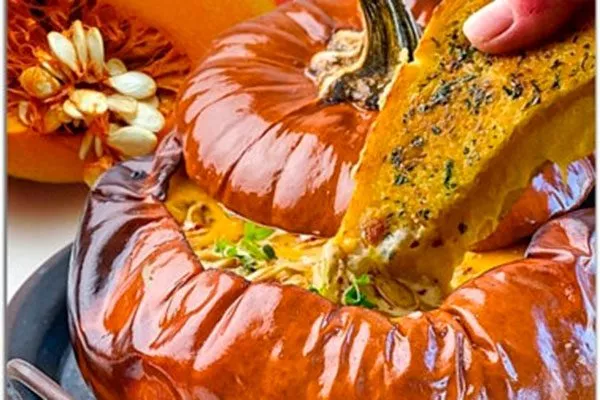
Other varietal characteristics:
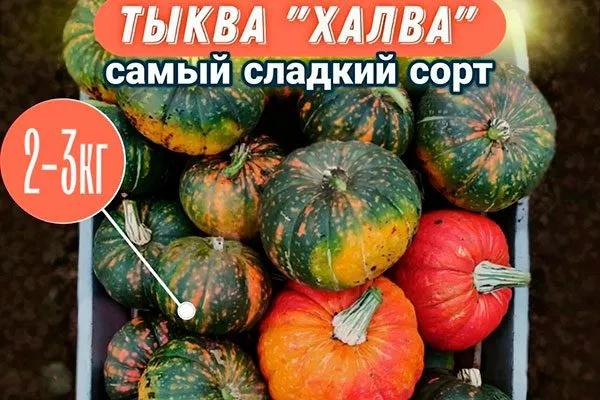
- The portioned fruits of this variety have a flattened shape with noticeable segmentation.
- Weighing up to 2.5 kg, they are colored bright orange.
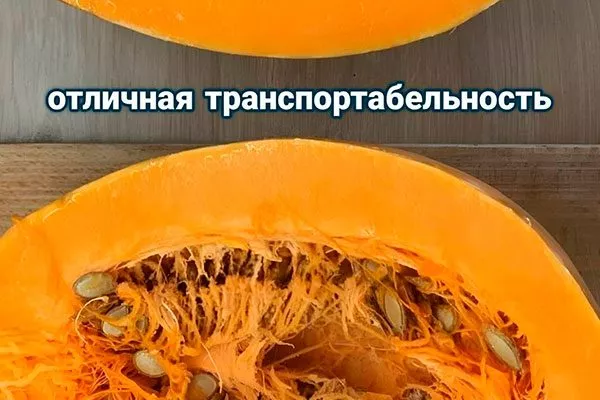
- The flesh of the squash is yellow-orange, and the seed nest is quite small.
- The skin is bright orange, not too thick, but strong.
- A distinctive feature of the pumpkin is its highly pronounced segmentation.
- Thanks to the small seed nest, the pulp can be fully used for preparing a variety of culinary dishes.
Main characteristics
Pumpkin, with its amazing flavor, consistently wins the hearts of food connoisseurs. Its sweet, aromatic flesh and delicate nutty flavor make it a versatile ingredient for a variety of culinary masterpieces. Pumpkin can be eaten raw, added to salads, or used as a side dish for meat dishes.
It fits into any type of culinary context: it can be used to make mashed potatoes, casseroles, and desserts such as pies or jam.
Key Features:
- From sowing to harvesting takes 100 to 110 days. You can tell the fruit is ripe by its color—it should turn bright orange.
- Pumpkin productivity is considered competitive: thanks to rapid growth and the abundance of fruits on each plant, a rich harvest is expected.
- Halva has excellent resistance to the most common diseases and pests, which significantly simplifies the process of caring for the plant and increases the likelihood of obtaining a healthy harvest without the use of chemical pesticides.
- The fruit's shelf life is also excellent—it can retain its quality for over a year under normal room conditions, making pumpkin an ideal choice for long-term storage.
Pumpkin pulp is rich in nutrients: it's packed with vitamins, particularly vitamin A and C, minerals, carotene, potassium, and fiber. Therefore, dishes containing this vegetable are not only delicious and aromatic, but also help maintain normal bodily function.
Growing
To achieve successful growing, it is important to choose a location that provides adequate light and nutrient-rich soil.
- ✓ The optimal soil pH should be between 6.0-6.8 for maximum nutrient absorption.
- ✓ The soil must be well-drained to avoid water stagnation and root rot.
Basic requirements and rules
Planting should be done after the danger of frost has passed, to a depth of 3-4 cm. Plants should be spaced 100 to 200 cm apart.
Other important aspects:
- Pumpkin prefers a warm, sunny environment, protected from cold winds.
- Pumpkin soil type isn't critical: it thrives in both humus-rich sandy and loamy soils. The best location is near a compost heap. Planting near a compost heap gives pumpkins the advantage of consistently moist soil and nutrient-rich leachate.
- Pumpkin crops require intensive fertilization to meet their nutritional needs. Therefore, it's optimal to plant them in the same area at least once every five years.
- When preparing the soil for planting, it's advisable to use organic fertilizers, particularly the decomposition products of legumes. Pumpkin, in turn, has a beneficial effect on subsequent crops, as its leaves enrich the soil with essential micronutrients.
- Before planting, you should thoroughly dig the soil to a depth of 30-40 cm and enrich it with organic and mineral fertilizers:
- manure (6-10 kg per 1 sq. m.), compost and mineral mixtures (20 g potassium and 30 g phosphorus);
- If soil conditions are unfavourable, ash (2400 g) and superphosphate (50-55 g) should be added to each hole.
- Undesirable predecessors for pumpkins are potatoes, melons, watermelons, cucumbers, squash and sunflowers, while optimal neighbors are eggplants, beets, onions, cabbage, tomatoes and carrots.
- To speed up growth, after sowing, the seeds can be covered with plastic film, securing the edges with soil. A week later, when the first shoots appear, cut holes in the cover above the plants. If the weather is warm, the film can be removed completely.
Preparatory work
It is important to carefully prepare the planting material:
- Sort by size. Pumpkin seeds can vary in size, so it's important to separate them into groups based on size and sow each group separately. This will ensure more uniform and healthy seedling growth, as seeds of uniform size are essential for strong, uniform germination.
- Quality control. To avoid planting stale seeds (which won't germinate), make sure they're fresh. Select 4-5 seeds of each type, place them in a damp cloth, and watch for green shoots to emerge.
- Heat treatment. This method improves seed germination and increases the number of female flowers, which is critical for pumpkins. Spread the pumpkin seeds evenly in a 2-cm layer on a baking sheet and bake them in the oven for 3-4 hours at 50°C to 65°C. Gradually increase the temperature and stir the seeds occasionally.
- Stimulation. This process will give the seeds additional energy and promote rapid growth. To do this, soak the pumpkin seeds in a liquid fertilizer solution (such as potassium humate or sodium humate) for a day.
- Hardening. The hardening process will strengthen the seeds' defense mechanisms before they are grown outdoors. First, soak them at a comfortable temperature of 20°C until they swell, then place them in moist sawdust or damp wipes.
Then transfer the swollen seeds to the refrigerator and maintain the temperature at 0°C for 5-10 days. It's important to monitor the seeds to ensure they don't sprout.
The subtleties of sowing
For growing pumpkins in areas with a temperate climate and further north, the seedling method is used, while in the south, direct sowing in open beds is preferable.
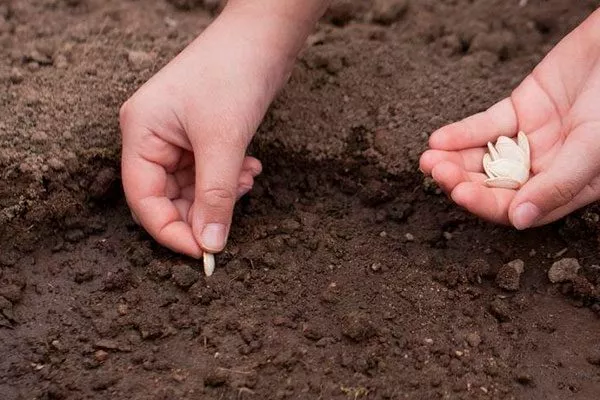
Direct sowing of seeds should be done between May 12th and 15th, when the soil temperature at the seeding depth reaches +13°C. The seeding depth depends on the soil type: 5-6 cm for medium loamy soils and 8-10 cm for lighter soils.
Experienced gardeners recommend sowing in a thick layer at varying depths to ensure the survival of a greater number of seedlings:
- in case of sudden frosts, seeds planted deeper will be better protected;
- If the weather remains consistently warm, the seedlings that appear later can be removed or planted throughout the garden.
Caring for pumpkin
To provide protection from cold, cover young pumpkins with a protective non-woven blanket for the first four weeks. This is especially important for plants planted directly in the soil. Using non-woven materials can significantly reduce the time to harvest, but they should be removed as soon as the large yellow female flowers begin to open, as they are pollinated by insects.
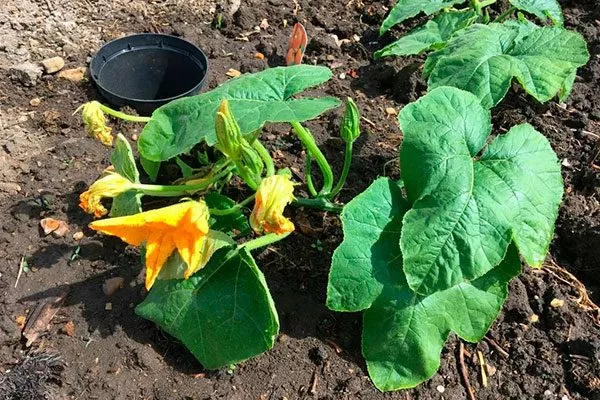
- Two weeks after the seedlings appear, apply nitrogen fertilizer (10 g of ammonium nitrate per 10 liters of water).
- At the beginning of flowering, feed with potassium-phosphorus fertilizer (15 g superphosphate and 10 g potassium sulfate per 10 liters of water).
- During the period of fruit formation, repeat the potassium-phosphorus fertilization.
Basic care procedures:
- Before budding begins, loosen the soil between young pumpkins twice.
- Provided that the required amount of compost was added to the soil when preparing the bed, periodic fertilizing with a diluted nettle decoction will be sufficient to maintain the pumpkin's growth.
Pumpkin needs nitrogen and, more importantly, potassium, phosphorus and other minerals. - Although pruning pumpkin plants is not mandatory, it can increase the likelihood of larger fruits. In this case, it is recommended to prune each vine after the second or third leaf to ensure compact growth and adequate nutrition for the remaining fruits.
Typically, each plant should only have two or three large or four or five small pumpkins to thrive. - In summer, it is important to remember to regularly moisten pumpkin crops:
- After applying fertilizer, plants require plenty of water to prevent the fruits from becoming too small.
- To protect the soil from drying out, it is recommended to use mulch around the root zone of each plant.
- When the pumpkin reaches its maximum size, irrigation should be reduced to a minimum to avoid reducing storage life.
- It is advisable to grow the variety on dry bedding, for example, by placing a wooden board or a thick layer of straw under the bushes.
- The fruits should be placed with the stem facing up so that they ripen evenly and acquire a smooth shape.
- It is necessary to remove lateral shoots to enhance the growth of the main stem.
Reviews
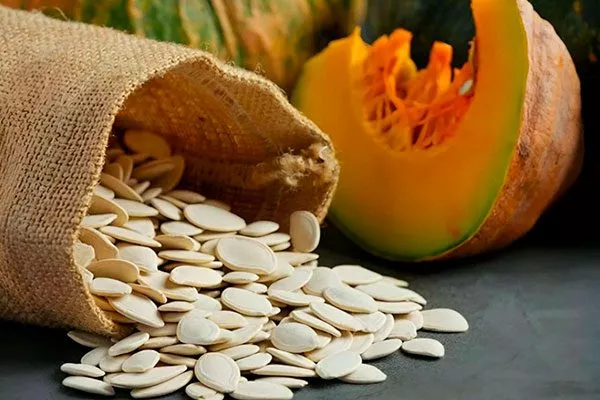
The Halva pumpkin is renowned for its high productivity, but it requires a tailored approach when growing. Its flesh is firm, the seed chamber is small, and the seeds are large, making the pumpkins highly decorative. Because it's a cultivar, not a hybrid, you can harvest your own planting material.