
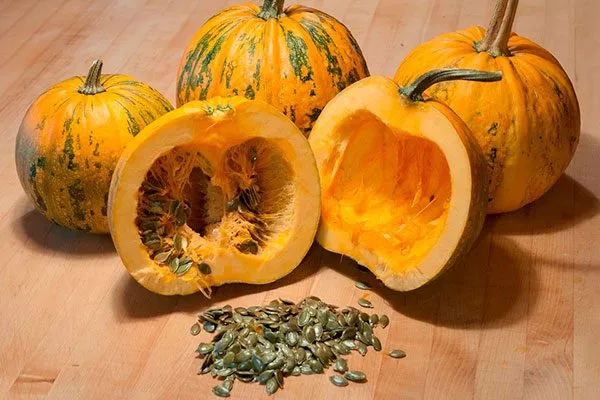
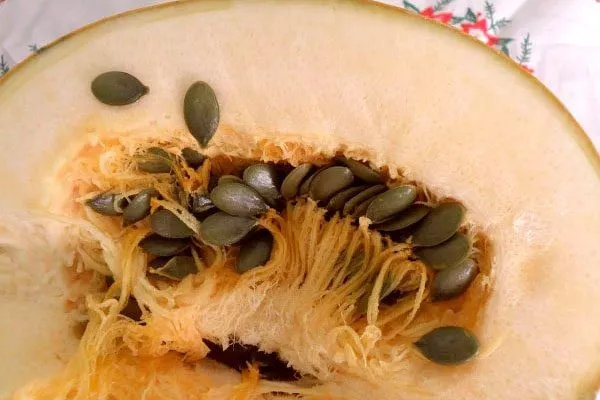
The Golosemyanka pumpkin is a hard-shelled variety named for its "naked" seeds, which have a thin, transparent shell instead of a shell. Golosemyanka seeds are tasty, very nutritious, and contain a lot of oil.
Description of the pumpkin Golosemyanka
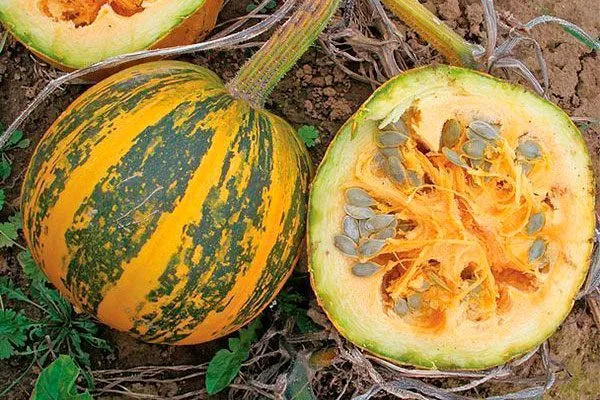
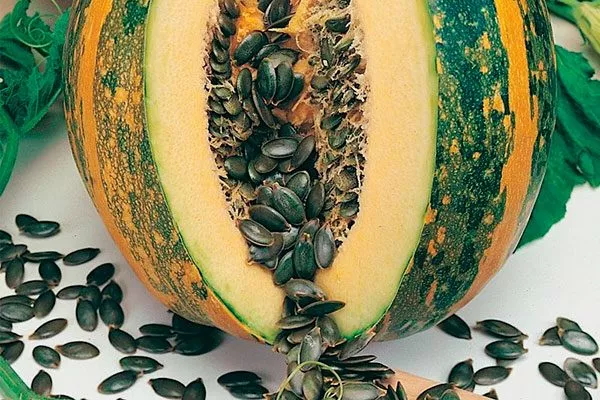
The plant has long, lush vines. Its vines reach 3-5 meters in length. The leaves are deeply dissected, dark green, moderately spotted, and medium-sized. This pumpkin produces single-piece, smooth fruits with medium-thick flesh. The seeds are small, olive-green, and narrowly elliptical.
Brief description of fruits:
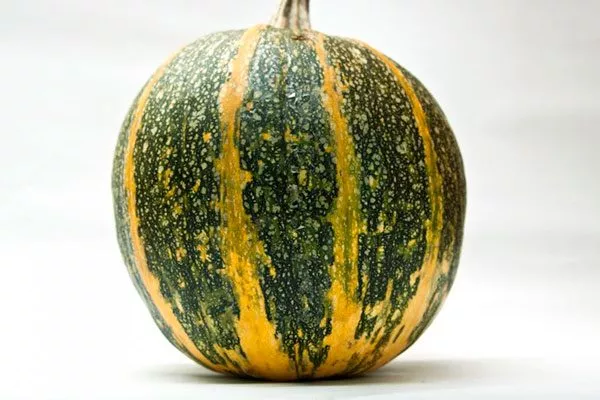
- Bark color: dark yellow with whitish spots.
- Pulp color: yellow.
- Shape: elliptical.
- Flesh: crispy.
- Weight: 4-6 kg.
Who developed the variety and when?
Naked-seed pumpkins first appeared in Austria in the 1880s. They were brought to Russia in the early 20th century. Today, naked-seed pumpkins are grown throughout the world. The originator of the Golosemyanka variety is Lance Company. It was approved for use in 2008. Synonym: Goloseminis.
Taste and purpose of fruits
The flesh of the Golosemyanka pumpkin is mildly sweet and quite tasty. The fruits can be eaten fresh, used for juices, and are suitable for therapeutic and dietary nutrition. This variety is popular in home cooking. The flesh is rich in vitamins E, B1, and B2.
Characteristics
The Golosemyanka pumpkin is a mid-season variety. It takes 100-110 days from germination to fruit ripening. The average yield is 5 kg per square meter. A single bush yields approximately 9-12 kg of fruit.
The variety is characterized by moderate cold resistance and can be grown in almost any region of the country.
Pros and cons
The Golosemyanka variety, along with its advantages, has quite a few disadvantages that those who want to get pumpkin seeds without shells must put up with.
Landing
The Golosemyanka pumpkin can be grown either by direct sowing or from seedlings. The former is primarily practiced in the south of the country; in other regions, growing from seedlings is more effective.
Selecting a site
For planting the Golosemyanka pumpkin, choose a well-lit, warm, and sunny site. Drafts and gusty winds are undesirable; the pumpkin will grow and bear fruit best on south-facing hillsides.
When planting pumpkins, it's important to consider crop rotation. This crop grows well after beets, cabbage, onions, carrots, and potatoes. Don't plant Golosemyanka pumpkins after squash, zucchini, cucumbers, or other pumpkin varieties. This crop significantly depletes the soil, so it should be grown in the same spot no more than once every 3-4 years.
Seed preparation
Seeds for planting can be purchased or collected from fully ripened fruits. The seeds are washed and thoroughly dried. Store them in paper bags. In the spring, the seeds are sorted and soaked in a growth stimulator.
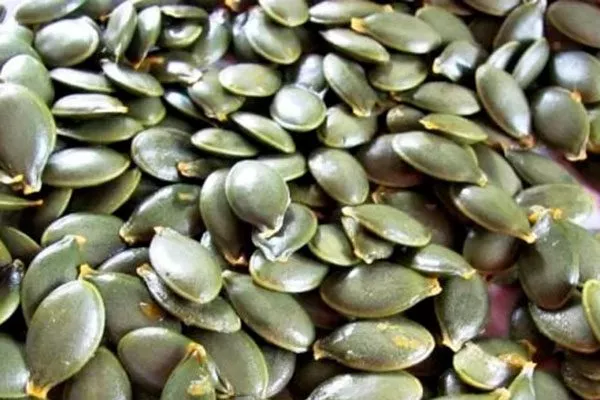
It is recommended to warm the seeds for 8-12 hours at a temperature of +40°C. This can be done, for example, on a radiator. However, the seeds must be wrapped in cloth.
Naked pumpkin seeds are germinated on a cotton pad or toilet paper. Gardeners also often germinate naked pumpkin seeds in steamed sawdust, applying a layer 1-2 cm thick. Once the seeds sprout, they are kept in the light for 10 days and then transferred from the sawdust to the growing medium.
Soil preparation
To grow pumpkins and reap a good harvest, it's important to provide them with favorable growing conditions, including high-quality soil. Preparation of the site for planting naked-seed pumpkins begins in the fall.
Features of soil preparation for planting the Golosemyanka pumpkin:
- The soil is thoroughly dug over, adding organic matter—humus or well-rotted compost—at a rate of approximately 10 kg per square meter. Along with the organic matter, mineral fertilizers are also added, such as superphosphate and potassium chloride, at a rate of 60 g and 30 g per square meter, respectively.
- To ensure the soil is loose and light, coarse river sand or peat is added during digging. The optimal soil pH for pumpkin growing is 6.5–7.5. If it is too acidic, add slaked lime or dolomite flour; if it is too acidic, add iron sulfate or sow green manure.
- In regions with cool springs and a high risk of cold snaps, it's recommended to insulate the soil before planting pumpkins. To do this, dig beds 1.2 x 1 m deep, two spade-widths deep. Fill the holes with organic matter such as manure, compost, and wood ash. Top with soil from the trench, adding a little compost.
- In spring, warm beds don't need to be dug over; simply loosening the top layer is sufficient. Heat-loving pumpkins will thrive more comfortably in such insulated beds.
Sowing pattern in the ground
Sowing times depend on the region's climate and current weather. You need to wait until the soil has warmed up sufficiently, to at least 14°C, and the air temperature to 18–22°C. The threat of recurrent frosts should also pass. In temperate climates, planting should take place after May 15th, and in the south, in April.
Features of sowing the Golosemyanka pumpkin in open ground:
- The soil, prepared in the fall, is loosened to a depth of 6-7 cm.
- The holes are dug according to a 100 x 100 cm pattern. The depth of the holes is from 7 cm, the diameter is 30 cm. A staggered planting pattern can be used.
- Add 5 liters of compost, 1 tablespoon each of superphosphate and potassium sulfate to the holes. Mix all ingredients thoroughly. Instead of mineral fertilizers, you can add a handful of bone meal or wood ash to the holes.
- Pour 1-2 liters of warm, settled water into each hole.
- Once the water has been absorbed and the soil has settled slightly (after about 0.5-1 hour), plant 3-4 seeds in each hole. Place the seeds 5-6 cm deep. Cover the seeds with soil and then mulch with humus or peat.
After a few days, seedlings emerge. The strongest and healthiest sprout is selected. The rest are carefully pinched off.
Sowing pumpkin seedlings
It takes 30-35 days to grow gymnospermous pumpkin seedlings. Planting occurs in May-June, with different timings for each climate zone. Accordingly, pumpkins are sown in April-May; the further north the region, the later the sowing.
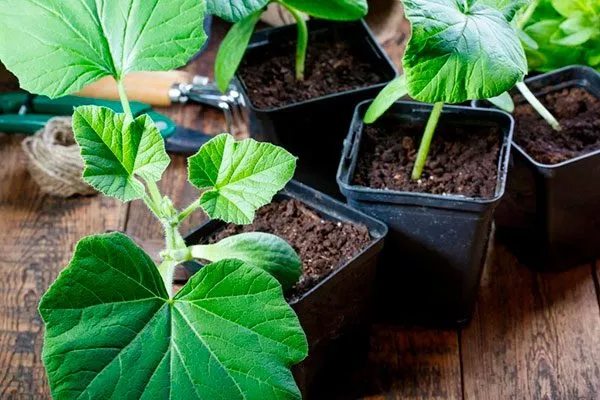
Features of growing pumpkin seedlings Golosemyanka:
- It's recommended to sow pumpkins in individual containers, pots, or cups (500 ml capacity). There's no need to transplant pumpkin seedlings; they should be transplanted directly into the ground.
- Planting containers should have drainage holes to remove excess water. Peat containers measuring 10 x 10 cm are preferable and convenient, as they are planted alongside the seedlings, preventing any damage to the plant's roots, which establish quickly and well.
- If using empty containers, fill them with store-bought substrate or a homemade potting mix. For example, you can make one from peat, humus, and sawdust mixed in a 2:1:1 ratio. It is also recommended to add a complex mineral fertilizer (adjust the amount according to the instructions).
- If the seeds have been properly prepared, tested for germination, warmed, and soaked in a growth stimulator, they can be safely planted one at a time per pot. If there is any doubt about germination and you want to be on the safe side, plant more than one seed. When seedlings emerge, leave one sprout and carefully remove the others.
- The seeds are planted 4-5 cm deep. The crops are watered with warm, settled water and then covered with plastic wrap. The optimal temperature is 22 to 25 °C. The crops are aired daily and moistened with a spray bottle as needed.
Caring for seedlings
Seedlings emerge in approximately 5-7 days. After this, the covering is immediately removed to prevent the sprouts from being damaged by the greenhouse effect. The room temperature is lowered to 15°C to prevent the seedlings from stretching and to ensure they are strong and healthy. They are kept at this temperature for about a week, then the temperature is raised to a comfortable 22°C to 25°C.
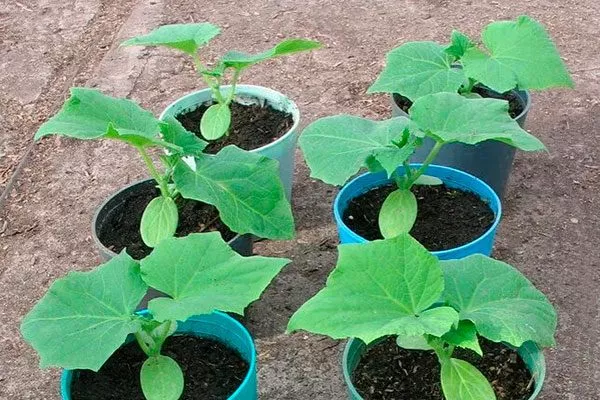
The seedlings require certain care:
- Plants are provided with at least 12 hours of daylight. If natural light is insufficient, artificial lighting, such as phytolamps, is used. If the seedlings become very elongated, the stems are curled into rings and covered with soil.
- Water the seedlings in the morning, as the top layer of soil dries out. Use settled water heated to 25°C. Soil should be soaked to a depth of 3-4 cm during watering.
- Feed the seedlings twice weekly with a complex fertilizer. You can use a solution of ammonium sulfate (15 g), superphosphate (20 g), mullein (1 l), and potassium sulfate (15 g) per 10 liters of water. Use 500 ml of solution for each seedling. Pumpkin seedlings can also be fed with herbal infusions.
Transplanting
By the time you transplant the seedlings into the ground, certain weather conditions must be reached. The soil should warm up to +14…+16°C, and the air to +18…+20°C.
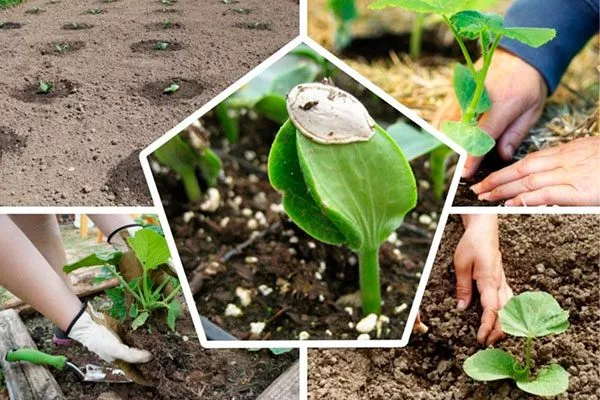
Features of planting naked-seeded pumpkin seedlings:
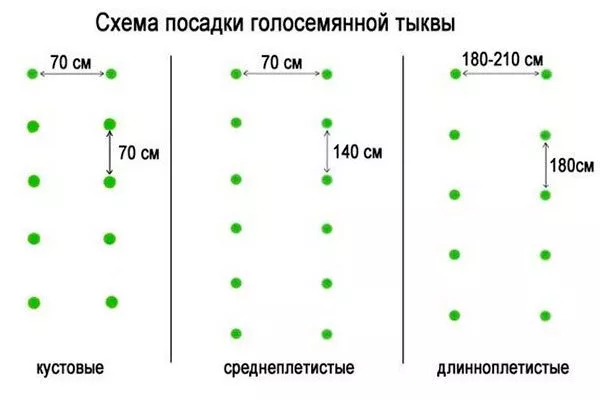
- The variety is a medium-climber, so the optimal planting pattern for it is 70 x 140 cm.
- The optimal depth of the hole is 7-10 cm.
- If the soil hasn't been fertilized since autumn or is initially infertile, it's recommended to add fertilizer to the planting holes. It's a good idea to add organic matter, such as mature compost and humus; pumpkins respond very well to these.
- Before planting seedlings in open ground, it is advisable to treat them with biostimulants Amicid or Biosil.
- You can also add phosphorus-potassium fertilizers to the planting holes—1 tablespoon each of superphosphate or potassium sulfate. Instead of mineral fertilizers, many gardeners use bone meal and wood ash—these are also very good options; just add a handful of each.
- Before planting the seedlings, water the holes with warm water. Wait for it to soak in, then transplant the pumpkin seedlings. Or, if using peat containers, plant them in the same container.
Care Features
The Golosemyanka pumpkin cannot be called capricious, but in order to produce large and juicy pumpkins filled with “naked” seeds, it requires certain care.
Watering
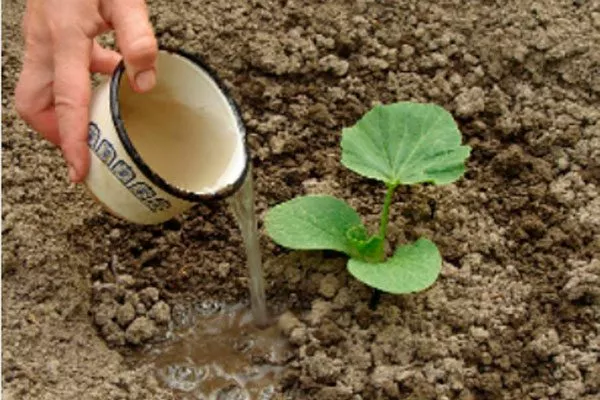
After planting, water the pumpkin daily until it takes root. Afterward, water less frequently, but the soil should always be slightly moist; it shouldn't dry out. Water the pumpkin primarily in the morning, when the temperature difference between the soil and the water is minimal.
Loosening
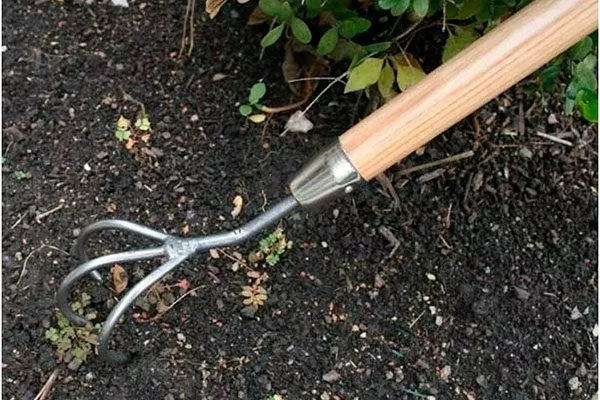
The soil in the beds is regularly loosened to prevent crusting and improve aeration. To reduce the need for watering, loosening, and weeding, the beds are mulched with hay, peat, straw, sawdust, etc. The optimal loosening depth is 6-7 cm.
Top dressing
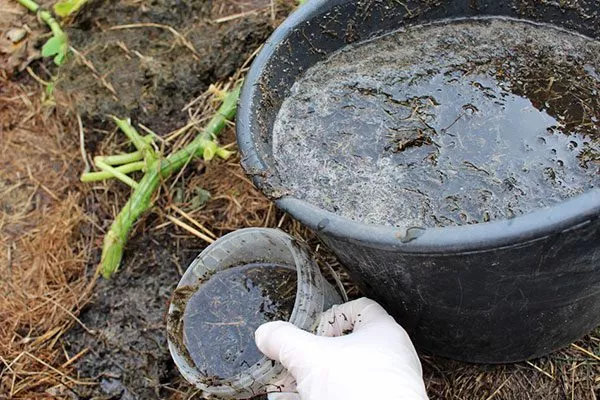
Once the seedlings have established themselves, after about 7-10 days, they can begin to be fed. It's recommended to use organic fertilizers—cow manure, bird droppings, herbal infusions, and ash—alternating with mineral fertilizers. For example, you can add potassium sulfate (30 g per 10 liters of water) or the micronutrient fertilizer "Uniflor-Micro."
Formation
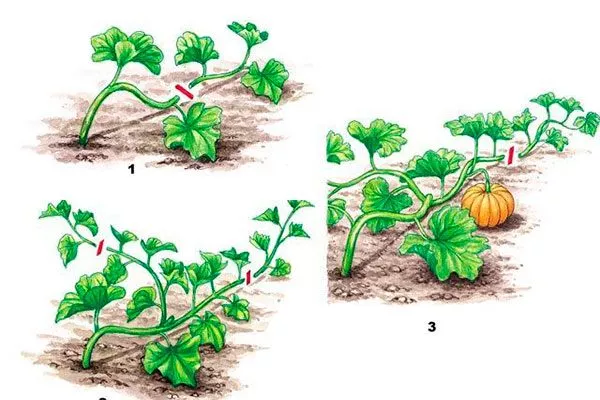
On Golosemyanka pumpkin plants, it's recommended to pinch off the side stems so that only one stem remains. When fruiting, remove any excess stems, leaving only five pumpkins on each plant.
Diseases and pests
This variety has average disease and pest resistance. Under unfavorable conditions, this pumpkin can be susceptible to powdery mildew, mosaic, and various types of rot. It's important to follow all preventative measures (soil digging, crop rotation, etc.), and apply appropriate treatments if signs of disease appear.
If symptoms of bacterial blight appear, treat the bushes with Bordeaux mixture or copper oxychloride. Colloidal sulfur is used for powdery mildew, and Bordeaux mixture or Alirin-B is used for green spot.
The Naked Seed pumpkin can be attacked by melon aphids, wireworms, sprout flies, spider mites, and slugs. To prevent and control pests, you can use decoctions of celandine and wormwood, soap solutions, and onion peel infusions. For severe infestations, treat the plants with chemicals, such as Malathion.
Harvesting
Pumpkins are harvested in early autumn, before the first frost, otherwise they won't keep. Ripeness is determined by the color of the pumpkin and the dryness of the stem. The pumpkins are trimmed with sharp pruning shears, including the stems.
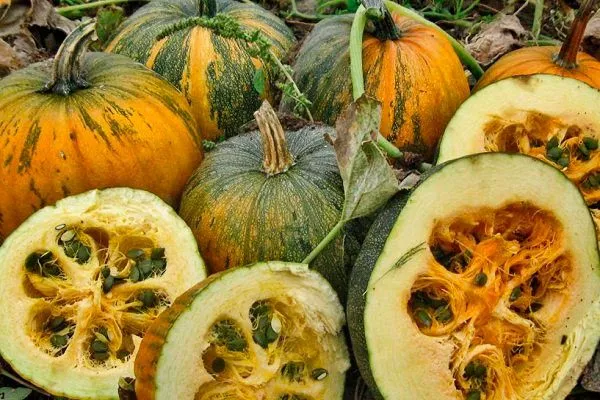
Pumpkins are stored indoors at a temperature of up to 10°C and humidity of up to 80%. The fruits are stacked on shelves; they are not stored on the ground. The pumpkins are arranged so that they do not touch each other. The spaces between the fruits are filled with straw.
Reviews
The Golosemyanka pumpkin is an interesting and promising variety that deserves the attention of our gardeners. It provides not only tasty and healthy pulp, essential for therapeutic and dietary nutrition, but also valuable seeds, a source of oil and a whole host of vitamins and nutrients.