
The Guitar pumpkin lives up to its name, with a unique shape reminiscent of the popular instrument. The large fruits have sweet, juicy flesh. This variety appeals to gardeners because of its easy-to-grow soil and drought tolerance. It thrives in light, fertile soils and doesn't require frequent watering.
Appearance of the bush and fruits
Russian breeders from the Aelita agricultural firm worked on developing this variety. Its creators are N.V. Nastenko, V.G. Kachainik, and M.N. Gulkin. In 2013, it was included in the State Register of the Russian Federation.
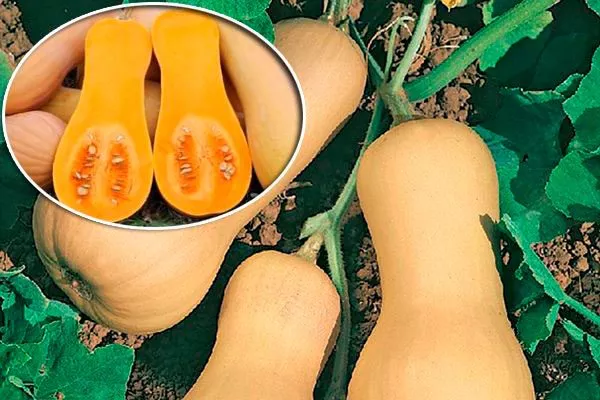
Distinguishing qualities:
- The plants are voluminous, with numerous branches. The main stem grows up to 3 m, covered with soft, spiny hairs that create a rough texture.
- The long vine has tendrils that allow the plant to cling to supports.
- The shoots are covered with large, five-lobed leaves, colored green.
- The fruit has an elongated, club-shaped form, reminiscent of a guitar, hence the name. The average weight of the vegetable is 3.5 kg.
- The skin is dense, elastic, covered with a waxy coating and colored a rich orange.
- The surface of the fruit is smooth, with slight ribbing.
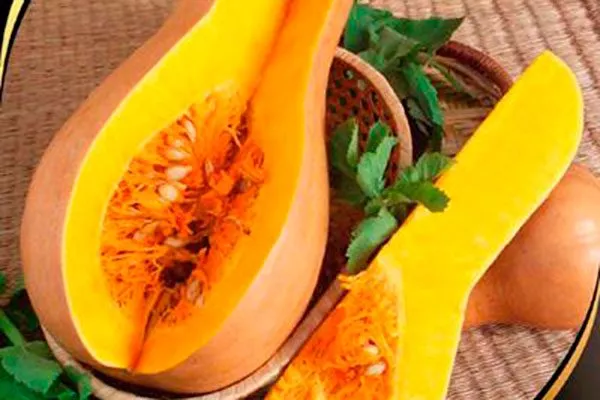
- The pumpkin flesh is bright orange, crisp, dense, and juicy, accounting for 85-90% of the volume. The seed pit is small and located at the bottom.
- The seeds are narrowly elliptical and cream-colored.
The vegetable is versatile in cooking and is used for preparing:
- fresh fruit and vegetable salads;
- boiled, stewed and baked dishes;
- porridge from various cereals;
- fillings for pies.
The flavor is slightly sweet, with a subtle combination of vegetable and fruity notes, leading to the variety's nickname "Honey." After cooking, the pumpkin becomes sweeter and more aromatic. Tasters rated the Guitar 4.9 stars.
Main characteristics
Despite its relatively short history, this variety has already gained popularity among gardeners due to its high productivity and excellent fruit flavor. The cultivar boasts numerous positive qualities.
Productivity, ripening time
Guitar is a mid-season variety. Full ripening occurs in 110-120 days, so harvesting usually occurs in September.
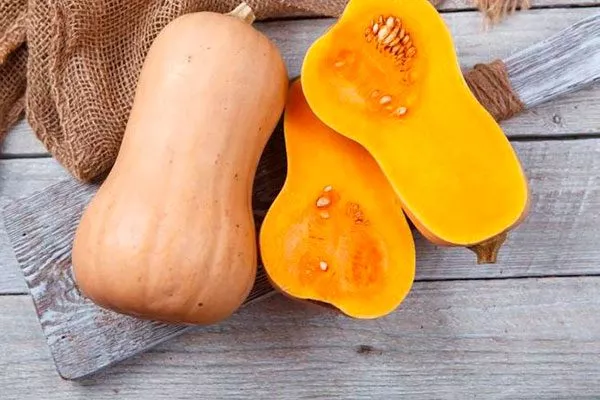
This variety is characterized by good yield: each shoot produces 2-3 fruits. On average, 2.7-3.6 kg of pumpkin can be harvested per square meter.
Growing regions
Guitar is a variety grown most successfully in the Central and Central Black Earth regions. However, it is also suitable for warmer climates.
Gardeners in other regions, including the Western and Far Eastern districts, the East Siberian region, and elsewhere, are also attempting to grow it. In cool climates, it is recommended to cultivate this variety exclusively in greenhouses.
Requirements for soil and climatic conditions
Pumpkin is an exceptionally heat-loving plant, actively growing at temperatures no lower than 18°C, with an optimal range of 20-25°C. This variety is absolutely frost-intolerant: even a short-term drop in temperatures will kill the plant, which must be taken into account when planting.
Guitar is drought-resistant and can withstand even extremely high temperatures. Choose open, sunny sites for cultivation. This variety doesn't have any strict soil requirements, but some basic preparation is still necessary. The soil should be neutral, light, and not waterlogged.
Resistance to diseases and pests
This variety is susceptible to bacterial and fungal infections, as well as pest attacks such as spider mites and aphids. Preventative treatments are important.
The main cause of disease development is often unfavorable weather conditions: sudden temperature drops, prolonged rainfall, and significant fluctuations between day and night. These factors reduce plant resistance and facilitate the development of infections.
Growing Guitar Pumpkin
The crop is typically grown using seedlings. However, in regions with a suitable climate, it can be sown directly from seeds into open ground.
Planting a plant
Plant the seeds in the soil in April. Sort and disinfect the planting material beforehand. Store-bought seeds generally don't require treatment, as information on preventative measures is included on the packaging.
- ✓ The optimal soil temperature for planting seeds should not be below +12°C.
- ✓ To prevent fungal diseases, it is necessary to ensure good ventilation in the greenhouse.
Soak your own collected seeds in a potassium permanganate solution, then place them in a damp cloth for a few days to germinate. Plant them in small peat pots. To improve germination, soak them in a liquid wood ash mixture (dissolve in hot water) for several hours.
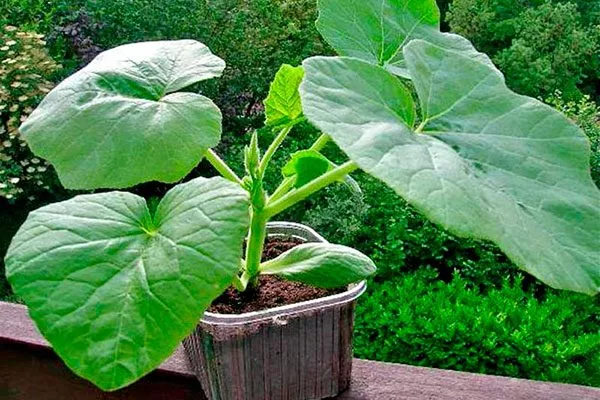
Follow these recommendations:
- When the sprouts appear, select the strongest one and remove the weak ones.
- Place the seedling containers on a windowsill, providing warmth and light. To prevent the soil from drying out, regularly moisten it with room-temperature water.
- Prepare the holes in advance. When the seedlings are 21-30 days old, move them to the garden bed. Water the holes generously and plant the seedlings in rows, leaving a distance of about 1.3 m between them and at least 90 cm between plants.
- After planting, compact the soil and, if necessary, cover with agrofibre.
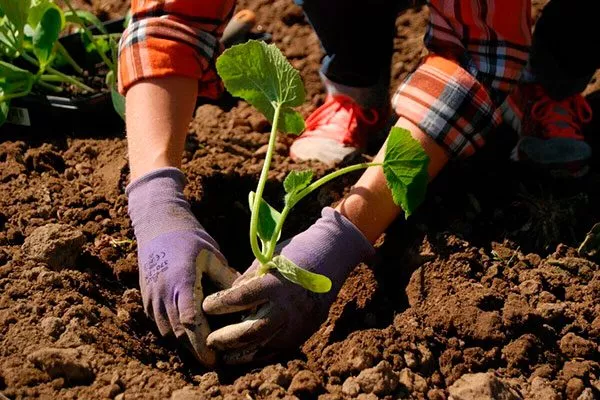
In warm climates, direct planting is possible. First, disinfect the seeds and germinate them, then plant them 5-10 cm deep in the holes. Place several seeds at a time to increase the chances of germination. Water thoroughly and, if necessary, protect from frost. Once the seedlings emerge, thin them out to ensure only strong shoots remain.
Plant care
This cultivar doesn't require complex care, but some agricultural practices can help ensure a good harvest. Follow these simple steps:
- Due to its dense foliage, the plant requires regular thinning. After 2-3 ovaries have formed on the stems, pinch them to avoid overloading and ensure adequate nutrition. Remove side shoots to allow the fruit to ripen.
- Apply the first fertilizer 16-22 days after transplanting the seedlings. Apply the second fertilizer application when the ovaries are forming. Use bird droppings, mullein, or herbal infusions as organic matter.
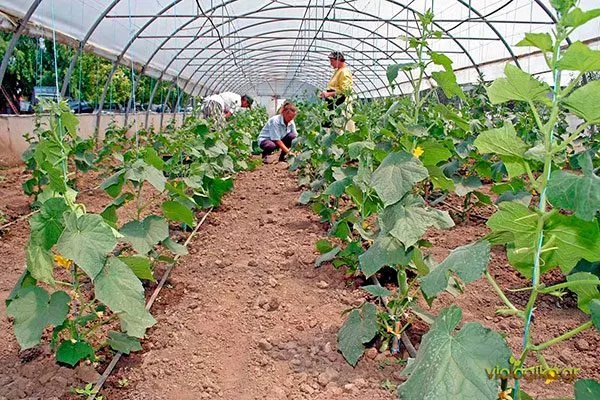
You can also use complex fertilizers for vegetable crops. For additional nutrition, sprinkle wood ash around the roots. - Water the pumpkin only at the roots. Avoid getting water on the foliage, as this can cause fungal diseases. In greenhouses, water the plant twice a week using warm, settled water. In open ground, the plant often thrives on natural precipitation.
Characteristic features of cultivation and potential difficulties
This cultivar performs best in well-lit areas. Plant the seedlings when the risk of frost has passed. When planting, the plants should have at least three well-developed leaves.
You can grow pumpkin bushes in pots, but choose deep, spacious containers to allow the root system to develop freely. When transplanting into open ground, remove the plant with the root ball as carefully as possible. Keep in mind that even minor damage can kill the pumpkin.
Growing tips from experienced agronomists
The crop prefers light, fertile, sandy loam soils enriched with humus. Experienced vegetable growers recommend polycarbonate greenhouses, as the material allows excellent sunlight transmission, and plants require long periods of daylight.
When grown indoors, the bushes require regular ventilation and moderate moisture. Outdoor cultivation requires planting the bushes when the soil temperature reaches 12°C.
Diseases and pests: how to deal with them
The guitar, like many other varieties, is susceptible to a number of diseases and insects. The main ones and their control methods are:
| Disease/Pest | Symptoms | Treatment |
| Phytophthora (fungal disease) | Yellowing and wilting of leaves, appearance of dark spots on fruits and stems. | For prevention, use fungicides such as Topaz, Skor, and Fitosporin. Treat the soil and bushes in the spring before flowering. |
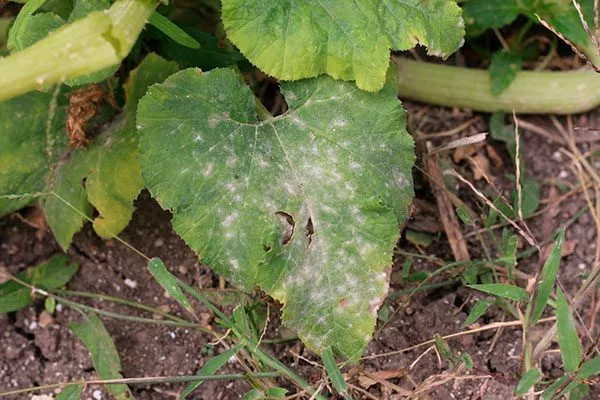
| Peronosporosis (powdery mildew) | Yellow spots on leaves that then turn grey and mummify. | Spray plants with copper-containing products, such as Bordeaux mixture or Hom. Use antifungal agents for prevention. |
| Bacteriosis | The appearance of wet spots on leaves and stems, brown bumps with a characteristic liquid. | Biopreparations such as Trichodermin or Fitosporin are effective for prevention. Apply before signs of disease appear. |
| Spider mite | The leaves turn yellow and damaged, and small webs appear on the underside. | Spray the plants with acaricides such as Fitoverm, Aktara, or Neoron. Follow the instructions for use. |
| Aphid | The leaves and stems become covered with a sticky coating, causing the bush to lose nutrients. | Use insecticides such as Actellic, Inta-Vir, or Fufanon. Folk remedies such as garlic infusion or soap solution can also help. |
| Method | Efficiency | Frequency of use |
|---|---|---|
| Fungicides | High | Before flowering |
| Biopreparations | Average | Regularly, throughout the season |
| Folk remedies | Low | As needed |
To prevent problems, regularly ventilate greenhouses to avoid excess moisture. Practice crop rotation and remove plant debris. Regularly inspect the plants and remove any damaged parts to prevent the spread of diseases and pests.
Harvesting and storage
Harvest vegetables in early fall. Pick pumpkins with stems on to avoid damaging the skin. After harvesting, store the fruits in a cellar or other dark place to ripen. The longer they are stored, the better their flavor will develop.
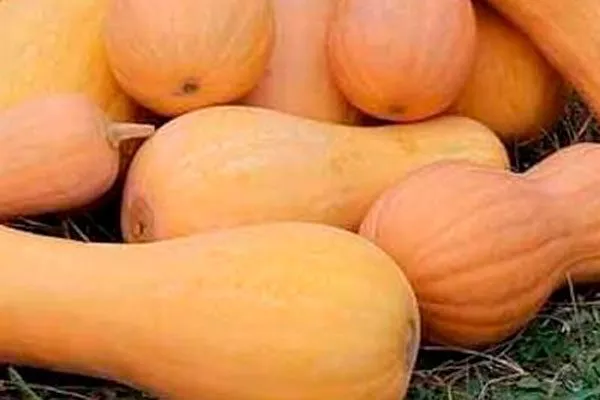
As the fruit ripens, its surface hardens, and the flesh takes on a rich orange hue. In moderate humidity, the harvested fruit can be stored for 3 to 4 months.
Pros and cons
This variety is often chosen by gardeners due to its significant advantages. However, it's important to consider the cultivar's drawbacks.
The following advantages of the Guitar are highlighted:
The main limitation is the plant's heat-loving nature, which makes it unsuitable for cool climate zones.
Reviews
The Guitar pumpkin is a versatile variety that combines good productivity, high disease resistance, and ease of care. Its delicious fruit and excellent shelf life make it an excellent choice for both gardening and greenhouse cultivation. This heat-loving plant produces a bountiful harvest with minimal effort.