
Melon pumpkin has a firm rind and large fruit. Bred by Russian scientists in 2006, it is a mid-season variety (harvesting in 100-120 days) and is characterized by its low maintenance and resistance to cold and drought. A distinctive feature is its long-lasting pleasant aftertaste. It has a significant sugar content of 15%.
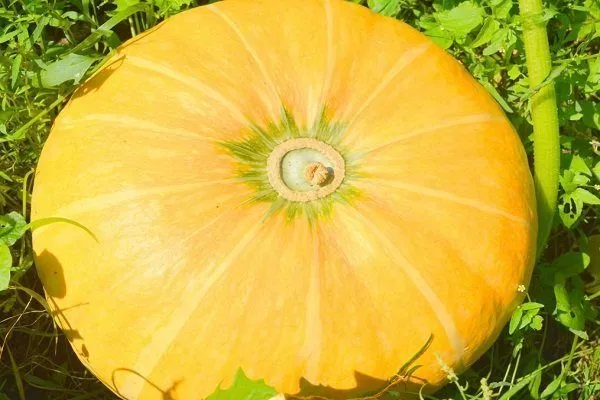
Melon pumpkin
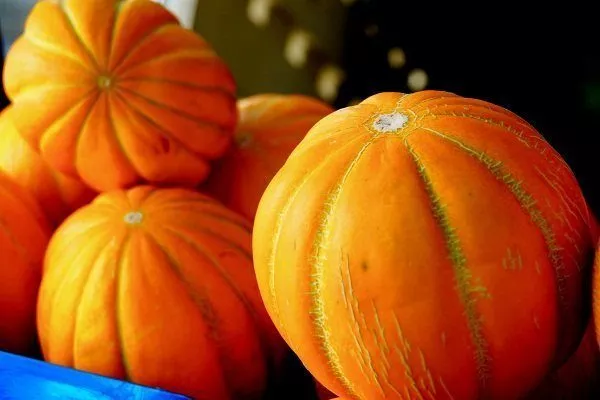
Melon pumpkin has a sweet taste.
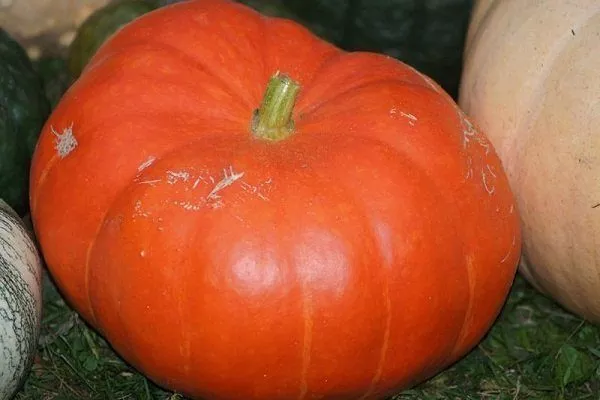
Melon pumpkin grows in any climate conditions
General characteristics
The melon pumpkin is a long-vineed, creeping plant with a branched root system. It adapts to drought and cold (down to 2°C), but requires protection during frosts. Maximum watering is required during the formation of ovaries and buds.
It can be planted using either seedlings or direct-seeding methods, depending on the climate zone (in the south, seeds are sown directly into the soil, while in the north, seedlings are planted first). Melon squash is characterized by high yields – 20 to 45 kg of fruit can be harvested from 1 square meter.
Features of the fruits and bush:
- the length of the taproot is 4-5 meters;
- foliage shape – heart-shaped, five-lobed;
- petiole – long;
- leaf blade size – 20-30 cm;
- flowers are single, unisexual, large in size, bright yellow in color;
- pollination type – cross;
- Sex of flowers: female flowers have short peduncles, male flowers have elongated ones;
- stem – thick, strong, creeping, over 4-5 meters long;
- the shape of the stalk is cylindrical;
- root system – powerful, branched;
- the fruit is large – from 10 to 30 kg;
- the shape is round, slightly flattened;
- crust color – deep yellow;
- pulp color – dark orange;
- pulp structure – dense, juicy;
- the fruit is sweet with a melon flavor;
- The caloric content per 100 grams of pulp is 22 kcal.
The variety has a wide range of applications due to its high sugar content:
- baby food;
- juices;
- milk porridges;
- desserts;
- salads;
- casseroles;
- pies, pastries;
- cream soups;
- second courses.
Not only the flesh but also the seeds, which have a good flavor, are edible. Pumpkin is used in home cooking and industrial applications. Besides culinary uses, this variety is also used in folk medicine:
- restores liver functionality;
- normalizes heart function;
- strengthens the immune system;
- cleanses blood vessels;
- has a beneficial effect on the gastrointestinal tract;
- has a mild diuretic effect;
- The purpose of the seeds is to treat helminthic infestations.
Features of cultivation
The Melon pumpkin grows in any climate, even in northern Russia. The variety is tolerant of low temperatures, but only for short periods. For example, if the air temperature doesn't rise above 5-7°C for a week or more, the plant will stop growing. In these cases, it's necessary to create warm conditions—cover it with agrofibre, thick plastic film, or plastic bottles. If the temperature drops for 1-3 days, the pumpkin will be fine.
- ✓ Soil pH should be between 6.0-6.8 for optimal growth.
- ✓ The soil must be well-drained to avoid water stagnation and root rot.
Peculiarities:
- The soil for Melon Squash should be loose and fertile. To achieve this, the soil should be thoroughly fertilized during digging.
- Crop rotation. Avoid growing pumpkins after cucumbers, watermelons, squash, and zucchini. It's best to plant tomatoes, other nightshade crops, and beans in the pumpkin patch the previous year.
- Soil preparation begins in the fall. To do this, dig the soil to a depth of 1-1.5 spade depths, simultaneously adding organic fertilizer. Manure is excellent for this purpose. Apply 6-7 kg per square meter of the plot. Potassium chloride and superphosphate can also be used.
- The variety does not like too dense soil, so it is lightened by adding river sand.
- In spring, digging is not required, but it is important to remove all weeds along with their root system. After this, the soil surface is loosened and leveled.
- Proper seed preparation is essential. Before sowing, sort through the seeds by hand, removing any damaged or spotted parts. Pay particular attention to whether the seed is still in its shell. If the seed is hollow, discard it.
- The seedlings need to be soaked for 3-4 hours. To do this, place the seed in water at a temperature of up to 50 degrees Celsius, placing the container on a radiator.
- This variety requires seed germination. Cut a piece of cheesecloth, fold it into several layers, soak it thoroughly in water, and place the seeds inside. Transfer the soaked seeds to a shallow container and cover with plastic wrap to create greenhouse conditions. Remove the wrap once sprouts appear. Remember to moisten the seeds daily.
- To help pumpkins adapt to outdoor conditions, harden off the seeds. This is done by placing them in the refrigerator 2-3 days before planting.
- ✓ Healthy seeds have a uniform color without spots.
- ✓ When pressed, the seed should not break easily, which indicates its viability.
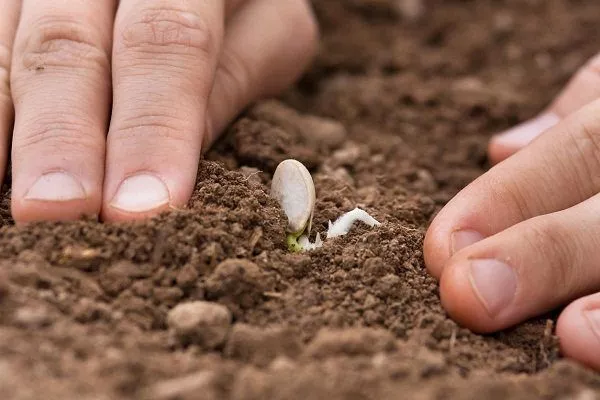
Planting using seedlings
First, you need to prepare the containers. While other crops can be planted in a single container, melon squash cannot. This is due to its delicate root system, which does not tolerate transplanting. Therefore, you can use peat cups, plastic bottles, disposable paper cups, or Tetra Paks from fermented milk products.
If the container isn't peat, it's disinfected by washing and treating it with special solutions or a dark solution of potassium permanganate. A few small holes should be made in the bottom for drainage.
For soil, use a general-purpose gardening substrate or a homemade mixture. What you'll need: garden soil, peat, humus, and sawdust.
Planting and growing stages:
- Soil is placed in the container and needs to be moistened.
- Next, the seed is inserted and covered with soil.
- Light watering is carried out again.
- The container is covered with film and placed on a windowsill on the sunny side (the film is removed when the first sprouts appear).
- The seed placement depth is 2 cm.
- The plant needs to be watered with warm water, settled or rainwater.
- Temperature requirements for seedling growth: 25-30°C (77-86°F) until germination, 15-25°C (59-77°F) for the next week, and 15-18°C (59-65°F) for the next 7 days. After that, room temperature is sufficient.
- 12-15 days after the sprouts have formed, fertilize with mullein or nitrophoska.
- Transplanting into open ground occurs after three full leaves have emerged. Seedling growth takes 20-22 days.
- In the garden, make holes at a distance of 0.8-1 meter from each other, fill with warm water (1-2 liters), and plant seedlings.
- It is better to pick in the morning or evening, when there is no exposure to direct sunlight.
- Place two seeds per container. After they germinate, keep the stronger seed and remove the weaker one. Uprooting the weaker seed is not recommended, as this will damage the root system of the stronger seed. Therefore, carefully cut the stem just below the soil surface.
Planting by seed
Pumpkin seeds can be sown outdoors when the soil temperature is 15-18 degrees Celsius. The temperature can be measured with a standard thermometer inserted 10-15 cm into the soil.
Landing features:
- The distance between holes and rows should be at least 80 cm-1 meter.
- The holes are made 25 cm wide (+/- 5 cm).
- The depth of planting material varies from 6 to 10 cm.
- First, add a couple of liters of warm water to the holes and add some compost. Place 2-3 seeds in the compost. To avoid problems with thinning the plants later, keep the distance between seeds 5 cm.
- Sprinkle with soil and water with water at room temperature.
- Mulching is carried out using peat or humus, which will retain heat and the necessary level of moisture.
- It is desirable, but not necessary, to cover the seeds with film until the sprouts germinate.
Watering
Watering should be regular, especially until mid-ripening. Initially, 2 liters of water should be poured under the root system, then gradually increase the dosage up to 5 liters per plant.
The liquid should be warm and not tap water, as it contains harmful chemicals. To avoid any negative effects, let the water settle for three days.
Thinning and weeding
Thinning is carried out after three normal leaves appear. The procedure is identical to that used for thinning seedlings.
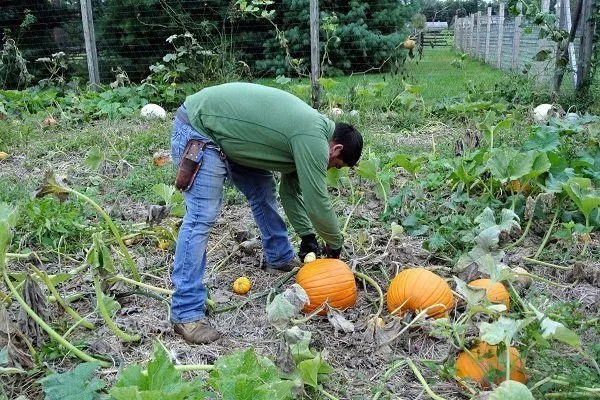
Pulling weeds prevents pests and the spread of diseases. Weeds absorb a lot of moisture and nutrients from the soil, so pumpkins won't get enough of them. Weeding and loosening the soil should be done the day after watering.
Top dressing
Fertilizers are applied as follows:
- 7-8 days after planting in open ground, you need to add slurry;
- during flowering, organic fertilizer is used (manure, humus, chicken droppings, compost);
- When pumpkins are ripening, wood ash and nitrophoska are needed.
Potential difficulties
Potential difficulties and useful recommendations:
- If the seeds aren't sprouting, pay attention to the air temperature and the water used to irrigate the soil. Another possible cause is unprepared seeds, resulting in hollow seeds. In the latter case, you'll have to replant. In the former case, increase the temperature.
- Weak sprouts may be caused by poor soil. The best solution is to apply organic and mineral fertilizers.
- If the roots are rotting, it means you are overwatering.
- If there are few ovaries, pollination is absent (there are few insects). Artificial pollination can help. To do this: pick a male flower, open the petals, and attach the stamens to the female stigmas.
- If there are no ovaries and the foliage is excessive, overfertilization may be the cause. Immediately add infertile soil.
- The fruits are taking too long to ripen. The main reason is insufficient light. Experienced gardeners recommend removing excess foliage that covers the fruit and prevents sunlight from reaching the pumpkins.
- You should not allow the shoots to grow too much, as they will absorb all the nutrients.
- To increase the flow of minerals and moisture to the plants, it is recommended to bury the shoots in soil. This will cause them to produce new roots that distribute the necessary substances throughout the plant.
- To ensure the fruit has excellent taste, watering should be stopped when the pumpkins turn yellow.
- You can prevent fruit from rotting using available materials: place glass, pieces of slate, boards, etc. under the pumpkins.
If you don't have enough space on your plot, use the trellis method for growing Melon Squash:
- install wooden supports along the rows;
- Mount the slats horizontally on them or tie a rope, secure a strong wire;
- attach the vines to the trellis elements;
- run them along the slats or cord.
When growing pumpkins using a trellis, space the holes 50 cm apart. This method not only saves space but also allows the plants to receive sufficient light and oxygen. However, keep in mind that larger pumpkins should remain on the ground, while smaller ones should be placed in a net and secured to a wooden base.
Diseases and pests
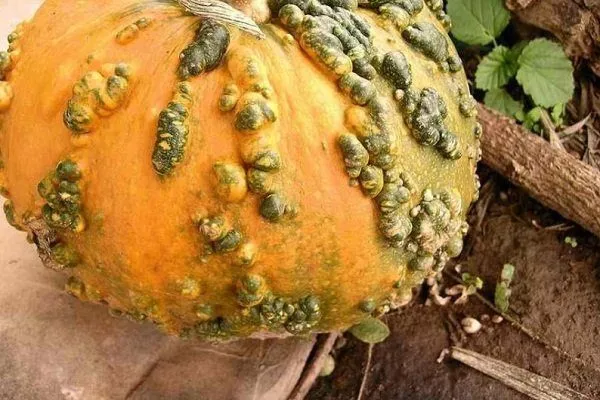
The melon variety is considered disease-resistant, but if not properly cared for, its immunity quickly declines. This can result in the following: diseases:
- Bacteriosis. The above-ground portion of the plant is affected. There is no specific treatment.
- Powdery mildew – the most common disease. It manifests itself as a whitish coating on stems, leaves, and fruits. Chemicals such as Topaz and Strobi are used for treatment.
- White, black, root and grey rot. The most common cause is overwatering of the soil. To resolve this issue, use copper sulfate and appropriate preparations for the type of rot.
- Mosaic virus It is not very common and cannot be treated, since the fruits become unsuitable for internal consumption after infection.
- Anthracnose. Characterized by a pink coating. Treated with Bordeaux mixture.
Pests and insects:
- melon aphid;
- spider mite;
- scoop;
- slugs;
- sprout fly;
- wireworm.
Traditional medicine and medications are used to treat diseases. Spraying is the preferred method of treatment. Insecticides (Akarin, Fitoverm, Iskra), wood ash, tobacco dust, onion peel infusion, and wormwood are used to control insects. Preventive measures are also important:
- control the soil moisture level (avoid excessive moisture);
- observe crop rotation rules;
- remove weeds and loosen the soil in a timely manner;
- treat plants with traditional medicine;
- disinfect seeds, tools, soil;
- do not allow the bushes to become too dense.
How to harvest and store crops?
Pumpkins must be cut off with a knife or pruning shears, stems included. Otherwise, the fruit will dry out. After harvesting, the pumpkins should be laid out in a dry place (indoors or outdoors) for about 10 days to dry thoroughly. After this, the pumpkins are stored in a cool place, such as a pantry, cellar, or basement.
Before laying for storage Pumpkins are inspected for damage and disease—preferably whole and healthy ones will keep well. The shelf life is 12 months or more. Temperatures should not exceed 15 degrees Celsius, and humidity should be 75-80%.
Pros and cons of the variety
Melon pumpkin has mass advantages:
- ease of care;
- excellent yield performance;
- adaptation to any climatic conditions;
- shelf life and transportability;
- storage duration;
- increased sweetness.
A video review of the Melon pumpkin variety can be seen in the following video:
Reviews
The Melon pumpkin is a nutritionally valuable fruit used in cooking and medicine. Its high sugar content allows for juice production without the need for added sugar. Growing this variety is easy and straightforward, as it's low-maintenance. With a minimal investment in seeds, you can reap a bountiful harvest.