
Ornamental pumpkin varieties are a true gem in any garden. These plants require little care and grow very quickly. The fruits ripen into pears, mushrooms, oranges, and even flowers. Read this article to learn about the proper cultivation practices for these varieties and their uses.
Description
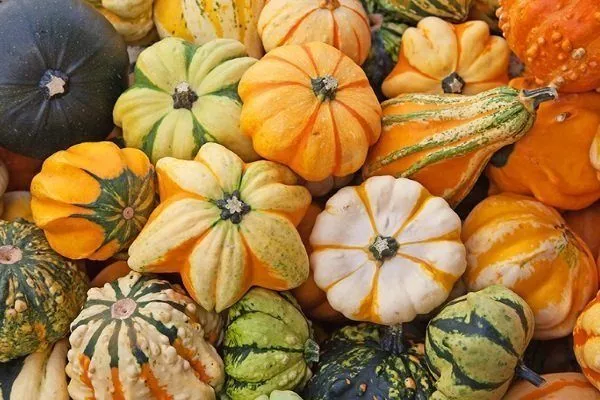
Ornamental pumpkins are annual melons, artificially bred to produce beautiful and unusual fruits. They are predominantly climbing, but bushy varieties are also found. Most varieties are lightweight, feature unusual shapes, or boast interesting colors.
Why do they grow it?
Among the main reasons to plant a crop on a site:
- Decorative qualities. With the help of plants you can hide unsightly buildings.
- Simplicity of agricultural technology. There is no need to spend a lot of effort on caring for plants and shaping bushes.
- Growth rate. Pumpkin vines can grow to a length of about 5 m in a short period of time.
- Durability. The fruits retain their external characteristics for a long time.
Agricultural technology
To properly grow ornamental pumpkins, you need to follow the appropriate recommendations.
Choosing a location
Among the requirements:
- Soil. It should be dense and well heated.
- Availability of support. The plant will climb up it. A house wall will do, or you can put up a trellis.
- Predecessor cultures. Plant in soil previously occupied by cabbage, beets, and legumes. Avoid crop rotation with melons under any circumstances.
- Neighborhood. Avoid planting near onions, peas, and spinach, as they attract dangerous pests.
- ✓ Soil pH should be between 6.0-6.8 for optimal growth.
- ✓ The soil must have high drainage capacity to avoid root rot.
Seed preparation
How it happens:
- Sorting. Remove any seeds that have spots or dark stripes. To remove empty seeds, place them in a glass of water and fish out any that float.
- Warming up. Place in the oven and heat for 10 hours at a temperature of up to 50 degrees.
- Hardening. Wrap in a damp cloth and refrigerate for 10 hours.
- Protection. Place the seeds in a weak solution of ash or potassium permanganate for 2-3 hours.
Growing seedlings
How to disembark:
- Prepare a soil mixture. To do this, mix soil, mineral and organic fertilizers in a ratio of 2 to 1 to 1. You can buy a mixture from the store.
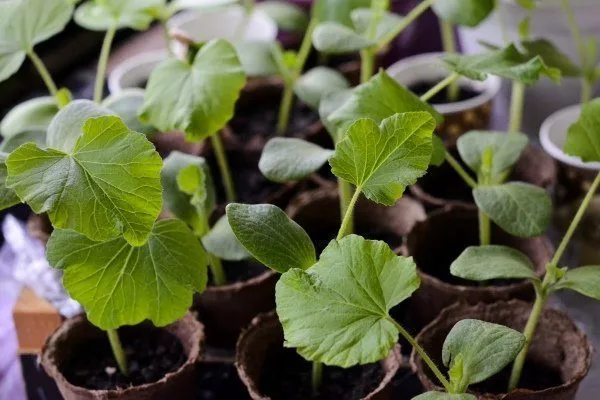
- Prepare containers. It is best to take cups made of peat.
- Plant the seedlings. Fill the pots with soil and make a 5cm hole. Plant one seed per pot. Cover with soil. Water and cover with transparent film. Remove the film after the seedlings emerge.
What does further care involve:
- Select a location. Move the pots with seedlings to a well-lit windowsill.
- Adjust the temperature. It should be within 15-20 degrees.
- Water it. Do this with water at room temperature as the soil dries out.
- Feed them. Do this twice during the seedlings' growth period. Use a mixture of 10 liters of water, 20 g of potassium, and the same amount of superphosphate.
- Harden yourself. Two weeks before transplanting into the ground, start taking the pots with plants outside every day.
- The first feeding is 10 days after emergence.
- The second feeding is 5 days before transplanting into open ground.
The seedling method is more suitable for residents of northern regions.
Planting in open ground and greenhouse
This usually occurs 30 days after planting the seeds for seedlings. This typically occurs between late May and early June.
How to do it:
- Prepare the area. To do this, dig up the soil. Make holes about 10 cm deep. Add fertilizer to each hole: 3 tablespoons of ash and 2 tablespoons of superphosphate per 1 liter of warm water.
- Take the diagram into account. The distance between plants is not less than 60 cm.
- Replant. Transfer the seedling into the hole together with the peat pot and cover with soil.
- Mulch. Use peat or sawdust. Then add a thin layer of soil.
If you are going to grow pumpkins in a greenhouse, ensure good ventilation before planting and during the flowering period.
Planting by seeds
This method is suitable for residents of the southern regions.
What you need to do:
- wait until the soil warms up to 15-20 degrees;
- apply fertilizer;
- make holes at a distance of 40-50 cm;
- plant 2 seeds in each one so that you can pinch out the weaker sprout in the future;
- sprinkle with earth;
- water it.
Care
For better growth, you need to take proper care of your plants.
Watering
Adviсe:
- Frequency. Immediately after planting, you will need to repeat the procedure up to 4 times a week. As the plant grows, you can reduce this to 4 times a month.
- Water. It is better to take it at room temperature.
- Way. It is applied under the root.
Top dressing
They are carried out every 15-20 days. Organic or mineral fertilizers are used.
Loosening and weeding
Weeding is done as soon as weeds appear. Once shoots have formed, this should be done more carefully to avoid damaging the plant. Weeding is usually done before watering, and loosening is done after.
Pollination
As a rule, insects can handle this, but if for some reason they rarely fly to the site or the plants are in a greenhouse, you will have to carry out the procedure yourself.
It is better to do this early in the morning:
- take a brush with soft bristles;
- "dip" in pollen from a male flower;
- transfer to the female flower.
Diseases and pests
The following are dangers for decorative pumpkins:
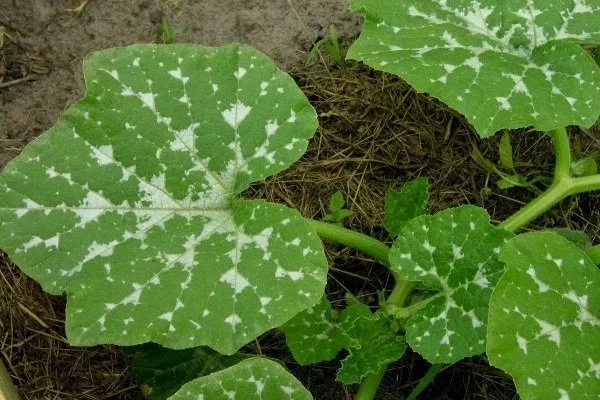
- Powdery mildew. It appears as a white coating that covers leaves and shoots. It causes the death of ovaries and fruits. Spraying with a 1% copper sulfate solution can help combat the problem.
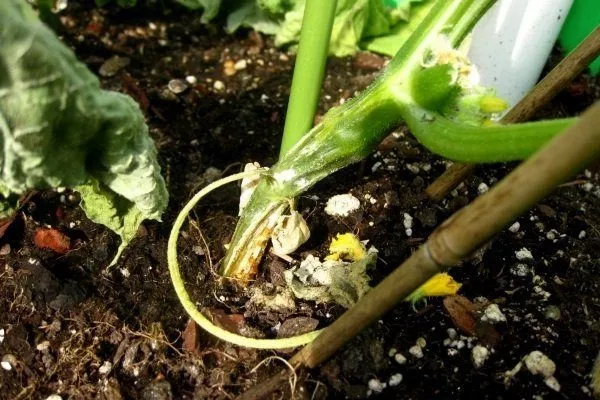
- Root rot. A fungal disease that causes plant death, starting from the roots. It can be prevented by following all watering guidelines.
- Slugs. They chew through leaves and damage fruit. They can be eliminated by treating the soil with a mixture of ash and lime in equal proportions.
- Melon aphid. A parasite that causes leaves to rot and curl. It often occurs when proper care, crop rotation, and crop placement are not followed. Spraying with a mild soap solution can help save the plants.
Powdery mildew of pumpkin
Pumpkin root rot
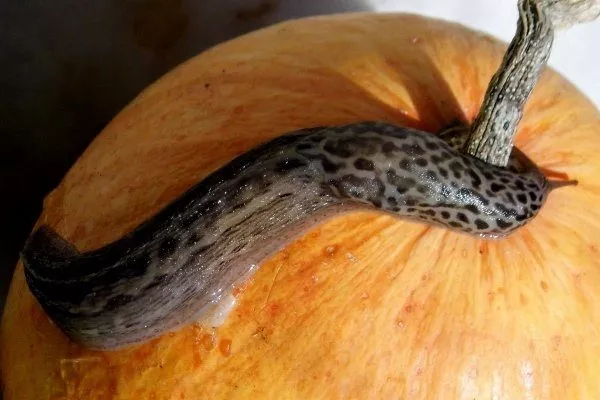
Slug on a pumpkin
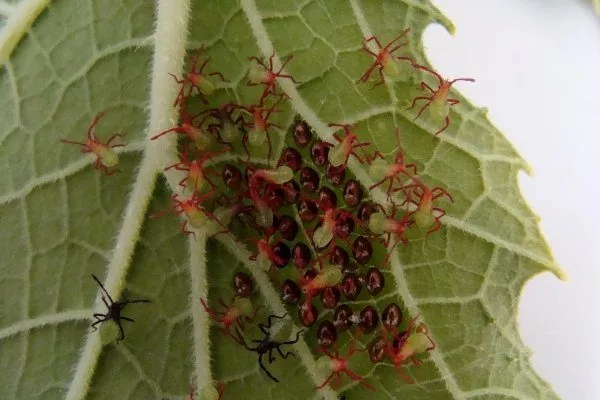
Melon aphid
Harvesting
This usually happens in the fall before the first frost. By this time, the skin should be firm and dense. Pumpkins are cut just above 5 cm from the stem.
Application
The use of pumpkin for decorative purposes is widespread.
First, the unusual fruits decorate the area, and then they are dried, used for crafts and as vessels (for example, for wine or baking dishes).
Some vegetables are edible and quite tasty. However, only those that haven't gone stale and have thin skins should be eaten.
The manufacturer usually writes about the possibility of using pumpkin as food on the packaging with seeds.
How do you dry pumpkins?
The process takes place immediately after harvesting.
How it happens:
- Wash the pumpkins in a solution of soap or baking soda.
- Place them on the floor or a mat in a warm, ventilated area. Do not stack the fruits on top of each other.
- Turn the vegetables over periodically, removing any damaged or rotting ones.
- After about 7 days, when the top layer of skin has dried, move the pumpkins to a dark, well-ventilated area. Place them on a rack or hang them.
- Check the fruits once a week and discard any bad ones.
- Once completely dry, seal with a coat of acrylic varnish to maintain durability and strength.
The drying process can take up to 6 months.
The best varieties
There are several popular varieties of ornamental pumpkin.
| Name | Fruit shape | Fruit color | Yield per bush |
|---|---|---|---|
| Lagenaria | Bottle, swan, jug | Dark or light green | Up to 12 pumpkins |
| Pear | Oblong at the top, widened towards the bottom | Various | About 20 pumpkins |
| Crown | Crown or star | White-yellow, gray-green | Up to 15 pumpkins |
| Fango | Rounded with segments | Two-color | 10-15 pumpkins |
| Little Red Riding Hood | Mushroom or head with a cap | Light lower part, reddish-orange upper part | Up to 20 pumpkins |
| Mandarin | Round, small | Orange or red-orange | About 15 pumpkins |
| Little Boo | Heads of garlic | White | Not specified |
| Warty | Round, oval, pear-shaped, flattened | White and black-green, yellow-orange, gray | Up to 30 pumpkins |
| Sweet Dumpling | Round or cylindrical | White with stripes | 5 pumpkins |
| Orange | Round balls | Golden orange | About 15 pumpkins |
Lagenaria
What you need to know:
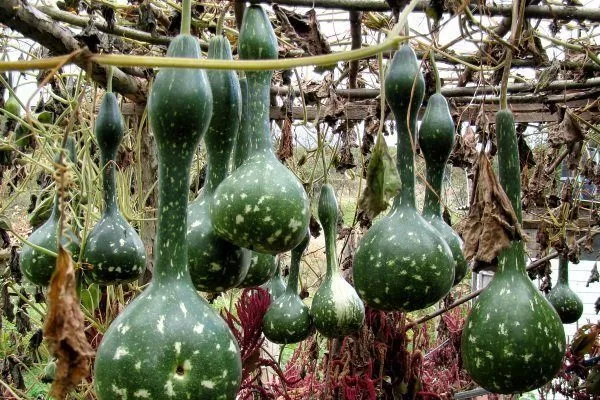
- Form. They are distinguished by their whimsicality and variety. Some vegetables are shaped like bottles, swans, and jugs.
- Bush. Long lashes and slightly rounded, large leaves.
- Color. Dark or light green. Some varieties are covered with white spots.
- Use. Only when very young. They taste like zucchini. They need to be cooked to remove the slight bitterness.
- Productivity. You can harvest up to 12 pumpkins from one bush.
Pear
Information:
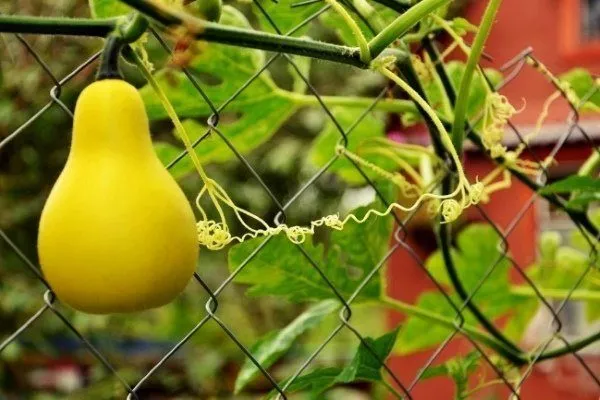
- Form. Similar to the fruit of the same name, it is oblong at the top and widens towards the bottom.
- Bush. They form long, branched shoots with dark green leaves.
- Color. Diverse. They come in light and deep yellow, watermelon-colored varieties. You can also find combinations of two colors: lemon on top and green with a white stripe underneath.
- Use. They don't eat.
- Productivity. About 20 “pears” are collected from 1 bush.
Crown
About pumpkin:
- Form. It resembles a crown or a star, with ray-like shoots extending from a round base. Some claim the vegetables resemble umbrellas.
- Bush. It grows up to 4 m and has good climbing habit. The leaves are large and emerald green.
- Color. Fruits come in white-yellow and gray-green. Varieties combining four colors are also available.
- Use. They have a distinctive, slightly bitter taste and are rarely added to food.
- Productivity. Up to 15 pumpkins are formed on 1 bush.
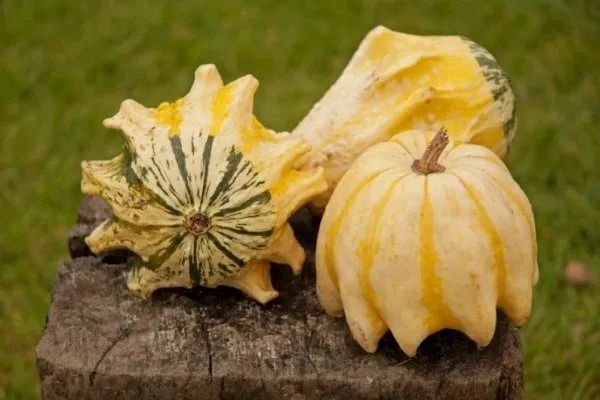
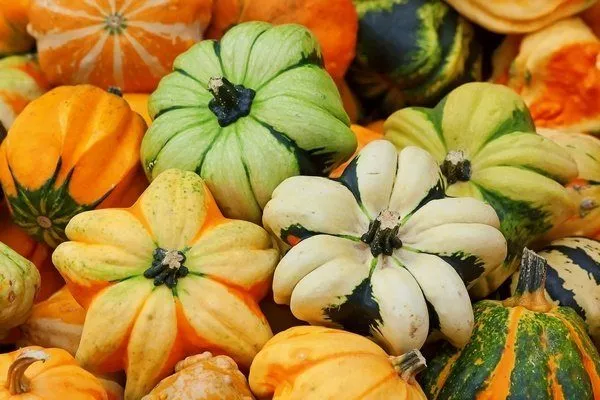
Fango
Main parameters:
- Form. Rounded with clearly defined segments.
- Bush. Medium-sized shoots, up to 3 m. Green, wrinkled leaves.
- Color. From above, it resembles a flower. Typically two-toned, it consists of a base and petals "drawn" onto it. They combine orange, green, gray, black, and yellow.
- Use. Do not add to food.
- Productivity. About 10-15 fruits from 1 bush.
Little Red Riding Hood
Specifications:
- Form. They look like a mushroom or a head with a hat on it.
- Bush. The shoots are not very long, growing up to 3 m. The plants have large funnel-shaped flowers.
- Color. The lower part is usually light, the upper part is reddish-orange or orange.
- Use. Available raw and cooked, they have a pleasant, slightly sweet taste.
- Productivity. They harvest up to 20 pumpkins per season.
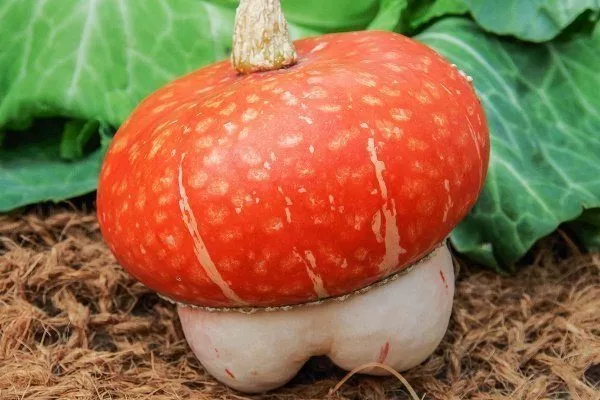
You can see the fruits of the Red Riding Hood variety and learn about its main characteristics by watching the video below:
Mandarin
What is known:
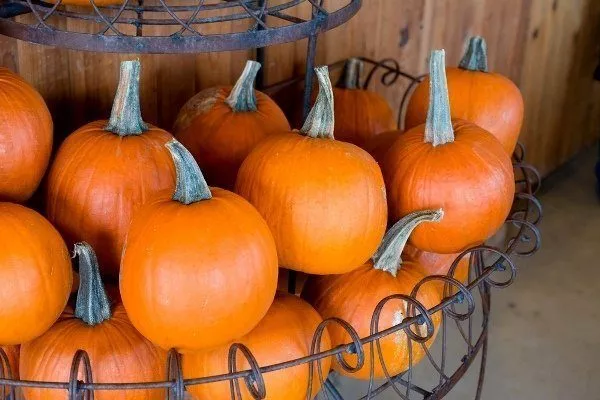
- Form. Very small, round pumpkins, reminiscent of the fruit of the same name. They have weak segmentation.
- Bush. It has good climbing properties.
- Color. Orange or red-orange.
- Use. Not fit for consumption.
- Productivity. About 15 fruits.
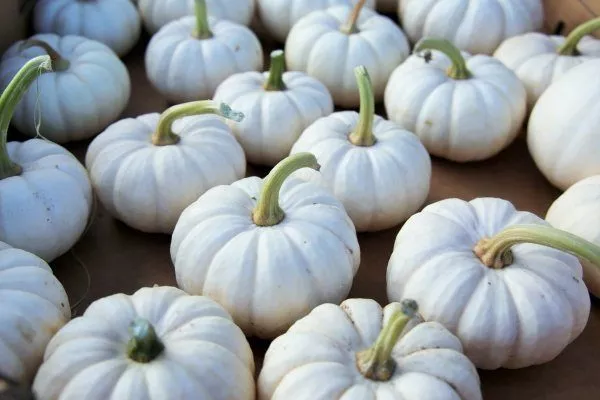
Little Boo
Basic information:
- Form. Small, neat pumpkins grow to resemble heads of garlic. They appear unreal due to their perfectly smooth surface and clear segmentation.
- Bush. Forms long lashes.
- Color. Uniform white with green stem.
- Use. It has a pleasant taste and is suitable for cooking.
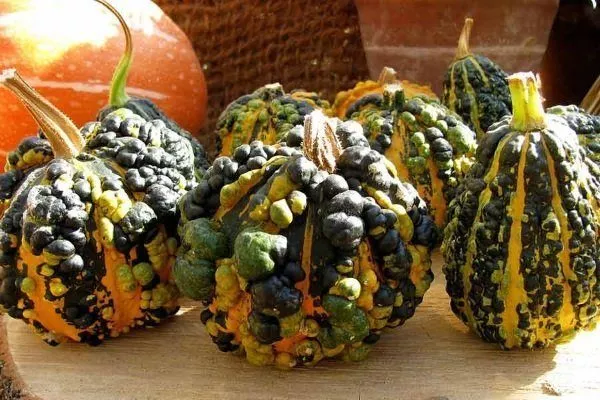
Warty
The following are significant:
- Form. They can be round, oval, pear-shaped, or flattened. All fruits are covered with small growths resembling warts.
- Bush. The vines grow up to 4 m long.
- Color. They come in white and black-green, yellow-orange, grey and with a white tint.
- Use. For decorative purposes only.
- Productivity. Up to 30 fruits ripen on one bush.
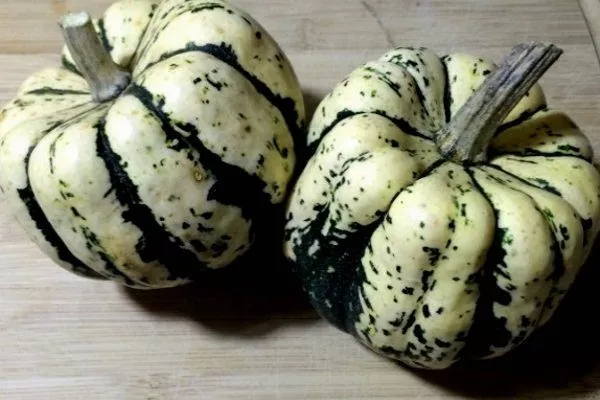
Sweet Dumpling
Facts about the variety:
- Form. Rounded or nearly cylindrical, with clearly defined segments.
- Bush. Climbing plant, about 3 m.
- Color. Ideal white color combined with greenish or orange stripes.
- Use. Very pleasant taste. Can be eaten raw or cooked. It has a rich, fruity aroma.
- Productivity. Only 5 pumpkins weighing up to 500 g grow on 1 bush.
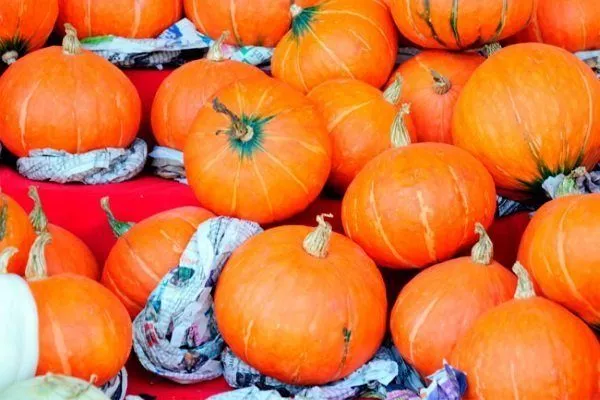
Orange
What we know:
- Form. Round, spherical fruits.
- Bush. It has an average climbing capacity, about 3 m.
- Color. Golden orange with light stripes.
- Use. Not recommended.
- Productivity. About 15 pieces per bush.
Reviews
To learn more about growing ornamental pumpkins, read what gardeners have to say:
The advantages of ornamental varieties include their miniature size, vibrant colors, and unusual shapes. They can be grown in a garden or greenhouse with little effort. The resulting harvest can be used for cooking or crafts.