
Pumpkins aren't exactly a disease-prone plant—they have a fairly strong immunity to infections and pests. Diseases are caused by improper agricultural practices and unfavorable growing conditions. Let's learn about pumpkin diseases, insects, and how to combat them.
What diseases does pumpkin have?
Pumpkins can be susceptible to fungal, bacterial, and viral diseases. Knowing the symptoms and taking simple control and preventative measures can help minimize the risk of infection.
Bacteriosis
It is considered one of the most dangerous diseases and can cause enormous crop losses. It is caused by phytopathogenic bacteria. The infection is transmitted by various means, including water, wind, birds, and insects.
The spread of the disease is facilitated by:
- temperature changes;
- increased soil and air humidity.
Symptoms of bacteriosis:
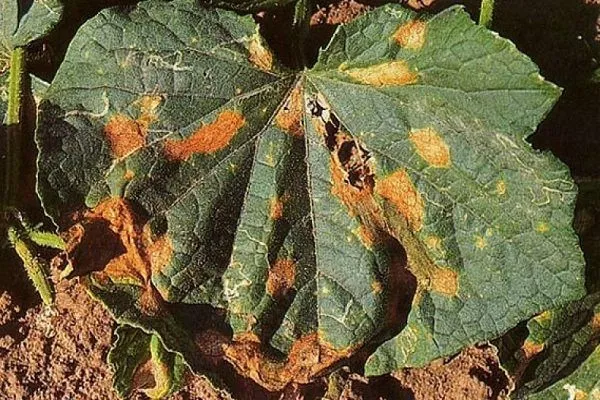
- Dark green spots appear on the leaves.
- The pumpkins have brown ulcers. The fruits are deformed and take on misshapen shapes.
- The leaves take on a mesh-like appearance, riddled with jagged holes.
Bacteriosis persists on seeds and plant debris, so they must be removed from the area and destroyed.
How to treat:
- spray with 1% Bordeaux mixture;
- spray with 0.4% copper oxychloride.
- ✓ The concentration of the solution must strictly correspond to 1%, so as not to cause burns to plants.
- ✓ Treatment should be carried out in the morning or evening hours to prevent sunburn.
To prevent the disease, pre-sowing disinfection of seeds with 0.02% zinc sulfate is carried out.
Powdery mildew
A fungal disease that typically occurs due to poor agricultural practices. It is spread by spores and can be transmitted through plant debris.
Triggering factors:
- dampness and coolness;
- a lot of nitrogen in the soil.
Signs of powdery mildew:
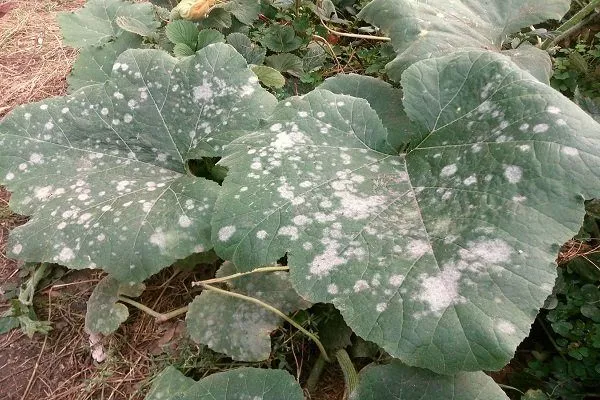
- on the leaves there are round white spots;
- the spots merge into one large one - a white coating covers the entire leaf;
- over time, the whitish coating spreads to all parts of the pumpkin;
- the affected parts of the plant darken and dry out;
- The disease disrupts photosynthesis, which causes a slowdown in the formation of ovaries and a deterioration in the taste and quality of the fruit.
How to treat:
- Diseased plants are treated with colloidal sulfur—either a 70% paste or 80% granules. The solution is prepared by mixing 10 liters of water and 20 g of sulfur.
- Spray with a mullein solution. Fresh mullein is poured with water (1:3) and left to steep for three days. After straining, dilute with water – 3 liters of water per 1 liter of infusion.
- If the above methods do not help, spray the plantings with Topaz.
- ✓ Use only fresh mullein to prepare the infusion.
- ✓ Infuse the solution for 3 days in a dark place to activate beneficial microorganisms.
To minimize the risk of damage, it is recommended to choose modern pumpkin varieties.
If the leaves are heavily infected, fruiting bodies form on them, in which fungal spores mature.
Downy mildew
Downy mildew (another name for the disease) is very similar in appearance to powdery mildew. The two diseases can be distinguished by the color of the coating. Powdery mildew's coating is white, while downy mildew's coating is gray with a purple tint.
Provoking factors:
- high humidity;
- temperature in the range from +16 to +22 °C;
- rains and fogs.
When the temperature rises to +30 °C, the symptoms of downy mildew disappear.
Symptoms of downy mildew:
- the grey coating is concentrated on the underside of the foliage;
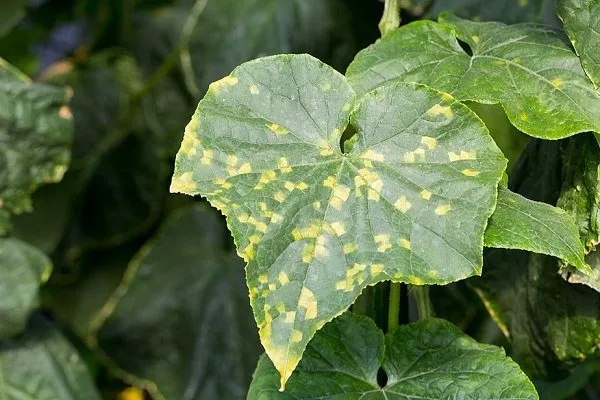
- the outer side of the leaves is covered with yellow spots, over time they begin to darken;
- The leaves lose liquid, dry out, and become brittle.
How to treat:
- Spray with a solution of copper oxychloride (35 g per 10 l of water).
- All parts of plants, both diseased and healthy, are subject to treatment.
To reduce the risk of downy mildew, maintain the established intervals between plants - dense plantings promote the disease.
Root rot
Affects plant roots. Weakened seedlings are usually susceptible to infection. If treatment is not taken promptly, the plants die.
What causes root rot:
- sudden temperature changes;
- watering with cold water.
Symptoms of root rot:
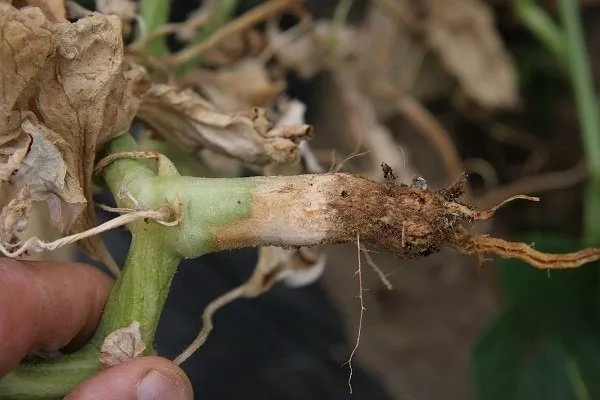
- The pumpkin roots turn brownish-gray and soften.
- The leaves at the bottom of the plant turn yellow.
- The pumpkin stops growing and developing.
Treatment methods:
- Disinfection of seeds in a 0.5% solution of copper salts.
- The top layer of soil is removed and replaced with fresh, uncontaminated soil, peat, sand, or sawdust.
- The above-ground parts of plants are treated with wood ash, slaked lime, crushed coal or chalk.
- Spray with a 1% solution of Fundazol.
Watering with warm water (from +20 °C) and treating the soil with the fungicide "Previkur" helps reduce the risk of root rot.
Green spot
This disease appears in the second half of summer, shortly before harvest. It is spread by wind and water. Initially, symptoms are barely noticeable, but the disease fully manifests itself during storage.
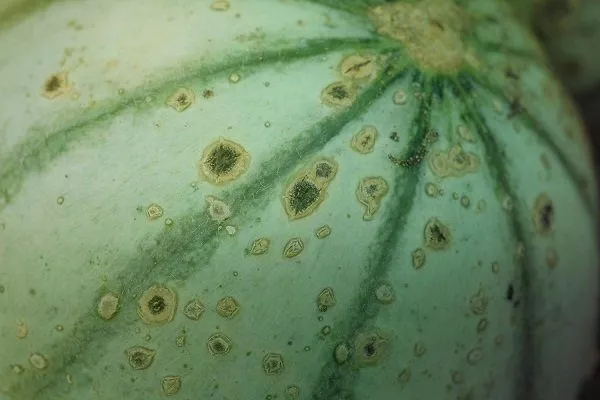
Provoking factors:
- clay soils;
- sudden changes in temperature.
Symptoms of green spot:
- spots appear on the pumpkins - light green or brown in color;
- crust cracking;
- When stored, affected fruits spoil from the inside and quickly rot.
Fruits affected by green spot are not stored; they must be processed immediately after harvesting.
How to treat green spot:
- spraying with Bordeaux mixture;
- treatment with the drug "Alirin-B".
The following measures help prevent green spot:
- use of seedling cultivation method;
- selection of large and weighty seeds;
- disinfection of seeds with aloe juice or potassium permanganate solution;
- seed hardening.
Yellow mosaic
The disease manifests itself very early—as soon as the seedlings emerge. Or a little later—on young bushes. It is transmitted through the soil and by insects such as aphids, whiteflies, and others.
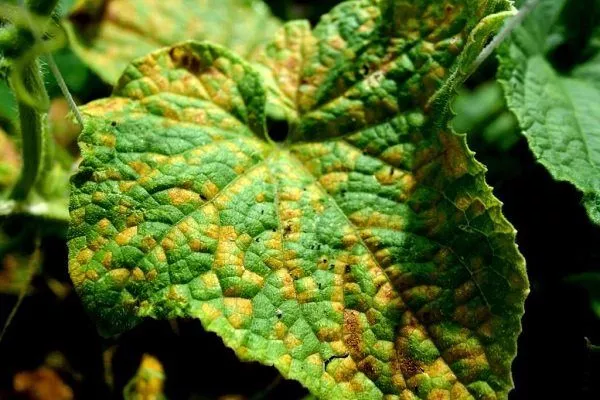
Pumpkins don't have sufficient immunity against yellow mosaic. There's a risk of secondary infection, which in almost 100% of cases leads to plant death.
Provoking factors:
- weeds;
- aphid infestation.
Symptoms:
- on young plants the leaves turn white and curl;
- on adults, the leaves are covered with yellowish patterns;
- the plant looks sick and stops growing;
- The fruits become deformed and do not develop, and their coloring becomes mosaic.
How to treat:
- spray with a solution of malathion;
- If a greenhouse pumpkin is sick, remove the top layer of soil and use a 0.5% solution of trisodium phosphate to treat the greenhouse.
The following measures will help prevent yellow mosaic:
- disinfection of seed material in potassium permanganate;
- treatment with the antifungal drug "Pharmaiod-3";
- treatment of plants with an emulsion prepared on the basis of mineral oils.
After spraying infected crops, clothes are boiled several times – the yellow mosaic virus can persist on fabric for 2 years.
Anthracnose (scarden)
This fungal disease attacks leaves and pumpkins. Fungal spores are airborne and carried by insects in rain.
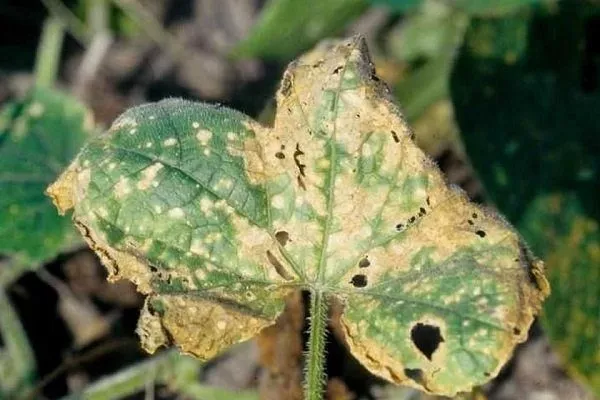
Pumpkins affected by anthracnose are unfit for consumption – their flesh acquires a bitter taste.
Causes of occurrence:
- high humidity;
- presence of weeds on the site;
- high temperature.
Symptoms of anthracnose:
- large brown-yellow spots appear on the leaves;
- over time, the stains dry out and crumble;
- then the infection spreads to the stems and fruits, which become covered with brown ulcers;
- The plant dries out, the pumpkins become wrinkled and rot.
Treatment:
- spraying with 1% Bordeaux mixture;
- treatment with the drug "HOM".
At the first signs of anthracnose, the plant should be treated with one of the above-mentioned preparations. If the plant is completely infected, it should be uprooted and destroyed.
In addition to general measures, anthracnose prevention involves treating plants with sulfur powder.
When harvesting, try not to damage the pumpkin rind, as fungal spores can penetrate the fruit through cracks.
To prevent anthracnose, seeds are treated with ash:
- dissolve 40 g of ash in 2 liters of warm water;
- keep in a dark place for 24 hours;
- soak the seeds in the solution for 6 hours;
- Dry and use for planting.
Fusarium wilt
The pathogen is a soil-borne fungus that can survive in the soil for a long time. It also survives on seeds. Infection occurs through the soil—the fungus first penetrates the roots and then spreads through the stem's vascular system.
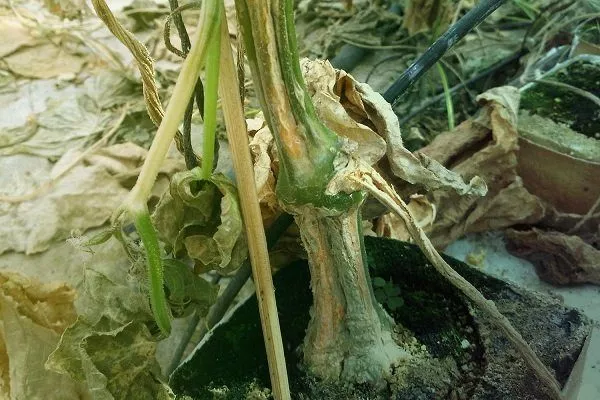
The plant can become infected during weeding and hilling, damaging the roots. The fungus quickly penetrates through wounds and cracks.
Causes of occurrence:
- low temperatures at the germination stage;
- high temperatures during the adult plant stage;
- clayey and loamy soils in drought conditions;
- increased soil acidity.
Symptoms of Fusarium wilt:
- weakening of the root system;
- thinning of stems;
- the affected areas are covered with a white-pink coating;
- The leaves turn yellow if the summer is dry and dry out.
Detecting fusarium wilt in its early stages is virtually impossible, as the disease begins at the roots. By the time symptoms become visible, the entire plant is already affected, and all that remains is to destroy it. Therefore, all measures to combat fusarium wilt are preventative, aimed at preventing the disease.
Prevention of fusarium:
- fertilizing with organic and mineral fertilizers with a high content of phosphorus and potassium;
- treating seedlings with Kornevin;
- soil treatment with fungicides, such as Fundazol, Fitosporin-M, Baktofit, etc.;
- spraying seedlings with a solution of milk and iodine.
White rot
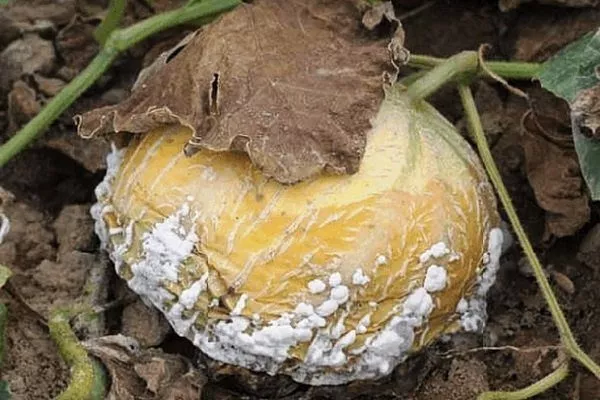
Sclerotinia leaf spot (also known as sclerotinia) attacks pumpkins during the fruiting stage—the fruits and all above-ground parts. It is caused by a fungus whose spores overwinter in the soil and are then dispersed by the wind. The disease affects a wide variety of crops and is widespread throughout Russia.
Reasons for appearance:
- waterlogging of the soil;
- high air humidity – about 90%;
- low temperatures – from +12 to +15 °C;
- watering with cold water;
- tight fit.
Symptoms of white rot:
- a whitish, flaky coating appears on the affected fruits;
- then sclerotia – dark spots – appear on the fruits;
- the affected areas become soft.
As a result of the disease, all affected fruits die on the vine or later, after harvesting. Pumpkins picked from a diseased plant may appear healthy, but they will inevitably rot during storage.
How to treat:
- sprinkle the affected parts with crushed chalk or coal;
- coat the affected areas of the fruit with a paste of chalk, potassium permanganate and water;
- cut out the affected area, capturing part of the healthy fruit.
To prevent white rot, plantings are sprayed:
- a solution of urea (10 g), zinc sulfate (1 g) and copper sulfate (2 g);
- At the three-leaf stage, treatment with Bordeaux mixture is carried out.
Pumpkin pests and control methods
Pumpkin pests are few, and the main control methods are folk remedies. Gardeners tend to use chemical pesticides only in the most extreme cases.
Melon aphid
This pest can be seen on the underside of leaves—this is where they establish their colonies. Aphid larvae can also appear in flowers and ovaries.
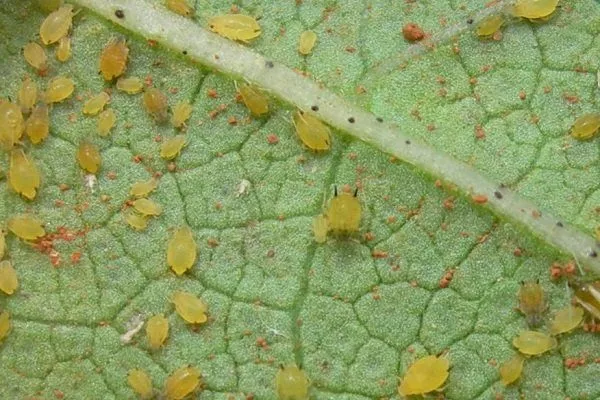
Aphids have oval bodies, yellow or green in color, and are 1.25-2 mm long. They suck plant juices, so they should be eliminated as quickly as possible.
If the wingless insects are not exterminated, the following year the garden will be attacked by winged females, which, flying from plant to plant, will quickly destroy the harvest.
The following factors contribute to aphid infestation:
- weeds;
- violation of agricultural practices and lack of prevention.
Signs of damage:
- the leaves curl and fall off over time;
- flowers are falling off;
- the plant stops growing, there is a high probability of the plant dying.
Aphids are carriers of dangerous diseases.
What to spray with:
- Decoctions of celandine and wormwood. Add 2-3 kg of chopped herbs to a bucket of water and let steep for 24 hours.
- Onion peel infusion. Infuse 200 g of onion peel in 10 liters of warm water.
- Soapy solution. Dissolve 150 g of laundry soap in a bucket.
- Chemical preparations – Karbofos, etc.
Chemical treatments should be stopped 20 days before harvesting.
You can prevent aphid attacks by attracting ladybugs.
Spider mite
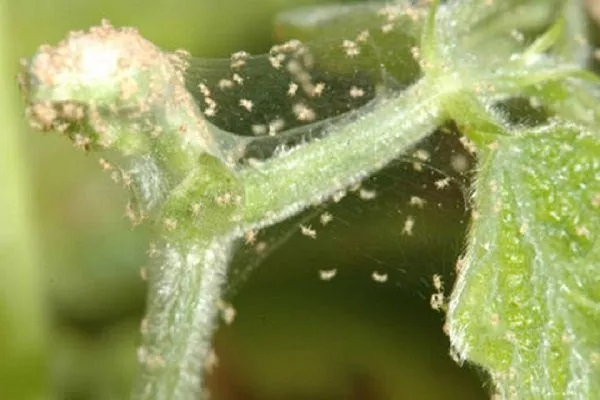
Spider mites are small but deadly enemies of pumpkins. If left untreated, the plant will surely die.
Factors that provoke the appearance of spider mites:
- dry and hot weather;
- lack of autumn digging – larvae and mites overwinter in the soil.
The mite's body length is 0.3-0.4 mm. It lives on the underside of leaves. Once settled, the insects gradually suck out all the plant's vital nutrients.
Signs of damage:
- on the inner side of the leaves there are yellow dots;
- individual spots gradually merge into one large one;
- the insect first weaves its web around the leaves;
- Hard areas appear on the fruits.
How to fight:
- spray the plantings with warm water;
- treat plants with an infusion of onion peel or garlic - 200 g per 10 liters of water;
- spray with "Kelthane", "Karbofos", etc.
Click beetle (wireworm)
Beetles don't cause any harm to pumpkins. It's their larvae, called wireworms, that cause the damage. They become dangerous in their second year, when they turn yellow and become covered in a thick chitinous shell.
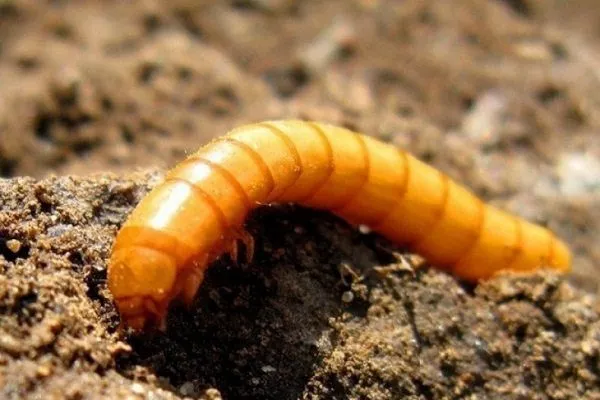
Damage caused by wireworms:
- eat young shoots;
- affect the roots and root collar.
How to fight:
- set traps;
- If the infestation is high, treat with insecticide.
Wireworm bait is made from pieces of potato, turnip, and beetroot. The chopped roots are placed in small depressions and removed after a few days, along with the larvae.
Slugs
They appear in late spring. They are very prolific, voracious, and capable of causing significant damage to crops. Their spread is facilitated by damp and cool weather. Slugs emerge at night and hide in the morning.
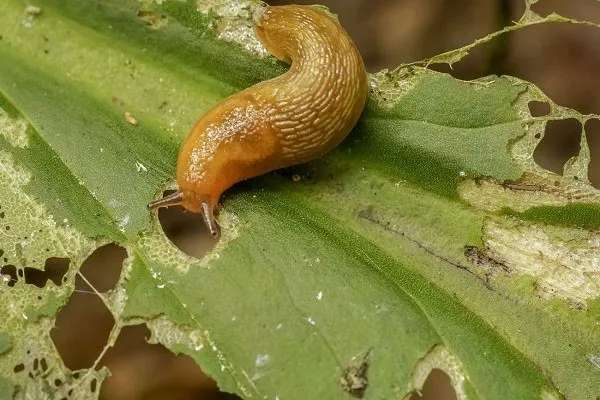
Damage caused by slugs:
- eat the ovaries;
- eat young leaves of plants;
- eat away the fruits.
How to fight slugs:
- thin out the plantings, weed out the weeds and loosen the soil;
- make traps from cabbage leaves, boards, and damp rags;
- dust the soil with ash or tobacco dust;
- they treat plantings with infusions of chamomile, garlic, and wormwood;
- make protective strips from lime or copper sulfate;
- If there are a lot of pests, the soil around the plants is sprayed with "Kreotsid-100" or sprinkled with "Groza".
Sprout fly
The fly itself doesn't harm the pumpkin, but its larvae are dangerous. The fly reaches 5-7 mm in length. It has a gray body, and a dark stripe crosses its abdomen. The larvae are white, grow up to 7 mm in length, and are slightly tapered at the front.
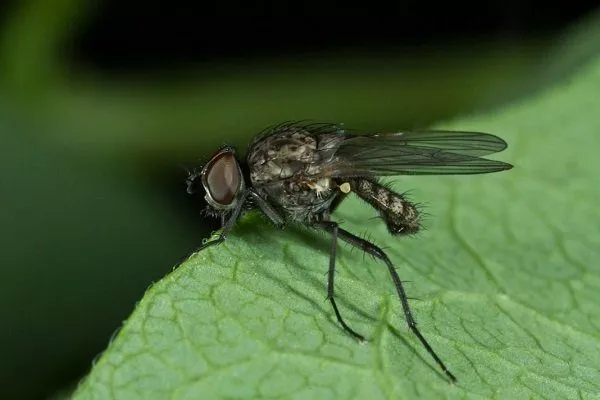
After overwintering in the soil, the pupae emerge in May and lay eggs in the soil. The hatched larvae feed on germinating pumpkin seeds and seedlings.
Damage from sprout fly larvae:
- making their way inside the stem, living and feeding in it, they destroy the plants;
- do not allow pumpkin seedlings to develop – they can destroy 2/3 of the plants.
Methods of control:
- treat seeds with Fentiuram before sowing;
- plant seedlings as early as possible;
- In the fall, they dig up the soil, adding fresh manure and mineral fertilizers.
Preventive measures
In addition to specific preventative measures used to prevent specific diseases and pests, there is a set of general measures. These measures, when implemented, allow for the simultaneous control of all diseases and pests.
General measures for preventing pumpkin diseases and pests:
- destruction of diseased plants;
- regular weeding and weed control (burning);
- planting disease-resistant varieties;
- adherence to the planting pattern – dense plantings should not be allowed;
- deep pre-planting digging of the soil with the addition of manure;
- soil disinfection with Fitosporin or Gamair;
- compliance with crop rotation principles;
- soil mulching;
- regular watering of pumpkins;
- regular inspection of plantings.
When dealing with pumpkin diseases and pests, it's important to identify the problem early, or better yet, prevent it from occurring. By taking timely preventative measures, you can minimize the risk of pumpkin damage.
Thank you for the detailed information. Based on your article, I was able to identify the disease and successfully treat it.