
Benincasa, or wax gourd, is an annual crop, more common in the southern regions of the country. Its fruits contain many nutrients, have excellent flavor, and can be stored for a long time. You'll learn about this vegetable's other benefits and how to grow it in this article.
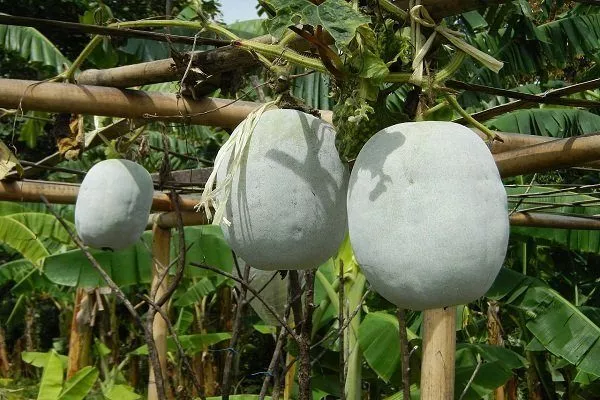
Benincasa pumpkin
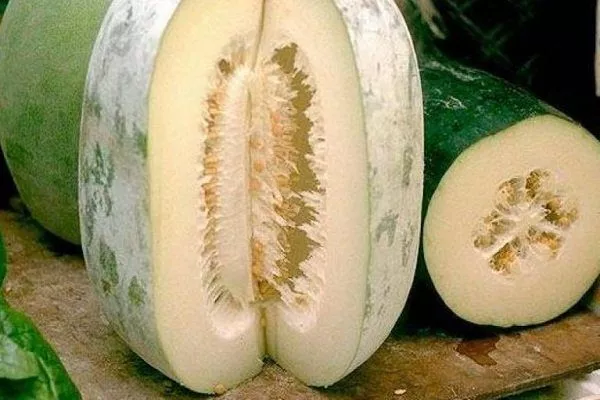
Benincasa has many beneficial properties.
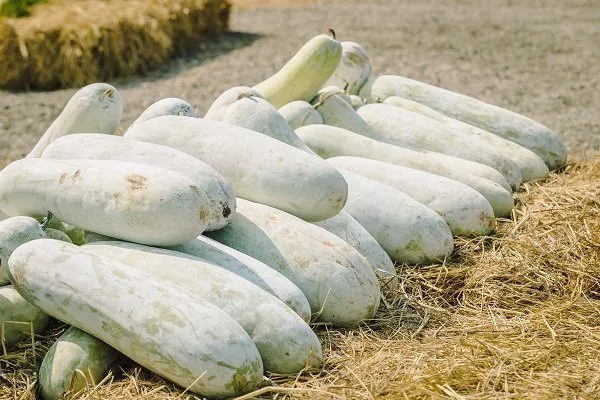
Benincasa can be stored for a long time in a cool and dark place.
Origin
Benincasa is a distinct pumpkin variety and belongs to the vine family. Its origins are thought to be in Southeast Asia, but today it has gained popularity in many warmer climates and is gradually spreading to the south of our country. The vegetable is prized for its medicinal properties and long shelf life.
Description
The main characteristics are:
- Stems. Thin, reaching 4 m in length. Covered with medium-sized leaves.
- Flower. It blooms very beautifully – several large orange flowers with a rich aroma appear at the same time.
- Fetus. Under favorable conditions, vegetables can grow to a weight of up to 10 kg. They have an oblong shape and a greenish tint. Their surface is covered with a waxy coating and fine hairs that serve as a protective barrier.
- Pulp. Delicate white in color, juicy, with a sweet, slightly tart flavor.
- ✓ The presence of a waxy coating on the fruit, which intensifies as it ripens.
- ✓ Characteristic sweetish taste with a slight sourness, different from other pumpkin varieties.
Main characteristics of the Benincasa pumpkin:
| Growing season, days | Fruit weight, kg | Time for planting seedlings, month | Time of transplantation into the ground, month | Time of sowing seeds in the ground, month | Yield, fruits per bush |
| 80 | 4-5 | 4-5 | 5-6 | 5-6 | 12 |
You can learn more about the characteristics and properties of the Benincasa wax gourd by watching the video below:
Beneficial properties
Benincasa pumpkins contain many vitamins and nutrients, which is why they are often used for medicinal purposes. Not only the pulp but also the peel, seeds, and leaves possess medicinal properties.
Consumption of wax gourd is recommended for diabetes, cardiovascular and gastrointestinal diseases.
What are the benefits:
- improves the functioning of the gastrointestinal tract;
- normalizes metabolism, which facilitates weight loss;
- has a diuretic effect, which helps in the fight against high blood pressure;
- removes excess cholesterol from the body;
- has an antipyretic effect;
- increases the body's defenses;
- cleanses the body of toxins, especially in cases of alcohol poisoning;
- reduces the load on the cardiovascular system;
- relieves swelling;
- Wax is used in cosmetology.
How to grow?
There are several peculiarities of growing wax gourd.
Through seedlings
In the North and central regions, the vegetable is grown using seedlings.
Time and method of sowing
Seeds for seedlings are planted 25-30 days before transplanting to a permanent location.
What you need to do:
- prepare a container for planting, preferably peat pots;
- fill them with soil for seedlings;
- make a hole in the soil, 1-2 cm deep;
- Place 2 seeds in each hole;
- sprinkle with earth;
- pour in water at room temperature;
- Move the pots to the southern windowsill.
After germination, the weaker sprout is carefully cut off with scissors.
Conditions for growth
To ensure that seedlings grow well, it is necessary:
- Temperature. Maintain a temperature of 25 degrees Celsius. Provide additional thermal insulation until sprouts appear. Cover the pots with transparent film.
- Watering. Do this using a spray bottle. Mist the plants regularly from the moment of planting, as the soil dries out.
- Hardening. One week before planting in the ground, the plants should be taken outside and left for 3-4 hours to allow them to adapt to the climate conditions.
Transplantation into the ground
Plants should be planted in the ground around the beginning of June, when the weather is consistently warm. They can also be transplanted into a greenhouse, where the temperature is maintained at a constant 25-30 degrees Celsius. This method is suitable for cold climates where growing heat-loving vegetables is only possible in a greenhouse.
- ✓ The soil temperature when planting seedlings should be at least 15°C to avoid stress on the plants.
- ✓ To prevent fungal diseases, it is necessary to ensure good air circulation around the plants, avoiding their thickening.
How to do it:
- water the bed with boiling water;
- Dig holes at a distance of 70-100 cm from each other;
- carefully transplant the seedlings, along with the peat pot;
- Mulch the bed with leaves and humus.
Preparing the garden bed
You should remember the following rules when choosing a place to plant a pumpkin:
- Plot. Good lighting will be required.
- Soil. Plant in fertile soil with low acidity.
- Predecessor cultures. It is better to plant Benincasa in soil in which beans, peas, potatoes, and cabbage were previously grown.
You should not use soil in which pumpkins have previously been grown.
- Preparation. In the fall, the area should be dug up, then manured. In the spring, add mineral fertilizers.

- Disinfection. To prevent many diseases, additional soil treatment with a 1:10 solution of ash and water can help. The solution is left to steep for three days and applied by spraying.
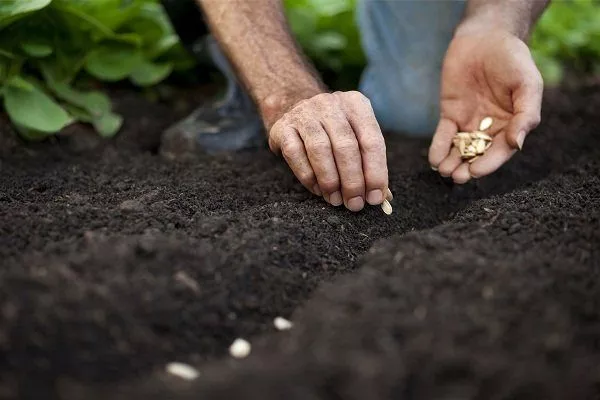
Sowing seeds in open ground
The soil temperature when planting seeds should be at least 10 degrees Celsius. This method is typically used in areas with hot climates.
Planting order:
- divide the area into rows;
- in each row, dig holes 4 cm deep (follow the pattern as when planting seedlings);
- take 2 seeds;
- place them in each hole;
- sprinkle with a thin layer (about 2 cm) of soil or peat;
- water it;
- After germination, pinch off the weaker shoot.
Care
One should not forget about the rules of agricultural technology.
Watering
The recommendations are as follows:
- Frequency. Immediately after the shoot, the plants should be watered daily. After one week, the frequency can be reduced to twice every seven days.
- Temperature. Water for irrigation should be warm, around 20 degrees Celsius. Cold water can kill the vegetable.
- Time. It's best to water in the late afternoon, when the heat subsides. If you do this during the day, a crust will form on the soil, and if water gets on the leaves, they may dry out.
- Quantity. One plant requires about 5 liters of water.
- Way. Pour water under the roots, avoiding exposing them.
Top dressing
What are the rules:
- Compound. You can prepare a mixture of ammonium nitrate, ammophos, and potassium sulfate in a ratio of 2:4:2. Add the mixture to 10 liters of water. This ratio is 4 liters per plant.
- Frequency. During the growth period, it is necessary to do at least 2 additional feedings - after the appearance of the 4th leaf and the formation of shoots.
Bush formation
Here are some tips to help you grow pumpkins:
- the formation will be more convenient if you put a trellis on the site;
- it is necessary to direct the growth force to 1 stem, for this all lateral shoots are removed;
- The central stem is pinched after 3-4 ovaries appear.
Pollination
This is usually done by bees. However, if for some reason they rarely visit the site or the pumpkin is growing in a greenhouse, it can be done by hand.
Actions:
- choose a warm sunny day;
- perform the procedure in the morning;
- take a soft brush and collect pollen from the “male” flower;
- bring it to the “female” flower and pollinate it.
Pest and disease control
Parasites dangerous for Benincasa are:
- Melon aphid. It damages the ovaries and leaves, causing them to curl and rot.
It's caused by an abundance of weeds in the area, so careful weeding is essential. You can also spray the pumpkin with a low-concentration soap solution.
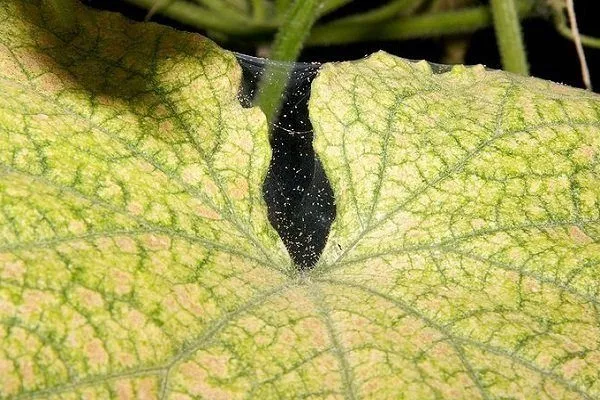
- Spider mite. It sucks the juices from pumpkin leaves and then covers them with a layer of webbing, which leads to death.
Onion and garlic infusions help against ticks.
Possible diseases include:
- Root rot. A fungal disease that attacks the plant from the roots down, resulting in complete death.
Controlling the quantity and quality of watering and the frequency of fertilizing will help prevent the development of the disease.
- Powdery mildew. The first signs of the disease are light spots on the surface of the plant, which gradually merge into 1. The result of development is the death of the plant.
Fungal spores may be present in the soil, so you need to:
- dig up the garden bed thoroughly;
- reduce the amount of nitrogen fertilizers (organic) applied and increase phosphorus-potassium fertilizers;
- observe crop rotation;
- Spraying with hay infusion also helps.
- Mosaic. It appears as multi-colored spots on the surface of the leaves.
The disease is transmitted by insects, so it's important to protect the plant in advance by treating it with insecticides, such as Fitoverm. For those who prefer not to use chemicals, spraying with an infusion of onion peels is recommended. Prepare the infusion at a rate of 200 g of onion peel per bucket of water.
Harvesting and storage
What you need to know about this:
- Time. It is better to harvest before the onset of frost.
- Collection method. The fruits must be carefully cut with scissors or a knife, taking care to preserve the stalk.
- Sorting. Vegetables should be sorted immediately after harvest. Only fully ripe pumpkins with no blemishes are suitable for long-term storage. All other pumpkins are best consumed immediately or cut into pieces and frozen.
- Caution. The wax layer on the surface of the fruit should never be rubbed off or washed off, because it is thanks to it pumpkins can be stored for a long time.
- Conditions. It doesn't require any special storage conditions. Simply place it in a cool, dark place.
Benincasa pumpkin can be stored at home, in a room, the main thing is that it is not exposed to direct sunlight.
Pros and cons
The main advantages of culture are:
- Storage. Can be stored for up to 2 years.
- Transportability. The fruits can be transported without losing their commercial qualities.
- Agronomic measures are no different from those for other pumpkin crops.
- Taste. Benincasa can be eaten raw or cooked. It is also canned, used in soups, porridges, and purees. The fruits make very healthy candies.
- Ornamental properties. Can be grown as a garden ornament.
Reviews
Learn more about wax gourds from reviews from people who have already grown this variety:
A video review of the Benincasa pumpkin variety can be seen in the following video:
Before growing wax gourds, you need to create the right conditions for the plant. Ensure proper air temperature and lighting, prepare the soil, and implement pest prevention measures. This is the only way to grow large, tasty fruits.